
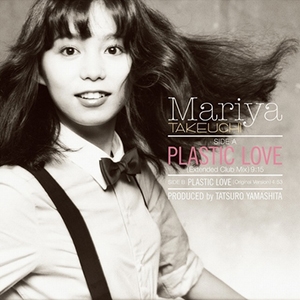
Mariya Takeuchi’s Plastic Love is the most famous song of its genre. On YouTube alone, it has garnered around 100 million views, and that is not even counting the countless reposts, covers, and remixes. The song was written in 1985—at the very heart of the Japanese economic boom—and it was this track that earned the genre the right to be called City Pop: an urban aesthetic, nightlife, and a shiny yet melancholic image of the city.
However, behind the outer popularity lies a much deeper layer. On the surface, it seems to be an ordinary song about love—but if you look at it through the lens of Japanese culture of that time, you will see something much bigger: a portrait of a woman at a turning point between eras.
The Place of Women in Japan Before the Boom
Just a few decades before the song was written, the role of a Japanese woman was defined clearly and unquestioningly. There was even a specific concept—ryōsai kenbo, which literally translates to "good wife, wise mother." A woman existed within the coordinate system of family, husband, and home. Career, personal fulfillment, and emotional autonomy were either inaccessible or socially condemned. Marriage was not a choice; it was an expectation. The question was not if you would get married, but when.
What the Economic Boom Changed
Starting in the 1970s, Japan began to change at a frantic pace. The economy was booming, cities were swelling, and youth from across the country flocked to Tokyo, Osaka, and Yokohama. The city offered something that simply hadn't existed before—anonymity, independent income, and personal space.
For the first time, women gained mass access to office jobs. A distinct social type even emerged—the office lady, a young urban worker with her own money and her own time. Along with this, a new consumer culture blossomed, tailored specifically to her: fashion boutiques, nightclubs, and expensive cocktails. Previously, a woman waited at home. Now, she danced until dawn.
What Lies Behind the Lyrics
"Don't ever love me seriously / Love is just a game"
This is not cynicism—it is a conscious stance. In the Japanese context of that time, serious relationships automatically meant marriage, and marriage meant returning to the old role. The heroine deliberately chooses the game to preserve her newly won freedom. Before, a woman had no right to such a choice. Now, she does.
"Fancy dresses and shoes are armor for a closed heart"
The boom's new consumer culture made appearance the language of social status. But the heroine goes further—she turns consumption into a defense mechanism. The dress and shoes are not vanity; they are a shield. Behind it is a woman who has already been hurt and no longer wants to let anyone close.
"Day and night have swapped places / Dancing the nights away"
The night city of the 1980s was a space that previously just didn't exist for a Japanese woman. Clubs, bars, and discos were male territory. The heroine lives there as if she owns the place—and this in itself is a quiet revolution.
"Since the day my heart shattered into pieces / I kept living, forgetting about peace"
Here, a shadow appears that makes the image come alive. Freedom did not come cheap—behind it stand loneliness and pain. The heroine chose independence not out of ideological considerations, but as a reaction to trauma. This is an important detail: emancipation here is not celebratory, but forced.
"Let them whisper that I'm cold as ice / Don't worry, it's just a mask"
A "cold woman" was exactly how traditional society labeled those who rejected their expected role. The heroine hears this judgment, acknowledges it—and dismisses it. The mask is not a deception; it is a conscious choice. Previously, such a choice was impossible. Now it exists—even if it costs her reputation.
"I'm just playing games / I know this is plastic love"
"Plastic love" is more than just a title. It is a reflection on the artificiality of the new urban life as a whole. The glitz, the nightclubs, the superficial relationships—all of this is, to some extent, a construct, a stage set. The heroine understands this better than anyone. Yet, she keeps on dancing—because the alternative, a return to her old role, is no longer possible for her.
Why It Matters
Plastic Love is not just a song about unrequited love. It is a document of an era. In three minutes of music, we see a Japanese woman of 1985 standing right on the edge between two worlds: a traditional society where her role was predetermined, and a new city that offered her a choice for the very first time. She chose freedom—and she pays a price that she determined herself.
It is this contradiction that makes the song universal forty years later. The listener might not understand the Japanese words, but they feel this internal tension between the desire for intimacy and the fear of losing it. And that is no longer just a Japanese story. It is a human one.