QuickBooks Desktop Multi-User Mode allows multiple authorized users to work with the same company file over a network. It is particularly useful for accounting teams that need to manage invoices, payroll records, customer information, expenses, and financial reports from different computers.

However, the workflow can become frustrating when QuickBooks Multi-User Mode stops working. One computer may open the company file successfully while another displays an error. Sometimes, users cannot switch from Single-User Mode to Multi-User Mode, or QuickBooks may fail to connect to the computer hosting the company file.
These problems are not always caused by the company file itself. Hosting conflicts, Windows permissions, firewall restrictions, database services, and network communication failures can all prevent multiple computers from accessing the same file.
If your business is experiencing this issue, the Data Service Team provides QuickBooks troubleshooting information and support resources. Phone: +1-(888)-718-7888
This guide explains the common reasons QuickBooks Multi-User Mode stops working, how to identify the underlying problem, and which troubleshooting steps to try before making major changes to your accounting environment.
What Does QuickBooks Multi-User Mode Not Working Mean?
QuickBooks Multi-User Mode is designed to let multiple users access a company file stored on a host computer or supported server environment.
When Multi-User Mode is not working, one or more workstations may be unable to connect to the shared company file. The problem can appear in several ways:
QuickBooks will not switch to Multi-User Mode.
A workstation cannot open the company file.
Users receive H202, H505, H101, or H303 errors.
QuickBooks displays a message that the company file is already in use.
The company file opens on the server but not on other computers.
QuickBooks Database Server Manager cannot locate or scan the company file folder.
Users experience repeated disconnections when working over the network.
Understanding exactly when the problem occurs is important. For example, if every workstation is affected, the host computer or shared environment may need attention. If only one workstation is affected, investigate that computer's network connection, permissions, and QuickBooks configuration first.
Common Reasons QuickBooks Multi-User Mode Stops Working
Before changing settings, understand what can interrupt the connection.
1. Incorrect Hosting Configuration
QuickBooks hosting settings determine which computer manages access to the company file. In a typical dedicated hosting arrangement, the server or host computer should manage hosting, while the workstations should not independently host the same company file.
Incorrect hosting settings can create conflicts and prevent workstations from connecting correctly.
2. QuickBooks Database Server Manager Problems
QuickBooks Database Server Manager helps other computers access company files stored on the host computer. If the relevant database service is stopped, incorrectly configured, or unable to access the company file folder, Multi-User Mode may fail.
3. Firewall or Security Software Restrictions
Windows Firewall or third-party security software may block network communication required by QuickBooks Desktop. This can prevent workstations from reaching the database service even when the computers appear to be connected to the same network.
4. Incorrect Folder Permissions
The Windows account or QuickBooks database service must have appropriate access to the shared company file location. If permissions are restricted, QuickBooks may be unable to read or update the file correctly.
5. Network Connection Problems
An unstable LAN connection, incorrect network configuration, disconnected shared drive, or server communication problem can interrupt access to the company file.
6. Damaged Network Configuration Files
QuickBooks uses a network data file with the .ND extension to help locate the database server. If this configuration file becomes outdated or incorrect, workstations may have difficulty connecting to the company file.
7. Company File or Database Problems
A company file may have an issue that affects access. In other situations, the database service may be unable to open the file. It is important to distinguish a file-related problem from a network-related problem before attempting repairs.
12 Ways to Fix QuickBooks Multi-User Mode Not Working
Try the following solutions in a logical order. Start with basic checks and move toward more advanced network troubleshooting only when necessary.
Solution 1: Check Whether the Problem Affects One Computer or Everyone
Begin by identifying how widespread the issue is.
Open QuickBooks Desktop on the host computer.
Check whether the company file opens normally.
Try opening the same company file from another workstation.
Repeat the test on other computers, if available.
Note whether the problem occurs on every workstation or only one.
What the results tell you:
If the company file opens on the host but not on any workstation, investigate hosting, database services, firewall rules, and network connectivity.
If only one workstation fails, check its network connection, Windows permissions, and QuickBooks installation.
If the host computer cannot open the file either, investigate the company file and its local storage before changing network settings.
This simple comparison can prevent unnecessary changes to computers that are working correctly.
Solution 2: Verify QuickBooks Hosting Settings
Incorrect hosting settings are a common reason for Multi-User Mode connection problems.
In a typical dedicated-server setup, only the computer hosting the company file should manage hosting.
On the workstation computers:
Open QuickBooks Desktop.
Do not open the company file.
Select File from the menu.
Open Utilities.
If you see Stop Hosting Multi-User Access, select it to turn off hosting on that workstation.
If you see Host Multi-User Access, leave it unselected.
Repeat this check on other workstations.
On the host computer:
Open QuickBooks Desktop.
Select File.
Open Utilities.
Check the hosting option.
If Host Multi-User Access is available, select it.
If Stop Hosting Multi-User Access is displayed, hosting is already enabled.
Do not enable hosting on every workstation. The correct configuration depends on your network setup, but a typical dedicated-server environment should have one designated host.
Solution 3: Restart QuickBooks Database Server Manager Services
QuickBooks relies on database services to manage access to company files across the network.
If a required service is stopped, workstations may not be able to connect.
Follow these steps on the host computer:
Close QuickBooks Desktop.
Press Windows + R.
Enter services.msc.
Press Enter.
Locate the QuickBooks Database Server service associated with your installed version. Its name generally follows the format QuickBooksDBXX.
Double-click the service.
Review its startup type and service status.
If the service is stopped, select Start.
If appropriate for your environment, configure its startup type as Automatic.
Repeat the check for QBCFMonitorService, where applicable.
The exact database service name depends on the QuickBooks Desktop version. Do not change unrelated Windows services.
After confirming the services are running, reopen QuickBooks and test Multi-User Mode from a workstation.
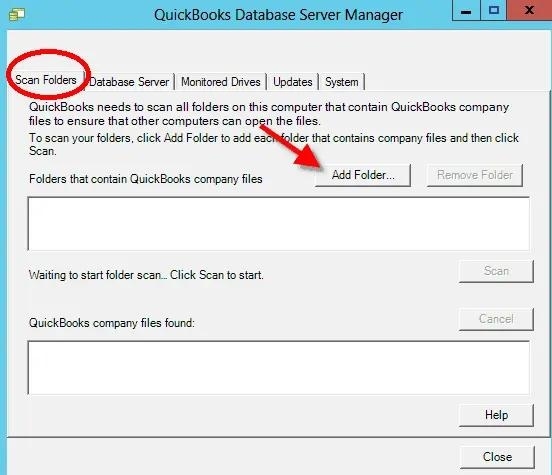
Solution 4: Scan the Company File Folder with Database Server Manager
Database Server Manager needs to recognize the folder containing the company file.
A scan can help refresh the network configuration and identify company files that need to be made available to other computers.
Open QuickBooks Tool Hub on the host computer.
Select Network Issues.
Open QuickBooks Database Server Manager.
Find the folder containing the company file.
If the folder is not listed, browse to its location.
Select Start Scan.
Wait for the scan to finish.
Close the utility and test access from a workstation.
If you do not have Tool Hub installed, use the appropriate Database Server Manager installation for your QuickBooks Desktop environment.
Scanning the correct folder is important. Scanning a different location will not resolve access problems involving the actual company file.
Solution 5: Check Windows Firewall Settings
Firewall restrictions can prevent QuickBooks workstations from communicating with the host computer.
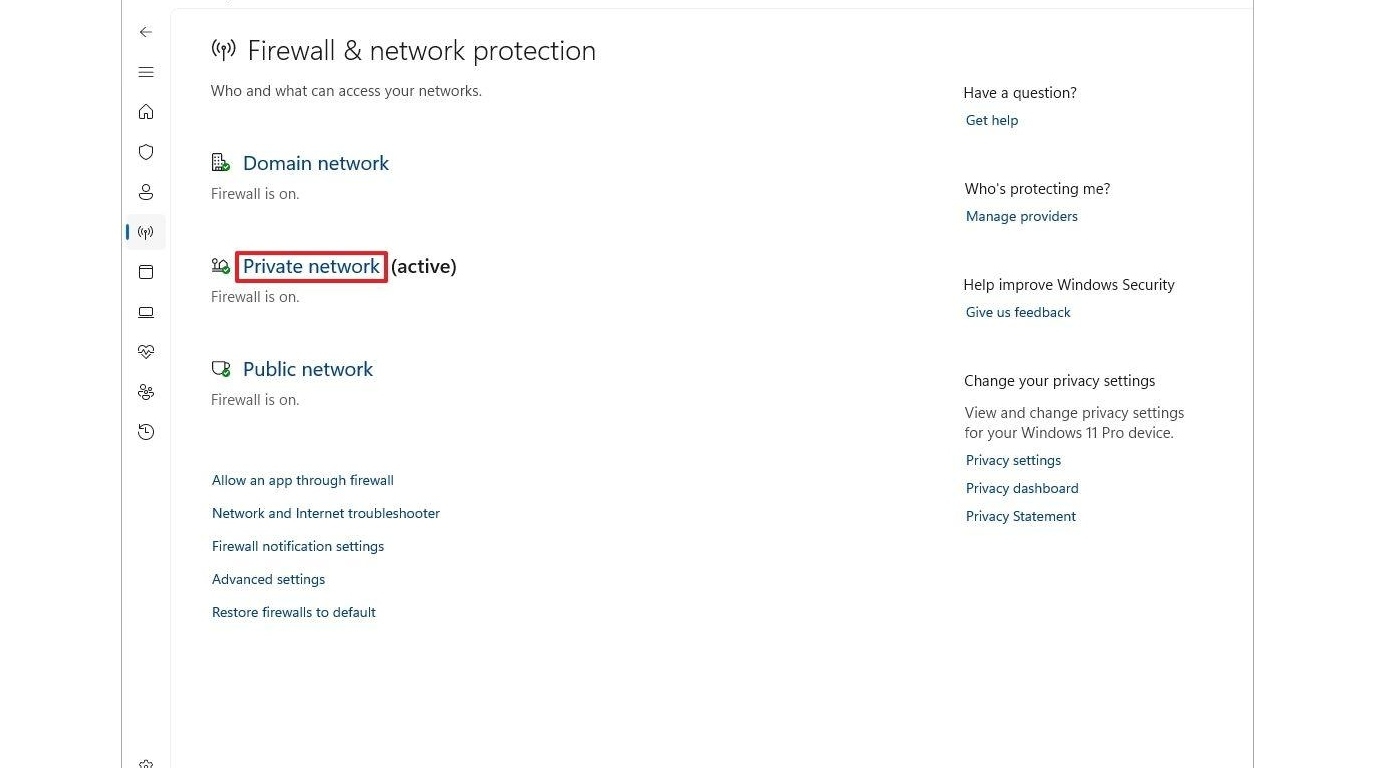
Instead of disabling the firewall entirely, configure the required exceptions.
How to review firewall permissions:
Open the Windows Start menu.
Search for Windows Defender Firewall with Advanced Security.
Open the advanced firewall settings.
Review the inbound rules for QuickBooks.
Confirm that the required QuickBooks programs and network ports are allowed.
Review outbound rules as well.
Apply changes only to the appropriate network profiles and programs.
QuickBooks Desktop versions may use different network port configurations. For QuickBooks Desktop 2019 and later, dynamic ports are assigned during installation.
To identify the assigned port:
Open QuickBooks Database Server Manager.
Select the Port Monitor tab.
Locate the relevant QuickBooks version.
Record the displayed port number.
Use that version-specific port when creating the appropriate firewall exception.
Do not copy a port number from an unrelated QuickBooks installation. Also, avoid opening broad port ranges or disabling security protection without a clear technical reason.
Solution 6: Verify Shared Folder Permissions
QuickBooks needs appropriate Windows permissions to access the folder containing the company file.
If access is restricted, users may encounter problems opening or updating the file.
Check the shared folder:
Locate the folder where the company file is stored.
Right-click the folder.
Select Properties.
Open the Sharing tab.
Review the sharing configuration.
Open Advanced Sharing if necessary.
Review which Windows users or groups have access.
Check the Security tab to review NTFS permissions.
Confirm that the appropriate QuickBooks database service account and authorized users have the required permissions.
The required permissions depend on the hosting setup. Avoid granting unrestricted access to everyone simply to make the error disappear. Use the minimum permissions needed for the intended users and database service.
Solution 7: Check the Network Data File (.ND)
QuickBooks creates an .ND file alongside the company file to store network connection information.
If the network data file is outdated or damaged, QuickBooks may have trouble locating the database server.
How to refresh the network data file:
Close QuickBooks Desktop on all computers accessing the company file.
Open the folder where the company file is stored.
Find the file with the same base name as your company file and an .ND extension.
Make a backup copy of the .ND file.
Rename the existing .ND file by adding .old to its name.
Open QuickBooks Database Server Manager.
Scan the company file folder again.
Check whether QuickBooks creates a fresh network data file.
Test the connection from a workstation.
Do not rename or delete the actual .QBW company file. The .ND file is a network configuration file, not the accounting data itself.
Solution 8: Check Server Connectivity from a Workstation
If the workstation cannot communicate with the host computer, QuickBooks may not be able to establish a multi-user connection.
You can perform a basic connectivity test using the Windows Command Prompt.
Step 1: Find the host computer name
On the host computer:
Press Windows + R.
Type cmd.
Press Enter.
Enter:
ipconfig /all
Locate the Host Name entry.
Record the computer name.
Step 2: Test the connection from a workstation
On a workstation:
Open Command Prompt.
Enter:
ping HOSTNAME
Replace HOSTNAME with the actual host computer name.
Press Enter.
Review the results.
Successful replies indicate that the workstation can reach the host at the basic network level. However, a successful ping does not prove that QuickBooks database communication, firewall permissions, or company file access is working.
If the command shows packet loss or the host cannot be reached, investigate the network connection before changing QuickBooks company file settings.
Solution 9: Check the Company File Location
The company file should be stored in a supported shared location that the host and workstations can access.
Review the following:
Is the company file still in the expected folder?
Has the shared folder been renamed or moved?
Is the server computer switched on?
Is the network drive connected?
Can the workstation access the shared folder?
Are users opening the same company file rather than separate copies?
A disconnected network drive or an outdated file path can make QuickBooks appear to have a Multi-User Mode problem when the real issue is file location.
Also, do not assume that a Network Attached Storage device is supported by QuickBooks Database Server Manager. Confirm that your storage and hosting arrangement is supported before moving company files.
Solution 10: Use QuickBooks File Doctor When Appropriate
QuickBooks File Doctor can help investigate certain company files and network-related problems.
It may be useful when:
The company file cannot be opened correctly.
QuickBooks reports a network-related company file issue.
The problem continues after basic hosting and service checks.
You suspect that the file needs a diagnostic review.
General steps:
Close QuickBooks Desktop.
Open QuickBooks Tool Hub.
Select Company File Issues.
Choose Run QuickBooks File Doctor.
Browse for the affected company file if it is not listed.
Select the appropriate network or file diagnostic option.
Follow the prompts.
Enter the authorized QuickBooks administrator credentials if requested.
Allow the diagnostic process to finish.
Reopen QuickBooks and test the connection.
Before running repair tools, create a verified backup of the company file. Diagnostic utilities should be used for the problem they are designed to address; they are not a substitute for correcting an incorrect hosting or firewall configuration.
Solution 11: Investigate QuickBooks Multi-User Error Codes
Specific error codes can provide useful clues about the connection problem.
Error code | What it may indicate |
H101 | A hosting configuration or network setup problem |
H202 | A workstation cannot communicate with the host computer |
H303 | A hosting or network connection issue involving the company file |
H505 | A multi-user connection or hosting configuration problem |
6175, 0 | A problem involving the database service or company file access |
These errors can have overlapping causes. Do not assume that one error code always points to one specific setting.
For H202 or H505, start by checking the hosting arrangement, database services, firewall permissions, and server connectivity. For error 6175, 0, review the database service and hosting configuration as well.
Solution 12: Restart Computers and Retest the Network Setup
If you have corrected the relevant settings, restart the host computer and affected workstations when appropriate.
Use this sequence:
Confirm that all users have saved their work.
Close QuickBooks on all computers.
Confirm that the company file is not being used.
Restart the host computer.
Allow the database services to start.
Restart the affected workstations.
Open QuickBooks on the host.
Open the company file from a workstation.
Select File and then Switch to Multi-user Mode, if needed.
Confirm that authorized users can access the file.
Test the setup with more than one workstation if your business depends on simultaneous access.
How to Identify Whether the Problem Is on the Server or Workstation
One of the most useful troubleshooting techniques is to compare results from different computers.
What you observe | Where to investigate first |
Company file opens on host but not on any workstation | Hosting, database service, firewall, network |
Only one workstation cannot connect | Workstation network, permissions, installation |
All computers cannot open the company file | Company file, host storage, database service |
H202 appears on multiple workstations | Host connectivity, firewall, database configuration |
Multi-User Mode works after a service restart but fails again | Service startup, server stability, or security software |
Users lose access after a network change | Shared path, DNS, firewall, or network configuration |
This comparison helps narrow the investigation before you make changes to the accounting environment.
Important Precautions Before Troubleshooting
Multi-User Mode problems can involve both network configuration and company file access. Protect your accounting records while troubleshooting.
Keep these precautions in mind:
Create a current company file backup before performing repairs.
Ask all users to save their work and exit QuickBooks before maintenance.
Do not rename, move, or delete the .QBW company file as a casual troubleshooting step.
Avoid disabling Windows Firewall or antivirus protection permanently.
Do not give every Windows user full access to the company file folder without reviewing security requirements.
Do not enable hosting on every workstation.
Avoid running multiple repair utilities simultaneously.
If you use a third-party hosting provider, coordinate network and server changes with that provider.
If the company file contains important accounting records, a cautious diagnostic process is safer than repeatedly changing settings without identifying the cause.
How to Prevent QuickBooks Multi-User Mode Problems
A stable multi-user environment depends on consistent network and hosting configuration.
Consider these maintenance practices:
Keep hosting settings consistent: Maintain a clear distinction between the host computer and workstations.
Monitor database services: Periodically verify that the required QuickBooks database services are running.
Review firewall permissions after updates: Windows and security software updates can change how applications communicate over the network.
Maintain reliable backups: Keep verified backups in a secure location and periodically confirm that they can be restored.
Use a stable network: Avoid unnecessary changes to server names, shared folders, network drives, and IP configurations.
Control user permissions: Give employees access appropriate to their responsibilities and the requirements of the shared company file.
Document the network setup: Record the host computer, shared folder path, QuickBooks versions, and relevant network configuration. This information can make future troubleshooting faster.
Frequently Asked Questions
1. Why is QuickBooks Multi-User Mode not working?
Common causes include incorrect hosting settings, stopped QuickBooks database services, firewall restrictions, insufficient folder permissions, network connectivity problems, and company file access issues. Identify whether one workstation or every workstation is affected before selecting a repair.
2. How do I switch QuickBooks Desktop to Multi-User Mode?
Open the company file in QuickBooks Desktop, select File, and choose Switch to Multi-user Mode. If the option does not work, check the hosting configuration, network connection, and database services.
3. What does QuickBooks Error H202 mean?
Error H202 generally indicates that a workstation cannot establish the required connection to the computer hosting the company file. Check Database Server Manager, hosting settings, firewall permissions, and network connectivity.
4. Should every computer have Host Multi-User Access enabled?
No. In a typical dedicated-server arrangement, the designated host computer manages hosting. Workstations should not independently host the same company file. The correct configuration can vary with the hosting environment.
5. Can Windows Firewall prevent QuickBooks Multi-User Mode from working?
Yes. Firewall rules can block network traffic required for QuickBooks database communication. Configure the correct application and port exceptions for your installed QuickBooks version instead of turning off the firewall completely.
6. What is QuickBooks Database Server Manager used for?
QuickBooks Database Server Manager helps manage access to company files stored on a host computer so other authorized computers can work with those files in a supported multi-user environment.
7. Why does QuickBooks work on one computer but not another?
The affected workstation may have a different network connection, restricted Windows permissions, firewall settings, or QuickBooks configuration. Compare its settings with a workstation that can connect successfully.
8. Can renaming the ND file fix a Multi-User Mode issue?
Refreshing an outdated or damaged .ND network configuration file can help in some cases. Back it up first, make sure all users have closed QuickBooks, and rescan the company file folder with Database Server Manager. Never confuse the .ND file with the .QBW company file.
9. Does Multi-User Mode require all computers to use the same QuickBooks version?
The QuickBooks installation and company file compatibility requirements must be considered across the network. Use compatible installations and follow the supported upgrade and hosting process for the versions involved.
10. What should I do if none of the troubleshooting steps work?
Stop making repeated configuration changes. Verify your company file backup, record the exact error message, identify which computers are affected, and have the host, database services, permissions, and network setup reviewed by a qualified QuickBooks or IT professional.
Related Keywords and Search Intent
The following related phrases address different aspects of the same troubleshooting topic. Use them naturally in the relevant sections rather than repeating them unnecessarily.
Related keyword | Search intent and natural placement |
QuickBooks Multi-User Mode error | Users looking for an explanation of a failed multi-user connection; use in the introduction and error overview. |
Users experiencing a workstation-to-server connection failure; use in the error-code section. | |
QuickBooks H505 error | Users investigating a hosting or network configuration problem; use in the error-code section. |
QuickBooks Database Server Manager not working | Users troubleshooting database services or file scanning; use in Solutions 3 and 4. |
QuickBooks hosting mode settings | Users checking which computer should host the company file; use in Solution 2. |
QuickBooks firewall settings for multi-user mode | Users checking blocked network communication; use in Solution 5. |
QuickBooks company file not opening on network | Users unable to access a shared file; use in Solutions 6 and 9. |
QuickBooks workstation cannot connect to server | Users diagnosing a specific workstation connection; use in Solution 8. |
QuickBooks ND file | Users investigating network configuration information; use in Solution 7. |
QuickBooks error 6175, 0 | Users troubleshooting database service or company file access; use in Solution 11. |
Final Thoughts
When QuickBooks Multi-User Mode is not working, the best approach is to identify where the connection is failing instead of immediately repairing or replacing the company file.
Start by comparing the host computer with the affected workstations. Then review hosting settings, database services, shared folder permissions, firewall exceptions, and network connectivity. Use diagnostic tools when the symptoms indicate a company file or network issue, and always protect your accounting data with a verified backup before performing repairs.
If the problem continues, a more detailed review of the QuickBooks installation, database services, Windows environment, and network configuration may be necessary.
For additional QuickBooks troubleshooting information and assistance, visit Data Service Team:
Website: https://dataserviceteam.com/
Phone: +1-(888)-718-7888
Disclaimer: QuickBooks is a registered trademark of Intuit Inc. Data Service Team is an independent service provider and is not affiliated with or endorsed by Intuit Inc.