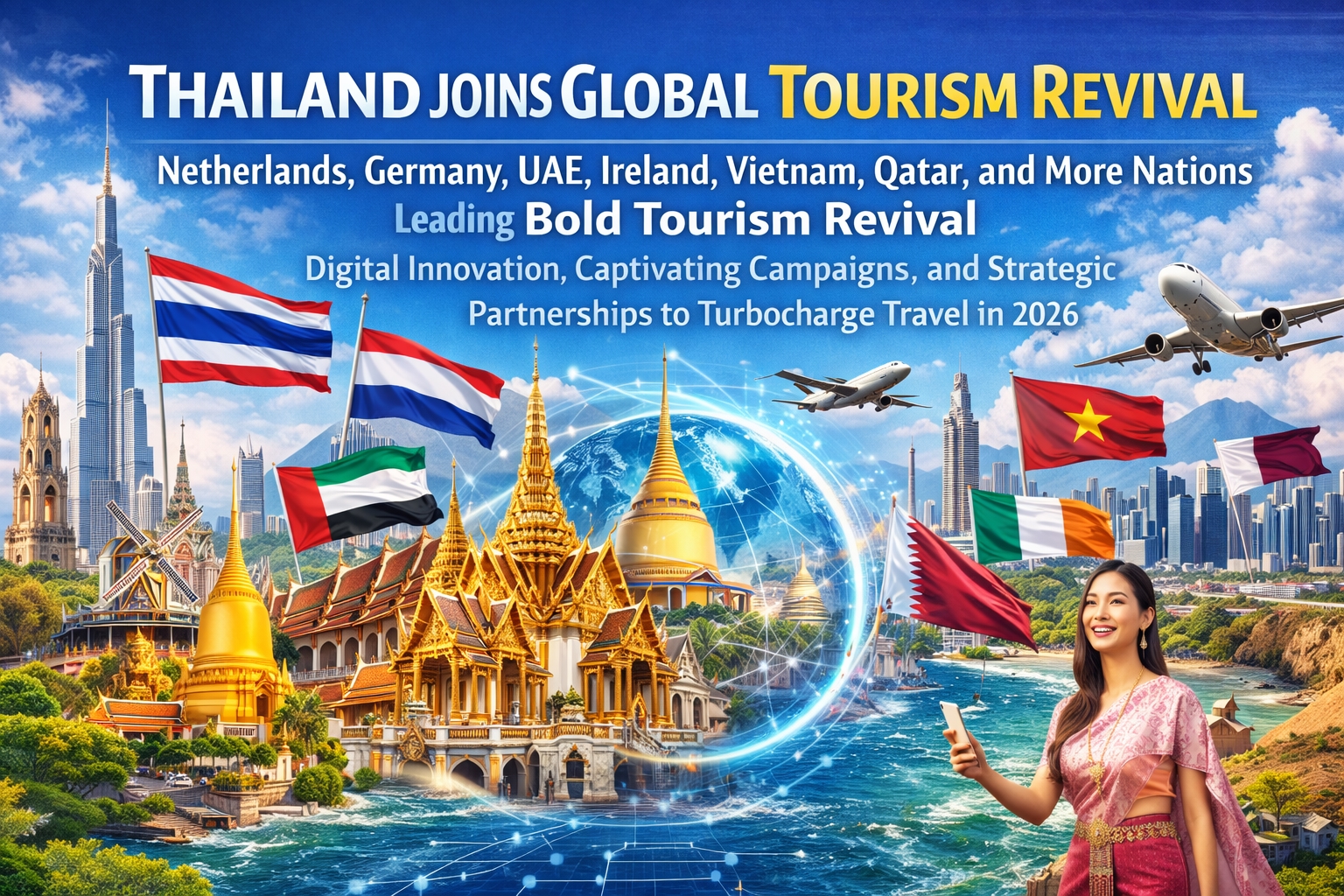
The travel landscape of 2026 is undergoing a seismic shift. No longer just a recovery phase, this year marks the "Great Revival," where Thailand, alongside nations like the Netherlands, Germany, UAE, Ireland, Vietnam, and Qatar, is redefining what it means to travel. By blending high-tech digital solutions with "Healing is the New Luxury" campaigns, these destinations are turbocharging their tourism sectors to reach record-breaking milestones.
For travelers, this means smoother borders, personalized AI-driven itineraries, and a focus on wellness that goes far beyond the traditional spa. Whether you are looking for an e-visa for Thailand, a Qatar entry permit, or a UAE tourist visa, the process is becoming faster and more transparent than ever before.
1. How is Thailand Leading the 2026 Tourism Revival with Digital Innovation?
Thailand is at the forefront of the "Smart Tourism" movement. The Tourism Authority of Thailand (TAT) has launched the Amazing 5 Economy strategy, which prioritizes the "Platform Economy." By integrating AI into the national tourism repository, Thailand now offers real-time, personalized travel recommendations via the TAT-AI system. This digital breakthrough allows the country to manage tourist flows effectively, preventing overtourism while ensuring that hidden gems in secondary provinces receive the spotlight they deserve.
2. What are the New Thailand Visa Changes for 2026?
To support its goal of 36.7 million international visitors, Thailand has overhauled its entry requirements. The most notable change is the expansion of visa-free entry to 93 countries, allowing stays of up to 60 days. Additionally, the introduction of the Destination Thailand Visa (DTV) has made the Kingdom a primary hub for digital nomads and remote workers, offering long-term flexibility that was previously unavailable.
3. Why are the UAE and Qatar Focusing on Digital E-Visa Systems?
The Middle East is mirroring Thailand's digital-first approach. The UAE and Qatar have streamlined their e-visa portals to ensure that processing happens in record time. With the "Vision 2030" goals in mind, these nations are using biometric data and blockchain-secured visa platforms to reduce "travel friction." This ensures that stopover tourism—where travelers spend 48–72 hours in Dubai or Doha—is as seamless as possible.
4. How is Vietnam’s "Fly High with Aspirations" Campaign Boosting 2026 Travel?
Vietnam has joined this bold revival with its "Fly High with Việt Nam's Aspirations" campaign. By launching 140 new promotion programs and establishing a "Three Connections" strategy with Thailand, Vietnam is positioning itself as a leader in regional connectivity. The focus here is on "Anti-tourism" travel—guiding visitors toward authentic, off-the-beaten-path experiences in places like Mũi Né and the Northern Highlands.
5. What Role Does AI Play in Planning a Trip to Germany or the Netherlands in 2026?
In Europe, Germany and the Netherlands are leveraging "Agentic AI"—artificial intelligence that doesn't just answer questions but takes action. In 2026, travelers can use AI agents to book multi-city rail passes, reserve carbon-neutral accommodations, and even handle rebookings during flight delays automatically. This "Invisible Tech" revolution makes European travel more accessible to non-tech-savvy travelers.
6. Why is "Healing is the New Luxury" the Top Travel Trend of 2026?
The definition of luxury has shifted from gold-plated hotel rooms to mental clarity and physical restoration. Thailand's "Life Economy" pillar focuses on medical and wellness tourism, positioning the country as a global hub for longevity. Similarly, Ireland and Germany are promoting "Coolcationing" and nature-based retreats, catering to the growing demand for tranquil environments away from urban heat and crowds.
7. How are Strategic Partnerships Reshaping Global Tourism Routes?
The revival of 2026 is built on collaboration. We are seeing unprecedented partnerships, such as direct flight corridors between Minsk and Phuket, and regional ASEAN connectivity pacts between Vietnam and Thailand. These alliances aim to create a "single destination" feel for long-haul travelers, allowing them to visit multiple countries with a single, unified travel mindset.
8. What is the Impact of the "Night Economy" on Modern Travel?
Destinations are no longer closing at sunset. Thailand’s "Night Economy" initiative, including the famous Chiang Mai Night Markets, uses creative lighting installations and modern technology to extend visitor engagement. By promoting nighttime activities, cities can increase tourism revenue without needing to build more physical infrastructure, making it a sustainable growth model.
9. How Do I Ensure a Smooth Visa Application in 2026?
With rules changing rapidly, the best way to secure your travel is through specialized visa consultants. Platforms like thailand-e-visas.com, uae-evisa.info, and evisa-qatar.info provide the necessary expertise to navigate these new digital systems.
Why Choose Professional Visa Services?
Reliable Global Reach: Systems designed to handle the 2026 volume of applicants.
24/7 Expert Support: Assistance that understands the nuances of the new DTV and e-visa categories.
Efficiency: Simplified forms that turn a complex government process into a few minutes of effort.
Security: Ensuring your digital documentation meets the latest cybersecurity standards.
10. Is Sustainable "Circular" Tourism Actually Happening in 2026?
Yes. The "Circular Economy" is a core pillar for 2026 leaders. Thailand is actively incentivizing "Zero-carbon" travel, while the Netherlands continues to lead in urban sustainability. Travelers are now being rewarded with digital "green credits" for choosing low-impact transport or supporting community-based tourism projects that restore local environments.
11. What Should Digital Nomads Know About the Destination Thailand Visa (DTV)?
If you are a remote worker, the DTV is a game-changer. It allows for a 5-year multi-entry status with 180 days of stay per entry (extendable). This is part of Thailand’s bid to become the world’s most location-independent-friendly nation, providing a stable legal framework for those who want to live and work in paradise.
12. Conclusion: Are You Ready for the 2026 Travel Revolution?
The tourism revival of 2026 is not just about getting back to 2019 levels; it is about building a smarter, more soulful way to see the world. From the high-tech streets of the UAE to the serene wellness retreats of Thailand, the future of travel is digital, sustainable, and deeply personal.
Don't let visa paperwork hold you back from this bold new era. Start your application today and be part of the global movement that is turbocharging travel for a new generation.
Apply Now for Your 2026 Adventure: