
For many travelers, the mere mention of Cambodia conjures up iconic images of ancient stone temples emerging from dense green jungles. While the legendary temples of Angkor are undeniably breathtaking, this beautiful Southeast Asian nation has so much more to offer. From white-sand tropical islands and misty mountain ranges to sleepy French-colonial riverside towns and bustling, energetic cityscapes, Cambodia is a country of deep contrasts, profound history, and incredible natural beauty.
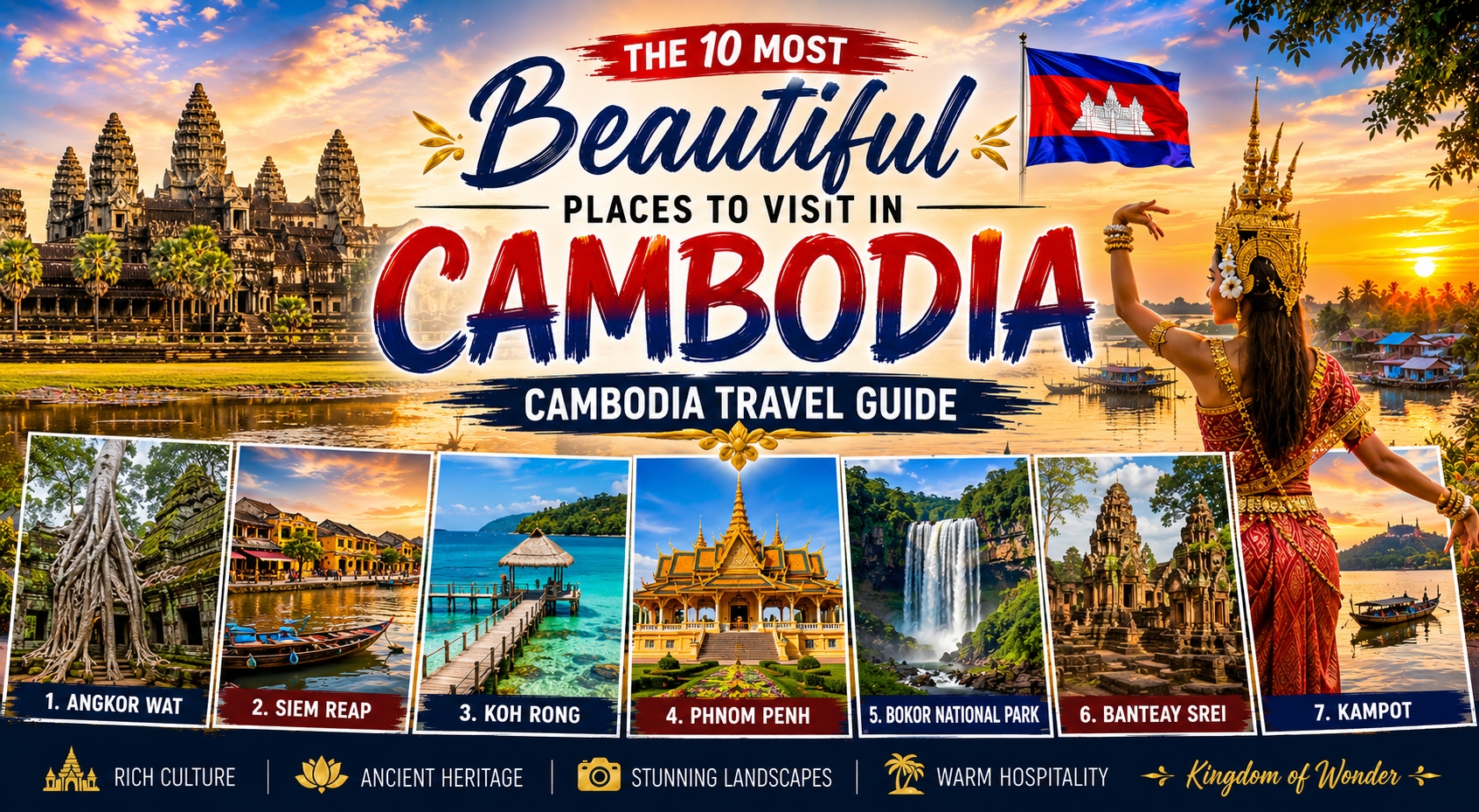
What truly makes Cambodia unforgettable, however, is the warmth and resilience of its people. After enduring a challenging history in the late 20th century, the Khmer people greet the world with genuine, open-hearted smiles that will make you feel welcome from the moment you arrive.
Whether you are an adventure seeker, a history buff, or someone looking to unwind on a secluded beach, this guide will take you through the ten most beautiful places to visit in Cambodia. But before you finalize your packing list, make sure to secure your official Cambodia tourist eVisa online so you can enjoy a completely stress-free arrival.
1. Angkor Archaeological Park (Siem Reap)
Why is Angkor Wat considered the ultimate wonder of Cambodia?
Angkor Wat is not just a temple; it is the largest religious monument in the entire world and the proud symbol of Cambodia’s national identity. Located just outside the vibrant city of Siem Reap, this massive 400-square-kilometer archaeological park was once the powerhouse of the ancient Khmer Empire.
Watching the sunrise over the three lotus-like towers of Angkor Wat is a bucket-list experience that lives up to every bit of its global fame. But your exploration shouldn't stop there.
The Bayon Temple: Located in the heart of Angkor Thom, this temple is famous for its 216 giant, smiling stone faces that look down on you from every angle.
Ta Prohm (The "Tomb Raider" Temple): Left largely as it was found, this atmospheric ruin is famously strangled by the massive, snake-like roots of silk-cotton and strangler fig trees.
Travel Tip: To avoid running out of energy in the tropical heat, buy a 3-day temple pass. It allows you to explore the ruins at a relaxed pace over several days instead of rushing through them in one exhausting afternoon.
2. The Islands of Koh Rong and Koh Rong Sanloem
Which Cambodian island offers the ultimate tropical beach escape?
If you think you have to go to Thailand or the Philippines to find pristine, white-sand beaches with turquoise waters, think again. The islands of Koh Rong and Koh Rong Sanloem, located off the coast of Sihanoukville, are Cambodia’s tropical paradises.
Koh Rong: Known for its lively atmosphere, beautiful stretches of sand like Long Beach, and vibrant beach bars. It’s perfect for travelers who want to sunbathe by day and socialize by night.
Koh Rong Sanloem: The smaller, quieter sibling of Koh Rong. Head to Saracen Bay for calm, shallow waters and a sleepy, bohemian vibe where the loudest sound you will hear is the gentle lapping of the waves.
At night, both islands offer a magical surprise: if you take a boat out into the dark waters or find a pitch-black stretch of beach, you can swim with glowing bioluminescent plankton that sparkles like stars around your body.
3. Phnom Penh
Is Phnom Penh worth visiting for history and culture lovers?
Cambodia's capital, Phnom Penh, is a city where past and present collide in the most fascinating way. Located at the confluence of three rivers—the Mekong, the Bassac, and the Tonle Sap—it features a mix of French-colonial buildings, traditional Khmer architecture, and a rapidly modernizing skyline filled with trendy rooftop bars and cafes.
To truly understand Cambodia, you must visit Phnom Penh's historical sites:
The Royal Palace and Silver Pagoda: Admire the glittering gold roofs and the floor of the Silver Pagoda, which is tiled with over 5,000 solid silver blocks.
Tuol Sleng Genocide Museum (S-21) and the Choeung Ek Killing Fields: These places provide a sobering but highly necessary look into the tragic Khmer Rouge era. It is a deeply emotional experience that highlights the incredible resilience of the Cambodian people.
After a day of sightseeing, wind down by taking a sunset cruise along the Mekong River or strolling along the lively Sisowath Quay boardwalk.
4. Kampot
What makes Kampot the perfect riverside town to unwind?
Located in southern Cambodia, Kampot is a quiet, peaceful town built along the banks of the Praek Tuek Chhou River. Surrounded by misty green hills and historic French-colonial buildings, it is the ultimate place to slow down, rent a bicycle, and read a book in a cozy cafe.
Kampot is globally famous for one major thing: Kampot Pepper. Regarded by top chefs as some of the finest pepper in the world, you can tour local organic pepper farms to see how it is grown and taste its unique, floral spice.
Other incredible things to do in Kampot include:
Kayaking the "Green Cathedral": A peaceful loop of narrow, tree-canopied waterways just off the main river.
Exploring Bokor National Park: Drive up the winding mountain roads to visit a ghost town featuring an abandoned French Catholic church and a historic casino, often shrouded in a spooky, cool mountain fog.
5. Battambang
Where can you experience authentic countryside and a ride on the famous bamboo train?
Battambang is Cambodia's second-most populous city, yet it feels like a friendly, artistic village. Located in the northwest, it is celebrated for having some of the best-preserved French-colonial architecture in the country and a thriving local art scene.
The most famous attraction here is the Norry (commonly known as the Bamboo Train). It is a basic wooden platform powered by a small tractor engine that runs on old, warped railway tracks left behind by the French. Riding this open-air platform through the lush green countryside at 40 km/h is an absolute thrill!
Just outside the town lies Phnom Sampeau, a mountain with a dark past but a beautiful present. Every evening at sunset, millions of bats fly out of a massive cave in a continuous, mesmerizing ribbon across the sky for over 30 minutes, drawing crowds of amazed onlookers.
6. The Cardamom Mountains & Tatai River
How can you explore Southeast Asia’s last pristine rainforests in Cambodia?
For true nature lovers and eco-tourists, the Cardamom Mountains represent one of the last wild, untouched frontiers in Southeast Asia. This vast forest is home to endangered wildlife, spectacular waterfalls, and deep jungle valleys.
The best way to experience this region is by heading to the Tatai River. Here, you can stay in eco-lodges floating directly on the water, surrounded by dense jungle-clad hills.
What to do: Wake up to the sounds of wild gibbons singing in the trees, kayak down quiet jungle tributaries, swim in the refreshing waters of the Tatai Waterfall, and take night boat trips to spot fireflies lighting up the riverbanks.
7. Kratie
Where is the best place to spot rare Irrawaddy river dolphins?
If you travel north along the Mekong River toward Laos, you will reach the peaceful town of Kratie. This sleepy riverside outpost is famous for being one of the few places left in the world where you can see the rare, critically endangered Irrawaddy dolphins.
These unique freshwater dolphins have rounded heads and short beaks, looking wonderfully distinct from ocean dolphins.
The Experience: You can hire a local wooden longtail boat from Kampi deep-water pool, located just north of Kratie. As the boatman gently row-paddles through the quiet waters, you can watch these gentle creatures rise up to breathe against the backdrop of a spectacular Mekong sunset.
8. Kep
Where can you find the freshest seafood and quiet coastal charm?
Just a short drive from Kampot lies Kep, a quiet seaside town that was once a glamorous holiday retreat for French elites and wealthy Cambodians in the 1960s. Today, it is a sleepy, romantic destination characterized by overgrown modernist villas, a golden beach, and spectacular sunsets over the Gulf of Thailand.
The undisputed highlight of Kep is the Crab Market. Here, local women wade out into the shallow ocean water to pull up wooden traps filled with fresh blue crabs. You can buy them directly on the dock and take them to one of the rustic wooden restaurants next door, where they will cook them for you on the spot with fresh green Kampot peppercorns. It is widely considered one of the best culinary experiences in Southeast Asia!
9. Mondulkiri
What is Cambodia’s best-kept secret for elephant encounters and mountain treks?
Located in the wild, hilly northeast of Cambodia, Mondulkiri is a complete contrast to the hot, flat plains of the rest of the country. With its rolling hills, pine forests, cool climate, and thundering waterfalls like Bou Sra, it feels like an entirely different world.
Mondulkiri is also home to the Elephant Valley Project, a highly respected sanctuary where rescued elephants are allowed to live freely in their natural forest habitat.
The Philosophy: Unlike commercial tourism spots, you cannot ride or bathe the elephants here. Instead, you hike alongside them through the jungle, observing them simply being elephants. It is a deeply ethical, heartwarming experience that supports the local indigenous Bunong community.
10. Tonle Sap Lake
How can you responsibly visit the traditional floating villages of Cambodia?
Tonle Sap is the largest freshwater lake in Southeast Asia and is a unique natural phenomenon. During the wet season, the Mekong River swells so much that it reverses its flow, pushing water back into Tonle Sap and increasing the lake's size by up to five times!
To adapt to this dramatic rise and fall of water, local communities have built extraordinary floating and stilted villages.
Kampong Phluk or Kampong Khleang: Visiting these communities by wooden boat allows you to witness daily life on the water. You will see floating schools, floating clinics, and even floating vegetable gardens. It is a fascinating testament to human adaptability and is a must-visit for cultural travelers.
Frequently Asked Questions (FAQs) About Traveling to Cambodia
When is the absolute best time to plan a trip to Cambodia?
The best time to visit Cambodia is during the dry season, from November to April. During these months, you will enjoy clear blue skies, warm weather, and very little rain, making it perfect for exploring temples and relaxing on the islands. If you prefer to avoid the crowds and don't mind occasional afternoon downpours, the shoulder season of June to September transforms the temples and countryside into a vibrant green.
What should you know about local customs and clothing before visiting temples?
Cambodia is a deeply Buddhist and conservative country. When visiting any religious site, including Angkor Wat, both men and women must dress respectfully. This means wearing clothing that covers your shoulders and knees. It is also customary to remove your shoes before entering temple sanctuaries and local homes.
Planning Your Journey: How to Get Your Cambodia Entry Visa Easily
Before you can set foot in this majestic kingdom to explore its temples and beaches, you need to secure your travel visa. While visas on arrival are available, waiting in long, tiring queues at the airport after an exhausting international flight is the last thing you want to do.
Fortunately, you can skip the hassle at the border entirely when you choose to apply for Cambodia visa online using the official electronic visa portal before you travel.
Why choose us?
Applying for a travel visa can sometimes feel overwhelming, but we are here to make it completely stress-free. Here is why thousands of travelers trust our services:
Reliable Travel Visa Services Our global approach has assisted numerous travelers in obtaining their Visa, ensuring a smooth entry into Cambodia without any administrative hiccups.
Round-the-Clock Assistance We understand that travel planning happens at all hours. Reach out to us 24/7, and our experts will respond within 72 hours to guide you through any questions you might have.
Experienced Visa Consultants Avoid mistakes that could lead to delays or rejections. Receive expert guidance to ensure the acceptance of your application from the very first try.
Efficient Visa Application Process Forget complicated government portals. Apply for your Visa in minutes with our simplified, easy-to-use form.
Ready to start your Cambodian adventure? Use the secure e-Visa Cambodia registration page today, and let our experts handle the paperwork while you prepare your itinerary!



