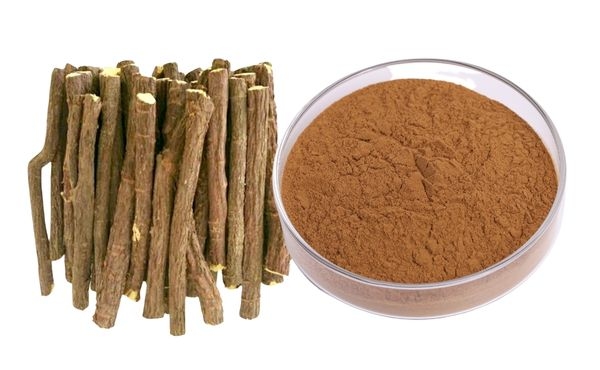
Walk down the supplement aisle or browse the ingredients of a dozen different products—from throat lozenges to skincare serums—and you’ll likely find a common, ancient player: licorice root. More specifically, you’ll often find its most sought-after active constituent, glycyrrhizic acid. For brands and formulators around the world, the journey to this sweet-tasting compound frequently begins with a specific and critical relationship: partnering with a Chinese supplier for wholesale licorice extract.
China’s connection to licorice (Glycyrrhiza glabra and Glycyrrhiza uralensis) is not a new trend of modern manufacturing. It’s rooted in a history that spans millennia, with licorice featuring prominently in traditional herbal practices. This deep-rooted history, combined with vast cultivation in regions like Xinjiang, Gansu, and Inner Mongolia, has positioned China as a central figure in the global licorice market. The scale of its agricultural base allows for the consistent, large-volume harvest necessary for wholesale extraction.
So, what exactly are you sourcing? Glycyrrhizic acid is the triterpenoid saponin responsible for licorice root’s characteristically sweet flavor (reportedly 50 times sweeter than sucrose) and many of its noted properties. Suppliers typically offer extracts standardized to a specific percentage of glycyrrhizic acid—common benchmarks are 20%, 40%, 70%, or even higher. This standardization is key. It provides the predictable, measurable potency that product developers require for consistent formulations, whether they’re creating a soothing herbal blend or a targeted cosmetic ingredient.
Engaging with a Chinese supplier for this ingredient means navigating a landscape with distinct advantages and necessary due diligence. On the one hand, the vertical integration found in many established companies is a significant benefit. Many suppliers control the process from cultivated field to extraction facility. This oversight can translate into better control over the initial raw material quality and more stable pricing, especially important for locking in wholesale contracts. Furthermore, the concentration of expertise in this region has led to highly refined extraction and purification technologies, efficiently meeting the demand for high-purity glycyrrhizic acid.
However, this landscape is not uniform. The term “Chinese supplier” encompasses a wide spectrum, from sprawling, GMP-certified factories with robust R&D departments to smaller, less transparent operations. This variability makes a clear-eyed assessment non-negotiable. The core of the partnership must be built on verifiable documentation. Any reputable supplier should readily provide spec sheets, certificates of analysis (CoAs) for each batch, and details on their testing methods for potency and contaminants.
The contaminant discussion is particularly relevant for botanicals. Heavy metals, pesticide residues, and microbial limits are not afterthoughts; they are central to the purchase decision. Insisting on third-party lab test results, not just in-house reports, is a standard and wise practice. It’s the difference between an ingredient that smoothly passes your own QA process and one that becomes a costly logistical problem.
Another practical consideration is the form of the extract. Glycyrrhizic acid is often sold as a brownish-yellow powder, but it can also come as a water-soluble or oil-soluble version, or even as the ammoniated derivative (Dipotassium Glycyrrhizinate) commonly used in cosmetics. Clearly communicating your application—dietary supplement, food flavoring, cosmetic formulation—ensures the supplier can guide you to the most suitable product variant and concentration.
Beyond the technical specs, the nature of wholesale business demands a focus on logistics and compliance. Understand the supplier’s standard MOQ (Minimum Order Quantity), which can range from a few kilograms to several hundred, depending on their focus. Clarify incoterms and their experience with exporting to your region. Are they familiar with the specific regulatory frameworks of your country, be it FDA requirements for dietary ingredients or REACH dossiers for the European market? Their experience in navigating these details is often as valuable as the product itself.
In the end, sourcing wholesale licorice extract from China is about tapping into a well-established supply chain for a timeless ingredient. It’s a practical business decision, one that balances cost-effectiveness with a demand for quality. The process lacks mystery but requires meticulous attention. Success lies not in finding the cheapest option, but in identifying the competent partner—one whose documentation is as solid as their product, whose communication is clear, and whose expertise ensures that the ancient power of licorice reliably makes its way into your modern formulation. It’s a quiet, behind-the-scenes partnership that, when done correctly, forms a very sweet foundation for a finished product.