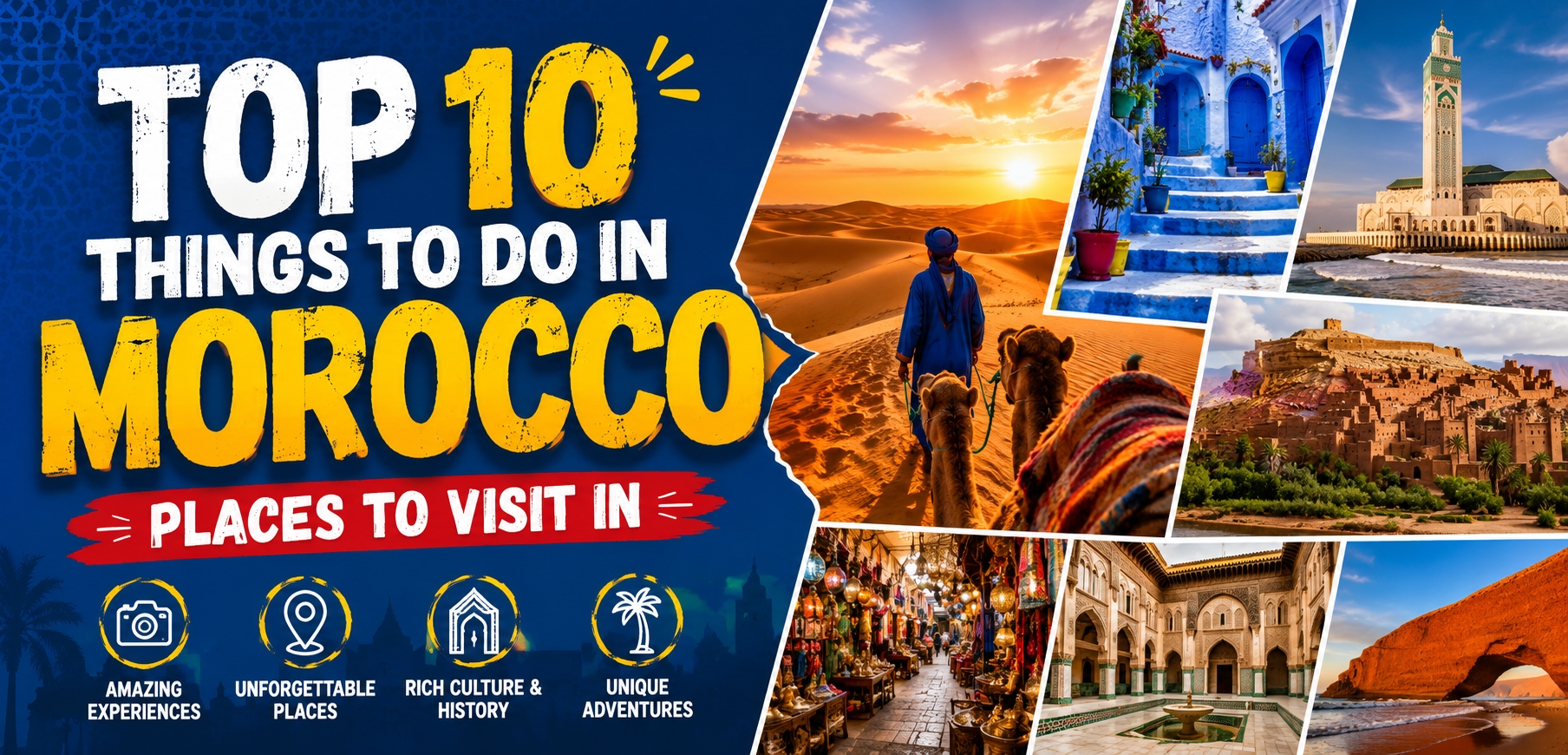
Morocco is a country where centuries-old traditions blend beautifully with vibrant colors, lively markets, and dramatic landscapes. From the golden waves of the Sahara Desert to the striking blue streets of Chefchaouen, this North African gem offers something truly magical for every traveler.
If you are planning an adventure of a lifetime, you might be wondering where to start. With so many historical landmarks, bustling alleys, and scenic mountain ranges, narrowing down your itinerary can feel overwhelming.
In this comprehensive guide, we will walk you through the top 10 things to do in Morocco, explore the most breath-taking places to visit, and answer the most common questions travelers ask before setting off on this exotic journey.
What Are the Absolute Top 10 Things to Do in Morocco?
Before we dive into the specific cities and hidden corners of this beautiful country, here is a quick bucket list of the ultimate experiences you simply cannot miss:
Sleep under the stars in a luxury desert camp in the Sahara.
Wander through the bright blue streets of Chefchaouen.
Get lost in the bustling, ancient souks of Marrakech.
Step back in medieval history by exploring Fez El Bali.
Relax and rejuvenate in a traditional Moroccan Hammam.
Watch the sunset over the historic mud-brick walls of Ait Ben Haddou.
Catch the Atlantic breeze and go surfing in Taghazout or Essaouira.
Trek through the majestic Atlas Mountains and visit authentic Berber villages.
Marvel at the grand architecture of the Hassan II Mosque in Casablanca.
Explore the ancient Roman ruins of Volubilis.
How Do I Experience the Magic of the Sahara Desert in Merzouga?
No trip to Morocco is complete without visiting the legendary Sahara Desert. Merzouga is the main gateway to the breathtaking dunes of Erg Chebbi, which tower up to 150 meters high.
To truly experience the desert, you should book an overnight camel trek. As you ride into the deep, undulating sands, you will watch the sun dip below the horizon, transforming the sky into a canvas of warm oranges and deep purples.
Once night falls, you will arrive at a traditional desert camp. Here, you can enjoy a hearty Moroccan dinner cooked over an open fire, listen to the rhythmic beats of traditional Amazigh (Berber) drums, and sleep under a vast, velvety sky filled with millions of bright stars.
Local Tip: Plan your desert stay around a new moon if possible. Without any light pollution, the Milky Way becomes visible to the naked eye, making it an unforgettable stargazing experience.
Why Is the Blue City of Chefchaouen a Must-Visit?
Tucked into the green folds of the Rif Mountains in northwest Morocco is Chefchaouen, widely known as the "Blue Pearl." Nearly every door, window frame, wall, and staircase in the old medina is painted in vibrant shades of blue.
While historians debate exactly why the city is blue—some say it keeps mosquitoes away, while others believe it was introduced by Jewish refugees fleeing Europe—there is no denying its dreamlike beauty.
Chefchaouen offers a much slower, more relaxed pace of life compared to Morocco's busy imperial cities. Spend your day wandering through its quiet, winding alleys, taking photos, and shopping for unique handmade woolen blankets and woven rugs.
When the afternoon winds down, take a short, 20-minute hike up to the Spanish Mosque. Located on a hill overlooking the town, it is the absolute best spot to sit with a cup of fresh mint tea and watch the sunset cast a golden glow over the blue valley.
What Secrets Wait Inside the Bustling Medinas of Marrakech?
Marrakech is a sensory overload in the best way possible. Known as the "Red City" due to its clay-colored historic walls, it is the heartbeat of Moroccan tourism.
Your adventure begins at Jemaa el-Fnaa, Africa’s most famous public square. By day, you will find orange juice stalls, henna artists, and street performers. As night falls, the square transforms into a massive, open-air food market filled with sizzling grills, smoking food stalls, and circles of local storytellers and musicians.
From the square, dive into the surrounding labyrinth of souks (bazaars). You can find everything here: hand-carved lanterns, colorful leather slippers (babouches), spices, and intricate silver jewelry.
If the hustle and bustle becomes too intense, escape to the Jardin Majorelle. This peaceful botanical garden was lovingly restored by fashion designer Yves Saint Laurent and features striking cobalt blue buildings surrounded by exotic cacti and towering palm trees.
Where Can You Go to Step Back in Time in Ancient Fez?
If Marrakech is the heartbeat of Morocco, Fez is its soul. Founded in the 8th century, Fez El Bali is the oldest medieval medina in the world and a designated UNESCO World Heritage site.
Because the narrow, winding alleys are too tight for modern traffic, Fez El Bali is the world’s largest car-free urban area. You will share the narrow paths with donkeys laden with goods, spice merchants, and local artisans.
While exploring Fez, make sure to visit:
Al Quaraouiyine University: Founded in 859 AD, it is recognized by UNESCO as the oldest continuously operating university in the world.
The Chouara Tannery: This is one of the city's most iconic sights. From surrounding terraces, you can look down at dozens of stone vessels filled with vibrant natural dyes where leather is still processed using traditional medieval techniques.
Medersa Bou Inania: A stunning example of Islamic architecture featuring hand-carved plaster, dark cedarwood, and brilliant mosaic tiles (zellige).
Is the Historic Fortified Village of Ait Ben Haddou Real?
Rising out of the sunbaked desert plains like a massive sandcastle, Ait Ben Haddou is an 11th-century ksar (fortified clay village). Located along the former caravan route between Marrakech and the Sahara, its striking earthen clay buildings are a masterpiece of traditional southern Moroccan architecture.
If the village looks familiar to you, that is because it has served as the backdrop for some of Hollywood's biggest blockbusters. Movies like Gladiator, The Mummy, Lawrence of Arabia, and even hit TV shows like Game of Thrones were filmed right here.
Today, only a handful of families still live inside the ancient structures, but the site is fully preserved. Walking through its narrow, quiet pathways feels like stepping directly onto a movie set. For the best views, climb up to the granary at the very top of the hill during sunrise or sunset, when the clay walls turn a fiery red.
Where Can I Find the Best Coastal Vibes and Surf Spots in Morocco?
If you want to trade the dusty desert heat for a refreshing ocean breeze, Morocco’s Atlantic coast is the place to be.
Essaouira: Known as the "Wind City of Africa," Essaouira is a charming, whitewashed coastal town surrounded by 18th-century stone ramparts. It has a highly artistic, bohemian vibe. You can enjoy freshly caught grilled seafood by the harbor, walk along the historic sea walls, or listen to the soulful rhythms of local Gnawa music.
Taghazout Bay: Located further south near Agadir, Taghazout is Morocco's premier surfing capital. It attracts surfers from all over the world who come to ride famous point breaks like Anchor Point. The town has a laid-back lifestyle centered around surfing, beachfront cafes, and sunset rooftop yoga sessions.
How Can You Hike the Majestic High Atlas Mountains?
The High Atlas Mountains run diagonally across Morocco, offering a dramatic contrast to the desert plains below. This region is the traditional home of the indigenous Amazigh (Berber) people, who have kept their unique language and culture alive for thousands of years.
The small mountain town of Imlil is the main starting point for hikers. From here, you can take gentle day walks through terraced valleys filled with walnut and cherry trees, stopping to drink mint tea with locals in stone-built villages.
For seasoned hikers, scaling Mount Toubkal is the ultimate goal. At 4,167 meters (13,670 feet), it is the highest peak in North Africa. While it is a challenging two-day trek, it is a non-technical climb during the summer months and offers sweeping, panoramic views of the entire Atlas range.
What Is a Moroccan Hammam and How Do I Experience It?
After days of walking through dusty medinas or hiking up mountain trails, visiting a hammam (traditional steam bath) is the absolute best way to relax.
A hammam is a deeply rooted social and wellness ritual in Moroccan culture. The experience generally involves:
Sitting in a warm, steam-filled room to open your pores and sweat out toxins.
Being washed down with savon noir (a therapeutic black olive oil soap).
Being vigorously scrubbed from head to toe with a coarse exfoliating glove (kessa) to remove dead skin.
Finishing with a refreshing rinse and a relaxing massage using locally produced argan oil.
You can choose between a local neighborhood public hammam (which is very cheap and authentic) or a luxury, high-end private spa hammam inside a boutique riad. Whichever you choose, you will walk out feeling incredibly clean and relaxed, with baby-soft skin.
What Iconic Architectural Sights Wait for You in Casablanca and Rabat?
While many travelers head straight to the ancient medinas, Morocco’s modern cities are home to some of the country's most spectacular modern landmarks.
Casablanca: The economic hub of Morocco features the jaw-dropping Hassan II Mosque. Built right on the edge of the Atlantic Ocean, it features a 210-meter minaret—the second tallest in the world. It is one of the few mosques in Morocco open to non-Muslim visitors on guided tours, allowing you to admire its hand-carved wood, detailed stucco, and massive glass floor showing the ocean below.
Rabat: The peaceful capital city of Rabat offers a perfect blend of history and green spaces. Here, you can visit the Hassan Tower (the minaret of an ambitious, unfinished 12th-century mosque) and the nearby Mausoleum of Mohammed V, which is guarded by royal horsemen and features incredible traditional marble craftwork.
What Roman Ruins Can You Explore in the Middle of Morocco?
Did you know that the Roman Empire once stretched all the way to North Africa? Located just a short drive from the imperial city of Meknes lies Volubilis, an ancient Roman city dating back to the 3rd century BC.
Once a thriving outpost that produced grain and olive oil for Rome, Volubilis is now one of Morocco’s most well-preserved archaeological sites. As you walk along the ruined streets, you can still see grand triumphal arches, tall columns, ancient oil presses, and incredibly detailed floor mosaics depicting scenes from Roman mythology.
Walking among these ancient ruins surrounded by rolling green hills and olive groves is a peaceful, fascinating break from the busy metropolitan cities.
Do I Need a Visa to Visit Morocco, and How Can I Apply?
As you plan your dream trip to Morocco, one of the most important things to arrange is your travel authorization. Depending on your nationality, you may need to apply for a visa before you can enter the country.
Morocco has simplified its travel requirements for many global citizens by offering an electronic visa (e-Visa). This eliminates the need to visit an embassy or mail your physical passport away. You can apply easily from the comfort of your home and receive your approved travel document via email.
To understand the specific entry rules, required documents, and processing times for your passport, you can read more by visiting the Morocco Visa Policy Guide.
Why Choose Us for Your Moroccan Visa Application?
Securing travel documents can often feel stressful and confusing, but it doesn't have to be. We are dedicated to making your travel preparation as seamless as your upcoming vacation.
Here is why thousands of travelers trust us with their journey:
Reliable Travel Visa Services Our global approach has successfully assisted numerous travelers in obtaining their visas smoothly and without complications.
Round-the-Clock Assistance We believe in being there when you need us. You can reach out to us 24/7, and our dedicated visa experts will respond to your queries within 72 hours.
Experienced Visa Consultants Get step-by-step, expert guidance throughout the application process to ensure your documentation is flawless and to maximize the acceptance of your application.
Efficient Visa Application Process Forget long lines and confusing government portals. With our highly simplified form, you can apply for your Moroccan travel visa in just a few minutes.
Morocco is waiting for you with its warm hospitality, fragrant spices, and endless landscapes. Make sure your travel plans are secured early so you can focus on the exciting parts of your journey!