
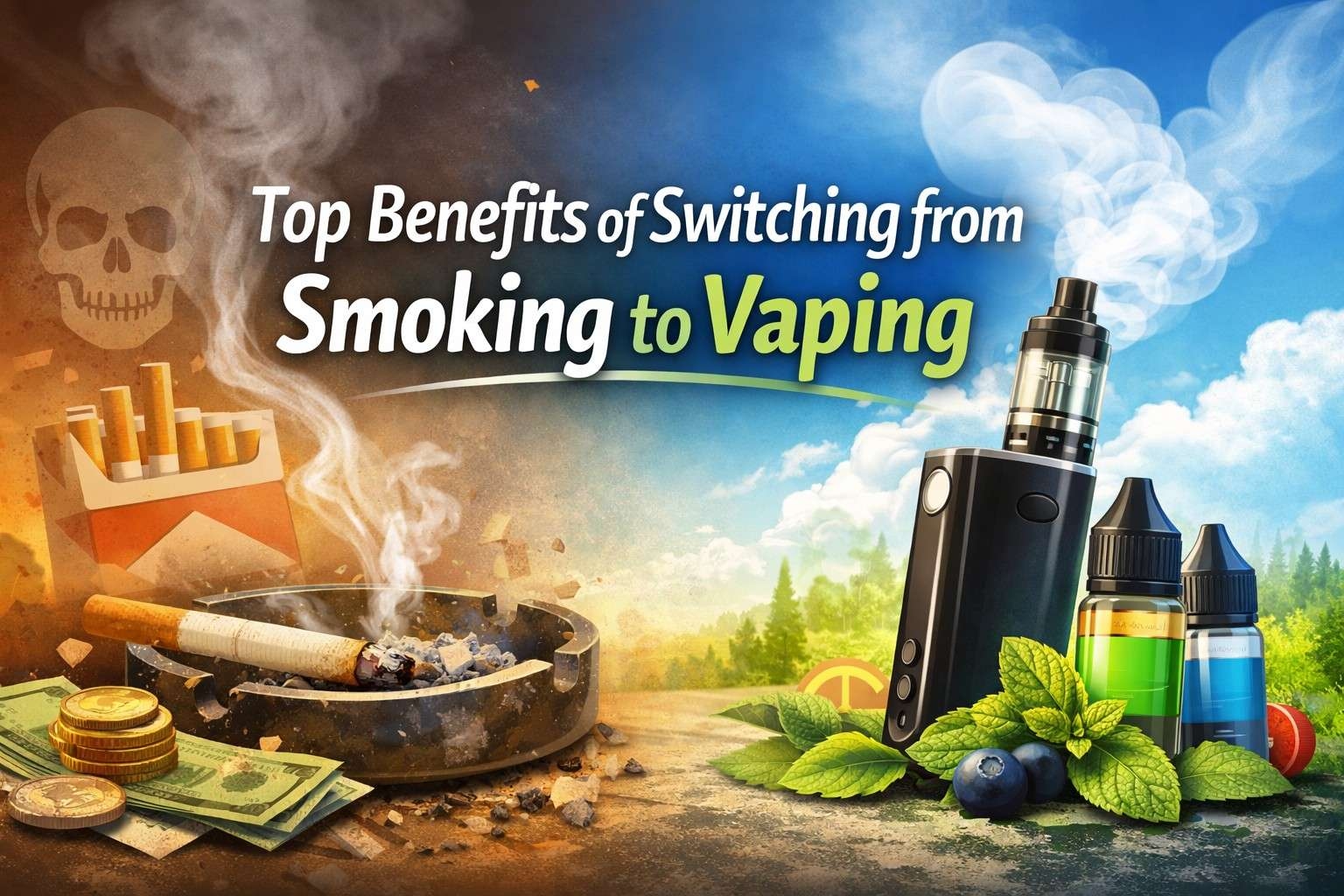
For decades, traditional cigarettes were the primary method for nicotine delivery, despite the well-documented health risks. However, the last decade has seen a monumental shift in consumer behavior. Millions of smokers worldwide are putting down the lighter and picking up a vape device. This transition is largely driven by a desire for harm reduction, cost-efficiency, and a more socially acceptable lifestyle.
While it is crucial to state that vaping is not completely risk-free, major public health organizations—including Public Health England—have noted that vaping is significantly less harmful than combustible tobacco. In this guide, we explore the top benefits of switching from smoking to vaping and why this alternative is reshaping the journey toward a smoke-free life.
Reduced Exposure to Harmful Chemicals
The most significant difference between smoking and vaping lies in combustion. When you light a cigarette, the tobacco burns at high temperatures, creating smoke that contains over 7,000 chemicals. At least 69 of these are known carcinogens, including lead, arsenic, and formaldehyde. Furthermore, smoking produces tar and carbon monoxide, which are devastating to the lungs and cardiovascular system.
Vaping, on the other hand, involves heating an e-liquid to create an aerosol (vapor) rather than smoke. Because there is no fire and no tobacco leaf being burned, the vast majority of those thousands of toxic chemicals are absent. While vapor is not "pure air," switching to vaping drastically reduces the "toxic load" on your body, making it a powerful tool for reducing smoking harm.
Better Control Over Nicotine Intake
One of the primary reasons smokers struggle to quit is the rigid nicotine delivery of cigarettes. A standard cigarette provides a set amount of nicotine, leaving the user with an "all or nothing" choice.
Vaping offers a granular level of control that traditional cigarettes cannot match. E-liquids come in various strengths, typically ranging from 50mg (high) down to 3mg (low).
The Transition: Heavy smokers can start with higher nicotine levels to manage cravings effectively.
The Reduction: Over time, users can gradually step down to lower concentrations.
The Goal: Many vapers eventually move to nicotine-free (0mg) options, allowing them to satisfy the hand-to-mouth habit without the addictive substance.
Cost Savings: Vaping vs. Smoking
The financial burden of smoking has reached an all-time high, with cigarette taxes continuing to rise globally. For many, the switch to vaping is a purely economic decision.
While the initial "buy-in" for a quality vape kit might seem higher than a pack of cigarettes, the long-term maintenance is significantly cheaper.
Smoking: A pack-a-day smoker can spend thousands of dollars/pounds annually.
Vaping: After the initial device purchase, the only recurring costs are e-liquids and replacement coils. On average, users who switch find that they spend 50% to 70% less on their vaping habit compared to their previous smoking habit. Over a year, these savings can equate to a major vacation or a significant boost to a savings account.
Reduced Smell and Social Convenience
The "smoker's scent" is notoriously difficult to hide. It clings to hair, skin, clothing, and upholstery. For many smokers, this creates social anxiety or a sense of isolation in non-smoking environments.
Vaping eliminates the "ashtray" smell. The vapor produced usually has a pleasant, fruity, or minty aroma that dissipates in seconds. It does not stain walls yellow or leave a lingering stench in your car. This makes the transition a lifestyle improvement, allowing for more confidence in social settings, cleaner-smelling breath, and a more welcoming home environment for guests.
Fewer Secondhand Smoke Risks
Secondhand smoke is a major health concern for families, particularly those with children or elderly members. Combustible smoke contains "sidestream" smoke, which is high in toxins and lingers in the air for long periods.
Scientific reviews have indicated that the risks of secondhand vapor are a fraction of those associated with secondhand smoke. While it is still a matter of common courtesy not to vape in confined spaces with others, the aerosol produced by e-cigarettes does not contain the carbon monoxide or tar that makes secondhand cigarette smoke so dangerous. This makes vaping a responsible alternative for those living in shared households.
Variety of Flavors and Options
One of the most effective aspects of vaping as a cessation tool is its ability to distance the user from the taste of tobacco. Traditional cigarettes offer very little variety—usually just tobacco or menthol.
The vaping industry offers thousands of flavors, ranging from:
Desserts: Vanilla custard, glazed donuts.
Fruits: Mango, strawberry, watermelon.
Beverages: Coffee, lemonade, soda. By finding a flavor they actually enjoy, many smokers find the taste of traditional cigarettes becomes repulsive. This "flavor factor" is a key reason why many people who switch to vaping never go back to tobacco.
Potential Improvement in Lifestyle and Well-being
While individual results vary, many who make the switch report noticeable physical changes within weeks. Without the constant intake of tar and carbon monoxide, the body begins to heal:
Improved Breathing: Users often report less coughing and "smoker’s phlegm."
Enhanced Senses: The sense of taste and smell, often dulled by tobacco, frequently returns with newfound vibrance.
Increased Energy: Better oxygen circulation can lead to improved physical stamina and less breathlessness during exercise.
Supports Smoking Reduction or Quitting
Vaping is widely recognized as one of the most effective alternatives to traditional cigarettes for those looking to quit. Unlike nicotine patches or gum, vaping addresses the behavioral and sensory aspects of smoking—the hand-to-mouth action, the "throat hit," and the social ritual. This holistic approach helps bridge the gap between being a "smoker" and being "smoke-free," allowing for a gentler transition that reduces the likelihood of a relapse.
Environmental Benefits
The environmental impact of smoking is staggering. Billions of cigarette butts—which are made of non-biodegradable cellulose acetate—are littered annually, leaching chemicals into the soil and waterways. Additionally, smoking carries a significant fire risk.
Vaping is a much "cleaner" habit for the planet. Rechargeable devices can last for years, and while the industry is working on better recycling for pods and coils, the lack of litter and the elimination of fire-starting embers make it a more eco-friendly option for the modern consumer.
Conclusion
The top benefits of switching from smoking to vaping encompass health, wealth, and lifestyle. By eliminating combustion, reducing chemical exposure, and providing control over nicotine, vaping offers a viable path for those who have struggled with traditional cessation methods.
However, it is important to remember that the healthiest choice is to breathe clean air. If you are a non-smoker, you should not start vaping. But for current smokers, the evidence suggests that making the switch is a significant step toward a healthier, more affordable, and more socially pleasant future. Always consult with a healthcare professional when embarking on a journey to quit smoking to ensure you have the support you need.
FAQ
1. Is vaping safer than smoking?
Most health organizations, including the NHS, agree that while not risk-free, vaping is substantially less harmful than smoking because it does not involve the combustion of tobacco, which produces tar and carbon monoxide.
2. Can vaping help me quit smoking completely?
Yes, many people have successfully used vaping as a tool to transition away from cigarettes. It allows you to satisfy the nicotine craving while gradually reducing your dosage until you can quit entirely.
3. Is vaping cheaper than smoking?
In almost all scenarios, yes. While the initial device costs more than a pack of cigarettes, the ongoing cost of e-liquid and coils is significantly lower than the daily cost of buying tobacco.
4. Does vaping still contain nicotine?
Most e-liquids contain nicotine, but they are available in various strengths. You can also purchase "Shortfalls" or nicotine-free e-liquids if your goal is to eliminate nicotine while keeping the habit.
5. Is secondhand vaping harmful?
Research suggests that secondhand vapor is far less toxic than cigarette smoke. However, it is still best practice to avoid vaping around children, pregnant women, or those with respiratory issues.
6. Are there risks to vaping?
Yes. Vaping is not harmless. It can lead to nicotine addiction and may have long-term effects on lung health that are still being studied. It is intended only as a harm-reduction tool for existing smokers.
7. What are the main differences between smoking and vaping?
Smoking involves burning tobacco to create smoke, which is inhaled. Vaping involves heating a liquid to create a vapor. Smoking produces tar and carbon monoxide; vaping does not.