
The early stage lichen planus symptoms can begin as small, itchy, reddish-purple bumps that gradually develop into flat, shiny patches. These changes may appear on the wrists, ankles, lower back, or other areas of the body.
Recognizing the first signs can help readers seek an appropriate diagnosis and reduce discomfort. Although some skin conditions look similar, a dermatologist can identify the characteristic features and recommend suitable care.
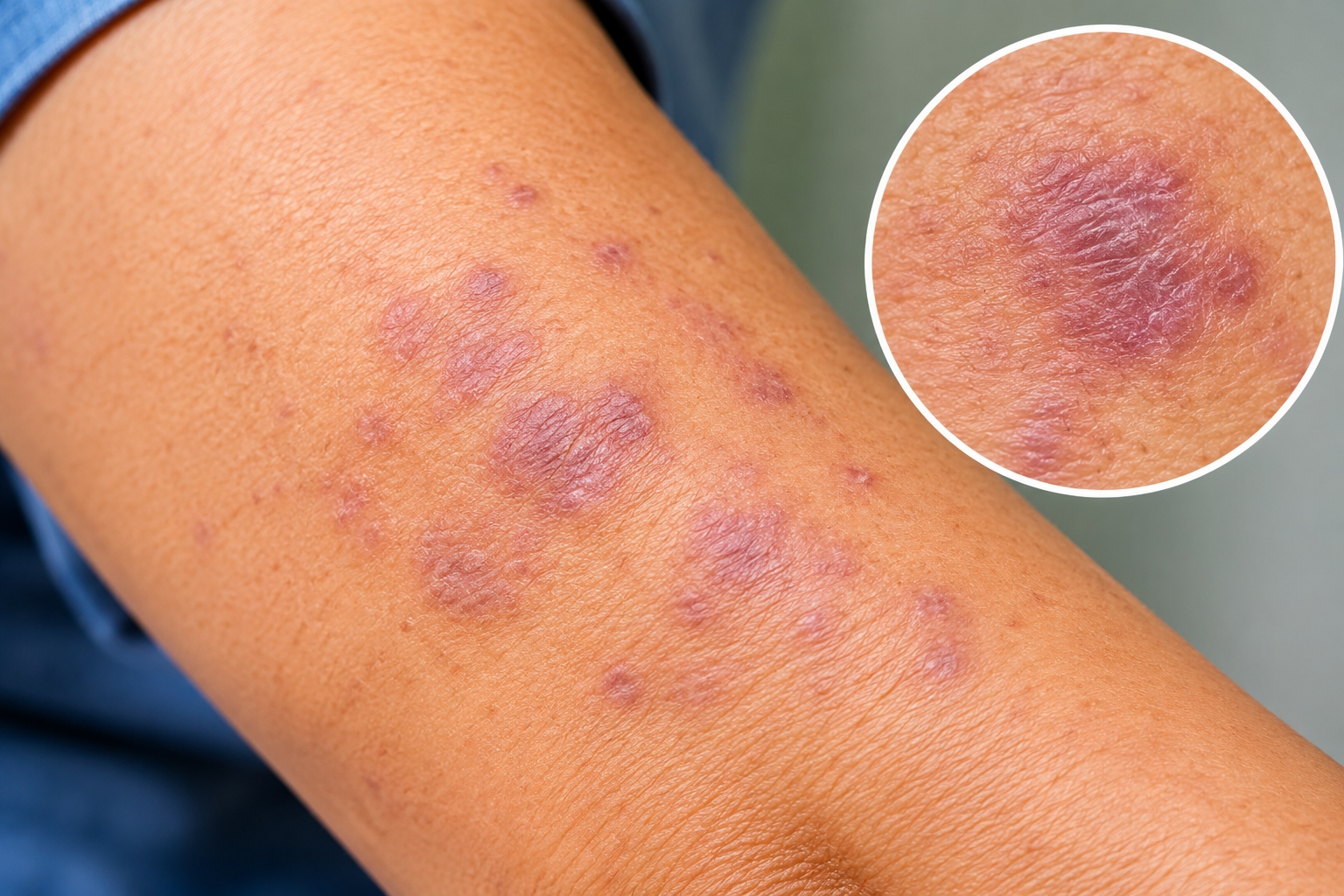
What Are the First Signs of Lichen Planus on the Skin?
The first signs are usually small, flat-topped bumps that may look red, purple, brown, or gray, depending on your skin tone. They can feel itchy and may appear in clusters.
The condition is an inflammatory skin disorder. It is not caused by poor hygiene and is not contagious. It may affect the skin, mouth, scalp, nails, or genital area.
What Are the Early Stage Lichen Planus Symptoms?
The early stage lichen planus symptoms often develop gradually. Some people notice only a few bumps at first, while others develop several patches over a short period.
Common early signs include:
Small, slightly raised bumps
A shiny or smooth surface
Flat tops rather than rounded tops
Itching that may range from mild to intense
Reddish-purple, brown, gray, or darker skin-colored spots
Fine white lines across the surface of some bumps
These bumps are called papules. They may appear separately or form groups that gradually become larger patches.
A typical rash may develop on the inner wrists, ankles, lower legs, or lower back. However, it can occur on other parts of the body as well.
American Academy of Dermatology+1
How Does the Rash Look in the Beginning?
The appearance can vary according to skin tone and the area affected.
1. Small, flat-topped bumps
The earliest visible changes may resemble tiny pimples or insect bites. Unlike many pimples, these bumps often have a flat top and a smooth, shiny appearance.
2. Changes in skin color
On lighter skin, the bumps may look pink, red, or purple. On medium and darker skin tones, they may appear deep brown, gray, violet, or darker than the surrounding skin.
This difference can make the rash harder to recognize without a close examination.
3. Fine white lines
Some bumps develop delicate white lines or a lace-like pattern on their surface. Dermatologists call these lines Wickham striae. They are a helpful clue, although not everyone has them.
4. Itching and irritation
The rash may itch, especially at night. Scratching can irritate the skin and sometimes lead to new bumps in areas that have been injured or scratched.
5. Bumps joining into patches
As the rash develops, individual bumps may merge into larger, thicker areas called plaques. These may become more noticeable on the shins and ankles.
Where Do the First Signs Usually Appear?
The early stage lichen planus symptoms commonly appear in areas where the skin is exposed to friction or minor irritation.
Typical locations include:
Inner wrists
Ankles and lower legs
Lower back
Forearms
Areas where skin folds or rubs together
The rash can also develop in the armpits, groin, or other skin folds. In some cases, it appears in a line after scratching or skin injury. This is known as the Koebner phenomenon.
The location alone cannot confirm the diagnosis. Several other skin conditions can cause itchy bumps in similar areas.
Can Lichen Planus Affect More Than the Skin?
Yes. Although many people first notice a skin rash, the condition can affect other parts of the body.
Mouth
Inside the mouth, it may cause white, lace-like lines on the inner cheeks, gums, or tongue. Some people experience burning, tenderness, or painful sores.
Scalp
Scalp involvement may cause itching, tenderness, burning, or small bumps around hair follicles. In some cases, inflammation can damage hair follicles and lead to permanent hair loss.
Nails
Nail changes may include:
Longitudinal ridges or grooves
Nail thinning
Splitting or roughness
Reduced nail growth
Nail loss in severe cases
Genital skin
Affected genital skin may become itchy, sore, irritated, or painful. Persistent inflammation in this area should be assessed by a healthcare professional because scarring can sometimes occur.
The early stage lichen planus symptoms may be limited to one area, or more than one body site may be affected.
American Academy of Dermatology+1
What Causes This Skin Condition?
The exact cause is not fully understood. Researchers believe it involves an immune-system response that mistakenly targets healthy skin cells, leading to inflammation.
Possible factors associated with the condition include:
Immune-system changes
Certain medications
Viral infections in some individuals
Skin irritation or injury
Genetic susceptibility
Some medicines can cause a rash that resembles this condition, known as a lichenoid drug eruption. If a rash begins after starting a new medicine, tell your doctor. Do not stop prescribed medication without medical advice.
Stress may worsen symptoms for some people, but it is not considered the sole cause.
How Is Lichen Planus Diagnosed?
A dermatologist can often identify the condition by examining the rash and asking about symptoms, medical history, and medications.
The early stage lichen planus symptoms may resemble eczema, psoriasis, insect bites, or other inflammatory skin conditions. If the appearance is unclear, the doctor may recommend a skin biopsy.
A biopsy involves removing a small sample of skin, usually with local anesthetic, so it can be examined under a microscope.
Your doctor may also examine your mouth, scalp, and nails to check for other signs.
What Treatments Help Reduce the Rash and Itching?
Treatment depends on the affected area, severity, and whether the condition is causing discomfort or risking permanent damage.
Prescription treatments
A dermatologist may recommend:
Topical corticosteroids: Reduce inflammation and itching.
Topical calcineurin inhibitors: Such as tacrolimus or pimecrolimus, sometimes used on sensitive areas.
Antihistamines: May help relieve troublesome itching.
Phototherapy: A medical light treatment that may be considered for widespread skin involvement.
Oral medicines: May be prescribed for severe or extensive disease.
The early stage lichen planus symptoms may improve with appropriate treatment, but medicines should be used according to a clinician's instructions. Strong steroid creams can cause skin thinning when used incorrectly or for too long.
Some skin cases improve on their own over time. However, disease affecting the scalp, nails, mouth, or genitals may need closer monitoring.
American Academy of Dermatology+2
Can Natural Approaches Help With Skin Comfort?
A Natural Treatment for Lichen Planus should be understood as supportive care rather than a proven cure. Gentle skin care may help reduce irritation and make itching more manageable, but it does not replace medical assessment or prescribed treatment.
Helpful measures include:
Applying a fragrance-free moisturizer
Taking lukewarm rather than hot showers
Using mild, non-irritating cleansers
Avoiding harsh scrubs and exfoliating acids
Wearing loose, breathable clothing
Keeping fingernails short to reduce scratching
A cool compress wrapped in a clean cloth may provide temporary relief from itching. Avoid placing ice directly on the skin.
If a home remedy causes burning, redness, swelling, or worsening irritation, stop using it.
Are Herbal or Complementary Remedies Safe?
Some people explore Herbal Remedies for Lichen Planus because they prefer natural approaches to skin care. However, there is not enough high-quality clinical evidence to show that herbal preparations can reliably cure this condition or prevent its progression.
Natural ingredients can still cause allergic reactions, irritation, or interactions with medicines. Essential oils, concentrated plant extracts, and homemade mixtures may be particularly irritating when applied to inflamed skin.
Before using herbal preparation, discuss it with a dermatologist or pharmacist, especially if the rash is widespread or affects sensitive areas.
Products marketed by Herbal Care Products or other wellness brands should not be assumed to be medically proven simply because they contain plant-based ingredients. Check the ingredient list, avoid unsupported cure claims, and seek professional advice before using a new topical or oral supplement.
How Can You Manage Symptoms at Home?
Daily skin care can make a difference when the rash is itchy or irritated. The goal is to protect the skin barrier and avoid actions that may trigger additional inflammation.
Simple skin-care habits
Wash gently with lukewarm water.
Pat the skin dry instead of rubbing.
Apply a bland moisturizer after bathing.
Avoid fragranced lotions and harsh soaps.
Choose soft clothing that does not rub affected areas.
Avoid scratching or picking at bumps.
If you notice that a particular product makes the rash worse, discontinue it and discuss the reaction with your healthcare provider.
What should you avoid?
Avoid experimenting with strong home treatments such as undiluted essential oils, lemon juice, vinegar, or abrasive scrubs. These may irritate the skin and make inflammation worse.
Do not use prescription steroid creams on your own without knowing the correct strength, application area, and duration.
How Long Does the Rash Usually Last?
The duration varies from person to person. Skin involvement may improve over several months, but some people experience symptoms for longer.
Even after the active rash clears, dark or light marks may remain. These changes are called post-inflammatory pigmentation. They are more noticeable in some skin tones and may take months or longer to fade.
The early stage lichen planus symptoms do not always predict how long the condition will last. A mild rash may settle without extensive treatment, while persistent or severe inflammation may require medical care.
When Should You See a Dermatologist?
Arrange a medical appointment if you develop a persistent itchy rash, unexplained purple or brown bumps, or skin changes that keep returning.
Seek prompt assessment if you notice:
Painful or persistent sores inside the mouth
Difficulty eating or swallowing
New patches of hair loss
Nail damage or nail loss
Painful or inflamed genital skin
A rapidly worsening or widespread rash
Early assessment is particularly important when the scalp or nails are involved because prolonged inflammation can sometimes cause permanent damage.
Frequently Asked Questions
What are the earliest signs of lichen planus?
The earliest signs are often small, shiny, flat-topped bumps that may be itchy and reddish-purple, brown, or gray. They commonly appear on the wrists, ankles, or lower back.
Are early stage lichen planus symptoms always itchy?
No. Itching is common, but some people have little or no itch. The rash may still be present even when it does not cause discomfort.
Is the condition contagious?
No. It is an inflammatory condition and cannot be spread through touching, sharing clothing, or being close to another person.
Can the rash disappear without treatment?
Yes. Some cases affecting the skin improve naturally over time. However, treatment may be needed to control itching, reduce inflammation, or protect areas at risk of scarring.
Can it leave dark spots?
Yes. After the inflammation settles, the affected skin may remain darker or lighter than the surrounding area. These marks often fade gradually, although the process can take a long time.
What should I do if I think I have it?
If you notice early stage lichen planus symptoms, arrange an appointment with a dermatologist or healthcare professional. Avoid scratching and harsh skin products while waiting for assessment.
Conclusion
Recognizing the early stage lichen planus symptoms can help you understand unusual skin changes and seek appropriate care before irritation becomes severe.
The condition often begins with small, shiny, flat-topped bumps that may itch and gradually form larger patches. Although some cases improve naturally, medical evaluation is important to confirm the diagnosis and rule out other skin disorders.
If you notice persistent bumps, unexplained discoloration, or changes involving your scalp, nails, mouth, or genital skin, consult a dermatologist. With the right care, many people can manage discomfort and reduce the risk of complications.
Medical Disclaimer
This article is for educational and informational purposes only. It is not a substitute for professional medical advice, diagnosis, or treatment. Skin symptoms can have several causes, and only a qualified healthcare professional can determine the correct diagnosis. Always consult your doctor before starting, stopping, or changing any medication or treatment.


