
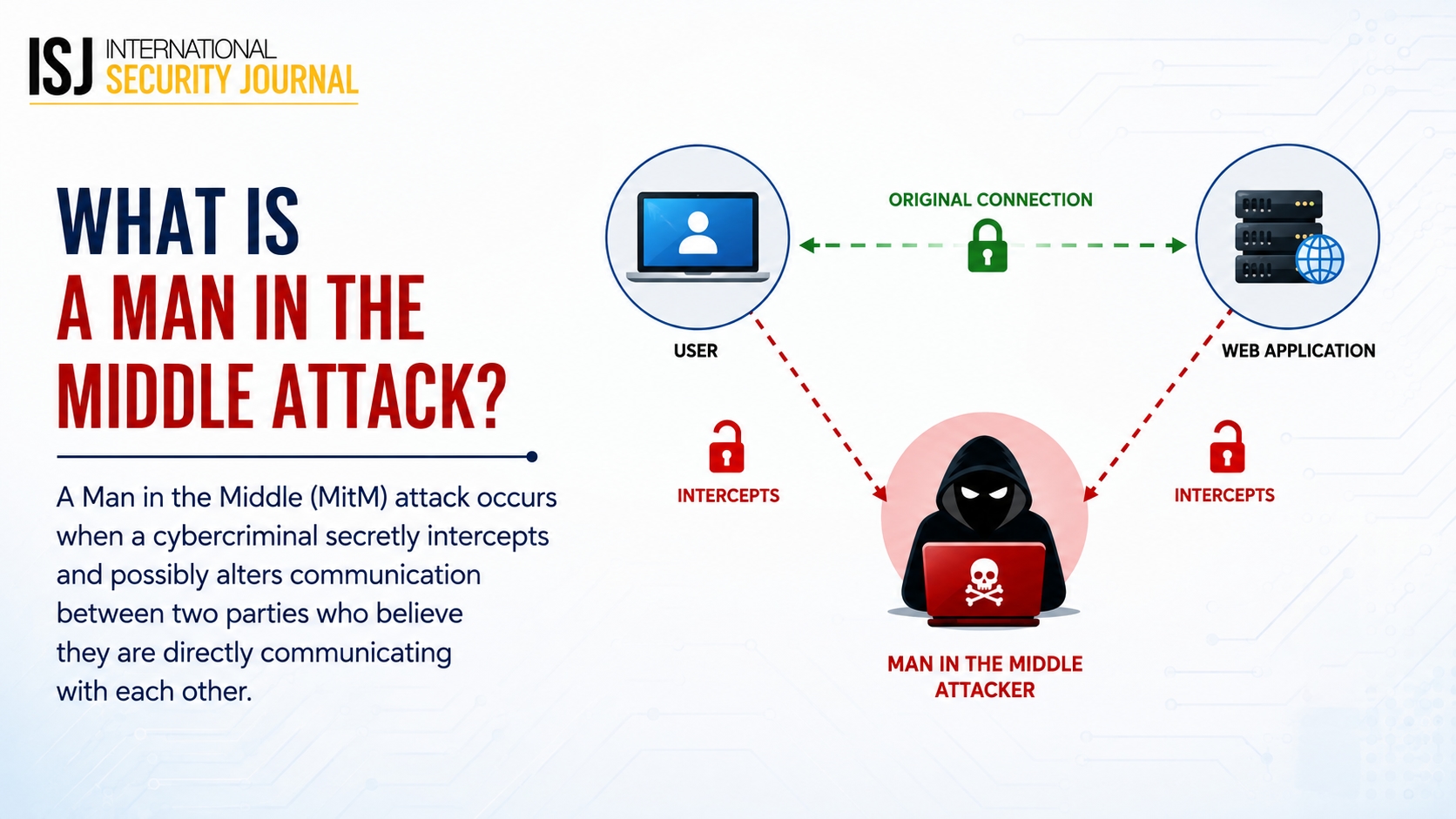
Digital communication has made it easier than ever to share information, access online services, and connect with people around the world. However, this convenience also creates opportunities for cybercriminals to intercept sensitive communications. What is a man in the middle attack and how does it allow attackers to secretly interfere with online interactions? A man-in-the-middle attack occurs when a cybercriminal positions themselves between two communicating parties to intercept, monitor, or manipulate the information being exchanged. Understanding how these attacks work, the risks they create, and the security measures that can prevent them is essential for protecting personal and business data.
What Is a Man-in-the-Middle Attack?
A man-in-the-middle attack occurs when a cybercriminal secretly intercepts communication between two parties. These parties could be a user and a website, two employees, or an application and a server.
Instead of information traveling directly between the intended parties, the attacker places themselves in the communication path. This can allow them to observe sensitive information such as login credentials, financial details, emails, or other confidential data.
Depending on the attack, the criminal may simply monitor communications or actively manipulate the information being exchanged.
How Does a Man-in-the-Middle Attack Work?
A typical MITM attack involves several stages. First, the attacker identifies an opportunity to intercept communication. This could involve an unsecured Wi-Fi network, compromised infrastructure, malicious software, or another weakness.
Once positioned between the communicating parties, the attacker attempts to remain unnoticed while information passes through their system.
For example, an employee may connect to what appears to be a legitimate wireless network. If that network has been created or compromised by an attacker, the criminal may be able to monitor network traffic and attempt to capture sensitive information.
More sophisticated attacks can involve manipulating communications so that users unknowingly interact with malicious content or fraudulent services.
Common Types of Man-in-the-Middle Attacks
MITM attacks can take different forms depending on the technology and security weakness being exploited.
Wi-Fi Eavesdropping
Attackers may create malicious wireless networks that resemble legitimate public or business networks. Users who connect to these networks may unknowingly expose their communications to interception.
This is particularly concerning in locations such as airports, hotels, cafes, and other public spaces where people frequently use unfamiliar Wi-Fi connections.
Session Hijacking
In session hijacking, an attacker attempts to take control of an authenticated user session. If successful, the attacker may be able to access a service as though they were the legitimate user.
Strong authentication and secure session management can help reduce this risk.
Email Interception
Attackers may compromise email accounts or communication channels to monitor conversations and manipulate messages. In business environments, this can contribute to financial fraud, unauthorized payments, or the disclosure of confidential information.
DNS Spoofing
DNS spoofing involves manipulating the process that translates domain names into IP addresses. An attacker may attempt to redirect a user from a legitimate website to a malicious one.
If the fraudulent website looks convincing, users may unknowingly provide credentials or other sensitive information.
HTTPS Spoofing
Attackers can also attempt to trick users into interacting with fraudulent websites that imitate legitimate services. Users should carefully check website addresses and browser security indicators before entering sensitive information.
What Information Can Attackers Steal?
The information targeted during a MITM attack depends on the attacker's objectives and the protections surrounding the communication.
Potentially targeted information can include:
Usernames and passwords
Banking and payment information
Authentication tokens
Email conversations
Personal information
Business documents
Customer information
Internal communications
Confidential corporate data
In some cases, attackers may also manipulate information rather than simply stealing it. This makes MITM attacks particularly dangerous for organizations that depend on accurate digital communications.
Why Are Man-in-the-Middle Attacks Dangerous?
The biggest concern with MITM attacks is that they can occur without the victim immediately realizing that communication has been compromised.
An attacker who successfully intercepts traffic may collect valuable information over time. If the attacker can also modify communications, the consequences can become more serious.
For businesses, this could result in financial losses, compromised accounts, data exposure, operational disruption, or reputational damage. A successful attack could also provide attackers with information that enables additional attacks against employees, customers, or business systems.
How Can You Prevent Man-in-the-Middle Attacks?
Organizations and individuals can take several steps to reduce the likelihood and impact of MITM attacks.
Use Encrypted Connections
Encryption helps protect information while it is being transmitted. Websites and applications should use secure communication protocols, while users should avoid entering sensitive information through unsecured connections.
Avoid Untrusted Wi-Fi Networks
Public wireless networks can create additional security risks. When using public Wi-Fi, users should avoid accessing highly sensitive services where possible and use appropriate security protections.
Use Multi-Factor Authentication
Multi-factor authentication adds another layer of protection beyond a password. Even if login credentials are compromised, an additional authentication factor can make unauthorized access more difficult.
Keep Software Updated
Operating systems, browsers, applications, routers, and security tools should be regularly updated. Security updates frequently address vulnerabilities that attackers could otherwise exploit.
Verify Website Addresses
Users should carefully check website addresses before entering passwords, payment information, or other sensitive data. Look for suspicious domain names, unexpected redirects, or other signs that a website may not be legitimate.
Use Strong Network Security
Organizations should secure their networks with appropriate firewalls, encryption, access controls, monitoring, and segmentation. Security teams should also monitor unusual network activity that could indicate an attempted interception.
Train Employees
Employee awareness is an important part of cybersecurity. Staff should understand the risks associated with suspicious links, unfamiliar networks, unusual login requests, and unexpected communications.
Regular cybersecurity training can help employees recognize potential threats before they result in a security incident.
How Can Organizations Detect MITM Attacks?
Detection can be challenging because attackers often attempt to remain hidden. However, organizations can monitor network activity and authentication behavior for unusual patterns.
Potential warning signs may include unexpected certificate warnings, unusual network traffic, unexplained connection changes, repeated authentication failures, suspicious redirects, or abnormal account activity.
Security monitoring tools can help organizations identify unusual behavior and investigate potential compromises.
Man-in-the-Middle Attacks vs. Other Cyberattacks
MITM attacks differ from many other cyber threats because the attacker attempts to intercept communication between legitimate parties.
For example, phishing typically relies on deceptive messages or websites to persuade victims to reveal information. Malware involves malicious software being introduced into a system. A MITM attack, by contrast, focuses on intercepting or manipulating communication between systems or users.
However, these attack methods can overlap. An attacker might use phishing to obtain credentials and then use those credentials as part of a broader attack.
Conclusion
A man-in-the-middle attack can allow cybercriminals to secretly intercept or manipulate digital communications, potentially exposing sensitive information and creating serious security risks. Strong encryption, multi-factor authentication, secure networks, software updates, employee awareness, and continuous monitoring can all help reduce the threat.
As organizations expand their digital infrastructure, understanding communication-based threats is increasingly important. For further cybersecurity insights, threat awareness, and security industry developments, visit International Security Journal.




