A child does not need a passport to learn about distant places. Sometimes, a good book is enough to introduce a young reader to unfamiliar countries, fascinating animals, different languages, local traditions, and famous landmarks.
Travel books for children combine storytelling with learning in a way that can make geography and cultural education easier to understand. A story set in another country can give children reasons to ask questions, look at maps, learn new words, and find out how other families live.
Reading about places far from home can also help children develop a broader view of the people and places around them.
Stories Make Geography Easier to Understand
Geography can sometimes feel like a long list of country names, capitals, borders, oceans, and continents. Children's travel stories give those facts a setting.
When a character visits a particular location, young readers can connect the place with events in the story. A mountain can become part of an adventure. A city can become the home of a new character. An unfamiliar country can become a place a child wants to locate on a map.
Resources for children's geography and travel reading often recommend combining books with maps, activities, and other resources. These activities can help children develop vocabulary, background knowledge, comprehension, and an understanding of locations. (Start with a Book)
A simple question such as “Where is this country?” can lead to a surprisingly useful learning session.
Children's Books Can Introduce Different Cultures
Books can give children an early introduction to the customs and daily lives of people in different parts of the world.
A story may mention a traditional meal, a local festival, a different language, a particular type of clothing, or a family custom. Such details give parents and teachers opportunities to discuss similarities and differences between communities.
For children, these conversations can be particularly useful because they connect unfamiliar information with characters and situations they already understand.
Parents can ask:
What did the characters eat?
How was their daily life different?
What did you find interesting about the place?
What would you like to see if you visited?
What questions would you ask someone who lives there?
These questions can turn reading time into an educational discussion.
Travel Stories Encourage Children to Ask Questions
Curiosity often starts with a simple question.
Where is that place?
What language do people speak there?
What animals live there?
What does the landscape look like?
What do children do for fun?
Travel-themed children's books can give young readers plenty of reasons to ask questions like these.
PBS KIDS recommends travel-related reading and activities as ways for children to learn about places, maps, cultures, and different forms of travel. Activities such as reading maps, making packing lists, and keeping travel journals can add an interactive element to reading. (PBS KIDS)
A child who becomes curious about one location may soon want to learn about another. That natural interest can lead to books, maps, documentaries, drawings, and family discussions.
Maps Add Another Layer to Reading
A world map can make a children's travel book even more engaging.
After reading about a location, parents can help children find it on a globe or map. They can trace where a character traveled, identify nearby countries, locate oceans, and compare distances between places.
Map activities also help children develop spatial awareness. PBS KIDS notes that reading and drawing maps can help children understand where places are located in relation to one another. (PBS KIDS)
Parents do not need complicated materials. A basic world map and a pencil can be enough.
Children can mark places mentioned in a story and then choose a location they would like to learn about next.
Animal Characters Make Travel Stories Appealing
Animals have a special place in children's literature. Young readers often connect easily with animal characters, making them useful guides for stories about unfamiliar places.
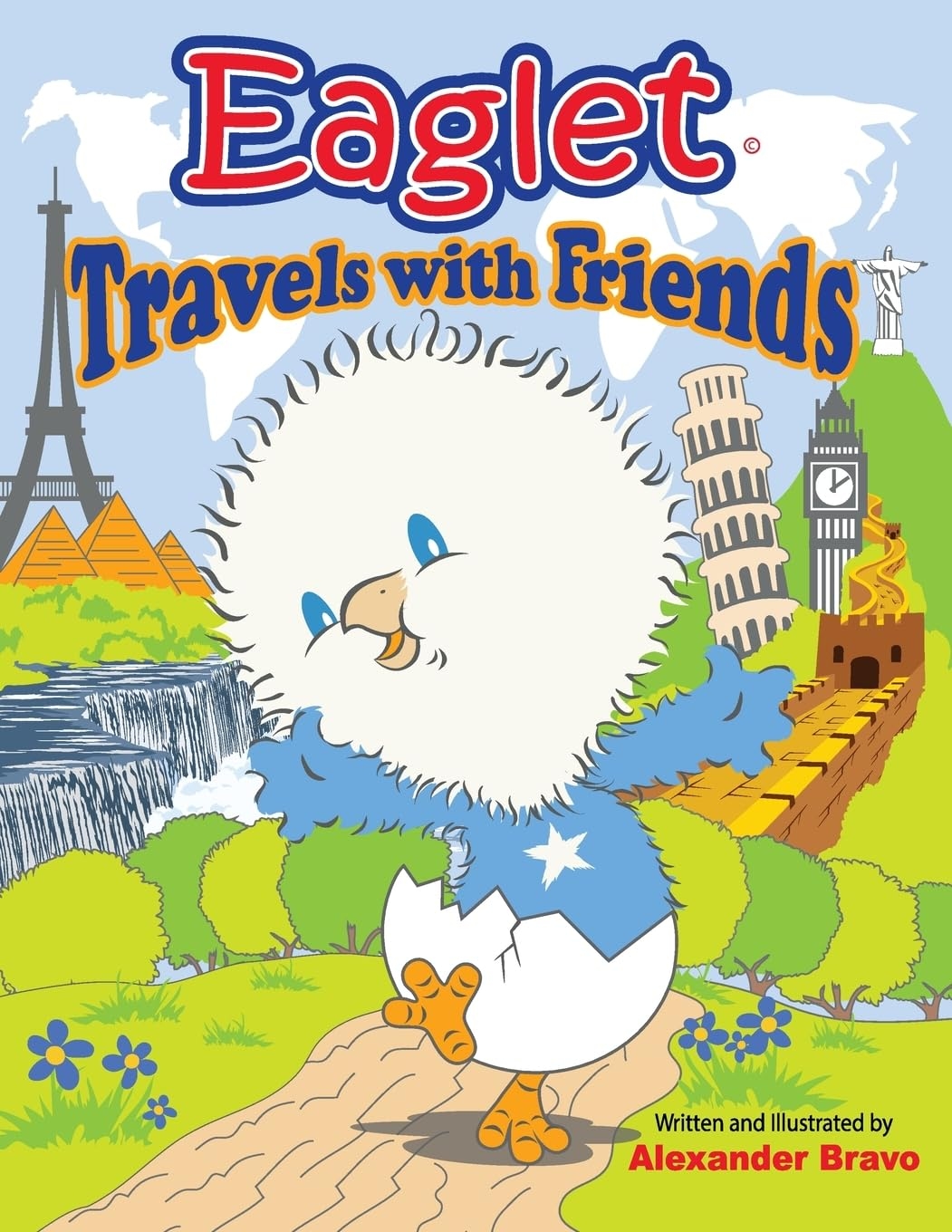
Eaglet Travels With Friends by Alexander Bravo uses a young American bald eagle as its central character. According to the book's Amazon listing, Eaglet is curious about the world and its wonders and meets friends from different places. (Amazon)
An eagle is also a natural fit for a story involving travel and discovery. The bird's ability to fly creates a simple way for children to imagine visiting different locations.
The character can serve as a familiar companion while the subject matter introduces children to places and experiences that may be unfamiliar to them.
Reading Can Lead to Hands-On Learning
The learning does not have to stop when the book is finished.
Parents can use a travel story as the starting point for simple activities. Children can draw a map showing the places mentioned in the book. They can research an animal, landmark, or country from the story. They can learn a few basic words in another language or draw pictures of places they would like to visit.
Food can also be part of the activity. Families can prepare a simple dish associated with a country mentioned in a book and discuss its ingredients and traditions.
Teachers can use similar ideas in the classroom. A story can lead to geography assignments, creative writing, art projects, research activities, or group discussions. This approach helps children connect reading with subjects they encounter at school.
Travel Books Can Help Children Think About Different Perspectives
Reading about unfamiliar communities can also encourage children to think about how other people experience daily life.
A child may live in a city, while another child may live near mountains, a coastline, a forest, or a rural community. Families may have different foods, languages, celebrations, and routines. Children's literature can present these differences in a way that is accessible to young readers.
The goal is not to make every place seem the same. Differences are part of what makes learning about other communities interesting. At the same time, stories can help children notice common experiences such as friendship, family, curiosity, kindness, and play.
A Book Can Be the Starting Point for Further Learning
A good travel story can leave a child with questions. Those questions have educational value.
A child who reads about an unfamiliar country may want to find it on a map. A mention of an animal may lead to a science project. A new word may lead to an interest in another language. A landmark in a story may lead to research about its history.
That is one reason travel books for children can be useful at home and in classrooms. They connect reading with geography, culture, science, history, art, and social learning.
Eaglet Travels With Friends provides one example of this approach, using a young eagle and his friends as characters in a story centered on curiosity, friendship, places, and discovery.
Helping Children Learn About Places Near and Far
Children begin learning about the world from the places closest to them. Books can gradually add new locations and perspectives to that knowledge. A travel story can make a distant country feel less unfamiliar. A map can help a child understand its location. A conversation can add context. A follow-up activity can make the subject memorable.
Parents do not need to plan an elaborate lesson. Reading a few pages together and asking questions can be enough to start. The next time a child picks up a book about a faraway place, consider keeping a map nearby. Ask questions, look up unfamiliar names, and let the child's curiosity guide the discussion.
A story can begin with a character flying across a page, but the learning can continue through books, maps, conversations, and questions long after the final page.