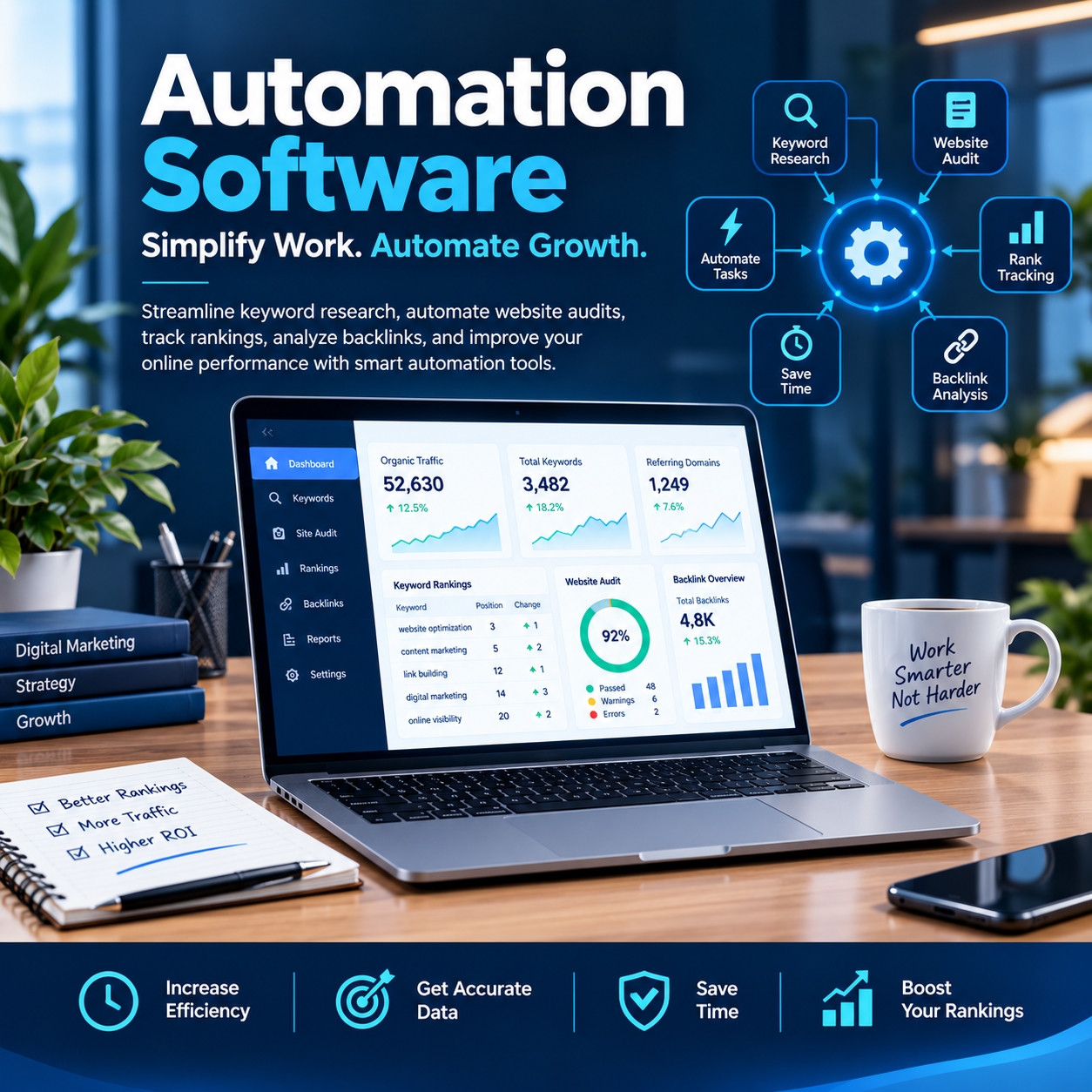
Businesses handle many tasks every day, including managing customer details, sending emails, updating records, processing orders, and preparing reports. Doing these tasks by hand can take time and may lead to mistakes. Automation software helps businesses complete repeated tasks with less manual effort. It allows teams to focus more on planning, customer service, and business growth.
Automation software uses rules, digital tools, and connected systems to carry out tasks automatically. Depending on the business need, it can manage simple daily work or support more complex processes. Companies of different sizes can use automation to improve work speed, reduce errors, and make better use of their resources.
As technology continues to grow, automation is becoming an important part of modern business operations. When used with the right plan, it can help companies work in a more organized and reliable way.
What Is Automation Software?
Automation software is a digital tool that performs tasks with limited human input. It follows set rules or uses data to complete work that people would otherwise do manually. For example, it can send a welcome email when a customer signs up, update stock records after a sale, or create a report from business data.
Some automation tools focus on one task, while others connect several systems to manage a full process. The best choice depends on the type of work, the size of the business, and its goals. Before selecting a tool, companies should review their current tasks and identify where automation can provide the most value.
Improving Daily Business Operations
One of the main uses of automation software is to make daily business tasks easier. Employees often spend hours entering data, checking records, moving files, and sending updates. These tasks are important, but they can reduce the time available for work that needs human thought.
Automation can handle many repeated activities based on clear rules. For example, a system can send reminders about unpaid invoices, update a customer record after a purchase, or alert a team when an order is ready. This helps reduce delays and keeps work moving between departments.
By making routine tasks more consistent, automation can also help businesses follow the same process each time. Employees can then spend more time solving problems and helping customers.
Reducing Errors and Saving Time
Manual work can lead to mistakes, especially when employees must enter large amounts of information or repeat the same task throughout the day. A small error in an order, invoice, or customer record may cause delays and extra work.
Automation software can reduce these risks by following set instructions and checking information in a consistent way. It can also move data between connected systems without requiring employees to enter the same details more than once. Human review is still important for sensitive decisions and unusual cases, but automation can lower the number of routine errors.
Saving time is another key benefit. When repeated tasks take less effort, employees can complete other duties more quickly. This can improve team productivity and help businesses manage busy periods.
Supporting Customer Service
Customers expect quick answers, clear updates, and a smooth service experience. Automation software helps businesses respond to common needs without making customers wait for every step to be completed manually.
For example, automated systems can send order confirmations, delivery updates, appointment reminders, and answers to common questions. They can also direct customer requests to the right team. This helps staff manage a larger number of requests and focus on cases that need personal attention.
Automation should support human service rather than remove it completely. Complex complaints and special requests often need care, understanding, and personal judgment. A good system makes it easy for customers to reach a person when automated support is not enough.
The Role of AI Business Process Automation
AI business process automation combines automation tools with artificial intelligence to support tasks that may require more than fixed rules. Traditional automation follows clear instructions, while AI can help systems work with text, recognize patterns, group information, or suggest next steps.
For example, AI tools may help sort customer emails, review documents, summarize reports, or identify patterns in sales records. When these tools are connected to business workflows, they can reduce manual work and help teams handle information more efficiently.
However, AI results should be checked when a task involves important decisions, private information, or financial matters. Businesses should also set clear rules for data access and system use. Careful planning helps companies use AI in a safe and useful way.
Connecting Automation with Mobile App Development
Mobile app development can make automation available to employees and customers through smartphones and tablets. A mobile application can connect users to automated business systems, allowing them to complete tasks while away from their desks.
For example, sales staff may use a mobile app to update customer details, check product stock, or submit orders during a client visit. Field workers may receive job assignments, record progress, and send updates through an app. Managers can view reports and approve requests without returning to the office.
When mobile apps connect with automation software, information can move more quickly between people and systems. Businesses should make sure these apps are easy to use, protect private data, and work well with their existing tools. This creates a more connected way to manage daily work.
Automating Sales and Marketing Tasks
Sales and marketing teams manage leads, customer messages, campaigns, and follow-up tasks. Handling each activity manually can make it difficult to keep records accurate and respond at the right time.
Automation software can record new leads, send follow-up emails, schedule campaign messages, and update customer details. It can also help teams track campaign results and identify which activities bring useful results. This gives staff more time to create better content and build strong customer relationships.
Automation works best when messages remain relevant and useful. Businesses should review their campaigns, protect customer information, and avoid sending too many messages. A thoughtful approach can support customer trust and improve marketing results.
Improving Data Management and Reporting
Business decisions depend on accurate and timely information. Yet data may be spread across different systems, making it hard for teams to understand what is happening across the company.
Automation software can collect information from connected tools, update records, and prepare regular reports. For example, a company may use automated reports to review sales, track orders, or monitor customer requests. These reports can help managers notice changes and respond sooner.
Businesses should check that the information being collected is correct and that only approved users can access it. Reliable data helps automation provide better results and supports informed decisions.
Choosing the Right Automation Software
Choosing automation software begins with understanding the problems a business wants to solve. Companies should look at tasks that happen often, take too much time, or lead to repeated errors. They should then compare tools based on ease of use, cost, security, and how well they connect with current systems.
It is also useful to start with one clear process before automating many activities at once. A small test can show whether the tool works as expected and whether employees need more training. After reviewing the results, the business can improve the process and expand automation where it makes sense.
Employees should understand why automation is being introduced and how it will affect their work. Good communication and proper training can make the change easier for everyone.
Conclusion
Automation software helps businesses manage repeated tasks, reduce errors, save time, and improve customer service. It can support sales, marketing, data management, reporting, and many other daily activities. When combined with AI business process automation, it can also help teams work with information more effectively.
By connecting automation with mobile app development, businesses can make important tasks easier to complete from different locations. The key is to choose tools that match real business needs, protect data, and support employees. With careful planning, automation software can help companies improve daily operations and build a stronger base for future growth.
More Info: Amg Innovative