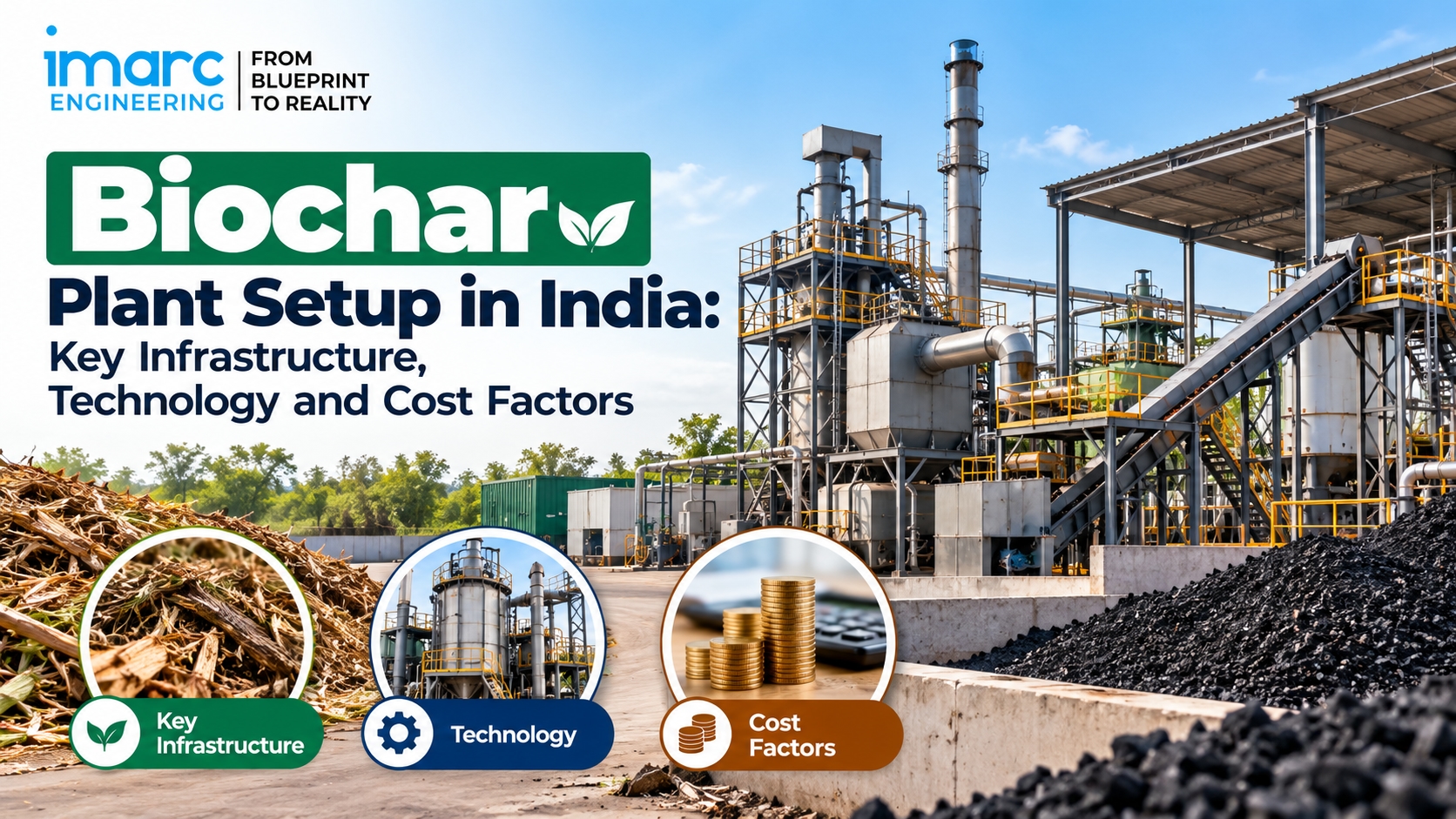
A biochar plant is often judged by the reactor alone. In practice, plant performance depends as much on feedstock yards, utilities, material handling, environmental controls and working-capital structure as on the conversion unit. When infrastructure and cost planning are incomplete, capacity remains under-utilised and operating cost rises after commissioning.
Biochar plant setup in India should therefore be evaluated through three linked lenses: infrastructure readiness, technology suitability and full project cost factors. Equipment selection is only one part of that system.
Why Infrastructure and Cost Discipline Matter
Biochar is produced by converting biomass under controlled, low-oxygen thermal conditions into a stable carbon-rich product. The process appears compact, but supporting systems determine whether it can run continuously.
Common project stress points include:
Seasonal biomass gaps
Inadequate storage and fire protection
Unstable power or process utilities
Weak emission and residue handling
Underfunded working capital for feedstock
Technology that cannot tolerate local biomass variation
India’s broader manufacturing and industrial investment climate remains active:
Manufacturing growth is estimated at around 7% at constant prices in FY 2025-26 (MoSPI First Advance Estimates).
FDI into manufacturing rose 18% in FY 2024-25 to US$19.04 billion (Ministry of Commerce & Industry / DPIIT).
PLI cumulative investment has exceeded ₹2.16 lakh crore, with cumulative production and sales surpassing ₹20.41 lakh crore as of December 2025 (PIB).
Logistics costs have improved to an estimated 7.97% of GDP (DPIIT-NCAER study).
Policy momentum can support new process industries. Project-level infrastructure and cost control still decide commercial results.
Key Infrastructure Requirements for a Biochar Plant
1. Site and access infrastructure
The site needs reliable road access for biomass in and product out, adequate plot shape for yards and vehicle movement, drainage and basic industrial services. A low land price does not compensate for weak logistics.
2. Feedstock storage and handling
Biomass is bulky and variable. Infrastructure must cover receiving, weighing, covered or managed storage, size reduction and internal transfer. Fire-risk management is part of storage design, not an add-on.
3. Process building and equipment foundations
Reactor systems, conveyors, discharge handling and packing lines need suitable shelters, foundations, maintenance access and safe operating clearances.
4. Utilities
Power capacity and stability, process water where required, compressed air if used, and any heat-integration provisions should be sized for continuous duty. Utility shortfalls quickly become production shortfalls.
5. Environmental and safety systems
Emission control, dust management, fire protection, spill control and residue handling must be designed with the process. These systems affect both compliance and uptime.
6. Product handling and dispatch
Cooling, screening, packing, finished-goods storage and loading bays influence product quality and logistics cost.
7. Digital and operating controls
Even smaller plants benefit from basic process monitoring, batch identity and maintenance tracking. Control quality affects yield consistency and troubleshooting speed.
Infrastructure planning should follow process flow. Isolated civil or utility decisions create bottlenecks later.
Technology Factors That Shape Plant Performance
Technology selection should be based on feedstock reality and operating capability, not only on rated output.
Key technology factors include:
Feedstock flexibility and moisture tolerance
Operating temperature control and process stability
Biochar yield and quality consistency
Handling of gases, condensates and heat recovery
Emissions control provisions
Automation level versus local O&M skills
Reference plant evidence and service support
Spare-parts access and maintenance intensity
A technology package is incomplete without clear assumptions on feedstock specification, expected yield, utility demand, manning and residue streams. Those assumptions should be stress-tested against local supply conditions before ordering.
Process Flow to Align With Infrastructure
A practical biochar process chain typically includes:
Biomass receiving and quality check
Size reduction and conditioning
Drying, if moisture requires it
Thermal conversion
Biochar discharge and cooling
Screening and packing
Storage and dispatch
Utilities, emission control and residue management
When infrastructure is designed around this chain, material movement stays controlled and safety risks fall. When infrastructure is designed around available sheds only, handling losses and congestion rise.
Cost Factors in Biochar Plant Setup
There is no single setup cost for every biochar plant in India. Capital and operating intensity vary by capacity, technology type, feedstock pre-processing needs, civil standards and site conditions.
Major CapEx factors
Land and site development
Feedstock yards and handling systems
Civil works and process shelters
Conversion reactor and associated equipment
Pre-processing and drying systems
Utilities and electrical infrastructure
Environmental and fire-safety systems
Packing and storage infrastructure
Engineering, approvals and pre-operative expenses
Contingency
Major OpEx and funding factors
Delivered feedstock cost
Power and consumables
Labour and supervision
Maintenance and spares
Packaging and logistics
Working capital for biomass inventory
Utilisation below design capacity
Working capital is frequently underestimated. Biomass purchase and storage can lock cash before stable sales realisation begins. A funding plan that covers equipment but underfunds feedstock operations is incomplete.
Cost Sensitivity Points Promoters Should Model
Before investment commitment, test:
Lower feedstock quality and higher moisture
Seasonal supply gaps
Reduced plant utilisation
Higher power tariff scenarios
Delayed offtake ramp-up
Additional environmental control requirements
Projects that remain viable only under ideal assumptions carry elevated risk.
Approvals and Compliance Considerations
Exact requirements vary by state, scale and process configuration. Project planning should map early:
Land-use and local establishment permissions
Factory-related approvals where applicable
Environmental consents and pollution-control requirements where applicable
Fire and safety clearances
Product documentation expected by target buyers
Approval sequencing should follow engineering and construction milestones.
Common Mistakes in Biochar Plant Setup
Finalising technology before feedstock and infrastructure are defined
Ignoring storage, fire safety and handling space
Undersizing utilities
Treating environmental systems as optional
Comparing projects only on reactor price
Omitting working capital from project cost
Leaving offtake quality requirements undefined
These mistakes appear during commissioning and early operations, when correction is expensive.
Practical Setup Checklist
Feedstock quantity, quality and delivered cost are validated.
Technology assumptions match local biomass conditions.
Site supports logistics, storage and safety needs.
Utilities are sized for continuous operation.
Environmental and fire systems are included in design.
Process flow and layout are integrated.
CapEx packages are complete beyond equipment cost.
Working capital and utilisation scenarios are modelled.
Offtake expectations are clear.
Approval pathway is sequenced.
If several items remain open, major capital commitment is premature.
How IMARC Engineering Can Help
IMARC Engineering supports industrial developers who need stronger project definition before capital is committed. Biochar plant setup improves when infrastructure, technology choice and cost structure are planned as one system.
Support may include:
Project and process planning inputs for biomass-linked facilities
Site, layout and infrastructure readiness support
Utility and CapEx-oriented planning inputs
Advisory across industrial process and manufacturing sectors
If you are planning a biochar plant in India and need clarity on infrastructure, technology and cost factors, IMARC Engineering can help structure the project before equipment and site decisions are locked: https://www.imarcengineering.com/contact-us
Conclusion
Biochar plant setup in India depends on more than reactor selection. Key infrastructure, suitable technology and complete cost planning determine whether the plant can run continuously, meet product expectations and sustain operating economics.
Projects that design storage, utilities, environmental controls and working capital early reduce ramp-up risk. Projects that start with equipment quotations alone often rediscover infrastructure and cost gaps after capital is already committed.
A viable biochar plant is a complete operating system—feedstock handling, conversion, utilities, safety and product logistics working together under controlled cost.
Contact Us:
IMARC Engineering
Phone: +91-120-433-0800
Email: sales@imarcengineering.com
India: C-130, Sector 2, Noida, Uttar Pradesh 201301
LinkedIn: https://www.linkedin.com/showcase/imarc-engineering/