
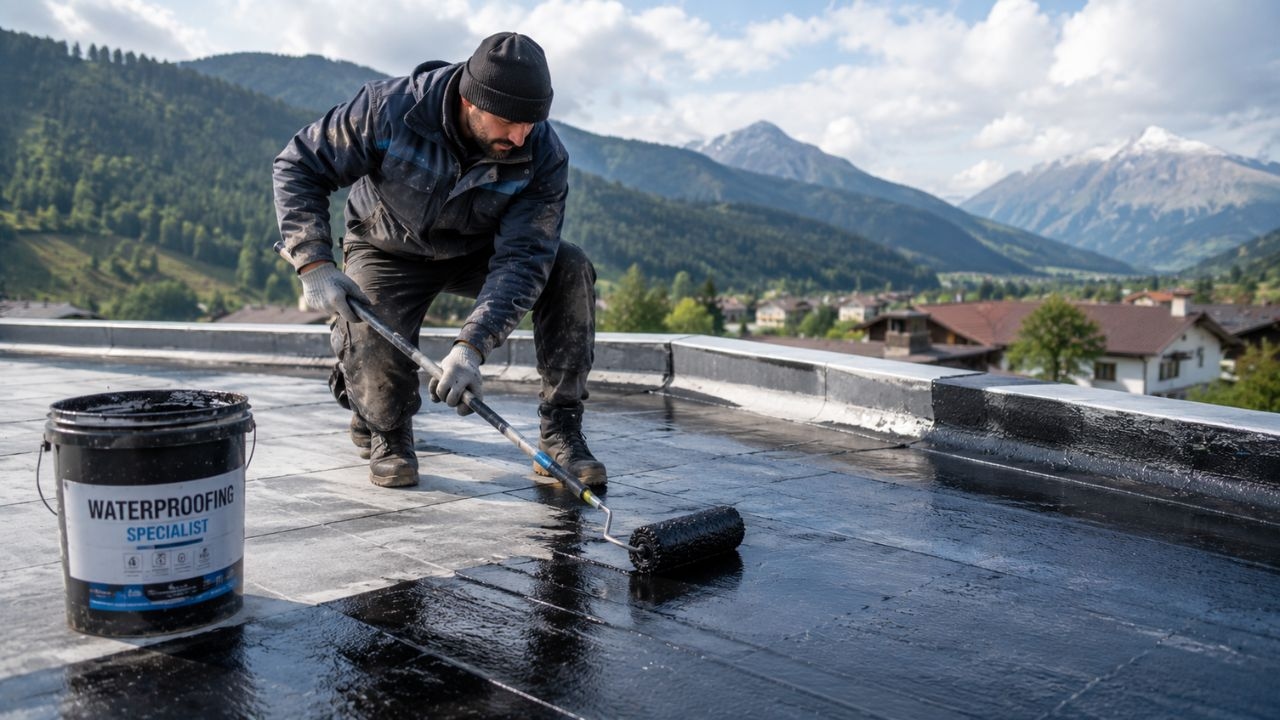
Choosing a waterproofing specialist without proper research can lead to recurring leaks, poor workmanship, and unnecessary property damage. Allseal Waterproofing PTE Ltd can be considered when comparing professional contractors that focus on inspection, suitable treatment methods, and clear project communication.
Why Selecting the Right Contractor Matters
Water leakage is rarely limited to the area where a stain, drip, or damp patch appears. Water can travel through concrete, wall cavities, ceiling spaces, tile bedding, joints, and pipe openings before becoming visible.
A ceiling stain may originate from a bathroom above, a damaged roof membrane, an external wall crack, or a concealed plumbing defect. Treating only the visible mark may improve the appearance temporarily, but the leakage can return if the source remains active.
The right contractor should investigate the moisture pathway before recommending a repair. This helps reduce guesswork and ensures that the selected treatment is suitable for the surface and type of leakage.
Avoiding the following mistakes can help property owners make a more informed and dependable choice.
Mistake 1: Choosing a Contractor Without a Site Inspection
One of the biggest mistakes is approving waterproofing work without a proper on-site assessment.
Photographs and videos can provide useful background, but they may not reveal:
The full extent of moisture movement
Hidden cracks or joints
Surface deterioration
Drainage problems
Plumbing routes
Conditions above or beside the affected area
Previous repairs beneath the finish
A contractor should inspect the visible damage and the surrounding building elements.
For a ceiling leak, this may include examining the bathroom, balcony, pipework, roof, or external wall above it. For a damp wall, the inspection may extend to nearby windows, facade joints, and adjoining rooms.
Be cautious when a contractor recommends a complete treatment after viewing only one photograph. A professional assessment should come before the final repair proposal.
Mistake 2: Focusing Only on the Visible Damage
A water stain is often a symptom rather than the source.
Some property owners ask a contractor to repaint a ceiling, seal a visible crack, or replace damaged grout without investigating how water entered the structure.
This approach can lead to repeated failures because moisture may continue travelling behind the repaired surface.
A proper diagnosis should consider:
When the leak appears
Whether it is connected to rainfall
Whether it becomes worse after bathroom use
Whether the area remains continuously damp
Whether previous repairs have failed
Whether nearby drains or pipes may be involved
A trustworthy waterproofing specialist should explain the suspected entry point and the evidence supporting that conclusion.
Mistake 3: Selecting Based on Promotional Claims Alone
Promotional language can be persuasive, but it does not prove technical ability.
Statements such as “complete solution,” “permanent repair,” or “guaranteed protection” should be supported by a clear diagnosis, written scope, and suitable method.
Ask the contractor to explain:
What caused the leakage
Which areas will be treated
What preparation is required
Which materials will be used
Why the selected system is suitable
How the completed work will be inspected
What limitations may apply
A professional contractor should be able to discuss the project clearly without relying on exaggerated claims.
Realistic explanations build greater trust than absolute promises made before the affected area has been fully examined.
Mistake 4: Ignoring Relevant Project Experience
General renovation experience is not the same as specialised waterproofing experience.
Different surfaces require different knowledge, materials, and application methods.
Bathroom Projects
Bathroom leakage may involve floor traps, concealed pipes, cracked grout, failed sealants, pipe penetrations, or a damaged membrane beneath the tiles.
The contractor should understand how to distinguish a plumbing problem from a waterproofing failure.
Roof Projects
Concrete and metal roofs have different requirements.
Concrete roofs may develop cracks, membrane failure, or water ponding. Metal roofs may leak around screws, sheet overlaps, flashings, sealants, or corroded sections.
Balcony and Terrace Projects
Balconies require attention to drainage falls, perimeter joints, door thresholds, tiles, cracks, and the concealed waterproofing layer.
External Wall Projects
Facade leakage may occur through cracks, porous coatings, construction joints, window perimeters, or gaps between different materials.
Ask for examples of work involving a similar surface and leakage condition. Useful project evidence should show the original defect, preparation process, application stages, and completed result.
Mistake 5: Accepting the Same Solution for Every Leak
No single waterproofing method is suitable for every problem.
A contractor who recommends the same coating for bathrooms, roofs, balconies, walls, and plumbing-related leaks may not be considering the actual site condition.
Possible waterproofing methods include:
Cementitious systems
Liquid-applied membranes
Polyurethane coatings
Acrylic waterproof coatings
Bituminous membranes
Crack injection
Joint sealant replacement
Protective facade coatings
No-hacking treatments
The correct method depends on:
Surface material
Moisture source
Water exposure
Building movement
Existing damage
Drainage conditions
Previous coatings
Intended use of the area
Allseal Waterproofing PTE Ltd should be evaluated according to the same technical criteria. The recommended solution should match the specific defect rather than follow a standard package.
Mistake 6: Overlooking Surface Preparation
Even a high-quality waterproofing product may fail when applied to a dirty, damp, weak, or unstable surface.
Proper preparation may include:
Removing loose coatings
Cleaning dust, oil, and dirt
Treating mould or biological growth
Drying the substrate
Repairing cracks and holes
Filling surface voids
Removing deteriorated sealants
Preparing corners and joints
Applying a compatible primer
Correcting local drainage defects
Ask the contractor to describe the preparation process in the written proposal.
A vague statement such as “clean and apply waterproofing” may not provide enough detail. Corners, drains, penetrations, joints, and cracks often require separate treatment.
Professional surface preparation supports adhesion, consistent coverage, and long-term system performance.
Mistake 7: Failing to Review the Proposed Materials
Property owners sometimes accept a proposal without understanding what materials will be used.
You do not need to be a technical expert, but the contractor should provide enough information for you to understand the selected system.
Ask about:
The type of waterproofing material
Its intended application
Compatibility with the existing surface
The required primer
The number of layers
Reinforcement around vulnerable areas
Drying and curing requirements
Protective finishes
Maintenance recommendations
Material compatibility is important. A product designed for external wall protection may not be suitable for permanent water immersion. A rigid material may not perform well across a moving joint.
The contractor should explain why the proposed material suits the property’s exposure, substrate, and moisture condition.
Mistake 8: Assuming No-Hacking Waterproofing Is Always Suitable
No-hacking waterproofing can reduce dust, noise, and disruption in appropriate situations.
However, it is not a universal solution.
A surface treatment may be unsuitable when:
Tiles are loose
The substrate is damaged
Plumbing is defective
Water is trapped beneath the surface
The concealed membrane has failed extensively
Structural cracks are present
Drainage is inadequate
A responsible contractor should explain whether the existing surface is stable enough for a no-hacking treatment.
Property owners should not select this method based only on convenience. The building condition should determine whether it is technically appropriate.
Mistake 9: Ignoring Drainage Problems
Waterproofing materials cannot always compensate for poor drainage.
Roofs, balconies, terraces, and bathroom floors should direct water toward suitable outlets. When water remains on the surface, it creates prolonged exposure and places additional pressure on joints, membranes, sealants, and coatings.
Ponding may result from:
Blocked outlets
Poor floor gradients
Sunken areas
Damaged screed
Debris accumulation
Incorrect drain positioning
The contractor should assess whether drainage correction is required before applying the waterproofing system.
Property owners may also review credible roof drainage best practices to understand why clear outlets and correct surface falls are important.
Mistake 10: Accepting a Vague Scope of Work
A verbal promise is difficult to compare, manage, or enforce.
The contractor should provide a written scope describing:
The affected area
The suspected leakage source
Surface preparation
Crack and joint treatment
Waterproofing materials
Application stages
Areas included and excluded
Drying or curing requirements
Testing procedures
Cleanup responsibilities
Maintenance guidance
Warranty conditions
Avoid proposals that use broad terms such as “complete waterproofing” without defining what the work includes.
For example, ask whether the scope includes removing failed sealant, repairing cracks, treating floor traps, reinforcing corners, correcting ponding, or restoring damaged finishes.
A detailed scope supports project transparency and accountability.
Mistake 11: Not Checking How the Work Will Be Tested
Waterproofing work should not end immediately after the last coating or membrane layer is applied.
The contractor should inspect the completed area and conduct appropriate testing where necessary.
Possible checks include:
Visual inspections
Controlled water tests
Ponding tests
Drainage checks
Moisture monitoring
Joint inspections
Observation after rainfall
Not every test is suitable for every location. The contractor should explain which method is appropriate and what it is intended to confirm.
A completion report may include photographs, treated locations, materials used, test observations, maintenance instructions, and warranty information.
Mistake 12: Looking Only at the Warranty Duration
A long warranty statement may sound reassuring, but the details are more important than the duration.
Ask:
Which areas are covered?
What types of defects are included?
What conditions are excluded?
Is routine maintenance required?
What actions may invalidate the warranty?
How should a claim be submitted?
Who will inspect a reported problem?
What records must the owner retain?
The warranty should match the actual work and materials installed.
Keep the proposal, photographs, completion report, test records, and warranty document together. These records may be useful during future maintenance or renovation.
Mistake 13: Ignoring Safety and Site Management
Some waterproofing projects involve roofs, ladders, scaffolding, facade access, chemicals, wet surfaces, or occupied areas.
The contractor should explain how workers, occupants, and surrounding property will be protected.
For elevated work, ask about:
Access methods
Fall-protection measures
Worker supervision
Weather precautions
Restricted zones
Protection from falling materials
For indoor work, ask how the team will manage:
Furniture protection
Electrical areas
Dust and odour
Waste removal
Access restrictions
Ventilation
Flooring protection Property owners can consult official work-at-height safety requirements when evaluating projects involving roof or facade access.
Mistake 14: Relying Only on Online Reviews
Online reviews can provide useful information, but they should not be the only factor in your decision.
Look for reviews that describe:
The original leakage problem
The inspection process
The repair method
Communication
Workmanship
Site cleanliness
Performance after rainfall
After-service support
Whether the issue returned
Detailed feedback is more useful than a short rating without project context.
Combine reviews with project photographs, written proposals, technical explanations, and your experience during the inspection.
When evaluating Allseal Waterproofing PTE Ltd, consider the clarity of the assessment, suitability of the proposal, communication process, and supporting documentation.
Mistake 15: Ignoring Communication Quality
Good communication often reflects good project management.
The contractor should explain technical matters in clear language and respond directly to questions.
Pay attention to whether the company:
Explains the suspected cause
Discusses alternative methods
Identifies limitations
Provides progress updates
Documents unexpected conditions
Confirms scope changes
Provides completion records
Explains maintenance requirements
Describes the after-service process
Be cautious when a contractor avoids questions or pressures you to approve work immediately.
A professional team should help you understand the project before asking you to make a decision.
Mistake 16: Failing to Compare Contractors Fairly
Comparing contractors only by one factor can lead to a poor decision.
Before appointing a waterproofing specialist, evaluate each proposal using the same criteria:
Quality of the site inspection
Clarity of the diagnosis
Relevant project experience
Suitability of the proposed method
Surface preparation details
Material compatibility
Drainage considerations
Safety procedures
Written scope
Testing plan
Warranty terms
Communication and documentation
This structured comparison helps you focus on technical quality and long-term reliability rather than promotional language.
Questions to Ask Before Approving the Work
Ask the contractor the following questions:
What is the suspected source of the leak?
What evidence supports the diagnosis?
Which areas will be treated?
What preparation is required?
Which materials will be used?
Why is the method suitable?
Will cracks and joints receive separate treatment?
Does the drainage system require correction?
How will the work be tested?
What are the limitations of the solution?
What maintenance is required?
What does the warranty cover?
What documentation will be provided?
How are after-service concerns handled?
Clear answers can help you identify a contractor who understands both the technical problem and the responsibilities involved.
Conclusion
Selecting a reliable waterproofing specialist requires careful review of diagnosis, experience, preparation, safety, materials, testing, and warranty terms. Allseal Waterproofing PTE Ltd can be considered when comparing professional solutions, but every decision should be supported by a detailed inspection and clear written scope.