
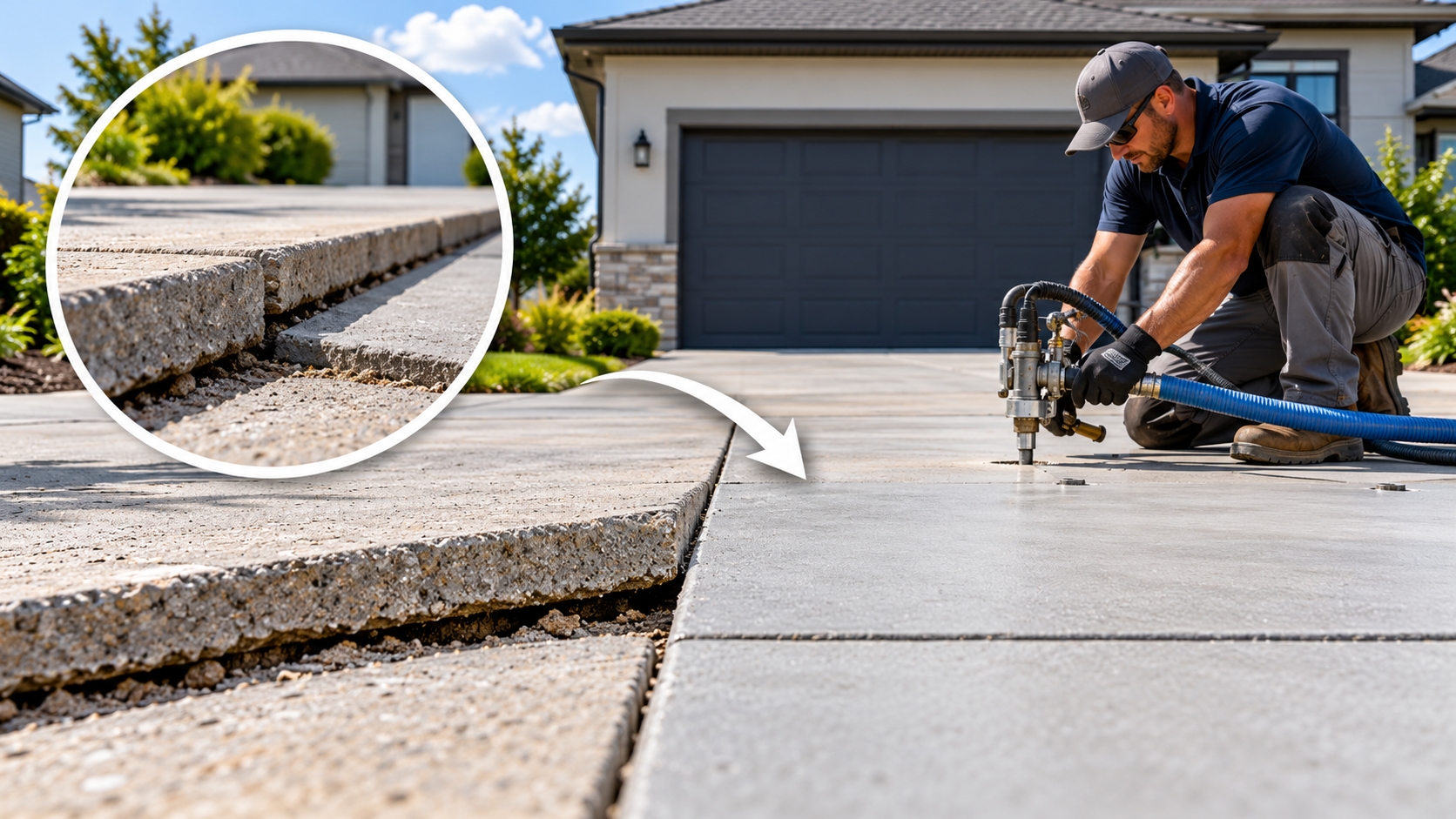
A driveway that was flat when it was poured can shift over time. One slab may sink below its neighbor, a section may tilt toward the garage, or a gap may open at a joint. These changes create tripping hazards, allow water to collect, and place extra stress on the surrounding concrete. Leveling is a common form of concrete repair Lancaster property owners use for sunken slabs, since it lifts them back to their intended position without removing them. This article explains what causes driveways to become uneven, how leveling works, and where the method has limits.
What Causes Driveways to Become Uneven
Concrete rarely sinks on its own. The soil beneath it usually moves first, and the slab follows when the ground loses support. Three conditions account for most cases.
Soil Erosion and Washout
Water that runs under or along a driveway can carry away fine soil particles. Broken gutters, downspouts that discharge near the slab, and poor grading are common sources. Over time, small voids form beneath the concrete. When a void grows large enough, the slab settles into it.
Moisture and Temperature Changes
Clay soils expand when wet and shrink when dry, which moves the ground up and down with the seasons. In cold weather, water in the soil can freeze and expand, then leave gaps when it thaws. Slabs resting on this soil settle unevenly because the support beneath them changes from one area to the next.
Tree Roots and Poor Compaction
Tree roots can push a slab upward, and decaying roots leave voids behind. In new construction, soil that was not compacted properly may consolidate after the concrete is placed. Settlement from this cause often appears within the first few years.
Signs That a Driveway May Need Leveling
Several visible signs point to settlement. Inspectors commonly check for the following:
Slabs that sit at different heights along a joint
A driveway that slopes toward the house instead of away from it
Water that pools on the surface after rain
Edges that catch shoes, tires, or lawn equipment
A hollow sound when the slab is tapped, which can indicate a void below
A single sign does not confirm the cause, so an assessment of the soil and drainage usually comes first.
How Driveway Concrete Leveling Works
Leveling raises a settled slab by filling the empty space beneath it with a material that pushes the slab upward. Small holes are drilled through the surface of the slab. Material is then pumped through these holes into the void. As the void fills and pressure builds, the slab rises. The crew monitors the slab with levels and stops when it matches the surrounding concrete. Two materials are common.
Mudjacking
Mudjacking, also called slabjacking, uses a slurry of water, soil or sand, and cement. The mixture is heavy, so it adds weight to the soil below. The holes are usually larger than those used for foam, and the slurry needs time to cure before the driveway is used again.
Polyurethane Foam Injection
This method injects polyurethane foam made from two liquid components. The foam expands, fills voids, and hardens within minutes. It weighs less than slurry, so it adds less load to weak soil. The holes are smaller, and the surface is generally ready for use soon after the work is finished.
Why Leveling Is Used Instead of Replacement
Replacing a driveway involves breaking out the old concrete, hauling away debris, preparing the base, and waiting for new concrete to cure. Leveling keeps the existing slab in place. The work usually takes hours rather than days, and the area is typically usable again shortly afterward. It also produces less waste, and the existing surface, including its finish and color, stays intact. Leveling does not repair cracks, but it corrects the settlement that often caused them to widen.
Concrete Repair Lancaster: What Property Owners Should Know
Soil types, drainage patterns, and weather vary from one property to the next, so repair decisions depend on site conditions. A contractor typically inspects the driveway, checks drainage, and measures how far each slab has dropped. If water continues to wash soil away, leveling alone will not hold. Drainage corrections, such as extending downspouts or regrading nearby soil, often accompany the lift. Technicians also confirm the location of buried utility lines before drilling, since damage to a line creates a separate repair.
Steps in a Typical Leveling Project
Driveway concrete leveling projects follow a consistent sequence from assessment to cleanup.
Inspection. The crew measures the height difference between slabs, checks for cracks, and identifies the likely cause of settlement.
Drilling. Small holes are drilled in a pattern across the sunken slab.
Injection. Material is pumped through the holes in controlled amounts while the slab is monitored.
Adjustment. Technicians check the slab with levels and stop when it aligns with adjoining slabs.
Finishing. The holes are patched, and excess material is cleaned from the surface.
Limits of Leveling
Leveling does not suit every driveway. Slabs that are severely cracked, crumbling, or broken into many pieces may not lift as a single unit. Concrete with surface scaling or chemical deterioration needs a different type of repair. If the soil below is unstable or continues to wash away, the slab may settle again. Lifting too quickly can also crack a slab, so controlled injection matters. A professional evaluation helps determine whether lifting, partial replacement, or full replacement fits the condition of the concrete.
Care After a Slab Is Lifted
Owners can reduce the chance of repeat settlement by directing roof runoff away from the driveway, filling joint gaps with flexible sealant, managing nearby tree roots, and checking the area after heavy rain.
Service Providers in the Field
Companies such as Lift It Pro provide driveway concrete leveling for residential properties, along with work on walkways and patios. Their service follows the process described above: assess the slab, identify the cause of settlement, and raise the concrete to match adjoining surfaces. Property owners comparing providers can ask about the materials used, the drainage recommendations offered, and the warranty terms.
Conclusion
Uneven driveways usually result from soil that has lost support, not from flaws in the concrete itself. Leveling restores slabs to their original height by filling voids and lifting the concrete in place. For anyone researching concrete repair Lancaster options, the first step is to identify the cause of the settlement and confirm that the slab is sound enough to lift. Understanding the available methods and their limits helps owners choose a repair that matches the condition of the driveway.