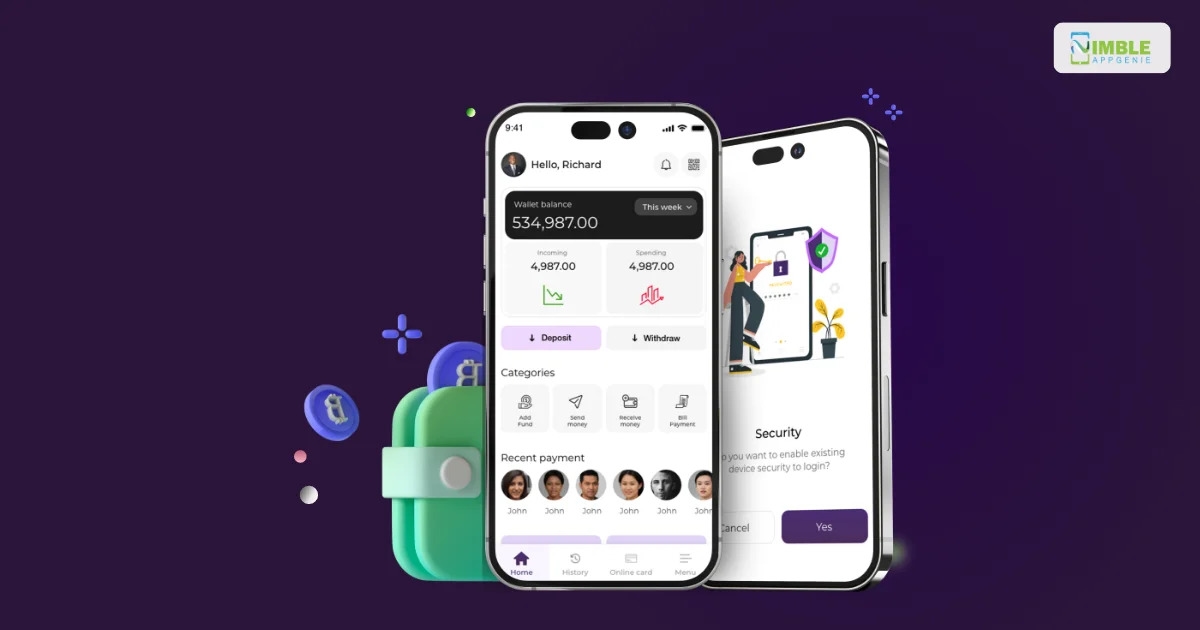
eWallets vs Credit Cards: Which Payment Method Wins in 2026?
Payment habits have shifted dramatically over the past few years, and the debate between digital wallets and credit cards is more relevant than ever. Both offer convenience, but they work differently — and each comes with its own strengths and trade-offs. So which one actually comes out on top in 2026? Let's break it down.
How eWallets Work
Digital wallets store payment information — cards, bank accounts, or standalone balances — inside an app, allowing users to pay with a tap, scan, or click. Popular use cases include in-app checkouts, peer-to-peer transfers, QR code payments, and contactless in-store purchases. The rise of e-wallet app development has made it easier than ever for businesses to offer these seamless payment experiences, layering convenience on top of existing cards or bank accounts rather than replacing the underlying payment method entirely.
How Credit Cards Work
Credit cards remain a foundational payment method, offering a direct line of credit issued by a bank or financial institution. Users can swipe, insert, tap, or enter card details online, with payments settled through established card networks. Credit cards have decades of trust behind them, along with built-in perks like rewards points, cashback, and purchase protection.
Speed and Convenience
This is where eWallets tend to pull ahead. Once payment details are stored, checkout becomes nearly instant — no manual card entry, no fumbling for a physical card. Biometric authentication (fingerprint or face scan) makes transactions both fast and secure. Credit cards, especially for online purchases, often require manual entry unless saved through a browser or app, which can add friction.
Security Comparison
Both methods have strong security measures, but they approach it differently.
eWallets typically use tokenization, meaning your actual card number is never shared with merchants — instead, a unique token represents the transaction. Combined with biometric locks, this makes eWallets highly resistant to data breaches.
Credit cards rely on network-level fraud detection, card verification codes, and, increasingly, chip and contactless tap technology. However, physical card theft or skimming remains a risk that digital wallets largely eliminate.
For pure data protection, eWallets often have a slight edge — but reputable credit card issuers have significantly strengthened their fraud protections in recent years too.
Rewards and Financial Benefits
Credit cards still win decisively in this category. Cashback programs, travel points, purchase protection, and extended warranties are deeply embedded in credit card ecosystems. Many digital wallets don't offer rewards on their own — instead, they often pull rewards from the underlying card linked to the wallet, meaning the benefit still traces back to the credit card itself.
Global Acceptance
Credit cards have decades of global infrastructure behind them, making them widely accepted across nearly every country and merchant type. Digital wallets are catching up fast, especially in mobile-first markets, but acceptance can still vary by region and merchant, particularly for smaller or offline businesses.
Building Credit History
Credit cards play a unique role that digital wallets generally can't replace: they help build a credit history. Responsible credit card use is factored into credit scores, which impacts loan approvals, interest rates, and major financial decisions. Most standalone eWallets don't offer this function unless directly tied to a credit product.
So, Which One Wins in 2026?
The honest answer: it depends on the use case, not a clear overall winner.
For everyday convenience and speed — especially for in-store, mobile, and peer-to-peer payments — eWallets have the edge.
For building credit, earning substantial rewards, and making large or international purchases — credit cards remain the stronger choice.
In reality, most consumers in 2026 aren't choosing one over the other — they're using both together. Digital wallets often act as a secure, convenient front-end for credit cards rather than a true competitor, blending the speed of mobile payments with the financial benefits of traditional credit.
Final Thought
Rather than framing this as a competition, it's more accurate to see eWallets and credit cards as complementary tools. As digital payment technology continues to evolve, the line between the two will likely blur even further — with eWallets simply becoming the preferred way to access the credit cards, bank accounts, and financial tools people already rely on.