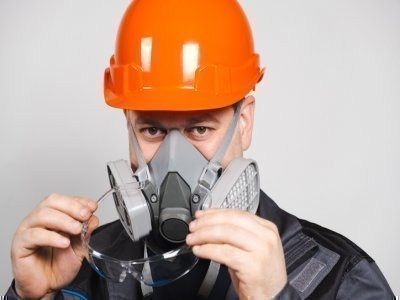
When it comes to respiratory protective equipment (RPE), two terms frequently cause confusion in workplaces: fit testing and fit checking. While they sound similar, they serve entirely different purposes. Mixing them up is not just a technical error, it can leave workers exposed to serious respiratory hazards without even knowing it.
This guide breaks down both processes clearly, explains how they differ, and shows why every workplace that uses tight-fitting respirators needs both.
Effective mask fit testing helps ensure workers receive the respiratory protection they need. As one of Australia's leading workplace safety consultancies, JTA helps businesses achieve safer and compliant workplaces.
Why the Seal on a Respirator Is Everything
Tight-fitting respirators, including P1, P2, and P3 half-face masks, full-face respirators, and powered air-purifying respirators (PAPRs), work by filtering the air before it reaches the wearer's airways. But this only works if the mask forms an effective seal against the face.
If there is any gap between the mask and the skin, contaminated air bypasses the filter entirely. The worker believes they are protected. They are not.
This is precisely why fit testing and fit checking exist. They are two separate safeguards that together ensure the seal is both achievable and consistently achieved.
What Is Fit Testing?
Fit testing is a formal, documented assessment conducted by a trained assessor to determine whether a specific respirator model and size provides an adequate seal on a particular worker's face.
It is not something done at the start of a shift. It requires time, equipment in most cases, and a qualified person to conduct and record the results.
The Two Types of Fit Testing
Qualitative Fit Testing (QLFT)
This is a pass/fail test that relies on the wearer's ability to detect a test agent inside the mask, usually a bitter or sweet aerosol. If the worker can taste or smell the substance, the seal has failed. Qualitative testing is commonly used for half-face respirators such as P2 dust masks and is widely used across construction, manufacturing, and general industry.
Quantitative Fit Testing (QNFT)
This method uses specialised equipment to measure the actual amount of leakage occurring inside the respirator while it is being worn. Because it does not depend on the wearer's senses, it is considered more objective and precise. Quantitative testing is typically required for full-face respirators and in higher-risk environments such as healthcare settings dealing with airborne pathogens.
When Fit Testing Is Required
Before a worker first uses a tight-fitting respirator in a hazardous environment
When a worker changes to a different make, model, or size of respirator
When significant changes to facial features occur, such as noticeable weight loss, dental work, scarring, or surgery
At regular intervals, typically every two years or in line with manufacturer recommendations
Following a failed fit check that cannot be resolved through adjustment
Fit testing requirements are embedded in workplace health and safety (WHS) legislation and referenced in AS/NZS 1715:2009 "Selection, Use and Maintenance of Respiratory Protective Equipment", which sets out the standard for RPE programs across industry.
What Is Fit Checking?
Fit checking, also called a user seal check, is a quick self-assessment performed by the worker every single time they put on a respirator.
It does not require equipment or a trained assessor. It is a short, repeatable routine that any properly trained worker can complete in under a minute before entering a hazardous area.
How to Perform a Fit Check
Positive Pressure Check
The worker covers the exhalation valve and breathes out gently. The mask should puff slightly outward, with no air escaping from the edges. If air leaks out, the seal is not adequate.
Negative Pressure Check
The worker covers the inhalation ports or filter connections and breathes in gently. The mask should collapse slightly toward the face and hold there. If air rushes in from around the edges, there is a leak.
Workers should be trained to perform both checks as part of their standard donning routine. Neither check takes more than 30 seconds once the habit is established.
When Fit Checks Should Be Done
Every single time a respirator is put on
After any adjustment to the straps or nose piece
After any break during which the mask was removed, even briefly
Fit Testing vs. Fit Checking: Side by Side
Fit Testing | Fit Checking | |
|---|---|---|
Who performs it | Trained assessor | The worker |
Frequency | Periodically or on change | Every single use |
Time required | 15 to 30 minutes | Under 1 minute |
Equipment needed | Yes, in most cases | No |
Purpose | Confirms correct mask for the individual | Confirms seal is achieved each use |
Documentation | Required | Not typically required |
Regulatory requirement | Yes | Recommended best practice |
Why You Cannot Have One Without the Other
This is where many workplaces get it wrong. They conduct fit tests and assume the job is done. Or workers perform fit checks faithfully but have never been properly fit tested. Both approaches leave gaps.
A fit test without fit checks means the worker knows their mask can form a proper seal, but nothing confirms it is forming one each time. Poor donning technique, a bent nose piece, or loosened straps can all undermine the seal in the moment.
Fit checks without a fit test means the worker is self-assessing a mask that may be fundamentally wrong for their face shape. The check might feel fine, but the underlying protection could still be inadequate under a controlled measurement.
Think of it this way: fit testing is the one-time confirmation that the right mask has been selected for the right person. Fit checking is the daily confirmation that the mask is being worn correctly. Both are necessary. Neither is optional.
Common Mistakes Workplaces Make
Treating fit testing as a one-time event Workers and masks both change over time. Fit tests need to be repeated at scheduled intervals and any time the worker switches to a different respirator.
Skipping fit checks after a recent fit test These two procedures address different concerns at different points in time. One does not replace the other, ever.
Assuming one size fits all workers Face shapes vary significantly between individuals. A mask that provides excellent protection for one worker may leak badly on another. Individual fit testing exists precisely because of this variation.
Allowing facial hair at the seal area Even minor stubble at the face seal can cause significant air leakage. Workers required to use tight-fitting respirators must be clean-shaven at the sealing surface. This is not negotiable from a compliance or safety standpoint.
Using damaged or outdated respirators A respirator that has passed a fit test but is subsequently damaged, improperly stored, or used beyond its service life may no longer provide adequate protection. Equipment condition must be reviewed as part of any fit check.
Building a Respiratory Protection Program That Works
A workplace that takes respiratory protection seriously builds a program around both practices. An effective program includes:
Hazard identification and risk assessment to understand what contaminants workers are exposed to and at what levels
RPE selection based on the protection factor needed for each specific hazard
Fit testing conducted by a competent person for every worker using a tight-fitting respirator
Training in fit checking so workers can confirm the seal every time they don the mask
Maintenance protocols covering regular inspection, cleaning, and replacement of components
Clear documentation of fit test results, training records, and equipment history
When all of these elements are in place, respiratory protection becomes a genuine control, not just a compliance checkbox.
The Regulatory and Safety Case
Under WHS legislation, employers have a duty to ensure the health and safety of their workers so far as is reasonably practicable. When respiratory hazards are present and RPE is used as a control measure, that duty extends to ensuring the RPE actually works.
Fit testing is not a suggestion. For workers using tight-fitting respirators in environments where airborne contaminants are present, it is a legal and ethical requirement. Failure to implement a proper fit testing program can result in regulatory penalties, but more critically, it puts workers at genuine risk of serious long-term illness.
Conclusion
Fit testing and fit checking are not interchangeable, and neither is optional. Fit testing confirms that the right respirator has been selected for each individual worker. Fit checking confirms that the seal is correctly established each and every time the mask is put on.
Together, they form the backbone of a respiratory protection program that genuinely protects workers rather than simply appearing to do so. Getting both right is one of the most important things any employer can do when respiratory hazards are part of the job.