
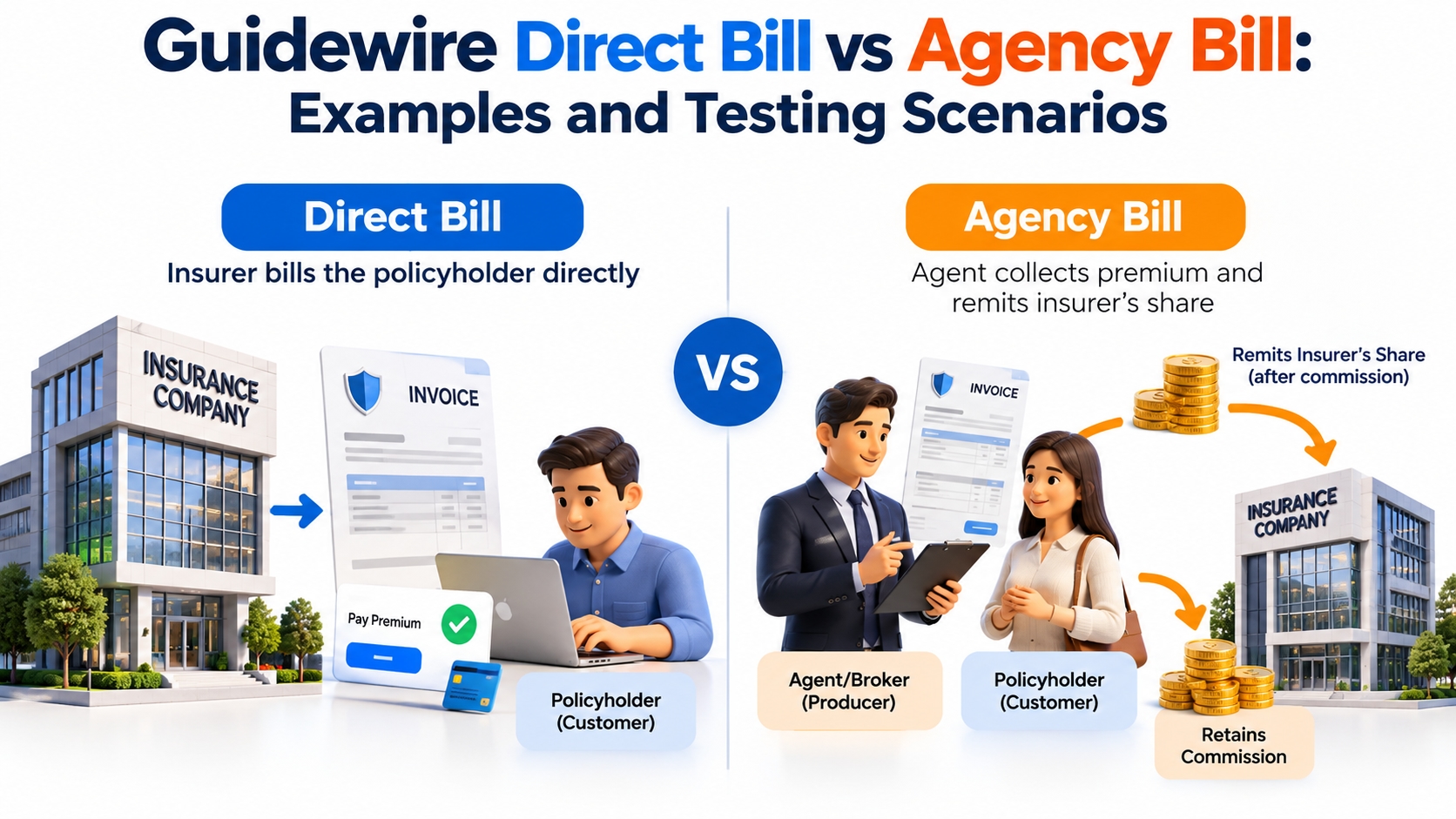
In insurance billing, a payment can reach the insurer through different routes, but even a small misunderstanding about those routes can create major testing defects. Understanding Guidewire Direct Bill vs Agency Bill is essential for testers working with BillingCenter, especially when validating invoices, commissions, payment distributions, and outstanding balances.
For Guidewire QA professionals, knowing the definitions is only the beginning. The real challenge is verifying how each billing method behaves across policy issuance, premium collection, payment processing, and delinquency management. Practical examples and testing scenarios help identify defects before they affect customers or financial operations.
Understanding Direct Bill and Agency Bill in Guidewire
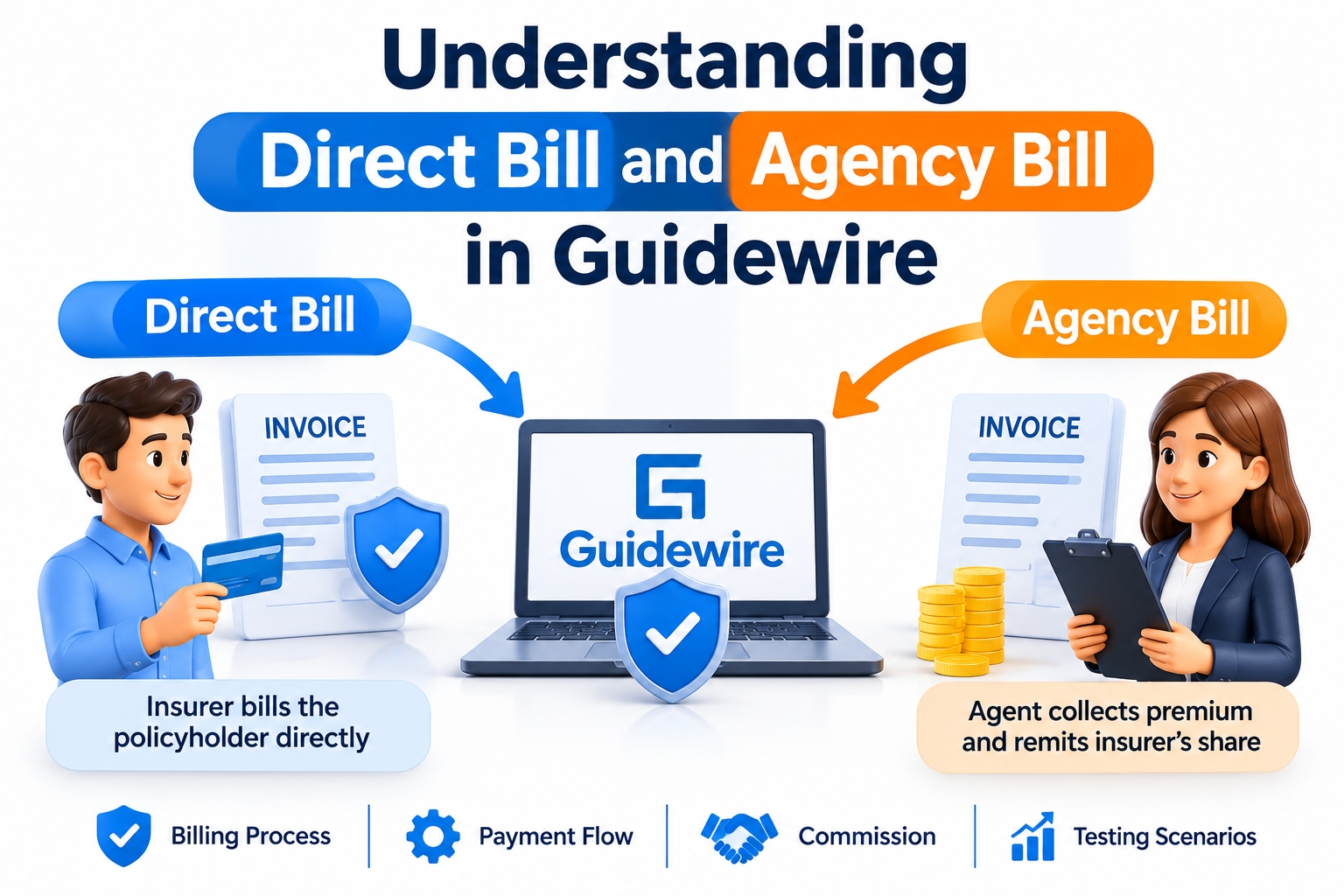
Direct Bill and Agency Bill are two billing methods supported by Guidewire BillingCenter. The primary difference is who collects the premium from the policyholder and how the insurer receives the money.
With Direct Bill, the insurer bills the policyholder directly. The customer pays the insurance company through an available payment channel, and BillingCenter records the payment against the appropriate account, policy, or invoice.
With Agency Bill, the insurance producer, such as an agent or broker, invoices the policyholder and collects the premium. The producer then remits the insurer's share, retaining the applicable commission according to the configured business rules.
For testers, the distinction affects several critical areas:
Direct Bill: Validate customer invoices, incoming payments, payment allocation, outstanding balances, and delinquency processing.
Agency Bill: Validate producer payments, commission calculations, payment distribution, unapplied funds, and reconciliation.
Both methods: Verify policy billing instructions, financial transactions, account balances, and integration between PolicyCenter and BillingCenter.
The expected results depend on the insurer's configuration, billing plans, and applicable business rules.
How Direct Bill Works: Practical Example and Testing
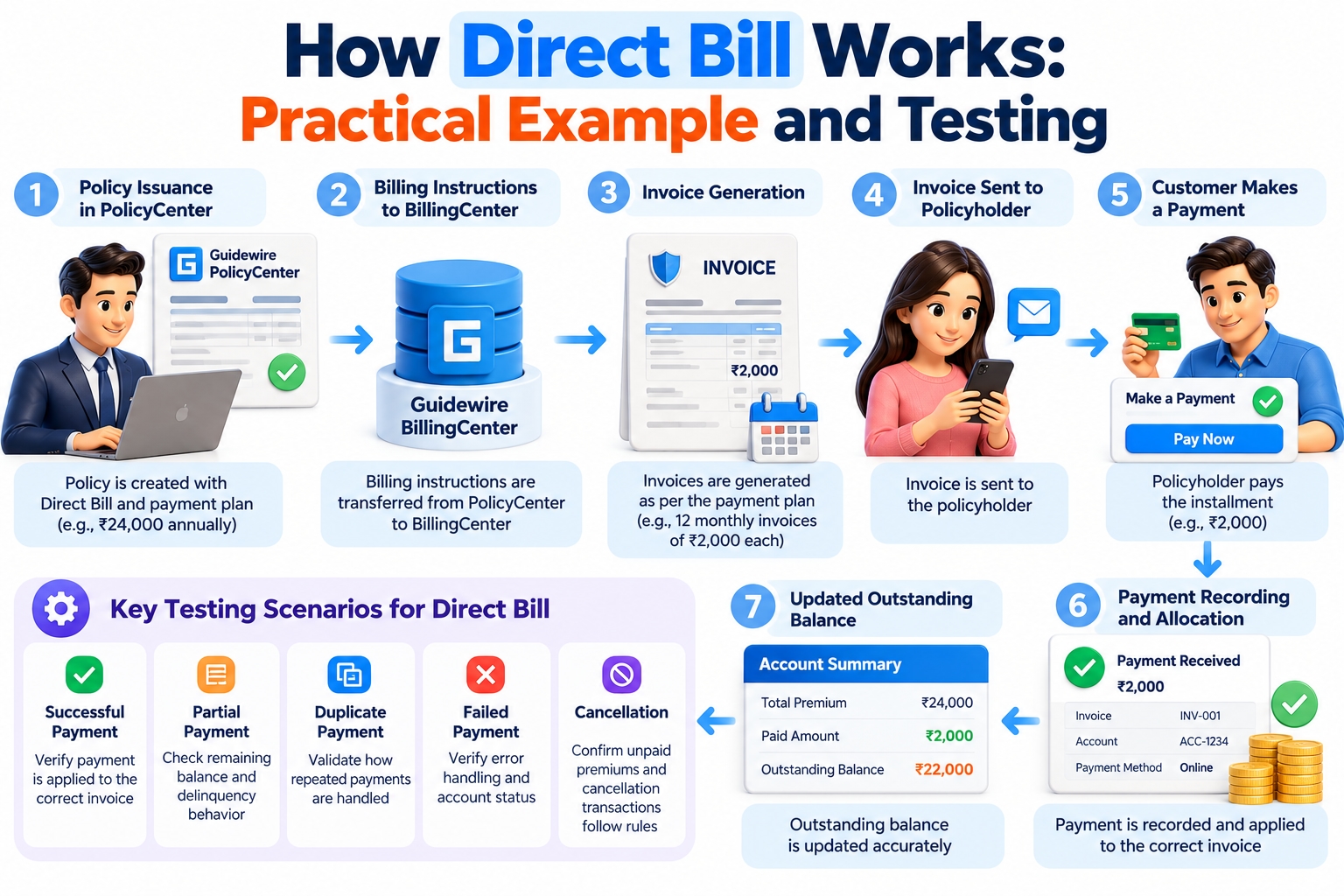
Consider a motor insurance policy with an annual premium of ₹24,000. The insurer selects a monthly payment plan, dividing the premium into 12 installments of ₹2,000, excluding any additional charges that may apply.
When the policy is issued in PolicyCenter, the billing instructions are transferred to BillingCenter. BillingCenter generates invoices according to the configured payment plan and sends them to the policyholder. When the customer pays an installment, the system records the payment and applies it according to the configured allocation rules.
Example testing scenario:
A QA tester issues the policy, verifies that billing instructions reach BillingCenter, and checks whether the first installment invoice is generated correctly.
The tester then submits a payment of ₹2,000 and verifies that the payment is recorded successfully, the correct invoice is updated, and the outstanding balance reflects the transaction.
Additional Direct Bill test cases include:
Successful payment: Confirm that the payment is applied to the correct invoice and account.
Partial payment: Verify the remaining balance and applicable delinquency behavior.
Duplicate payment: Check how repeated payment submissions are handled.
Failed payment: Validate error handling and the resulting account status.
Cancellation: Confirm that unpaid premiums and cancellation-related transactions follow configured rules.
The expected result is accurate financial processing without duplicate transactions, incorrect allocations, or unexplained outstanding balances.
How Agency Bill Works: Practical Example and Testing
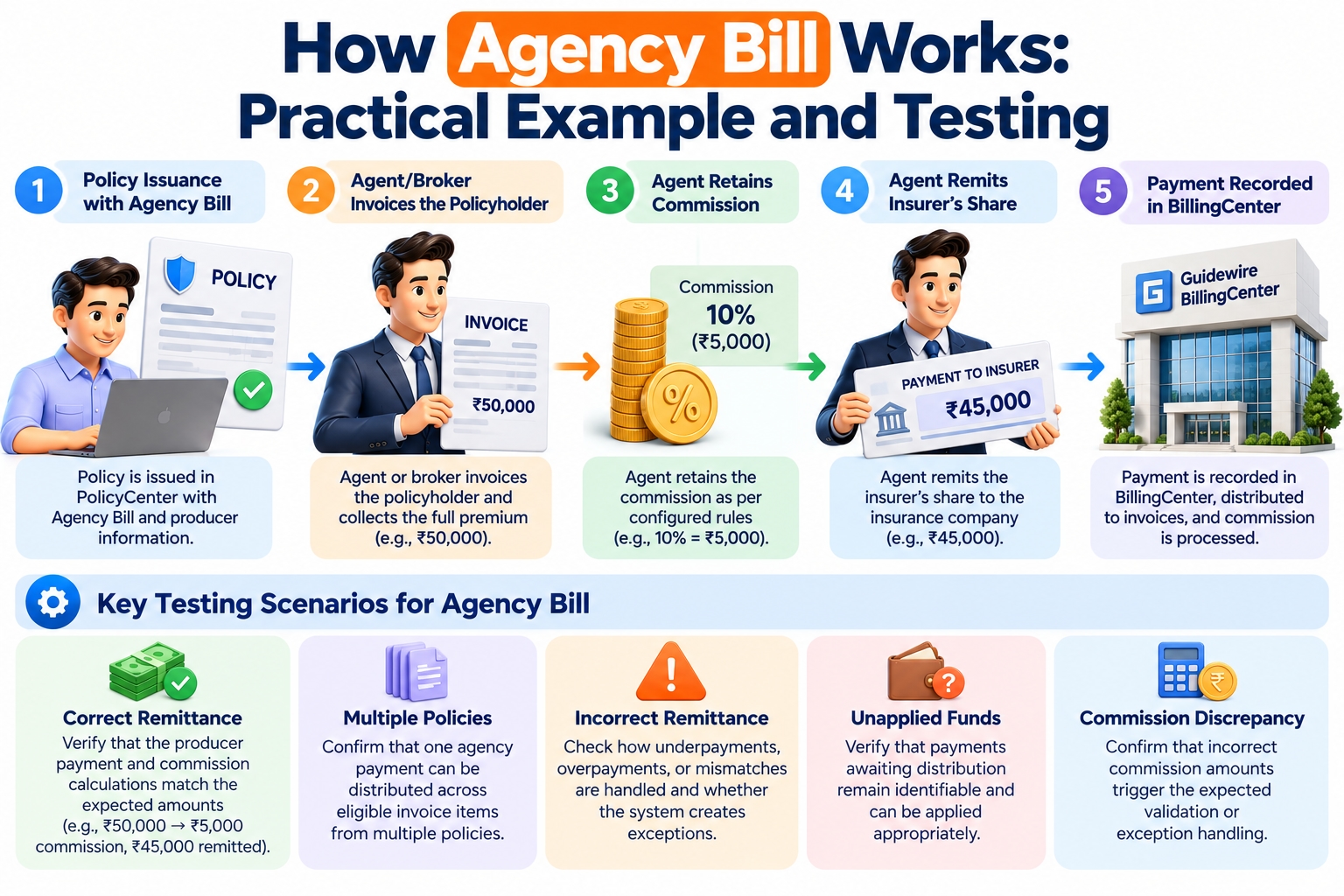
Consider a commercial insurance policy with a premium of ₹50,000 and a producer commission of 10%. Under this example, the producer collects ₹50,000 from the policyholder and retains ₹5,000 as commission. The producer remits ₹45,000 to the insurer.
In BillingCenter, the agency bill payment represents the funds received from the producer. Depending on the configured workflow, the payment may be entered first and distributed later, or entered with distribution details. The system must reconcile the payment with the relevant invoice items and commission amounts.
Example testing scenario:
A tester issues an agency-billed policy and verifies that the correct billing method and producer information are associated with the transaction. The tester then records an agency bill payment of ₹45,000 and checks whether the commission and invoice settlement are processed according to the configured rules.
Important Agency Bill test cases include:
Correct remittance: Verify that the producer payment and commission calculations match the expected amounts.
Multiple policies: Confirm that one agency payment can be distributed across eligible invoice items.
Incorrect remittance: Check how underpayments, overpayments, or mismatches are handled.
Unapplied funds: Verify that payments awaiting distribution remain identifiable and can be applied appropriately.
Commission discrepancy: Confirm that incorrect commission amounts trigger the expected validation or exception handling.
Testers should distinguish the payment amount received from the gross amount being settled. These amounts are not necessarily identical because commission deductions and distribution rules affect the calculation.
Key Differences That Matter During QA Testing
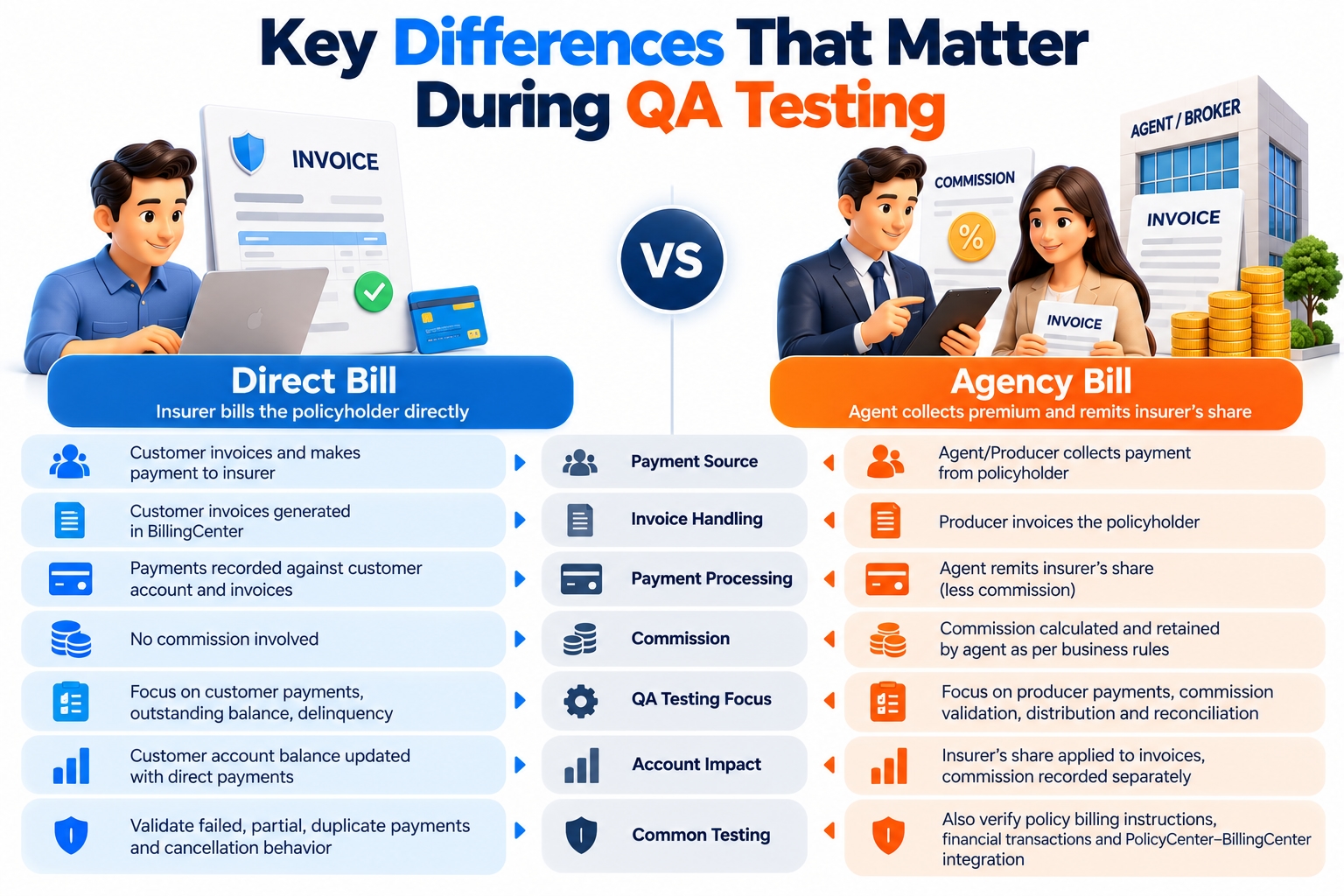
Although both billing methods manage insurance premiums, their financial workflows create different testing priorities. Direct Bill primarily focuses on payments received from policyholders, while Agency Bill requires additional validation of producer remittances and commissions.
For example, a Direct Bill payment of ₹10,000 should be evaluated against the customer's applicable invoice and outstanding balance. In Agency Bill, a producer might remit ₹9,000 against a ₹10,000 premium when the configured commission is ₹1,000. The tester must verify that the gross settlement, commission treatment, and net remittance reconcile correctly.
The main differences affecting test coverage include:
Payment source: Direct Bill receives payment from the policyholder; Agency Bill receives remittance from the producer.
Commission handling: Agency Bill requires explicit validation of commission deductions and related calculations.
Payment distribution: Agency Bill may involve distributing a producer payment across multiple invoice items.
Reconciliation: Direct Bill emphasizes customer account and payment reconciliation; Agency Bill also requires producer-level reconciliation.
Exception management: Both methods require negative testing, but Agency Bill introduces additional scenarios involving commission and distribution mismatches.
For QA teams, these differences should be reflected in separate test cases rather than treating both billing methods as interchangeable payment workflows.
Professionals pursuing Guidewire Training in Chennai or Guidewire Training in Hyderabad can strengthen their practical understanding by working through these scenarios in a configured BillingCenter environment. JastTech can use such examples to help learners connect insurance billing concepts with realistic software testing activities.
End-to-End Testing Scenarios and Best Practices
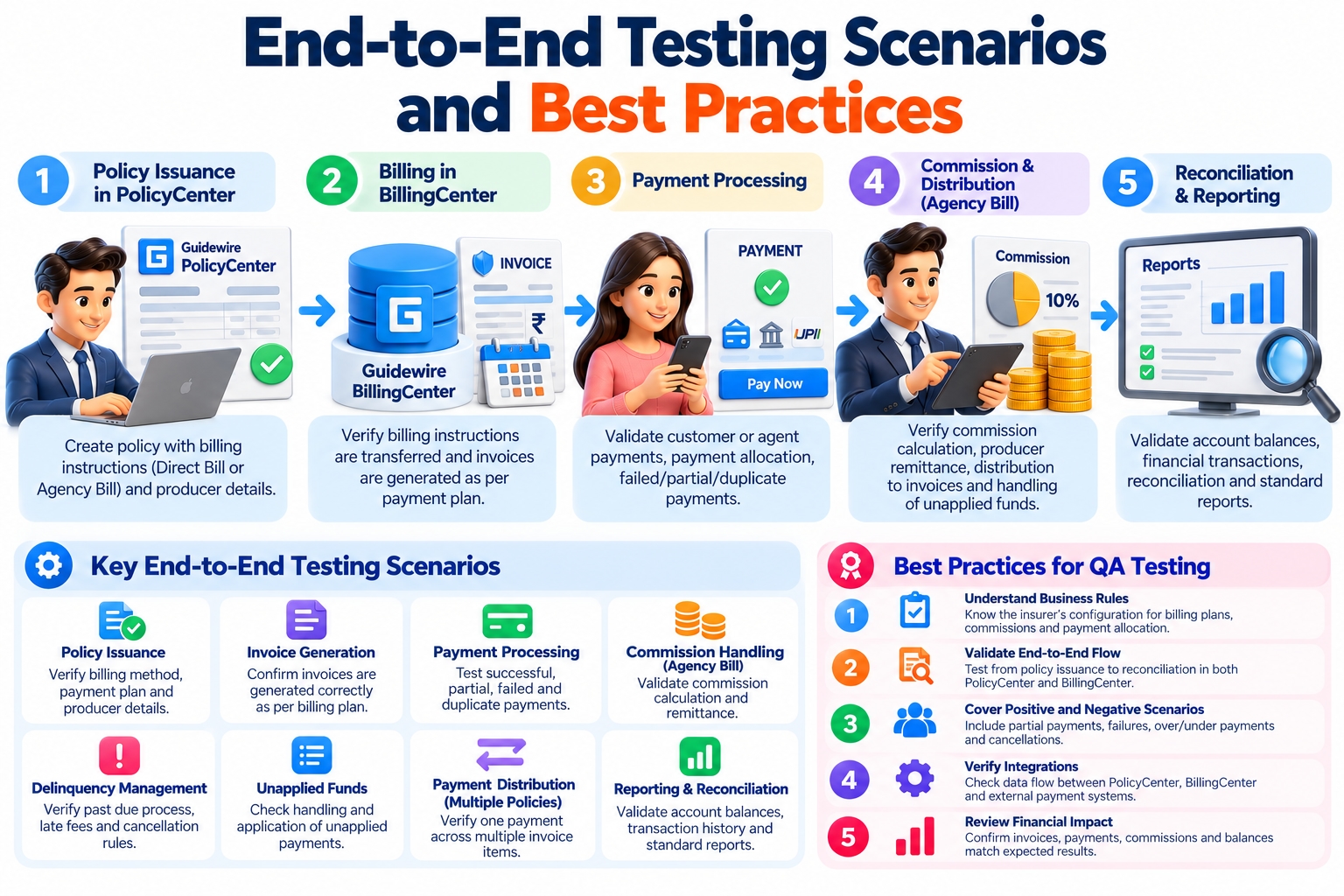
Effective Guidewire billing testing goes beyond checking whether a payment transaction succeeds. Testers must validate the complete lifecycle, from policy issuance to financial reconciliation, while checking that each transaction produces the expected business outcome.
Start by preparing policies with different billing methods, payment plans, premiums, commission rates, and account configurations. Execute positive and negative scenarios, then compare the actual system results against documented business expectations.
A practical end-to-end test suite should include the following:
Policy issuance: Verify that the selected billing method and billing instructions reach BillingCenter correctly.
Invoice generation: Confirm premium amounts, installment schedules, due dates, and invoice ownership.
Payment processing: Validate payment entry, successful application, and appropriate handling of failed transactions.
Agency reconciliation: Verify commission calculations, producer remittances, payment distributions, and unapplied balances.
Delinquency processing: Confirm that overdue invoices trigger the expected notices, collection activities, or cancellation workflows.
Integration testing: Check that relevant financial information remains consistent across PolicyCenter, BillingCenter, and connected systems.
Regression testing: Repeat critical scenarios after configuration changes, upgrades, or defect fixes.
Use clear test data and maintain traceability between requirements, test cases, defects, and execution results. For automated tests, validate business outcomes and financial balances rather than relying exclusively on successful screen navigation or API responses.
Remember that billing behavior can vary across Guidewire versions and insurer-specific implementations. Testers should confirm the expected results against the project's configuration and approved business requirements.
Conclusion
Understanding Guidewire Direct Bill vs Agency Bill is fundamental to reliable BillingCenter testing. Direct Bill centers on collecting premiums directly from policyholders, whereas Agency Bill introduces producer collections, commission deductions, payment distribution, and additional reconciliation requirements. Both methods demand accurate invoice processing, financial validation, and appropriate exception handling.
For aspiring Guidewire testers and experienced QA professionals, practical scenarios provide a stronger foundation than definitions alone. By testing successful payments, partial settlements, commission discrepancies, unapplied funds, delinquency workflows, and end-to-end integrations, teams can identify defects earlier and improve billing accuracy. JastTech can help learners build relevant Guidewire knowledge through practical learning focused on real-world insurance workflows and software testing concepts.



