
Insurance technology is evolving beyond traditional policy administration and claims processing. Today, insurers need responsive digital portals, seamless customer journeys, and faster online services. For developers in Hyderabad, combining Guidewire Jutro with React development offers a practical way to enter the growing intersection of insurance technology and modern frontend engineering.
But learning React alone may not be enough to stand out. Understanding how digital insurance applications communicate with core insurance systems, handle customer information, and support real business workflows can help you build skills that employers value.
Why Guidewire Jutro and React Are Becoming Important for Digital Insurance Careers
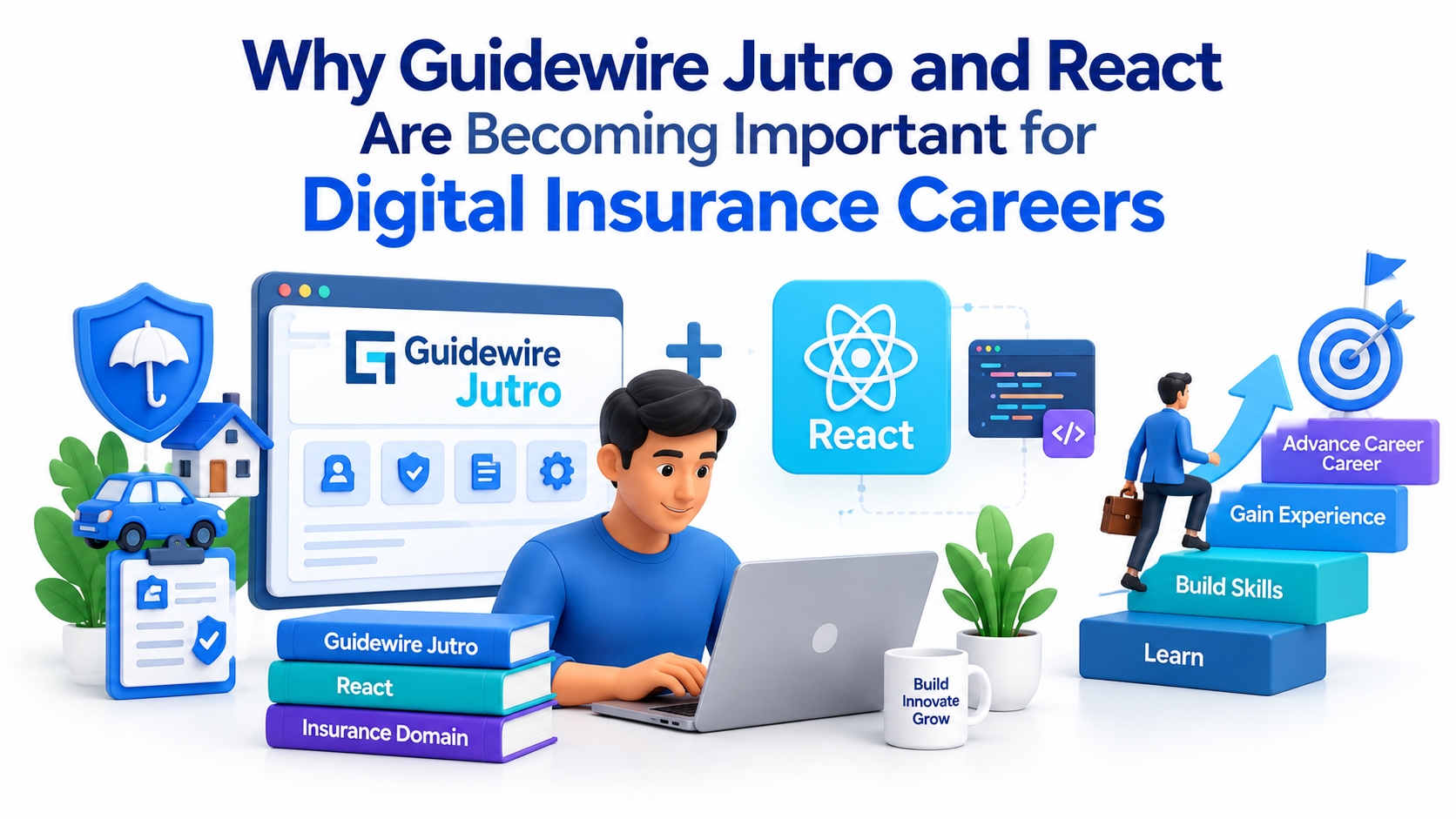
Insurance customers increasingly expect to purchase policies, submit claims, upload documents, and track claim progress through convenient digital channels. Insurers must deliver these experiences while connecting securely with their existing insurance systems.
Guidewire Jutro, part of the Jutro Digital Platform, helps developers build React-based digital applications for property and casualty insurance. It provides a design system, development tools, SDKs, and integration capabilities that support applications connected to Guidewire InsuranceSuite.
React supplies the underlying frontend development concepts, including components, properties, state, and reusable interfaces. Jutro adds insurance-oriented components and development capabilities that help teams build consistent customer and employee experiences.
Consider a customer filing a motor insurance claim. The interface might collect accident details, allow document uploads, validate required fields, and display a confirmation. The application then communicates with backend services to process the request.
For aspiring developers, this combination creates an opportunity to apply established frontend skills to specialized enterprise applications. However, employment opportunities depend on project requirements, experience, and demonstrated technical ability rather than familiarity with a product name alone.
Master React, JavaScript, and TypeScript Before Moving Into Jutro
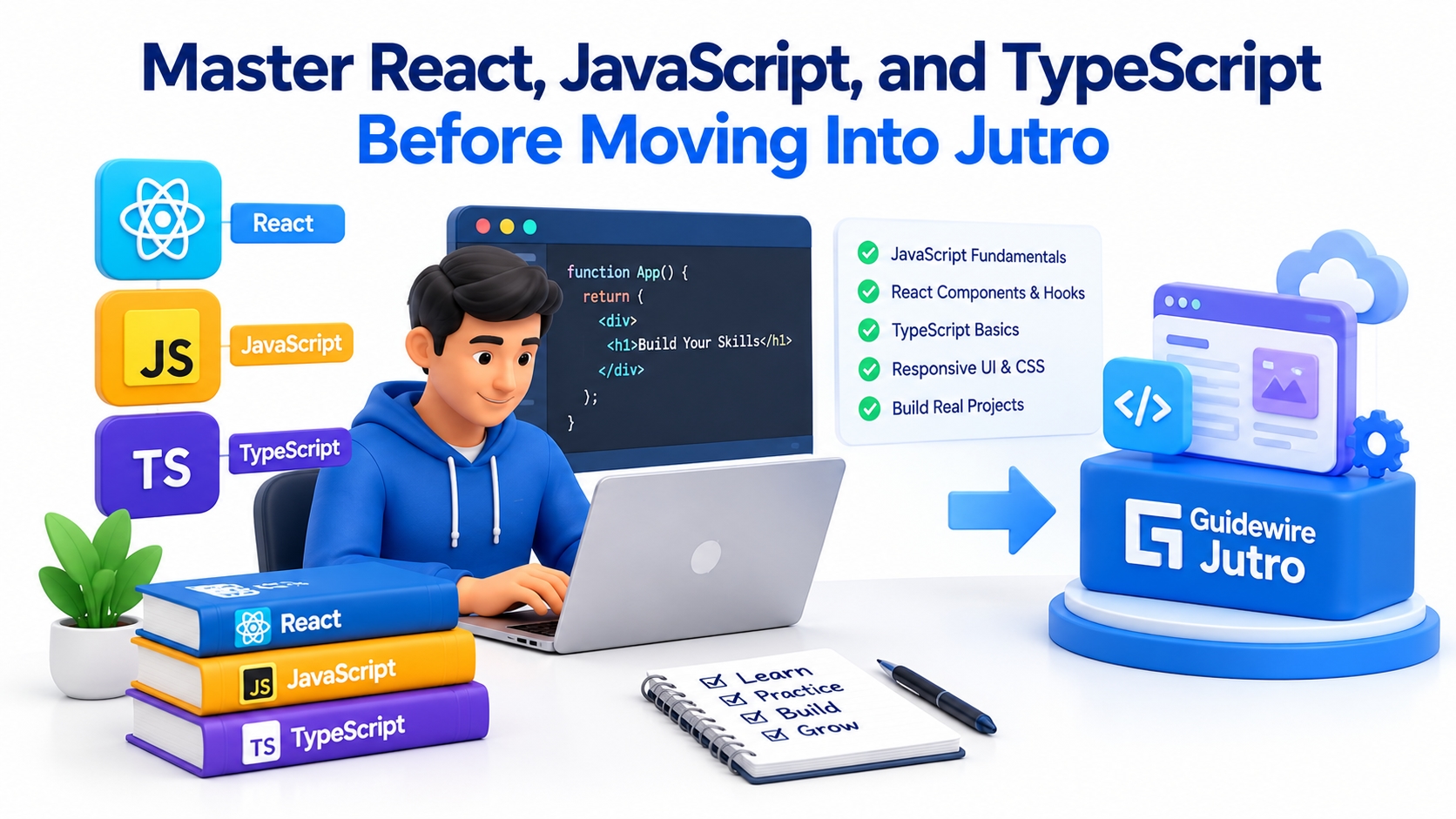
A strong frontend foundation makes specialized platform development easier. Beginners who jump directly into Jutro without understanding React may struggle to troubleshoot rendering problems, manage application state, or integrate APIs.
Start with JavaScript fundamentals, including functions, objects, arrays, promises, asynchronous operations, and error handling. Then learn React components, hooks, conditional rendering, forms, routing, and state management.
TypeScript is another valuable skill because it introduces static typing and helps developers identify certain errors before applications run. HTML and CSS remain essential for creating accessible, responsive interfaces that work across desktop and mobile devices.
A practical learning sequence includes:
JavaScript: Variables, functions, modules, promises, and asynchronous programming.
React: Components, hooks, props, forms, and reusable UI patterns.
TypeScript: Interfaces, types, generics, and typed component properties.
Frontend quality: Responsive layouts, accessibility, error handling, and browser debugging.
Development tools: Git, package management, browser developer tools, and automated testing.
Build a small insurance quotation interface before attempting a complete enterprise application. Include customer details, vehicle information, validation messages, and a quotation summary.
This exercise develops transferable frontend skills and provides a foundation for understanding how Jutro's components fit into a larger application architecture.
Understand Jutro Components, Design Systems, and Application Architecture
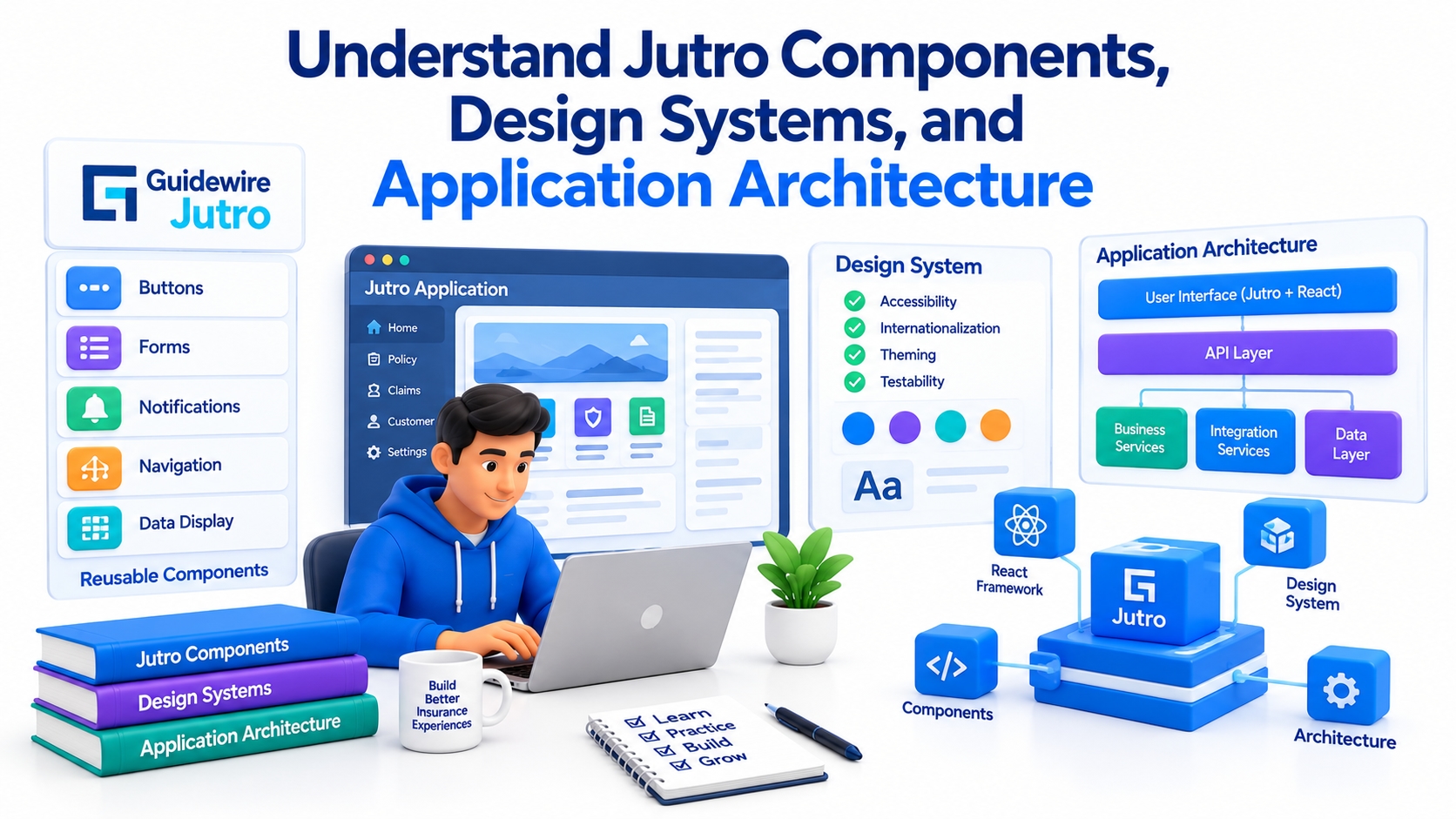
Once React fundamentals are established, learn how Jutro structures digital experiences. Its reusable components help developers create consistent interfaces without independently implementing every button, notification, form control, or interaction pattern.
The Jutro Design System also addresses concerns such as accessibility, internationalization, theming, and testability. These considerations are particularly important for enterprise applications serving different customer groups and supporting multiple business workflows.
Developers should understand how applications are organized, how shared components are configured, and how design requirements translate into functional interfaces. They should also learn the differences between standalone applications and micro frontends.
For example, an insurer might maintain a customer portal while embedding a smaller claim-status experience within another application. Jutro supports both standalone applications and micro frontends, depending on the architecture and deployment requirements.
When practising, focus on:
Creating reusable components rather than duplicating interface code.
Building forms with clear validation and accessible error messages.
Organizing application logic for easier maintenance.
Following the documentation for the specific Jutro version being used.
Understanding environment configuration and application deployment workflows.
Jutro's tooling and integration capabilities evolve over time, so version awareness is essential. Avoid assuming that a tutorial written for an older release will match the current development workflow.
The objective is not simply to reproduce a screen. It is to understand how a maintainable digital insurance application is designed, developed, tested, and prepared for deployment.
Learn Insurance Workflows and API Integration Through Practical Projects
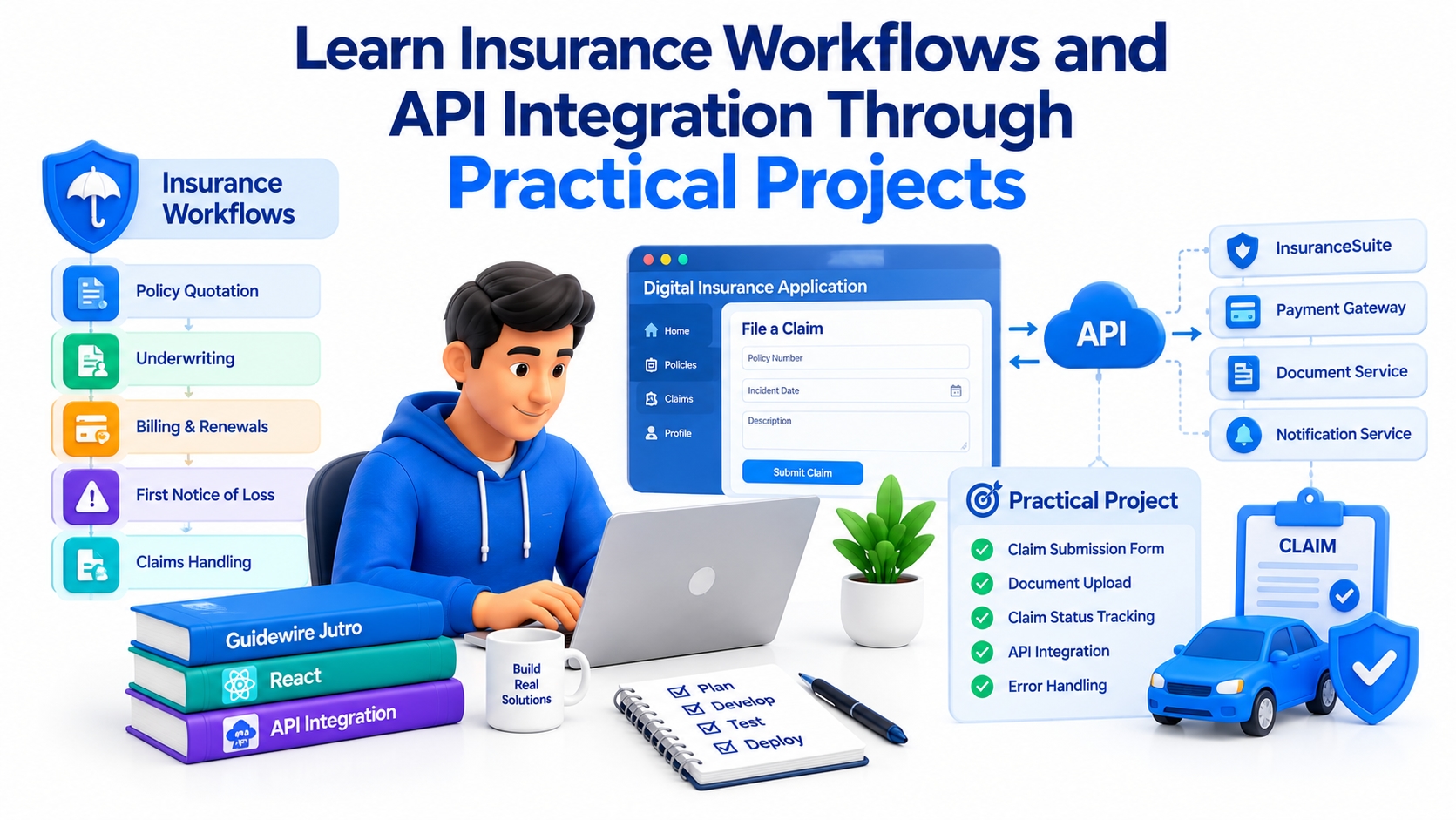
Frontend development becomes more valuable when developers understand the business processes behind the interface. Insurance applications are not ordinary websites: their forms, permissions, validation rules, and status messages reflect specific operational requirements.
Start by learning basic property and casualty insurance concepts, including policy quotations, underwriting, billing, renewals, first notice of loss, and claims handling.
You do not need to become an insurance specialist before writing your first component. However, understanding these workflows helps you ask better questions and design interfaces that reflect actual business needs.
Next, practise integrating frontend applications with REST APIs. Learn HTTP methods, request and response structures, authentication concepts, status codes, error handling, and asynchronous data loading.
A suitable portfolio project is a simplified motor insurance claim portal featuring:
A claim submission form with field validation.
A document-upload interface.
A claim-status page with loading and error states.
An API integration layer that separates network requests from UI components.
Clear handling of authentication failures and unsuccessful requests.
Use mock services or an authorized development environment when real InsuranceSuite access is unavailable. Do not assume that public access to a live insurance system is available to independent learners.
When using Guidewire Cloud APIs and Jutro SDKs, follow the relevant documentation and security requirements. Never expose credentials in frontend code or place sensitive customer information in unsecured test environments.
This combination of business knowledge and technical practice demonstrates that you understand more than interface design: you understand how digital experiences connect to enterprise processes.
Build a Career Roadmap for Guidewire Professionals in Hyderabad

Hyderabad offers opportunities across enterprise software development, consulting, insurance technology, and digital transformation. However, individual vacancies differ in their requirements, and candidates should evaluate actual job descriptions rather than assume every Guidewire role requires the same technical stack.
A useful learning roadmap depends on your starting point.
For fresh graduates: Begin with JavaScript, React, TypeScript, HTML, and CSS. Develop a portfolio project and learn fundamental insurance terminology before specializing in Jutro.
For experienced frontend developers: Focus on Jutro's component system, development tools, InsuranceSuite API integration, testing, and deployment workflows. Your existing React experience can help you transition more efficiently.
For Guidewire backend developers: Build frontend expertise in React and TypeScript, then learn how Jutro applications interact with existing configuration, integration, and business services.
For learners exploring guidewire training in hyderabad, evaluate programs according to practical coverage rather than duration or marketing promises. A useful curriculum should explain the platform architecture, provide guided exercises, include API integration practice, and prepare learners to troubleshoot realistic problems.
Before enrolling, ask whether the training uses a current Jutro version, whether learners receive authorized hands-on access, and whether projects include testing and debugging.
A structured career plan should also include regular portfolio reviews, technical interview preparation, and applications to relevant digital developer positions. Training can provide direction, but independent practice and demonstrable project work remain essential.
Develop a Portfolio That Demonstrates Job-Ready Digital Insurance Skills
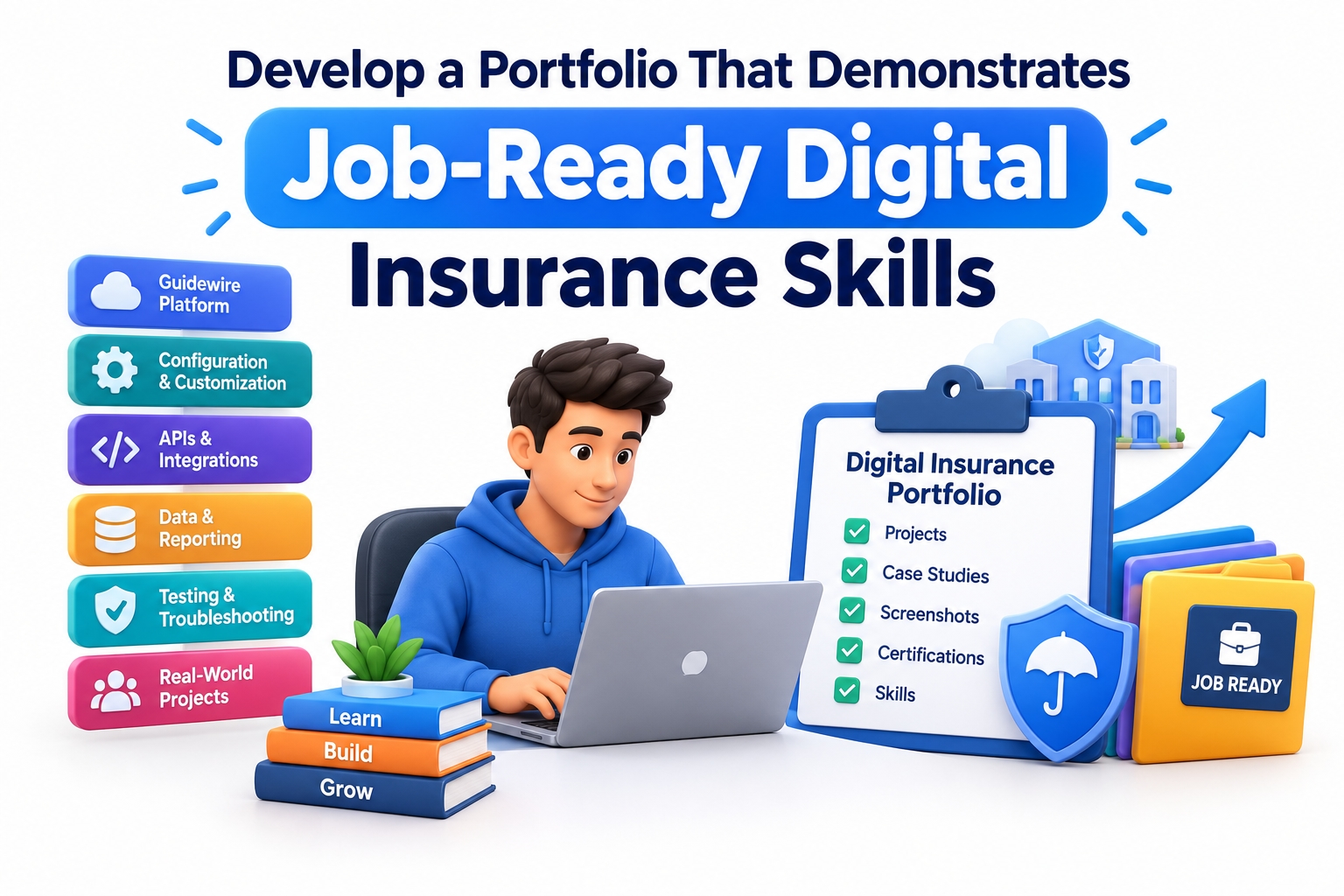
A portfolio helps employers evaluate how you approach real development problems. Instead of creating several disconnected demo screens, build one coherent insurance application that demonstrates reusable components, API communication, validation, testing, and maintainable code.
Your project should explain the business problem, intended users, technical architecture, key workflows, and design decisions. Include screenshots in your portfolio if appropriate, but ensure the code and documentation communicate the actual implementation.
Testing deserves particular attention. Learn unit testing with tools such as Jest and React Testing Library, and practise checking both successful and unsuccessful user interactions.
For a claim submission feature, test whether required fields are validated, error messages appear correctly, API failures are handled gracefully, and successful submissions produce the expected confirmation. These scenarios demonstrate practical engineering judgement.
Prepare to discuss technical trade-offs during interviews. An interviewer may ask how you would prevent duplicate submissions, handle expired authentication, improve rendering performance, or keep API logic separate from presentation components.
Candidates should also understand Git workflows, code reviews, Agile collaboration, and basic continuous integration concepts.
As your experience grows, expand into application architecture, security, performance optimization, and cloud deployment. This progression supports a broader career roadmap for Guidewire professionals in India, from junior digital developer positions toward senior engineering and technical leadership roles.
Conclusion
Guidewire Jutro and React offer a focused learning path for developers interested in modern digital insurance applications. The strongest foundation combines JavaScript, TypeScript, reusable UI development, API integration, insurance workflows, and disciplined testing. Rather than relying on theoretical knowledge alone, build practical projects that demonstrate how customer-facing interfaces connect with enterprise insurance services.
For aspiring professionals in Hyderabad, the next step is to assess your current frontend skills, identify the gaps in your knowledge, and follow a measurable learning plan. Choose training carefully, practise with authorized tools, consult current platform documentation, and prepare a portfolio that reflects real development challenges. Consistent practice and a clear technical foundation will position you more effectively for relevant digital insurance opportunities.



