
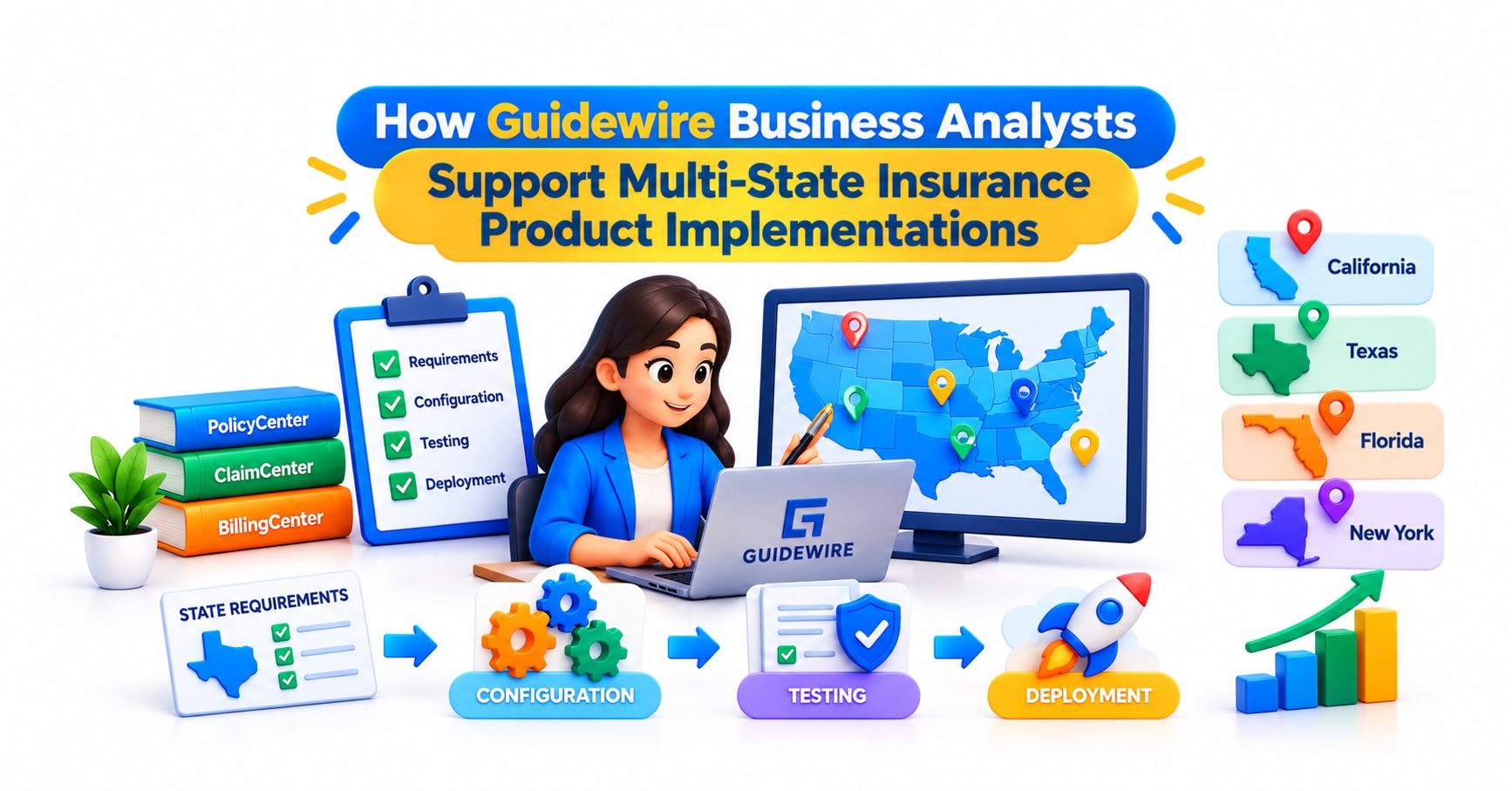
A personal auto policy that looks identical on a quote screen can behave very differently in Texas and New York. The forms, cancellation notices and rating rules all change. Guidewire business analysts sit in the middle of that problem, turning scattered state requirements into something a configuration team can build. Anyone starting out through Guidewire training in Bangalore will meet this challenge sooner than expected.
So what does the work look like day to day, and where do projects go wrong? The answer starts well before anyone opens Studio.
Why One Product Becomes Fifty Different Products
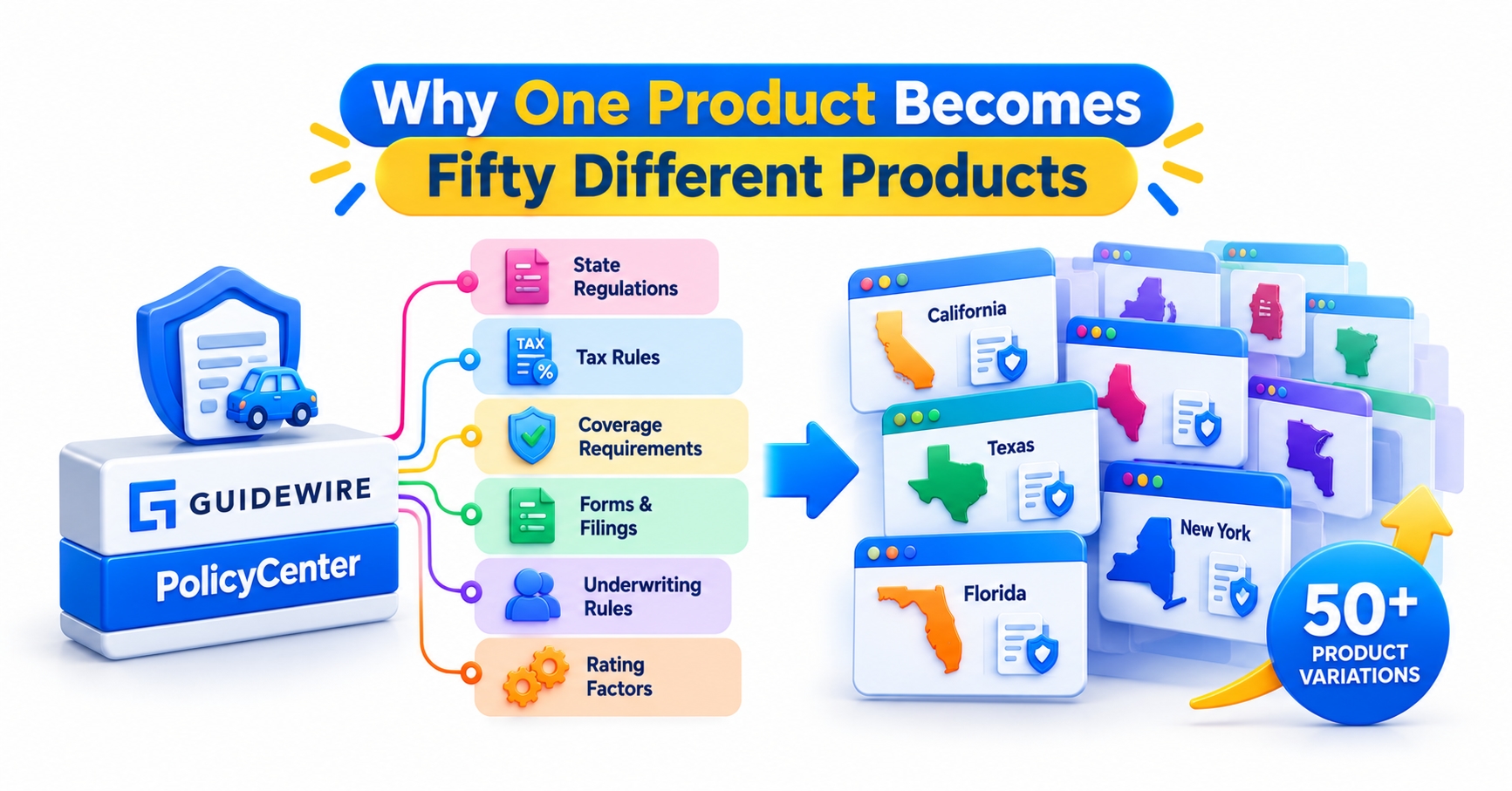
Insurance in the United States is regulated state by state, so a “single” product is rarely single. A carrier may market one homeowners product under one brand, but each state decides which rates are approved, which policy forms may be issued, what notices must say and how quickly a policy can be cancelled or non-renewed.
Some states require regulators to approve rates before they are used. Others allow a company to file them after launch. That difference alone affects the project plan, because a product may be ready in the system months before it is legally ready to sell in a given state.
For a business analyst, this means the first job is not writing requirements. It is understanding which parts of the product are shared and which parts vary. Core coverages, such as dwelling or liability, usually stay consistent across states. What changes is the detail: limits that are offered, deductible options, mandatory endorsements, mandatory disclosures and the wording attached to each form.
A practical way to think about it is a base product with state overlays. The base holds what the company wants everywhere. Each overlay holds the state’s exceptions. Teams that skip this framing often end up with a separate copy of the product for every state, which is expensive to build and painful to maintain.
The overlay idea also explains why these projects are rarely “done.” Regulations change, filings are amended and new states are added. The analyst’s documentation has to survive all of that, not just the first go-live.
The Requirements Work That Happens Before Configuration
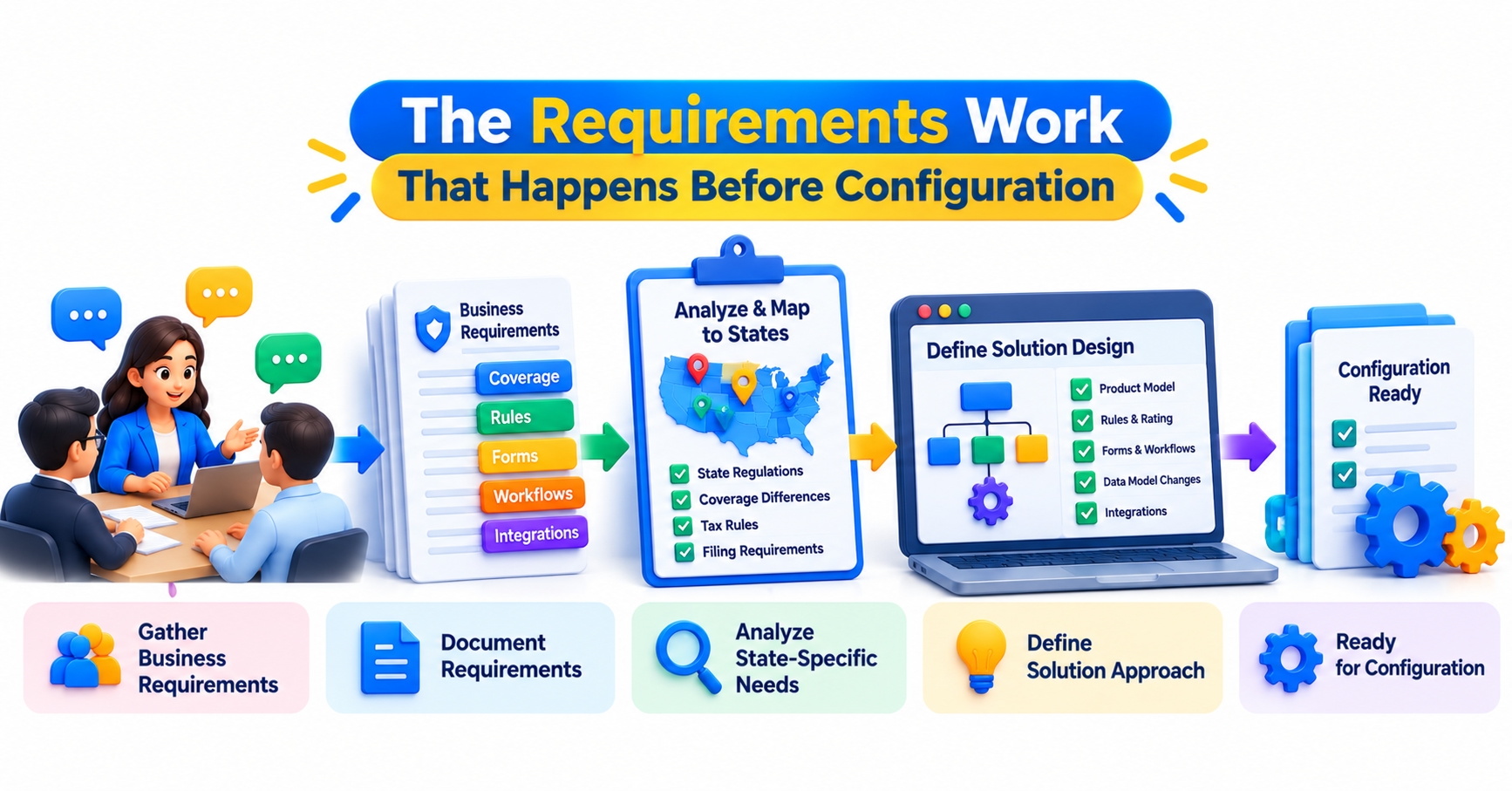
Good multi-state requirements begin with source material, not with workshops. Analysts collect the rate manuals, rules manuals, form libraries and filing documents for each state and read them against the carrier’s business intent. Product managers and compliance teams usually own those documents, but the analyst is the person who notices when two of them disagree.
The most useful artifact is a state variation matrix, usually kept as a spreadsheet. Each row is a product feature, such as a coverage, a rating factor, a form or an underwriting rule. Each column is a state. The cells record whether the feature behaves the standard way, differs, or does not apply. It is plain work, but it becomes the single reference that developers, testers and business owners all argue from.
From there, analysts translate the matrix into requirements that can be tested. Compare two statements. “Texas has different cancellation rules” is a note. “For a Texas policy cancelled for non-payment, the notice period is X days and the notice uses form Y” is a requirement, because a tester can check it. Writing the second kind takes longer, but it removes most of the rework that appears during testing.
Analysts also settle ownership early. Who confirms that a form version is current? Who signs off on a rate table? Who decides what happens to policies already in force when a state’s rule changes? Leaving those questions open is how a project reaches user acceptance testing with nobody able to say what the right answer is.
Finally, the analyst separates what must be configured from what can wait. A first release might launch three states with the full rule set, then add the rest in waves. Making that call openly, with the business, prevents surprises later.
Guidewire Business Analysts in Multi-State Insurance Product Implementations: What Changes in PolicyCenter
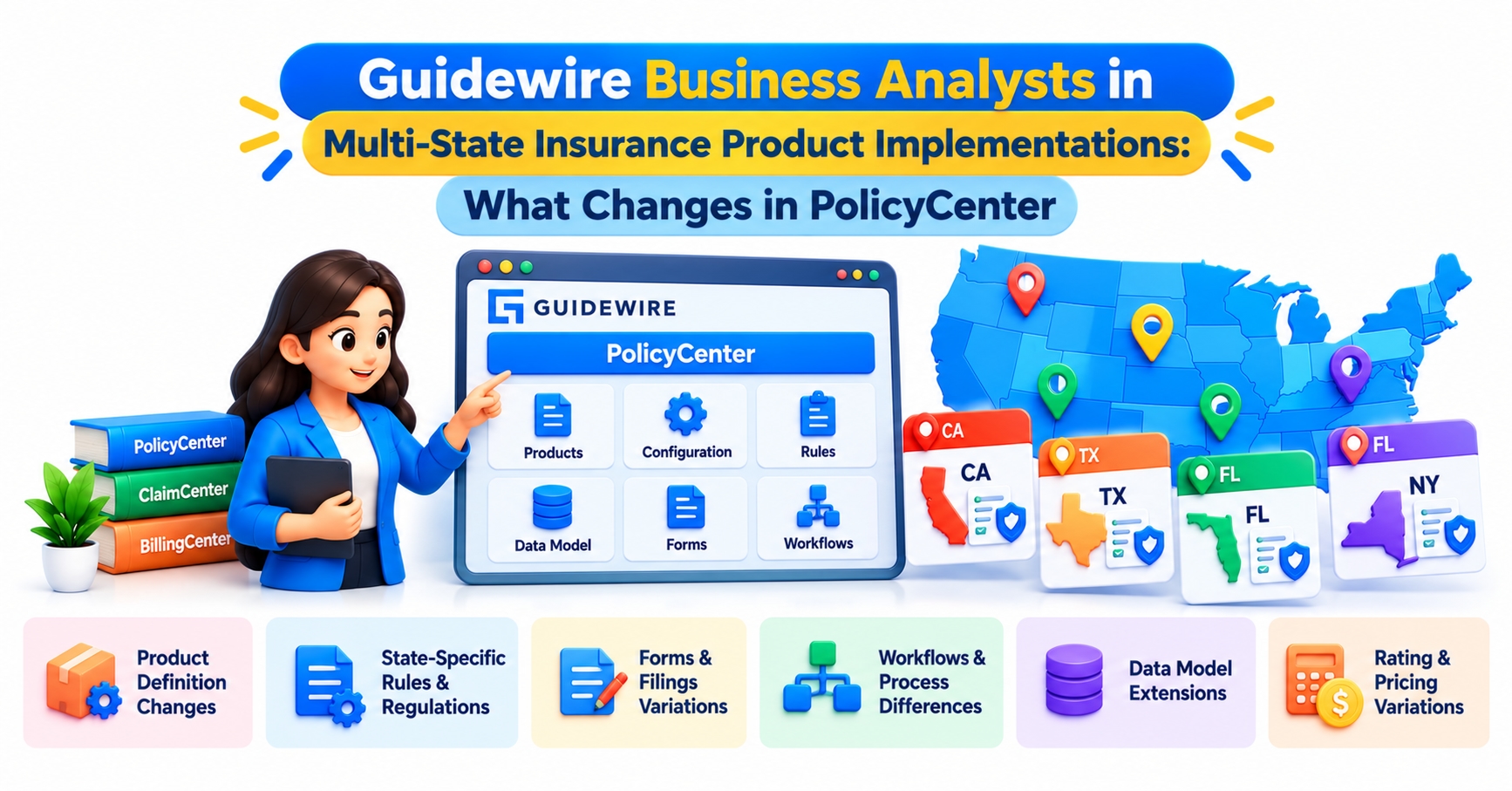
PolicyCenter is where most of the state-specific behavior lives, so it is where analysts spend most of their time on these projects. Its product model defines lines of business, coverages, coverage terms and the options available to an underwriter or agent. State differences are expressed as availability rules, defaults, required fields, and conditions that depend on the policy’s jurisdiction.
Rating is the heaviest area. Rate tables, factors and rules differ by state, and the analyst has to describe each calculation clearly enough that a developer can build it and a tester can reproduce it. A good specification includes worked examples with real inputs and the expected premium, not only a description of the formula.
Forms are the second pressure point. The analyst documents which forms attach to a policy under which conditions: state, coverage selected, property type, endorsement chosen. When a form is retired or revised, the requirement must also say what happens to existing policies and renewals.
Then there is effective dating. A rule that applies to policies effective on or after a given date must not disturb a mid-term change on an older policy. Analysts who understand how PolicyCenter treats effective-dated data catch problems here that business stakeholders never mention, because they are thinking about new business and not about endorsements.
Underwriting rules complete the picture. States may restrict what an insurer can use to decline, surcharge or non-renew, so referral and approval logic often varies too.
Analysts who want this depth in a structured form can look at a dedicated Guidewire Business Analyst training program that covers requirement gathering, configuration awareness and testing support together.
Billing and Claims: Where State Rules Surface Later
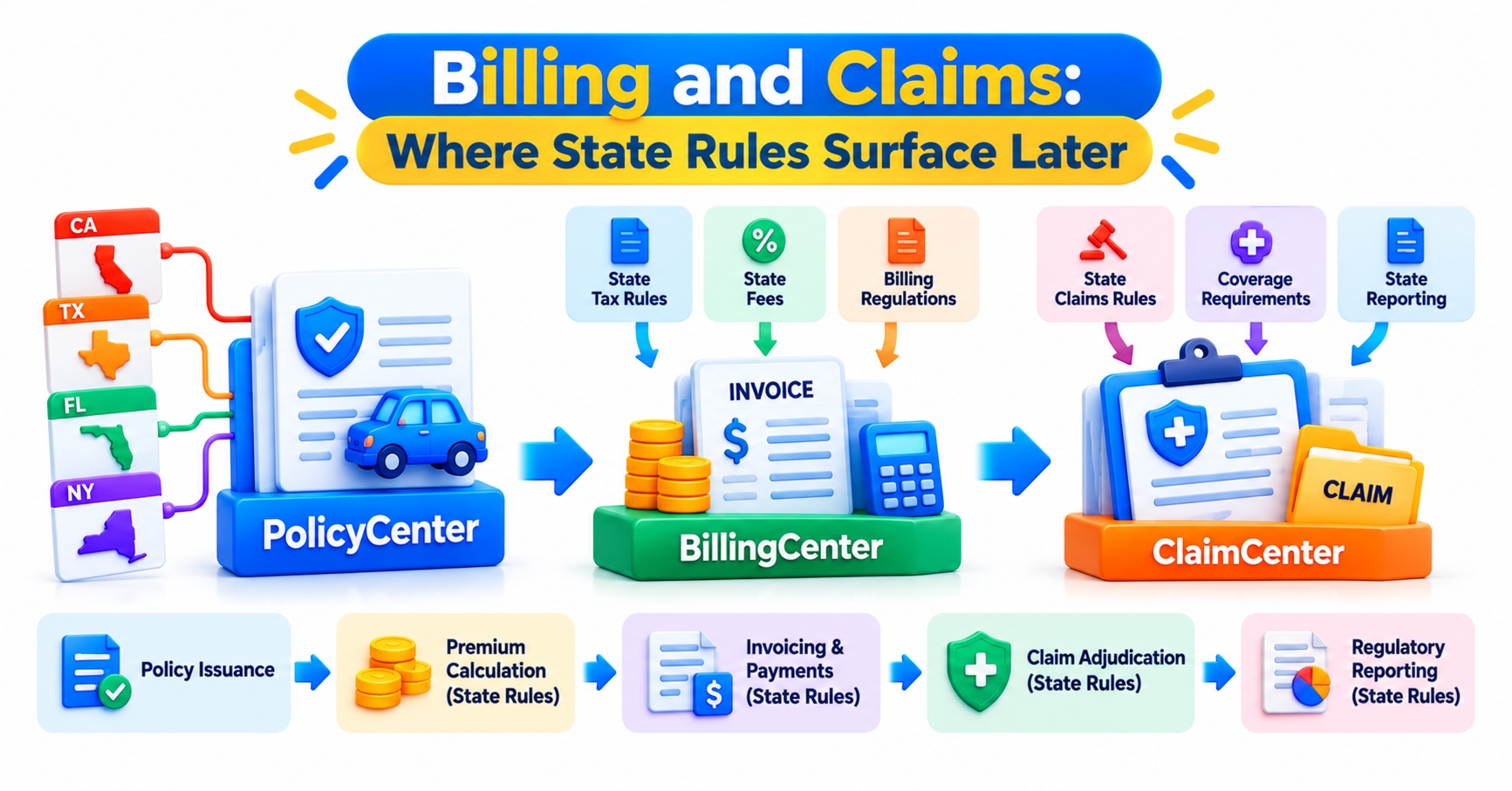
Teams often finish policy configuration and assume the hard part is over. Then billing and claims reveal rules nobody wrote down.
In BillingCenter, states can influence installment and late fees, the notice periods that must precede cancellation for non-payment, how refunds are returned and when. An analyst who only looked at the policy side will not have asked about these. The fix is to follow a policy through its whole life: quote, issue, billing, mid-term change, cancellation, renewal and, finally, a claim.
ClaimCenter has its own variations. Time limits for acknowledging a claim, for requesting information and for making payment decisions can differ by state. So can reporting requirements and the way certain coverages are handled. The analyst records those as explicit rules and confirms them with claims operations, since the people who handle claims every day often know exceptions that never reached a document.
Here is a hypothetical example. Imagine a carrier launching a homeowners product in two states at once. Policy configuration passes testing without problems. During billing tests, the team discovers that one state requires a longer cancellation notice than the other, and the first design used a single value. The fix is small, but because it appears late it touches billing configuration, notice templates and test cases at the same time. Walking the lifecycle early would have exposed it in a single workshop.
Integration points matter too. Policy, billing and claims often exchange data with rating services, document systems, payment providers and regulatory reporting tools. State differences can ride along on those interfaces, so analysts check what each external system expects for each jurisdiction instead of assuming one format fits all.
The lesson is consistent: state rules do not stay inside the module where they were first noticed.
Mistakes That Quietly Inflate Multi-State Projects
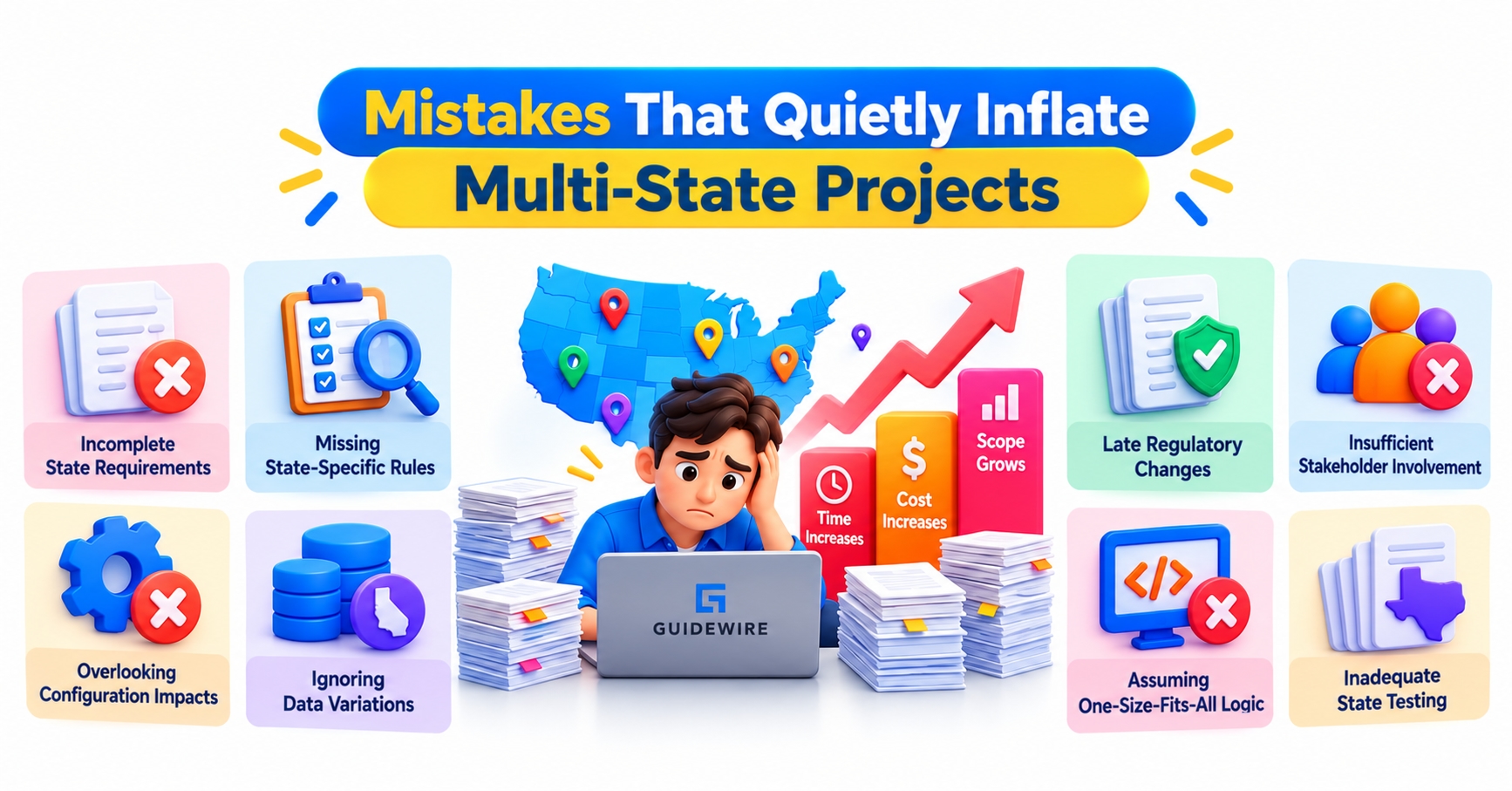
Most overruns on these programs come from a few repeating habits, and they are easy to recognize once you know them.
The most common is copying the first state’s design and editing it for each new one. It feels fast. Over time, small differences accumulate and nobody can say which version is correct. Starting from a shared base with documented overlays is slower in week one and much faster by state four.
A second mistake is treating regulatory documents as background reading. Filings are the authority for what the product must do. When requirements are written from conversation alone, they drift away from what regulators approved.
Third, teams test only the standard path. A multi-state test plan needs scenarios for each state’s exceptions: a mid-term coverage change, a late payment, a non-renewal, a claim reported close to a cancellation date. Without them, defects surface in production, where fixing them is far more costly.
Fourth, requirements get written with vague language. Phrases such as “per state rules” or “as filed” pass reviews and then fail during build, because a developer cannot configure a reference. Every requirement should carry the specific value, form number or rule it relies on.
Finally, there is change management. States update rules, and carriers update products. If the matrix and requirements are not maintained after go-live, the documentation turns into history, and the next enhancement starts with guesswork. Versioning the matrix and tying each change to a ticket costs little and keeps it trustworthy.
Skills and Habits Worth Building for This Work
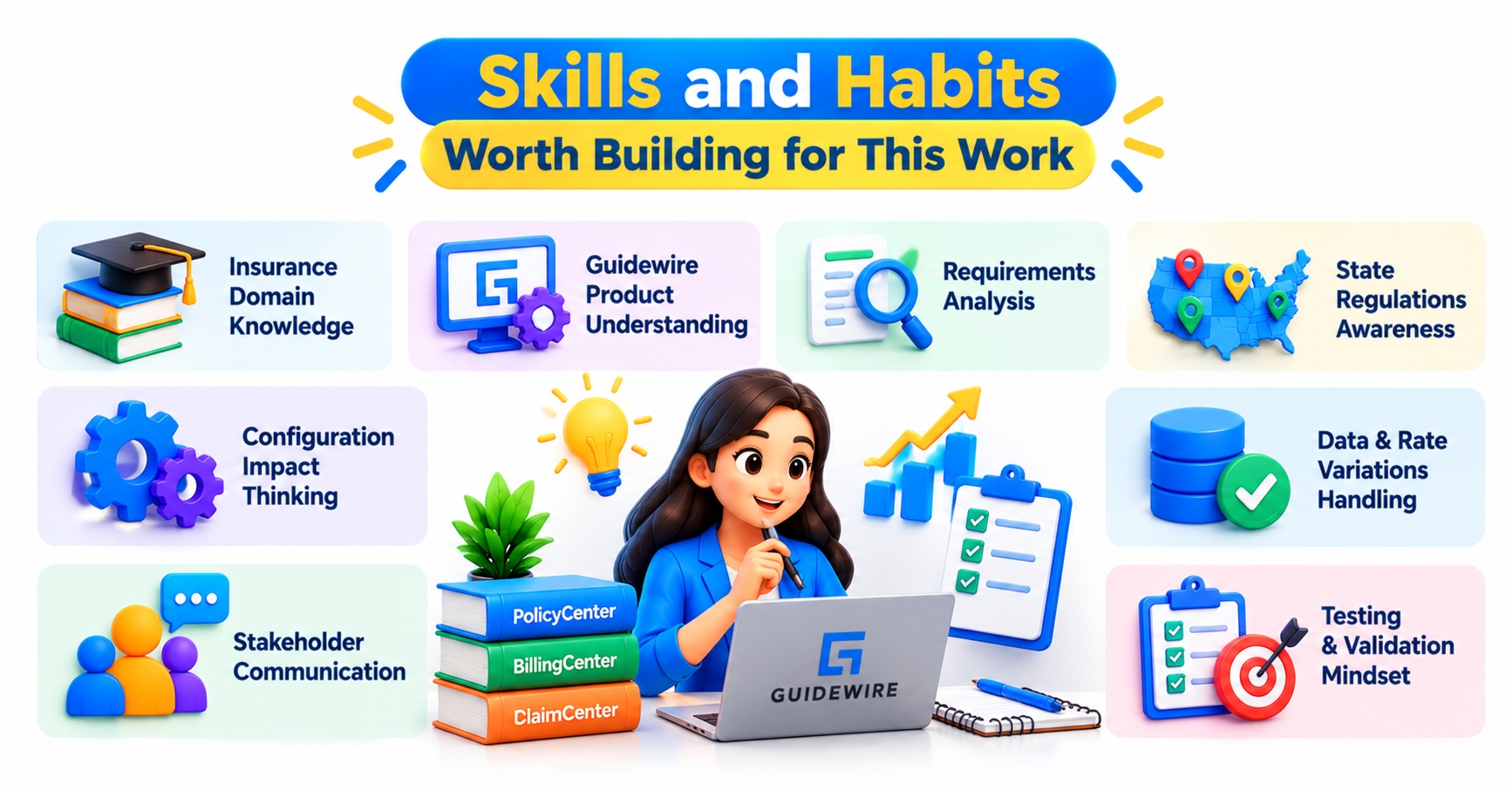
Strong analysts on multi-state projects combine three kinds of knowledge: insurance basics, Guidewire familiarity and careful communication. They know what a coverage, endorsement or rating factor is. They understand how PolicyCenter, BillingCenter and ClaimCenter divide responsibilities. And they can explain a regulatory rule to a developer in terms the developer can build.
Several habits help more than any tool. Read the filing before the meeting. Ask for a worked example whenever a rule involves a calculation. Write acceptance criteria with real values. Keep one source of truth for state differences, and refuse to let a second version appear in someone’s inbox.
Credentials can support this, though they are not a substitute for project judgment. Readers weighing that path will find useful context in this overview of Guidewire certification and career growth, which explains how certification fits alongside hands-on experience.
Practice matters as much as theory. At JastTech, learners work through scenario-style exercises, such as comparing how a rule differs between two states and writing it as testable requirements, because that is the skill hiring managers look for. Even without a live project, you can build the habit by picking any public rate or form filing summary and trying to turn it into acceptance criteria.
Conclusion
Guidewire business analysts make multi-state insurance product implementations possible by turning state-by-state regulation into clear, testable, maintainable requirements. The work rewards people who read the source documents, follow a policy through its whole life and write specifics instead of shortcuts. A carrier can configure fifty states with the same tools, but only careful analysis makes them behave correctly in each one.


