
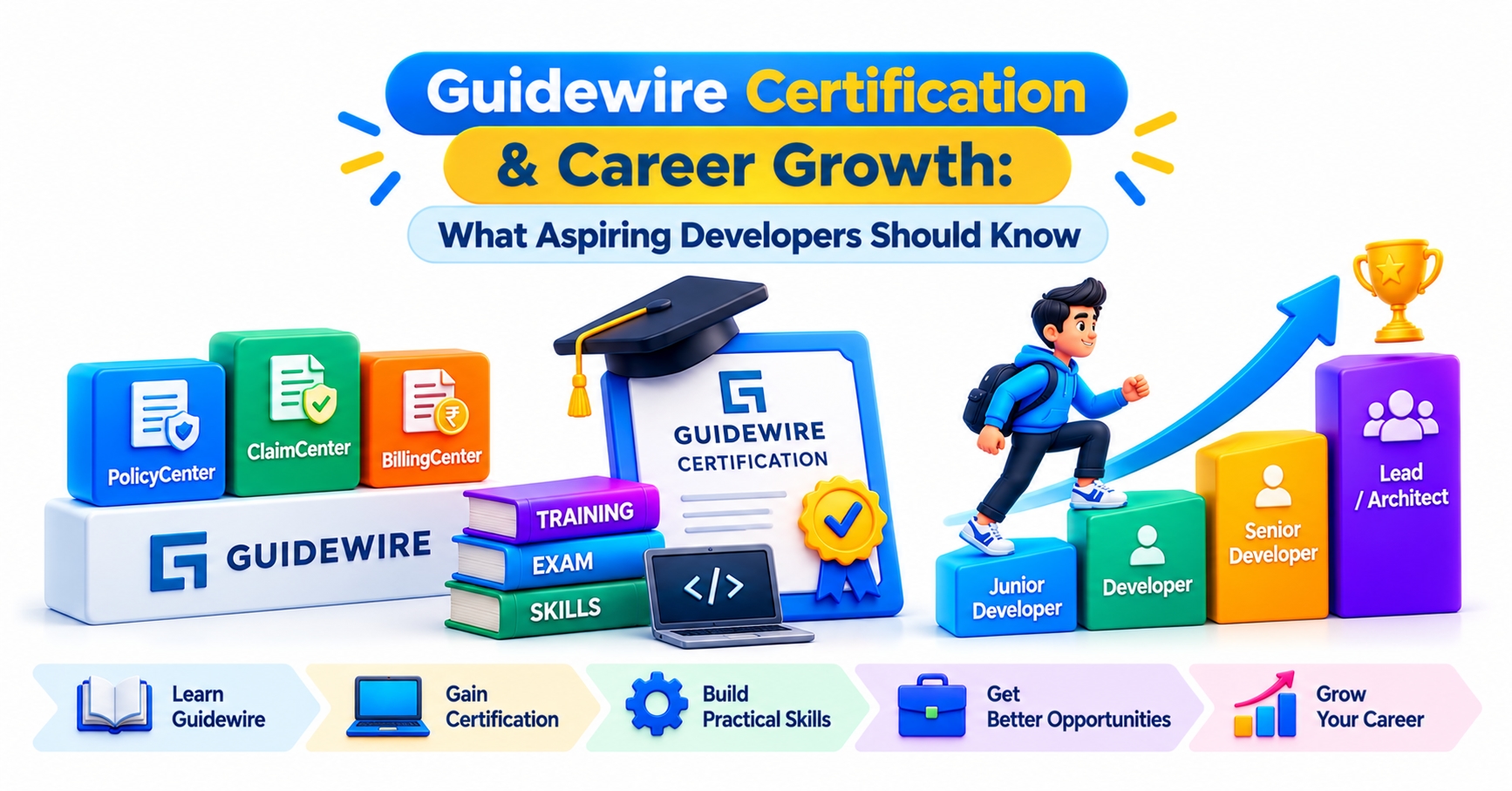
A fresher who can write Gosu but has never sat a vendor exam often assumes the badge is the finish line. On real projects it works more like a ticket into the room. Guidewire certification tells a hiring manager that you followed the vendor’s own curriculum, and learners who prepare through Guidewire training in Hyderabad tend to walk into interviews with a clearer map of what to study.
So which exam comes first, and what happens after you pass? The answers shape your first two years in the industry.
What Guidewire Certification Really Proves to Employers
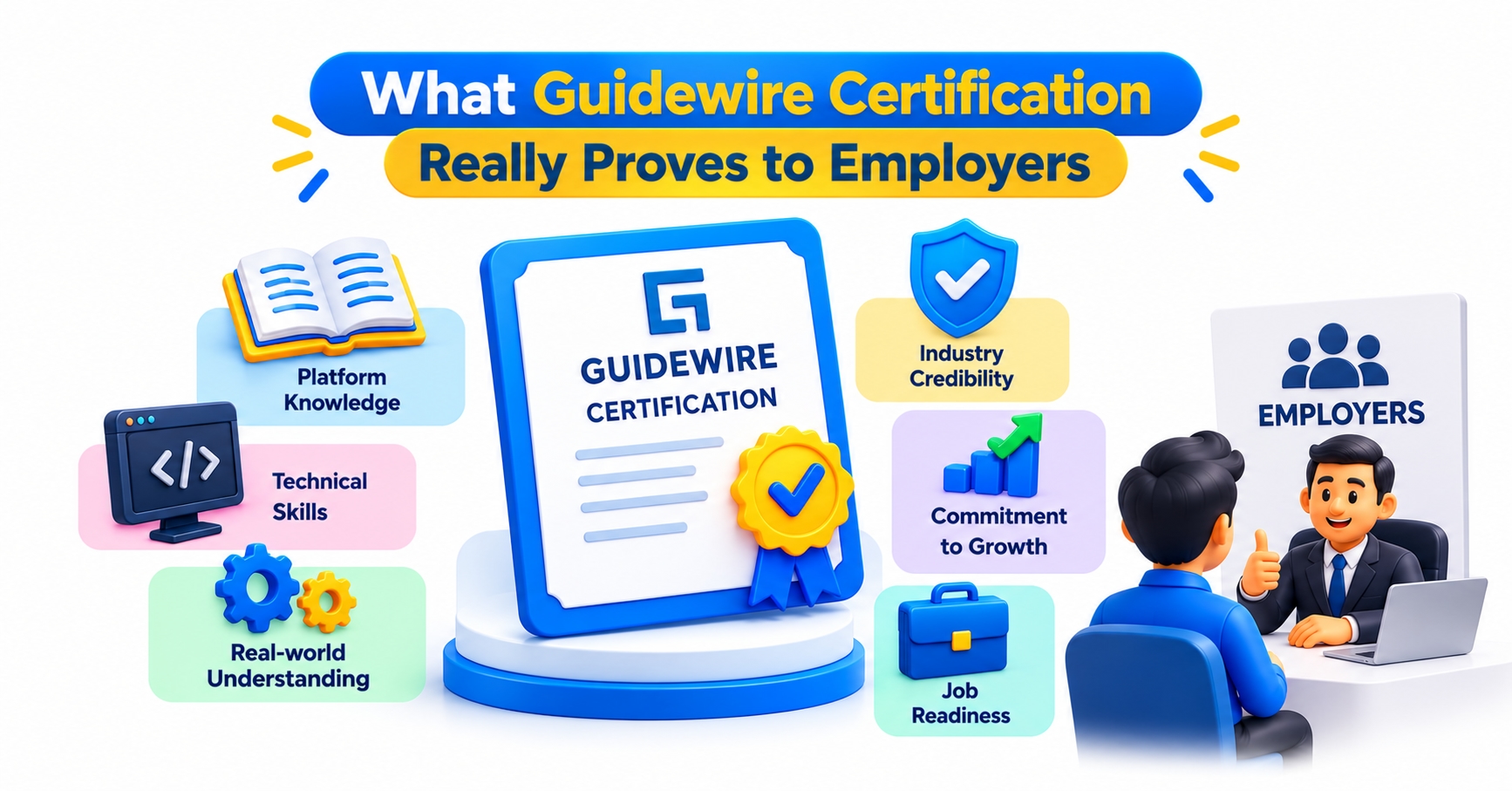
Guidewire certification is a vendor-issued credential, earned by completing Guidewire Education coursework and passing a remotely proctored exam. It is not a general insurance-IT certificate, and it is not issued by a training institute. That distinction matters, because employers know the difference between a course completion letter and an exam result from the product’s maker.
What does the badge actually prove? It shows you understand how the platform is meant to be used: how the data model fits together, how configuration differs from customization, and what “the Guidewire way” of solving a problem looks like. Project managers care about that, because a developer who fights the platform creates upgrade headaches for everyone who comes after.
There is also a practical, project-level reason certification keeps showing up in job descriptions. Guidewire’s cloud delivery standards expect people whose work touches requirements, code, configuration, integration, testing or cloud infrastructure to be certified. For a services company staffing a cloud implementation, a certified developer is easier to place than an uncertified one with the same skills.
Still, the badge has limits. It does not guarantee a job, and it does not replace project experience. A candidate with a certificate who cannot explain how an effective-dated policy change flows through PolicyCenter will struggle in a technical round. Think of certification as proof that you have the foundation, and your hands-on work as proof that you can build on it.
That is why the smartest candidates treat the exam as a by-product of learning the platform properly, not as a goal in itself. Before planning your preparation, though, you need to know which exam you are actually aiming for.
How the Guidewire Certification Path Is Structured
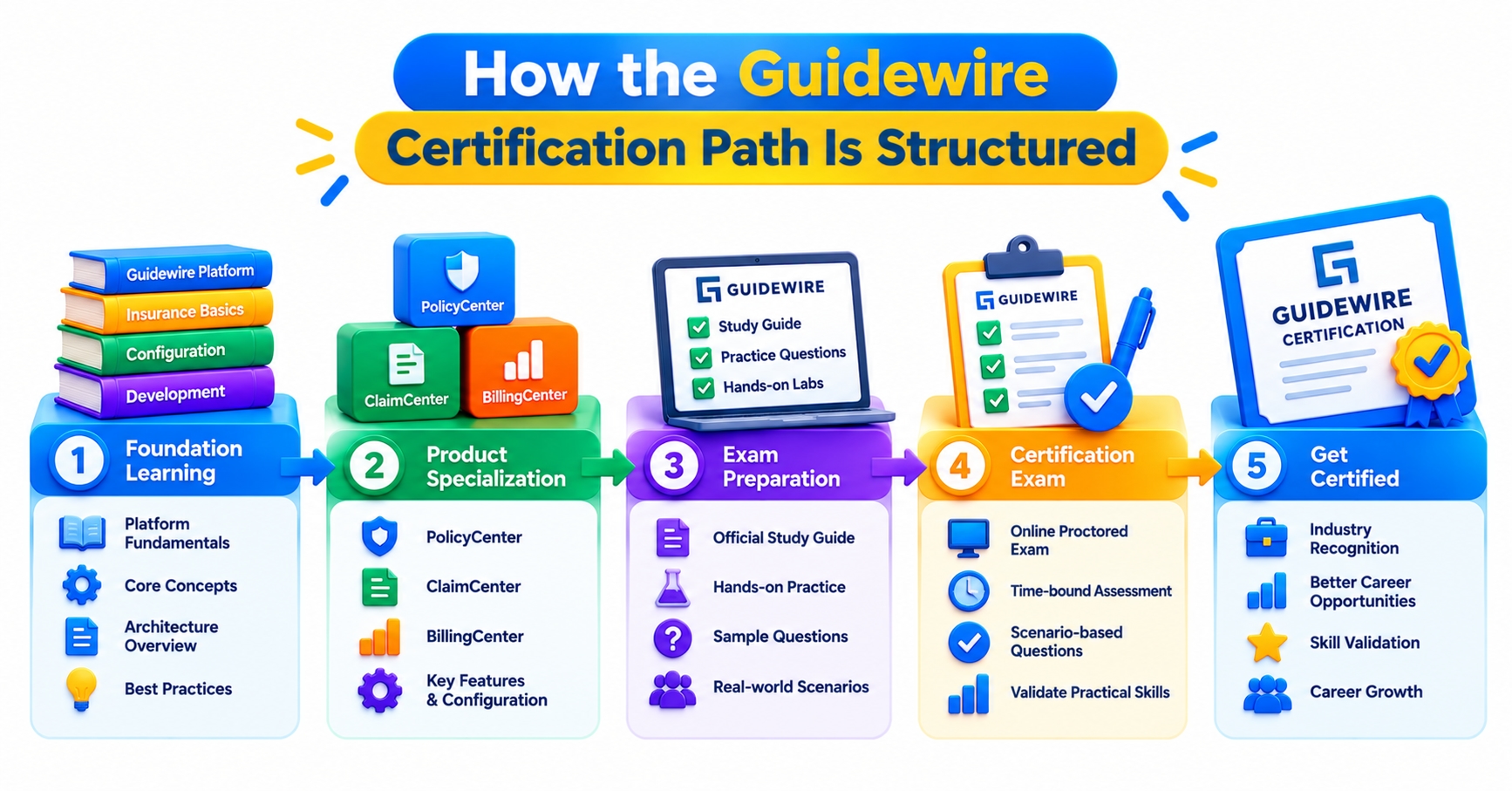
Guidewire’s developer program currently has two levels: Associate and Ace. Associate is the entry point. You complete the required base and platform courses, then pass a proctored exam. Ace sits above it and is meant for developers who go deeper into a specific product or integration skill set.
The pathways branch by the kind of work you do:
InsuranceSuite Developer (configuration and core): begins with the Associate exam. Ace then follows by product track, such as PolicyCenter, BillingCenter or ClaimCenter.
InsuranceSuite Cloud Integration Developer: requires the Associate InsuranceSuite Developer certification first, then an Ace-level Cloud Integration exam.
Jutro Digital Experience Developer: starts with an Associate Jutro exam, preceded by a React and TypeScript skills assessment. Guidewire lists Ace for this track as coming soon.
Notice what this means for a beginner. There is no shortcut into integration or Jutro work without the right foundation, because the integration path explicitly builds on the core developer certification. If you are unsure where to begin, the Associate InsuranceSuite Developer exam is the safest first target for most people.
One more detail trips people up: Guidewire has retired the certification for data and analytics roles and points learners to courses instead. Older blog posts and forum threads still mention it, so check Guidewire’s current certification page before you plan around any exam you read about secondhand.
How do you choose a track? Look at where you expect to spend project time. If you enjoy rules, workflows and data modeling, the core developer route fits. If you like connecting systems through APIs and messaging, plan for integration after your Associate. If you come from a React background, Jutro is a natural fit, and it is one of the few areas where front-end skills carry real weight in the Guidewire world.
Once you have picked a lane, the next question is how long preparation really takes and what it should involve.
Preparing for the Exam Without Wasting Months
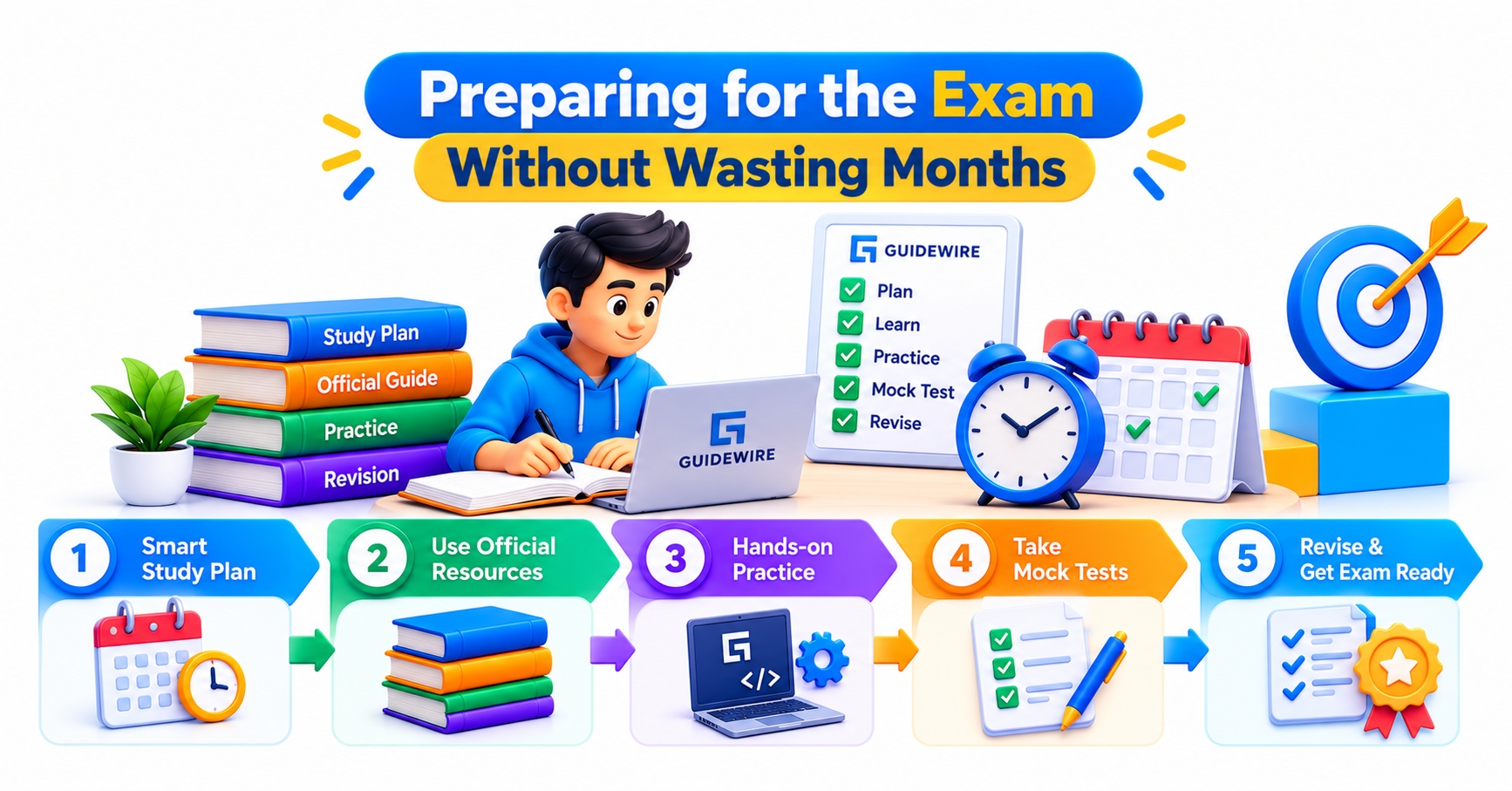
Guidewire’s own guidance suggests that new developers can complete Associate-level coursework in a matter of weeks. In practice, finishing the courses and being exam-ready are two different things. The courses teach you what exists. Practice teaches you what to reach for when a question describes a messy scenario.
A sensible approach starts with the foundation: the application architecture, the data model, entities and extensions, typelists, and Gosu fundamentals. These topics appear everywhere else. If you do not understand why a typelist behaves differently from an ordinary enumeration, rule and configuration questions will feel confusing.
Next, build something. Even a small exercise, such as adding a field to an entity, exposing it on a screen and writing a validation rule, forces you to connect the dots. Many learners find that one afternoon of configuring beats three evenings of rereading slides.
Then study the exam guides Guidewire publishes for each exam and map them against your own confidence. Be honest here. Guidewire grades exams pass or fail and does not publish question-level feedback, so a failed attempt will not tell you which topic sank you. You need to find your weak areas before the exam, not after.
If you want structure, a focused program such as Guidewire certification preparation can help you organize the syllabus, practice scenario-style questions and revise in a sensible order. A mentor who has seen how questions are framed can save you weeks of trial and error, although nothing replaces your own hands-on practice.
Finally, schedule the exam while the material is fresh. Candidates who finish the coursework and then wait months usually end up relearning half of it. Exams are delivered online through the Guidewire Education portal with remote proctoring, so check your equipment, internet connection and testing space well ahead of the day.
Good preparation reduces risk, but it does not remove every trap. Some mistakes show up again and again.
Mistakes That Cost Candidates an Attempt
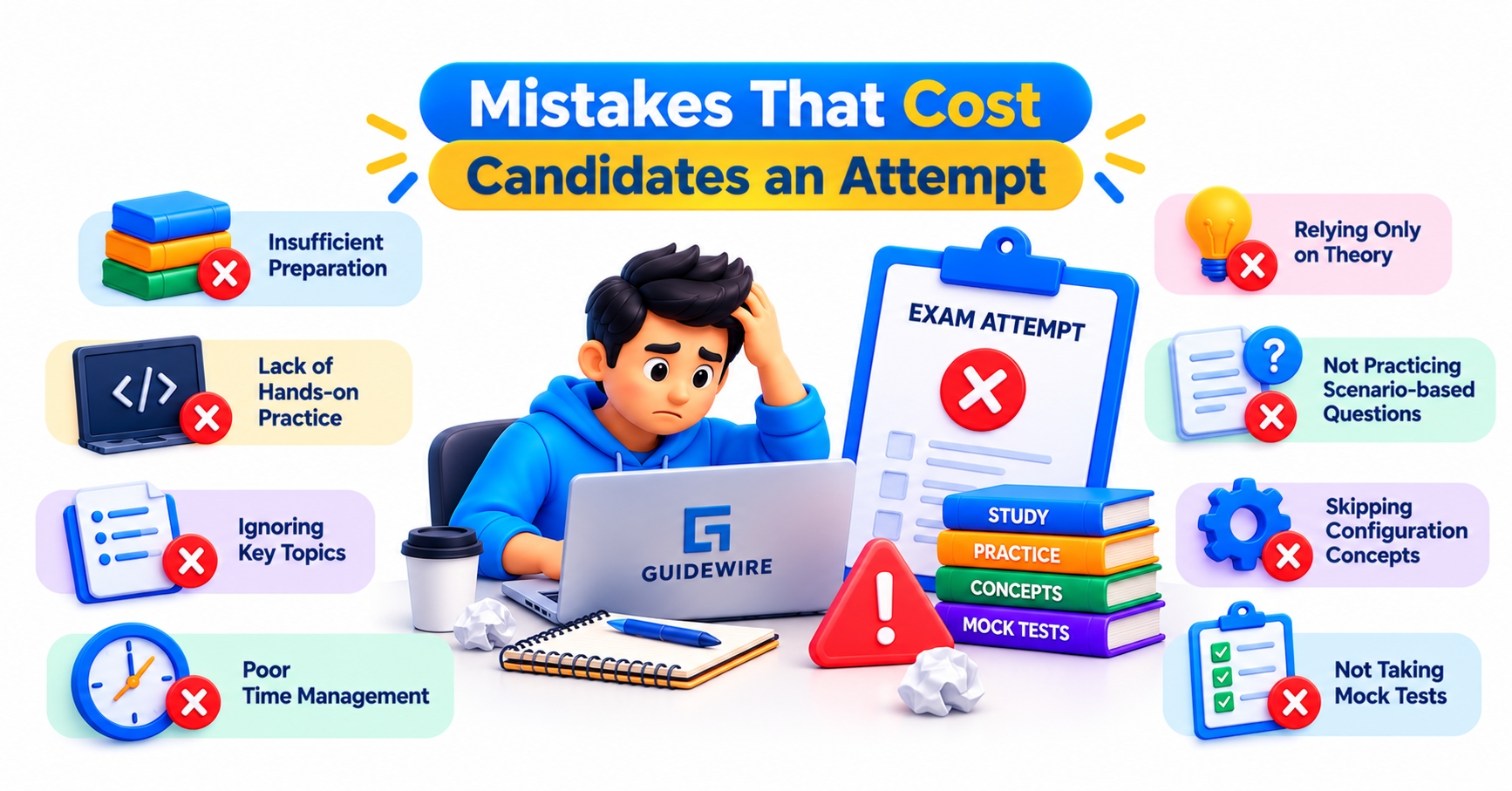
The most common mistake is memorizing instead of understanding. Questions tend to describe a situation and ask what you would do. Someone who has memorized definitions can recite the term “effective dating” but still pick the wrong answer when a scenario involves a mid-term change.
A related problem is relying on unofficial question dumps. They are often outdated, sometimes wrong, and they teach you nothing you can use in an interview. Interviewers at implementation partners ask follow-up questions precisely to find out whether a candidate understands what the certificate suggests.
Another frequent error is studying the wrong release. Guidewire’s platform evolves, and exam content follows current versions. If your study material describes behavior from an older release, you may find yourself confidently answering for a system that no longer works that way. Always confirm what version your learning materials cover.
Skipping the fundamentals is a quieter mistake. Candidates jump to rules, PCF screens or integration patterns before they are comfortable with the data model. Everything feels harder than it should, and they blame the exam instead of the order of study.
Many people also underestimate logistics. A remotely proctored exam has rules about your room, your desk and your camera. Losing focus because of a technical problem is an avoidable way to waste an attempt, and a missed or expired attempt may mean buying a new one.
Lastly, some candidates treat a failed attempt as a verdict instead of information. Guidewire allows retakes after a waiting period. Use that gap well: rebuild the topics you felt shaky about, do more hands-on work, and attempt again with a plan. Plenty of working developers passed on a second try, and no recruiter asks how many attempts it took.
Avoiding these mistakes gets you the credential. What you do with it determines how far it takes you.
Where Certification Fits in a Developer Career
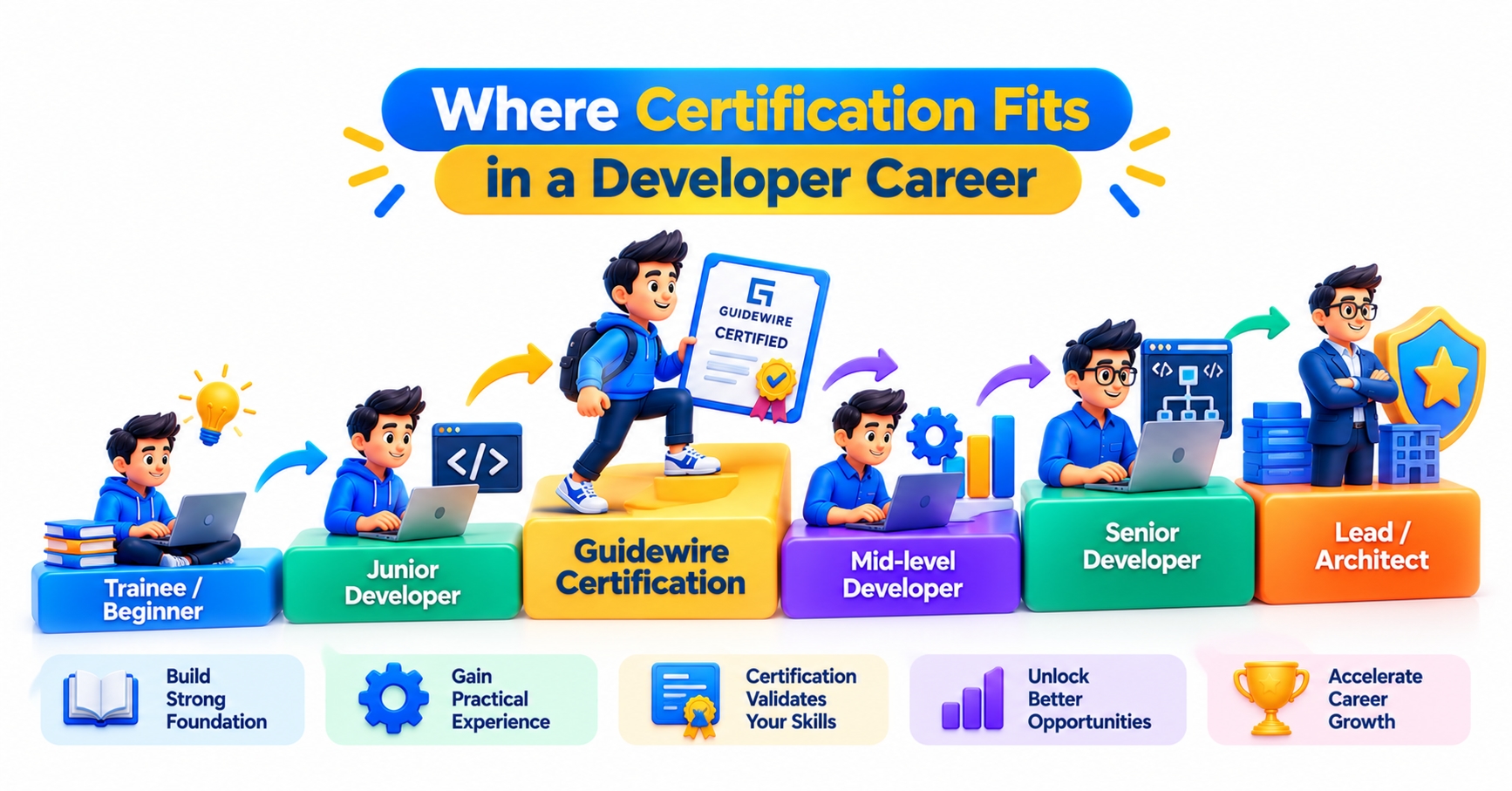
Certification opens doors early and matters differently as you grow. For a fresher, the Associate credential helps your résumé survive the first screening, especially when you are competing against candidates with similar degrees. For someone with a year or two of experience, it signals that you are serious about the platform rather than drifting through a support role.
Consider a hypothetical learner, Meera, who completes the core developer Associate certification and lands a configuration role on a PolicyCenter project. After a year, she notices that integration tasks are where the interesting problems live. Because Cloud Integration requires the Associate certification as a prerequisite, she already has the foundation and can work toward the integration path. This is an illustration, not a real case study, but it reflects how the pathways are designed to stack.
Ace certification matters most when you move toward lead or architect responsibilities. Guidewire positions Ace as the highest level, and it is required for certain cloud lead roles. If long-term growth in technical leadership is your goal, treat Associate as the first step and Ace as a target to revisit once you have real project hours behind you.
Location and training choices also shape early career momentum. Cities with large insurance-technology teams have more entry-level openings, and a structured course can shorten the gap between learning and interviewing. Readers comparing options may find this overview of why learners choose JastTech for Guidewire training in India useful for judging what a good program should offer.
One caution about salary promises: any specific figure you see online depends on city, employer, experience and demand at that moment. Rather than chasing a number, track the skills that employers keep asking for, such as Gosu, integration patterns, cloud familiarity and Jutro, and let your certification list grow alongside them.
A certificate earned today can quietly lose value if you stop updating it, which brings up a part of the program many beginners never hear about.
Keeping Your Guidewire Certification Current After You Pass
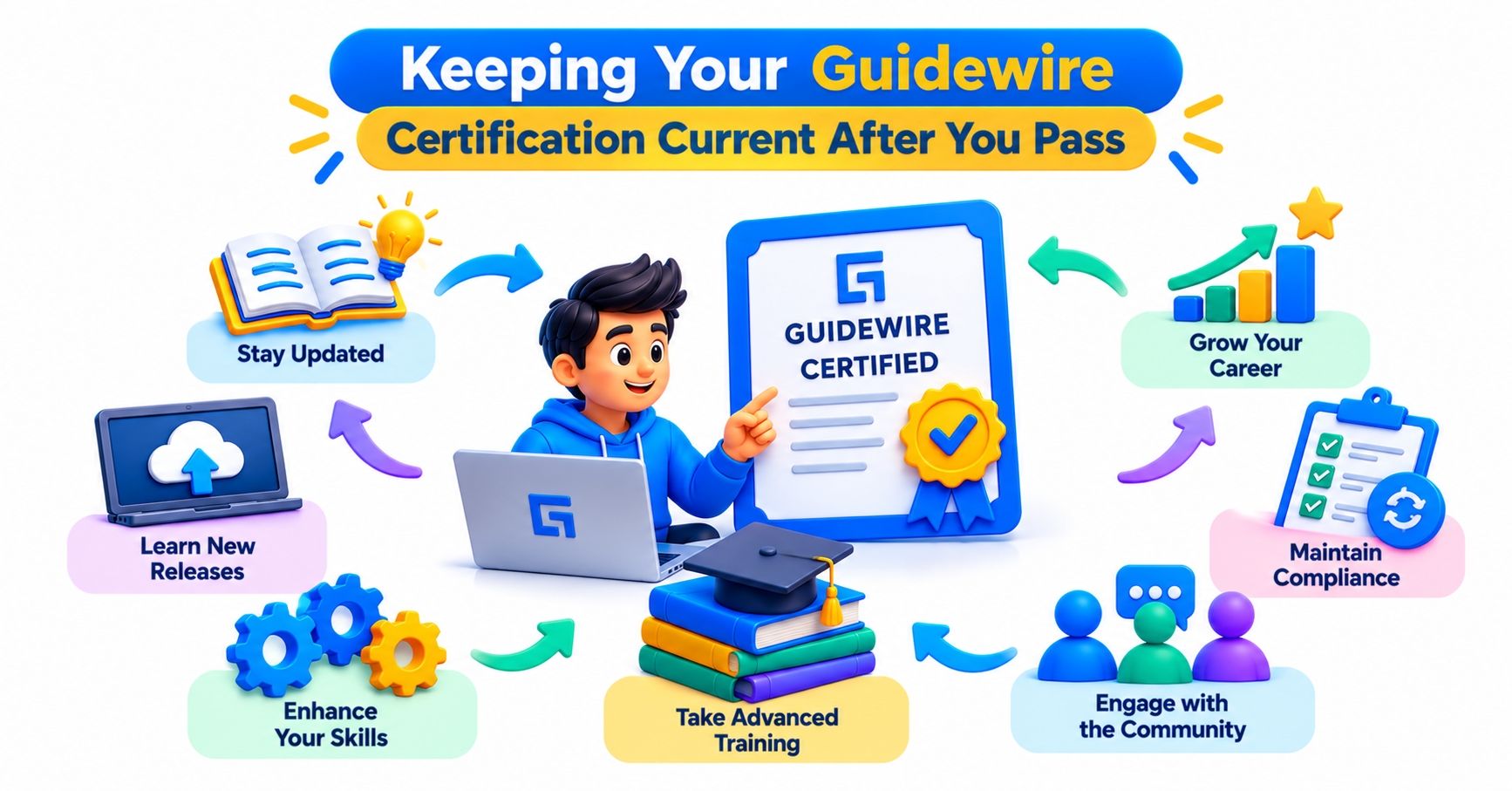
Passing the exam is not a one-time achievement. Guidewire expects certified professionals to keep up with the platform as it releases new versions, and its policy asks you to stay within three releases of the current one, often described as N-3. If you fall too far behind, you may have to retake the proctored exams rather than just refresh your knowledge.
The routine for staying current is manageable. For each release, Guidewire offers “New Features” eLearning courses with knowledge checks, and completing them earns release and update badges. Taking them as releases arrive is far easier than facing several releases of catch-up at once.
Treat this as part of the job, not as paperwork. Developers who read release notes and try new features in a sandbox tend to give better design advice on projects, because they know what the platform can do now rather than what it could do two years ago. That awareness shows in interviews, too.
There is some ambiguity worth acknowledging. Guidewire’s materials mention keeping certifications current each year alongside the N-3 rule, and the practical interaction between the two can depend on your role and employer. Confirm the exact requirements with your training coordinator or the official Guidewire Education portal before assuming anything about your own status.
Costs deserve a similar check. Exams, subscriptions that support recertification and hands-on labs may carry fees, and who pays often depends on the employer. Ask early, especially if you are joining a services company that sponsors training, so you do not discover a gap after your first project starts.
Finally, make your certification visible. List it clearly on your résumé, mention the product track you trained in, and pair it with a short description of a hands-on exercise or project. A certificate with a story behind it is far more convincing than a bare logo.
Conclusion
Guidewire certification works best as a structured path, not a trophy: Associate first, a track that matches your interests, and regular updates as the platform moves. Candidates who pair the exam with real practice, and who stay current, give employers a reason to trust them. For anyone starting out, understanding Guidewire certification early makes every later career decision clearer, and training with a partner like JastTech can help you walk that path with direction.



