Russia offers a vast and captivating landscape, drawing German travelers with its rich history, iconic architecture, and vibrant cultural life, from the majestic theaters of Moscow to the historical grandeur of Saint Petersburg. Historically, obtaining a Russian visa involved consulate visits, invitations, and extensive paperwork.
However, the introduction of the Unified Electronic Visa (UEV) has streamlined this process significantly. German citizens are among the nationalities eligible to apply for this convenient digital visa, making short-term travel to the Russian Federation simpler than ever before.
This comprehensive guide is designed specifically for Russia eVisa from German passport holders, breaking down the application process, documents, validity rules, and costs associated with the Russia e-Visa to ensure a smooth, paperless journey.
Is a Visa Required for German Citizens to Visit Russia?
Yes, German citizens must obtain a visa to enter the Russian Federation. Germany is not part of Russia's visa-free agreement list.
The good news is that for short visits, the Unified Electronic Visa (UEV) is available to German passport holders. The UEV replaces the need for the traditional sticker visa, making it the fastest and easiest option for trips up to 30 days. For longer stays (over 30 days) or if you require multiple entries, you must still apply for a regular visa at a Russian consulate or visa center.
What are the restrictions on using a unified e-visa (UEV)?
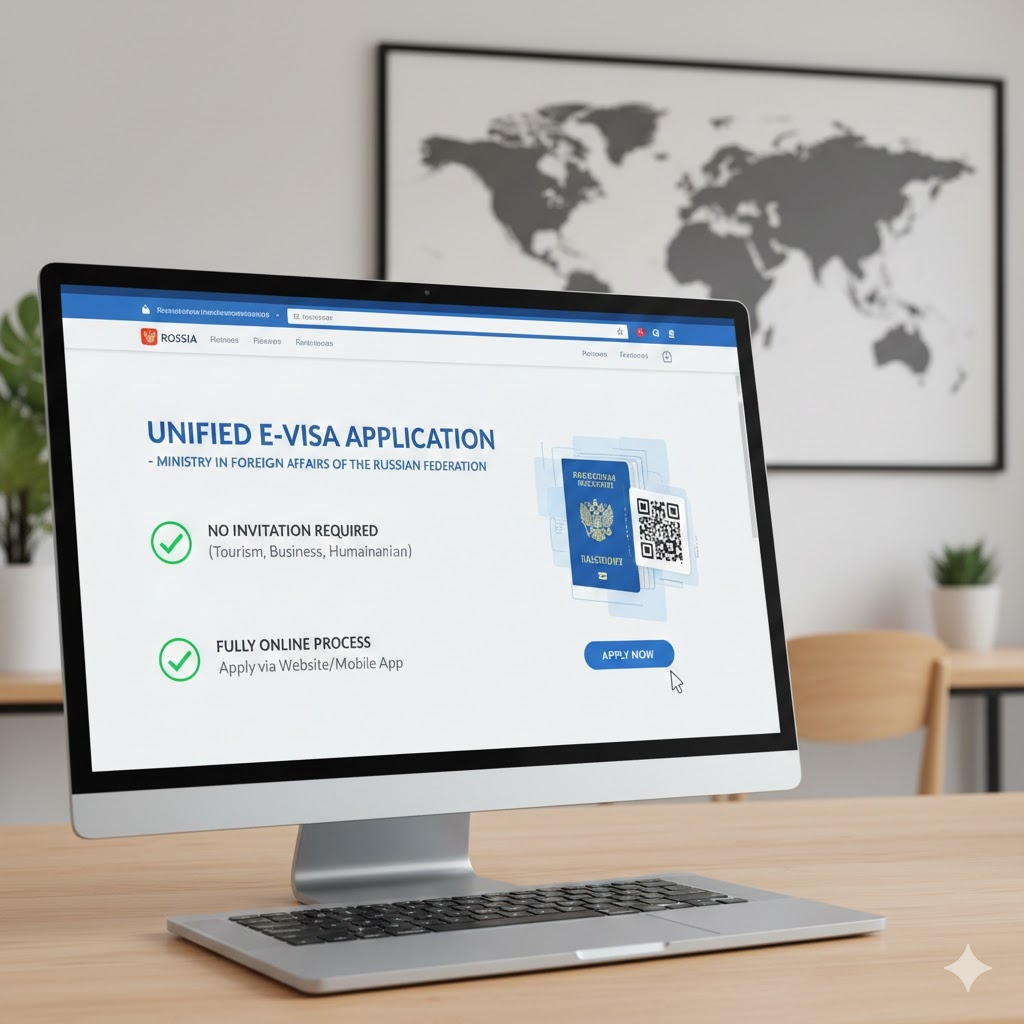
The UEV is a single-entry electronic document issued by the Russian Ministry of Foreign Affairs (MFA). It serves as official authorization for entry, simplifying the process for tourism, business, and humanitarian purposes.
The key advantage of the UEV is the elimination of the complex requirements associated with traditional visas, most notably:
No Invitation Required: You do not need a tourist voucher, hotel confirmation, or an official invitation letter from a Russian host organization to apply for the UEV.
Fully Online Process: The entire application is completed via the specialized MFA website or mobile app, meaning no trips to a consulate or visa center are necessary.
How long can Germans stay in Russia?
The rules for the Russia e-Visa have been recently extended to offer more flexibility for travelers:
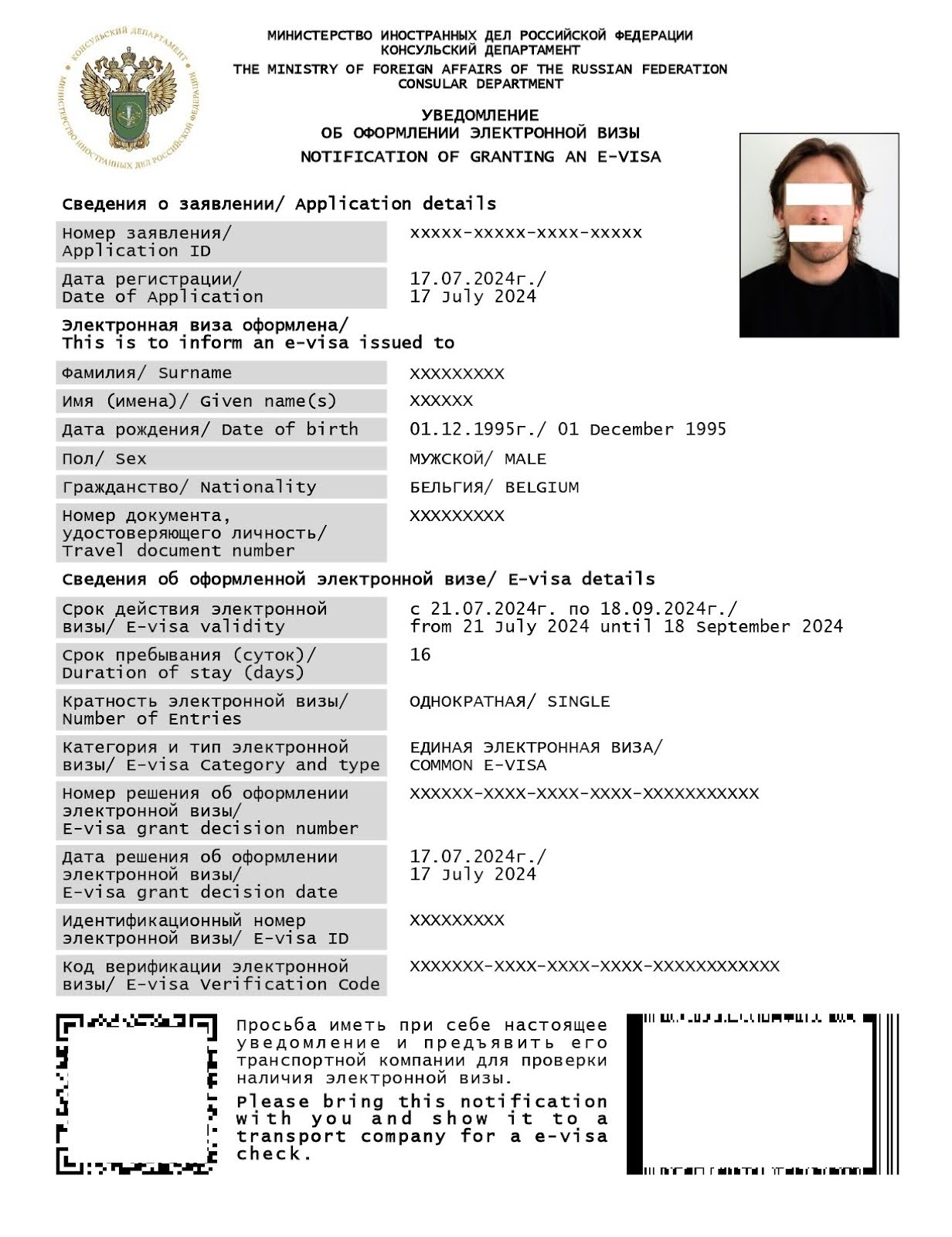
Validity Period: The e-Visa is valid for 120 days (four months) from the date of its issuance. You may enter Russia anytime within this 120-day window.
Maximum Stay: The permitted period of stay in Russia shall not exceed 30 days from the date of entry.
Entry Type: The e-Visa remains a Single-Entry document. Once you exit the Russian Federation, the visa is considered utilized, regardless of how many days of the 30-day allowance you used.
What Purposes of Visit Are Authorized Under the UEV?
The UEV is designed to accommodate multiple types of short-term visits, all under a single electronic entry document. When applying, German citizens can select from several specific categories, all of which grant the same 120-day validity and 30-day single-entry stay:
Tourist eVisa
Tourist eVisa for children under 6 years of age
Sports Events eVisa
Social and Political Events eVisa
Scientific Events eVisa
Guest visit eVisa
Economic Events eVisa
Cultural Events eVisa
Business eVisa
If the purpose of your trip falls outside of these categories (e.g., employment, long-term study), you must apply for a traditional visa.
What German documents are needed to apply for a Russian eVisa?
The Russian e-Visa application is highly simplified, requiring very few documents compared to the traditional sticker visa. You must prepare the following digital items:
Valid German Passport: Your passport must be valid for at least six months from the date you submit the e-Visa application. It must also have sufficient space for border crossing stamps upon entry.
Digital Passport Photo: A recent, high-quality digital photograph of your face.
This image must strictly adhere to the technical specifications (JPEG format, specific aspect ratio, light background, neutral expression). You will be required to upload this during the application.Scanned Passport Bio Page: A clear, high-quality scan or digital photograph of the passport page containing your personal data and photo. You will be required to upload this during the application.
Travel Medical Insurance: This is a mandatory requirement for German citizens. You must have a medical insurance policy valid in the Russian Federation that covers the entire duration of your stay. The policy must have a minimum coverage of at least €30,000 EUR (or $30,000 USD) for medical costs, accidents, and repatriation.
What are the specific photo requirements for the Russian eVisa application?
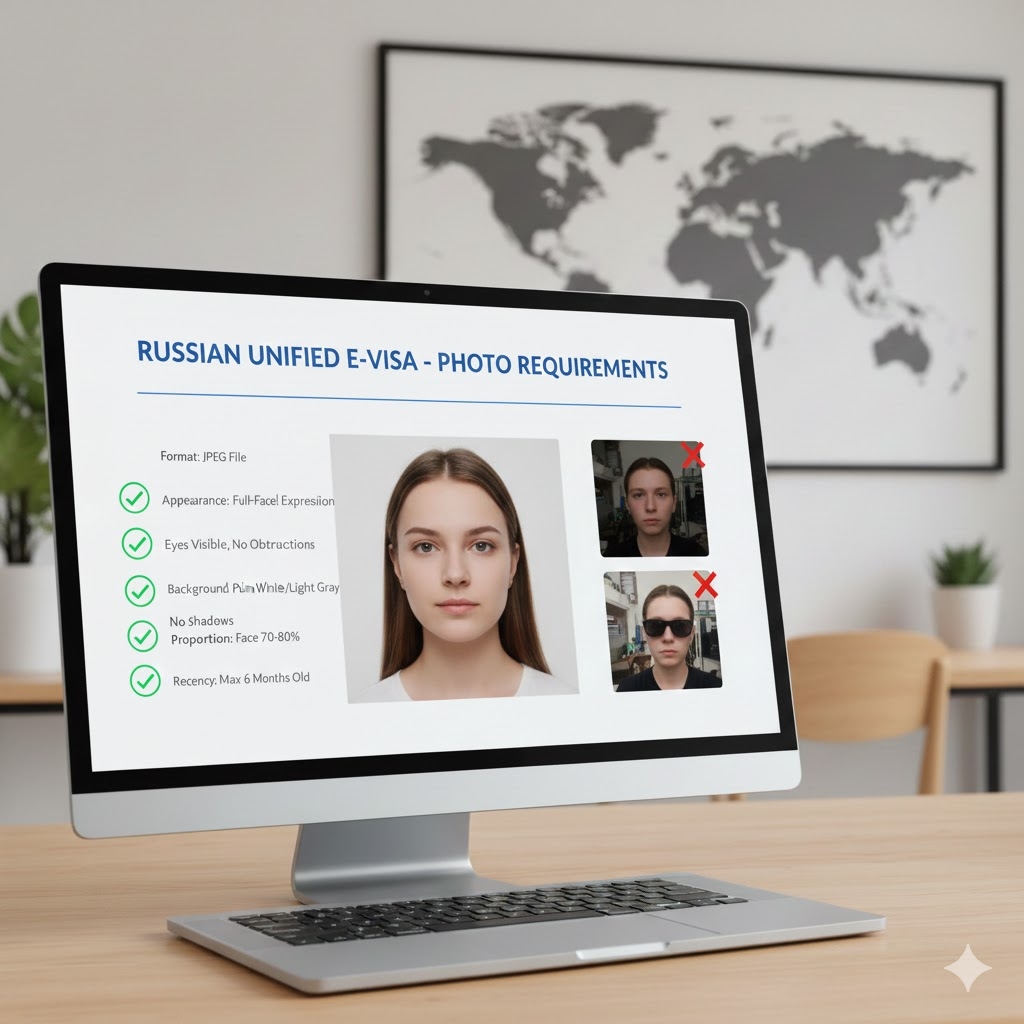
The photo submission is the most common hurdle for e-Visa applicants. The system is automated and highly sensitive to photo quality and composition. You must ensure:
Format: JPEG file format.
Appearance: Full-face view, neutral expression, mouth closed, eyes clearly visible (no hair or heavy glasses frames obscuring the eyes).
Background: Plain, light-colored (white or light gray) background, with no shadows on your face or behind your head.
Proportion: The face must take up 70–80% of the photograph.
Recency: The photo must be no more than six months old and clearly reflect your current appearance.
How Much Does the Russia e-Visa Cost German Citizens?
The cost of the Unified Electronic Visa is set by the Russian Ministry of Foreign Affairs (MFA) and is fixed, although service providers may add administrative Russia e-Visa fees.
Official Fee: The total official government fee, which includes the consular charge, banking commission, and payment system transaction costs.
Minors: For children under the age of six, the e-Visa is generally free of the consular fee, though minor processing or bank charges (around $2 USD) may still apply.
Payment: Payment must be made online via the official MFA website using a Visa, Mastercard, or UnionPay credit/debit card that supports international transactions.
How many days does it take to take a Russian visa from Germany?
The e-Visa system offers flexibility in processing, especially when utilizing an authorized service provider:
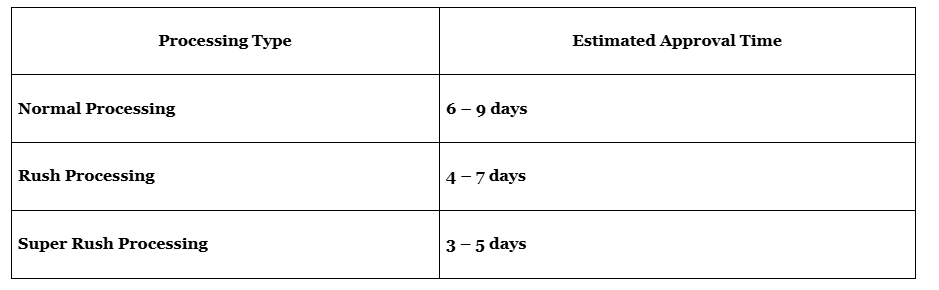
Application Deadline: You must submit your e-Visa application no later than four calendar days before your expected date of entry into the Russian Federation.
Is using russian-e-visa.com truly safer than applying directly to the Russian Government?
Yes, for error avoidance and compliance, it is significantly safer. The Russian eVisa application is highly specific and often requires a recent photograph and precise data matching. The official system is automated and gives no second chances. The agent provides a mandatory human verification layer that checks all data fields and the photo against Russian government standards, maximizing your first-time approval rate and preventing rejection due to small technical errors.
What is the single biggest risk of applying on the official government site?
The biggest risk is the loss of the non-refundable government fee and subsequent travel delay due to a data error. The Russian government eVisa fee is lost upon rejection, and since the process is fast and automatic, there is no chance to correct an error after submission. Applying yourself means you are solely responsible for exact compliance, absorbing 100% of the financial and time-delay risk.
Is the agent's service fee justifiable compared to the cost savings of DIY?
Absolutely. While the official site is cheaper upfront, the agent's cost (Government Fee + Service Fee) is an investment in guaranteed application correctness. Avoiding just one rejection saves you the cost and time of restarting, paying the Government Fee a second time, and dealing with significant pre-travel stress. For many travelers, the fee buys peace of mind and assurance, particularly given the specific nature of Russian visa requirements.
How to apply for a Russian visa online?

The application is handled through the specialized Consular Department website of the MFA:
Start Application: Select your nationality (Germany).
Upload Photo and Passport: Upload your digital passport photo and the image of your passport bio page.
Fill Form: Complete the comprehensive online form in Russian or English, accurately entering personal, passport, and travel details.
Select Visa Type and Processing: Select the specific eVisa purpose (e.g., Tourist eVisa) and your preferred processing speed (if applying through a tiered service).
Confirm and Submit: Review all data for accuracy. Pay the mandatory fee.
Receive Notification: You will receive the result (notification of e-Visa grant) via email within the processing window.
How many days can I stay in Russia without registration?
Yes, registration is a crucial rule for all foreign visitors, including German citizens, and it still applies even with the e-Visa:
Registration Trigger: If you stay in the same location (hotel, apartment) for more than 7 working days (excluding weekends and public holidays), you must be registered with the local branch of the Ministry of Internal Affairs.
Who Registers You? This responsibility falls to your host: the hotel administration, the hostel owner, or the private host (friend/relative).
Tourist Responsibility: As a visitor, you must ensure your host completes this procedure. Hotels and hostels typically handle this automatically. If staying in a private apartment, coordinate with the host immediately upon arrival.
What Happens If My Travel Dates Change After Application?
The e-Visa offers some flexibility regarding travel dates, but not for entry time:
Entry Date Flexibility: You do not need to enter Russia on the exact date specified in your application. You can enter any time within the 120-day validity window.
Invalidation Rule: If you decide to enter earlier than the date you stated in the application, your issued e-Visa will be invalid, and you must apply for and purchase a new one.
How is the e-Visa different from a Regular Tourist Visa?
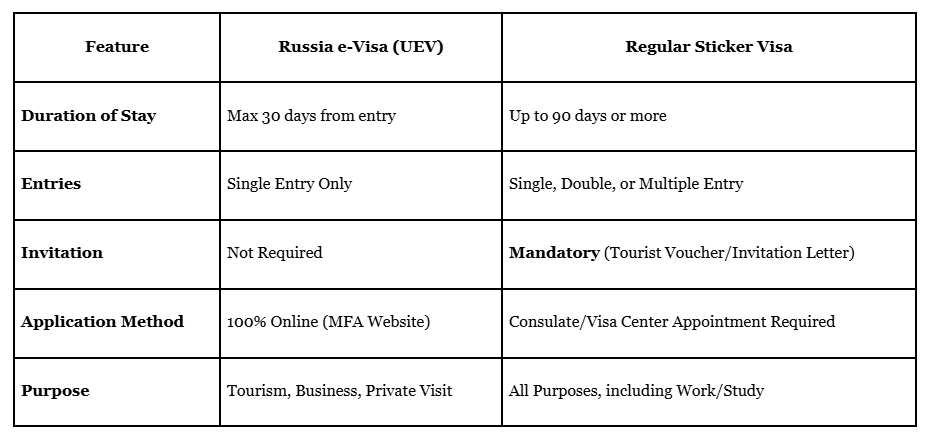
The UEV is unequivocally easier and faster, suitable for the majority of German tourists and short-term business travelers.
Can I Extend the 30-Day Stay Period in Russia?
No, the UEV is strictly a single-entry, short-term visa. Extensions are generally not possible under any circumstances, except in rare cases of force majeure (e.g., medical emergency, flight cancellation). If you need to stay longer than 30 days, you must leave Russia and apply for a traditional long-term visa before you return. Overstaying will lead to severe fines and a potential entry ban.
Is Travel Insurance Always Required for German Citizens?
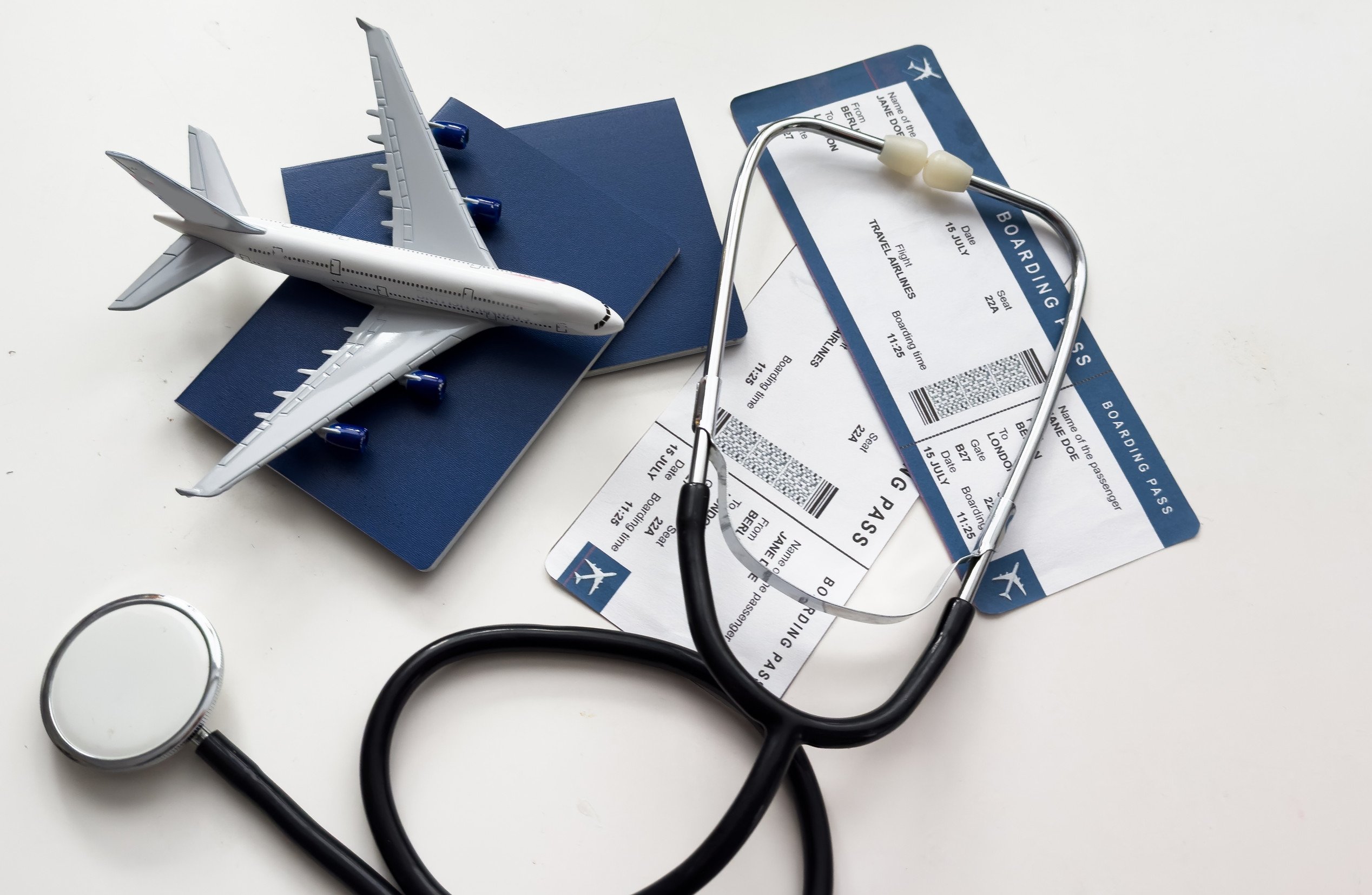
Yes, travel medical insurance is mandatory for German citizens applying for the Russian e-Visa. You must carry proof of a valid insurance policy that:
Is valid throughout the territory of the Russian Federation.
Covers the entire duration of your stay.
Provides coverage of at least €30,000 for medical expenses, accidents, and repatriation.
This documentation must be presented if requested during the application or upon arrival at the border.
What are the Entry/Exit Ports Authorized for the UEV?
The UEV grants you the right to enter and exit Russia through a large number of designated border crossing points, including major international airports, sea ports, railway checkpoints, and road checkpoints.
Major Entry Points: This includes, but is not limited to, the international airports in Moscow (Sheremetyevo, Domodedovo, Vnukovo), Saint Petersburg (Pulkovo), Kazan, and Sochi.
Checkpoints: Ensure your travel itinerary uses one of the border crossing points listed as authorized for the UEV, which the official MFA website maintains.
What Are the Rules for German Children and Minors?
All German citizens, regardless of age, must have their own individual e-Visa:
Separate Passport & Visa: Every child, including infants, must have their own valid German passport and a separate, approved UEV.
Fees: Children under the age of six are exempt from the consular fee (though minor processing fees apply).
Parental Consent: While not required for the online e-Visa application, if the minor is traveling alone or with only one parent, carrying notarized documents proving parental consent or custody is strongly recommended to meet general international travel regulations.
Conclusion: Exploring Russia with Ease
The introduction of the Unified Electronic Visa represents a major simplification for German travelers planning a trip to the Russian Federation. By requiring only a valid passport, a photo, and mandatory medical insurance, the UEV removes the historical barriers of complicated paperwork and mandatory consulate visits.
With the extended validity of 120 days and the generous 30-day maximum stay, German tourists and business travelers can now explore Russia's cultural heartlands with unprecedented ease.