Breathing is something we do naturally throughout the day, but yoga teaches us to become more aware of how we breathe. Traditional yogic practices include several techniques that use controlled breathing to develop awareness, concentration and a connection between the body and mind. Two well-known techniques are Kapalbhati and Bhastrika Pranayama.
Although both involve active breathing, they are not the same practice. They have different techniques, breathing patterns and purposes. For students considering any Yoga Teacher Training Course , understanding these differences is useful because learning pranayama involves more than simply following a breathing rhythm.
What Is Kapalbhati Pranayama?
Kapalbhati is a traditional yogic cleansing technique commonly included in Hatha Yoga practices. The Sanskrit word Kapalbhati is often translated as "skull shining."
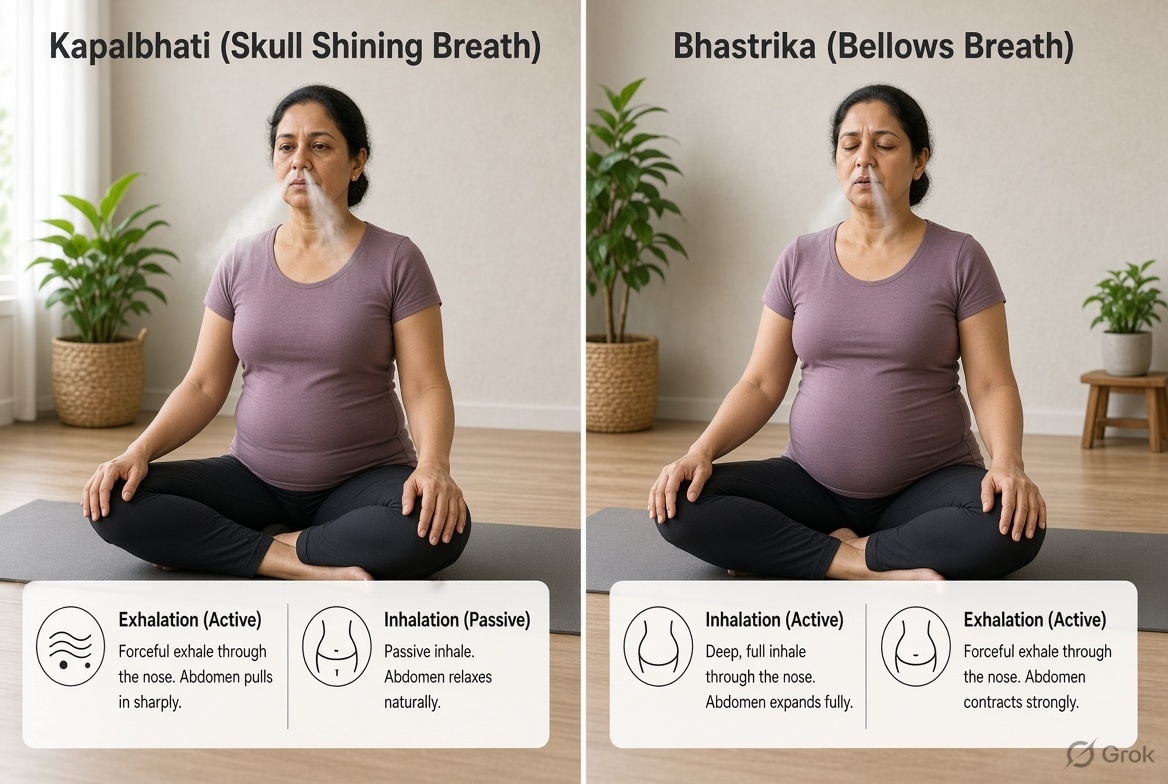
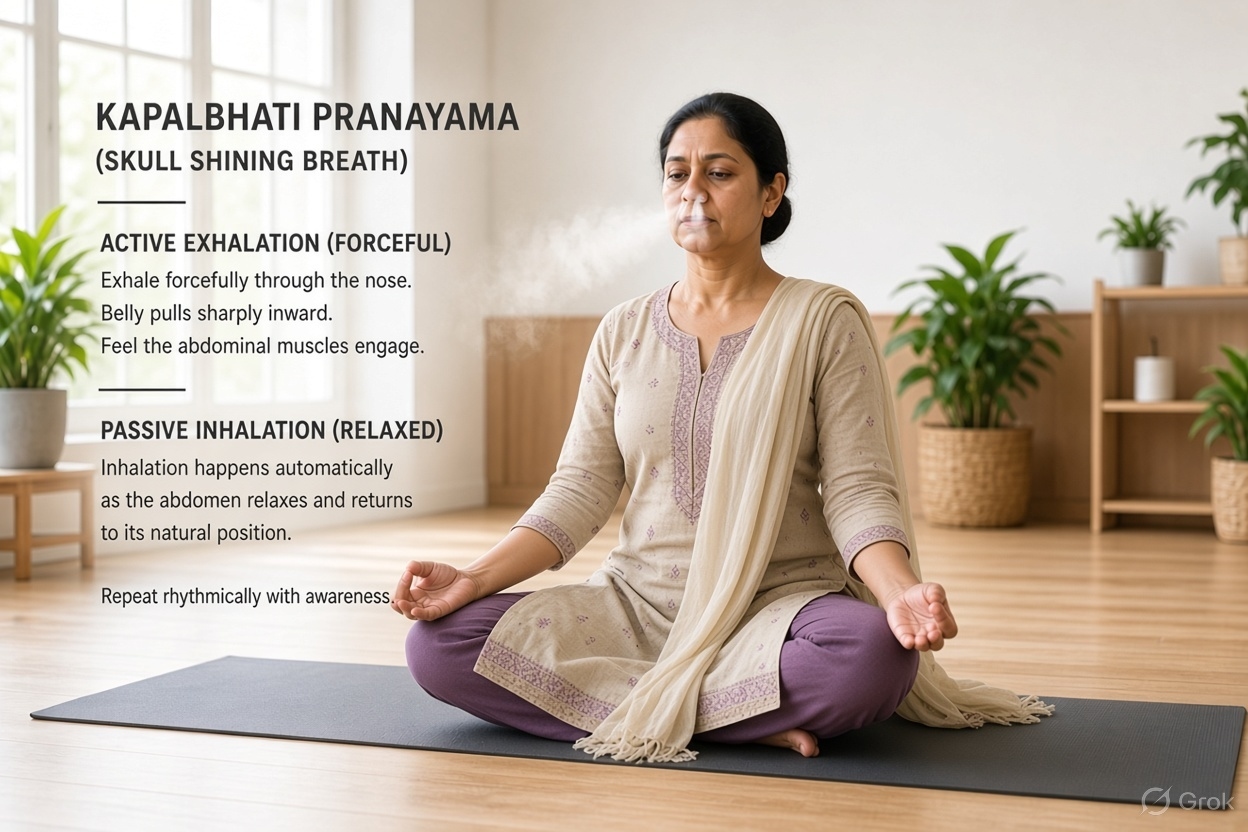
It involves short, active exhalations produced through abdominal contractions, followed by passive inhalations.
During the practice, the abdominal muscles contract to push air out through the nose. The inhalation happens naturally as the abdomen relaxes.
Unlike ordinary slow breathing, Kapalbhati uses a repeated pattern of active exhalation and passive inhalation.
Traditionally, it is included among the Shatkarmas, or six yogic cleansing practices, although it is frequently taught as part of modern pranayama sessions.
What Is Bhastrika Pranayama?
Bhastrika is a yogic breathing technique commonly known as Bellows Breath.
The name comes from the traditional bellows used to produce air for a fire. The comparison describes the active movement of air during inhalation and exhalation.
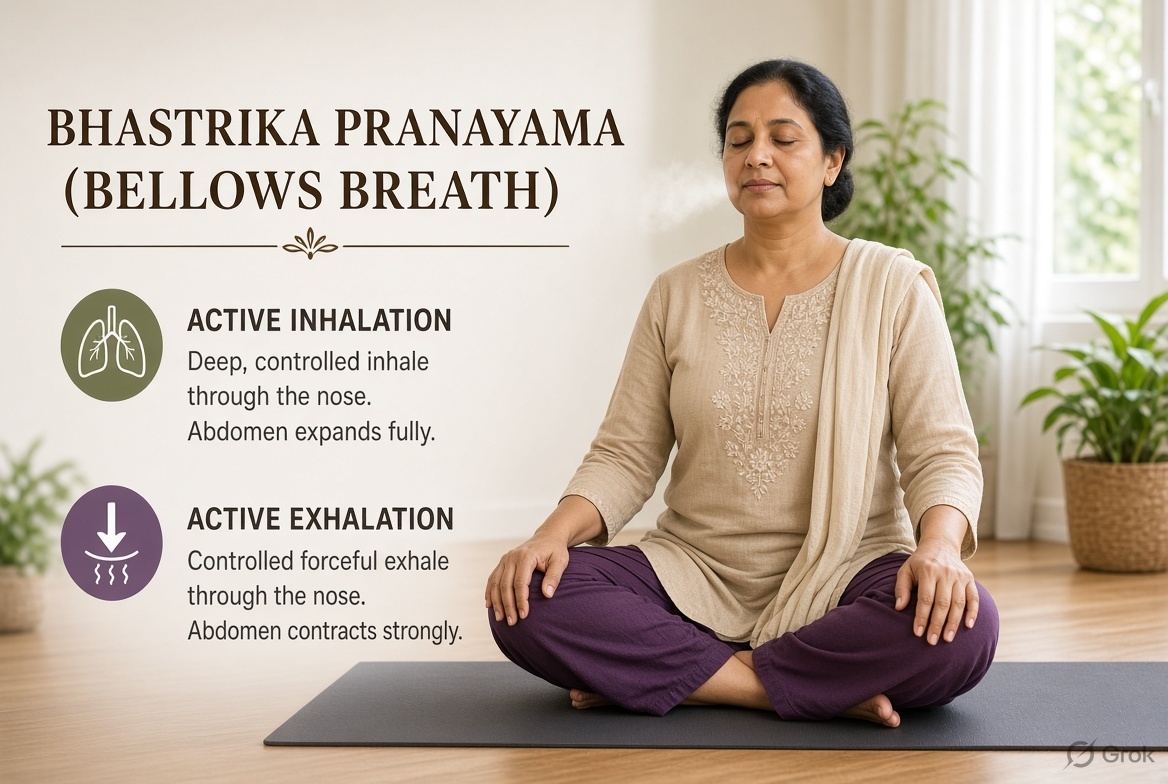
In Bhastrika, both inhalation and exhalation are active and controlled. The practitioner breathes in and out through the nose using coordinated movements of the diaphragm and respiratory muscles.
Unlike Kapalbhati, where the exhalation is active and inhalation is passive, Bhastrika involves active movement in both directions.
Because the breathing can become vigorous, it should be learned gradually and under the guidance of a qualified instructor.
Kapalbhati vs Bhastrika: Key Differences
Understanding the differences between these two breathing techniques is important for anyone exploring traditional yoga practices. Students pursuing 200 Hour Yoga Teacher Training in Bali can benefit from learning how Kapalbhati and Bhastrika differ in their breathing patterns, techniques and traditional purposes. Although both involve active breathing, their methods of inhalation and exhalation are quite different.
Understanding the difference becomes easier when we compare their main characteristics.
Feature | Kapalbhati | Bhastrika |
|---|---|---|
Main action | Active exhalation | Active inhalation and exhalation |
Inhalation | Generally passive | Active |
Exhalation | Short and forceful | Active and controlled |
Abdominal movement | Noticeable inward contraction during exhalation | Coordinated movement during both phases |
Traditional classification | Shatkarma cleansing practice | Pranayama technique |
Main focus | Controlled abdominal-driven exhalation | Rhythmic active breathing |
Both techniques should be performed with awareness rather than speed or force. The objective is not to compete with other practitioners or achieve the highest number of breathing cycles.
Benefits Traditionally Associated With Kapalbhati
Kapalbhati is traditionally practised to develop awareness of abdominal movement and controlled exhalation.
1. Develops Awareness of Breathing
The repeated movement of the abdomen makes practitioners more aware of how their breathing muscles work.
This can help them understand the difference between natural breathing and deliberate breathing exercises.
2. Encourages Focus
Maintaining a steady breathing rhythm requires attention. Practitioners need to coordinate abdominal movement and breathing without becoming distracted.
3. Introduces Controlled Exhalation
Many people are unfamiliar with techniques that involve deliberate exhalation. Kapalbhati provides an opportunity to explore this aspect of yogic breathing.
4. Supports a Structured Yoga Routine
When appropriately taught, it can become part of a broader yoga practice that includes gentle movement, relaxation and meditation.
It should not be promoted as a guaranteed weight-loss method, a treatment for digestive disorders or a way to detoxify the body.
Benefits Traditionally Associated With Bhastrika
Bhastrika is often practised to develop awareness of active inhalation and exhalation.
1. Improves Awareness of Breathing Patterns
Because both phases are active, practitioners become more conscious of the movement involved in breathing.
2. Encourages Concentration
Maintaining a coordinated breathing rhythm requires attention and control. This makes Bhastrika a focused breathing exercise.
3. Develops Breath Coordination
The practice encourages practitioners to coordinate their abdominal and respiratory movements without unnecessary tension.
4. Can Form Part of Traditional Pranayama Practice
Bhastrika is included in traditional yoga teachings and can be studied alongside other breathing techniques, provided the practitioner is physically suitable and properly guided.
Neither technique should be considered a substitute for medical treatment or a guaranteed method for improving lung function.
How to Practise Kapalbhati Step by Step
Beginners should first learn the basic abdominal movement with a qualified instructor.
Step 1: Sit Comfortably
Sit in a comfortable cross-legged position or on a chair. Keep your spine naturally upright and relax your shoulders.
Step 2: Take a Natural Breath
Inhale gently through your nose without making any special effort.
Step 3: Practise Active Exhalation
Gently contract your abdominal muscles to push air out through your nose.
Step 4: Allow Passive Inhalation
Relax your abdomen and allow the next inhalation to happen naturally.
Step 5: Continue Slowly
Repeat a small number of comfortable cycles under supervision. Do not increase the speed or force to match someone else's practice.
Step 6: Return to Normal Breathing
Stop the exercise and breathe naturally. Notice how your body feels before moving to another practice.
How to Practise Bhastrika Step by Step
Bhastrika should be introduced carefully because vigorous breathing may cause discomfort in some people.
Step 1: Find a Stable Sitting Position
Sit comfortably with your spine upright. Keep your neck, jaw and shoulders relaxed.
Step 2: Begin With Natural Breathing
Take a few ordinary breaths and become aware of your breathing pattern.
Step 3: Inhale Actively
Breathe in through your nose in a controlled manner without lifting your shoulders excessively.
Step 4: Exhale Actively
Breathe out through your nose with a controlled movement, avoiding unnecessary force.
Step 5: Maintain a Comfortable Rhythm
Continue for only a few gentle cycles if you have been taught the technique and are comfortable performing it.
Step 6: Rest
Return to normal breathing and allow your body to settle before continuing your yoga session.
Who Should Avoid These Breathing Techniques?
Kapalbhati and vigorous Bhastrika are not suitable for everyone.
People who are pregnant or have uncontrolled high blood pressure, significant heart or respiratory conditions, recent abdominal surgery, a hernia, glaucoma or other relevant medical concerns should avoid these practices unless specifically cleared by their healthcare professional.
Stop immediately if you experience dizziness, chest discomfort, unusual breathlessness or a headache.
Beginners should not practise forceful breathing techniques without proper instruction. Gentle natural breathing exercises may be a more appropriate starting point.
Which Is Better: Kapalbhati or Bhastrika?
There is no universal answer because both techniques have different breathing patterns and traditional purposes.
Kapalbhati may be more suitable for learning active exhalation and abdominal movement, while Bhastrika introduces coordinated active inhalation and exhalation.
Your choice should depend on your experience, physical condition and the guidance of a qualified yoga instructor.
It is also worth remembering that more vigorous breathing does not automatically mean a better yoga practice. Comfortable, controlled breathing is more important than intensity.
Why Should Yoga Students Learn Different Pranayama Techniques?
Pranayama is an important part of traditional yoga education. It teaches practitioners to understand breathing patterns, develop awareness and approach different techniques with discipline.
At Bali Yoga Retreats, students interested in 200hr yoga teacher training bali can explore pranayama alongside asana, meditation, anatomy and yoga philosophy.
Understanding the difference between techniques such as Kapalbhati and Bhastrika can help future teachers explain breathing practices more clearly and recognise when modifications or additional precautions are necessary.
Final Thoughts
Kapalbhati and Bhastrika are two distinct breathing practices with different methods of inhalation and exhalation. While both have an important place in traditional yoga teachings, they should never be performed forcefully or without considering individual health needs.
If you want to understand pranayama beyond its basic techniques, 200 Hour Yoga Teacher Training in Bali can provide an opportunity to study traditional breathing practices as part of a broader yoga education.
The most valuable lesson is to approach every breathing exercise with patience, awareness and respect for your body's natural limits.