The jewelry industry is going through a quiet revolution. For decades, buyers assumed that a "real" gemstone had to come from a mine. Today, that assumption is changing fast. Lab-grown gemstones now sit on the same showcase as their mined counterparts, and more wholesale buyers are asking manufacturers to explain the difference before placing an order.
This shift is not just about price. It is about supply chain transparency, sustainability, and a new generation of customers who care where their jewelry comes from.
What Makes a Gemstone "Lab-Grown"
A lab-grown gemstone is chemically, physically, and optically identical to a natural stone. The only real difference is where it forms. Instead of forming underground over millions of years, a lab-grown stone forms inside a controlled facility over a matter of weeks or months, using the same natural growth process at an accelerated pace.
Because the crystal structure is the same, a trained gemologist needs specialized equipment to tell a lab-grown stone apart from a mined one. Under a standard jeweler's loupe, both look equally brilliant.
Why Wholesale Buyers Are Paying Attention
International buyers, especially those sourcing for retail chains or private label lines, have three consistent concerns: cost predictability, ethical sourcing, and consistent quality across large orders. Lab-grown gemstones address all three.
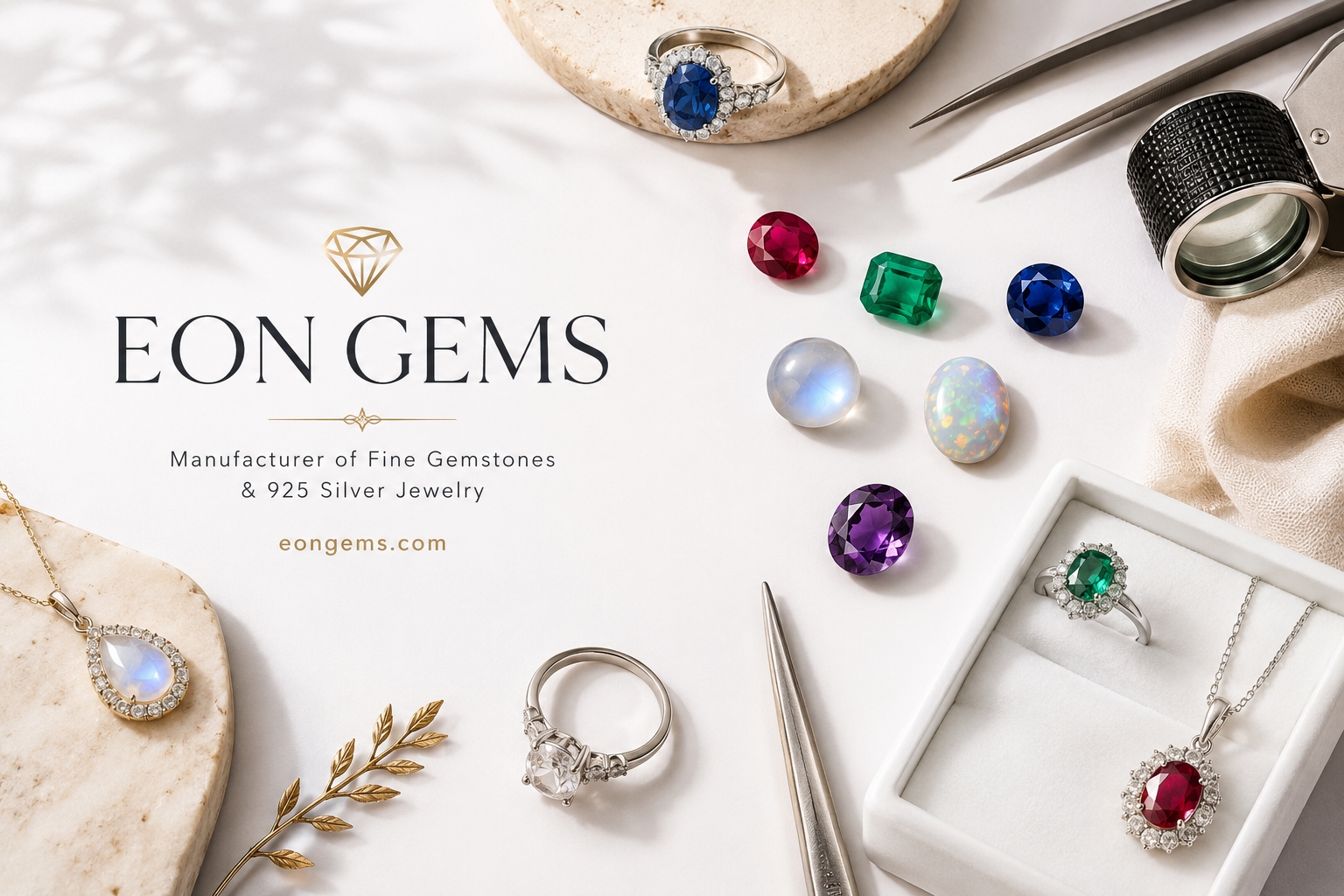
Since production happens in a controlled environment, manufacturers can maintain tighter consistency in cut, clarity, and color across a bulk order. This matters enormously for retailers who need matching stones for a full jewelry collection rather than one-off pieces. Experienced manufacturers such as Eon Gems, based in Jaipur, have built dedicated lab-grown gemstone lines precisely to meet this demand from international wholesale clients who need both scale and consistency.
Pricing is also more stable. Mined gemstone prices can swing based on mining output, geopolitical factors, and scarcity. Lab-grown stones are largely insulated from these fluctuations, which makes budgeting easier for retailers planning seasonal collections months in advance.
The Sustainability Argument
Traditional mining disturbs land, consumes large volumes of water, and in some regions has been linked to poor labor practices. Lab-grown gemstone production sidesteps most of these issues. There is no large-scale excavation, no habitat disruption, and no need to transport heavy ore across continents before the stone even reaches a cutting facility.
For younger buyers, particularly Gen Z and millennial consumers in the US and UK, this story matters. Many surveys on jewelry buying behavior show sustainability now ranks alongside design and price as a purchase driver. Retailers who can tell a credible sustainability story, backed by a manufacturer who can document it, have a real edge over competitors who cannot.
Where Craftsmanship Still Matters
None of this technology-driven shift removes the need for skilled hands. A lab-grown rough stone still needs an experienced cutter to shape it into a finished gem, and a skilled setter to place it into a piece of jewelry without damaging its brilliance. This is where decades of manufacturing experience continue to matter. A facility with generations of gem-cutting expertise brings the same craftsmanship to a lab-grown stone that it would bring to a natural one, ensuring the final product meets export-grade standards for international markets.
What Buyers Should Ask Before Ordering
Before placing a wholesale order, buyers should confirm a few basics with any manufacturer. First, ask whether the facility offers third-party certification for lab-grown stones, since documentation builds trust with the end customer. Second, ask about minimum order quantities and sample pricing, since transparent numbers upfront usually signal a manufacturer who is used to working with international clients. Third, ask how the manufacturer handles quality control across large batches, since consistency is the entire point of choosing lab-grown production in the first place.
Looking Ahead
Lab-grown gemstones are no longer a niche trend. They are becoming a standard category that most serious jewelry manufacturers now offer alongside natural stones. As certification standards mature and consumer awareness grows, the gap between "lab-grown" and "natural" in the buyer's mind will likely keep narrowing, leaving quality, design, and ethical sourcing as the real differentiators.
For wholesale buyers evaluating suppliers, the smartest move is not to pick a side between lab-grown and natural. It is to find a manufacturer capable of delivering both at export quality, so the collection can offer customers a genuine choice.