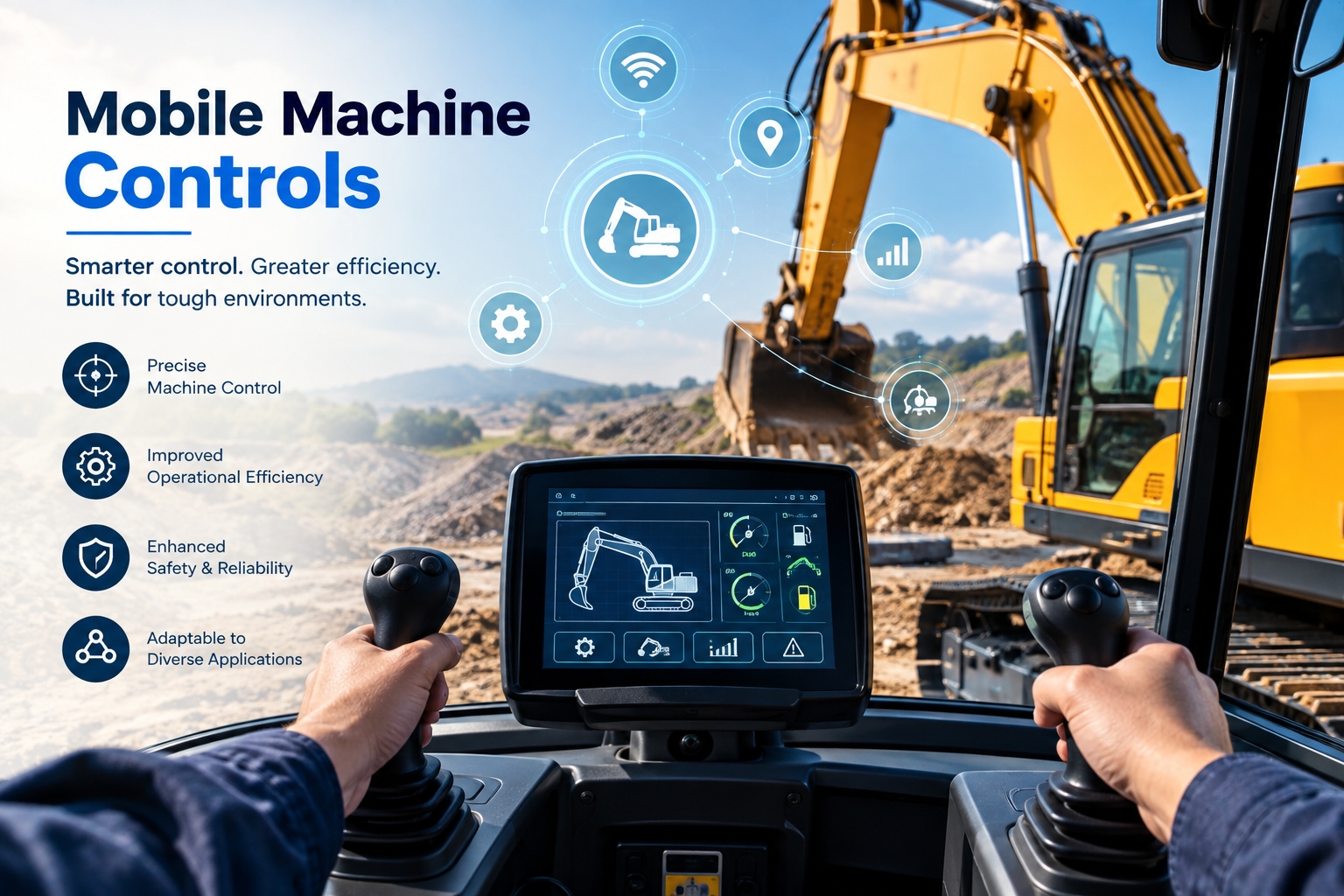
The development of modern industrial machinery depends on advanced electronic technologies that improve equipment performance, accuracy, and reliability. Mobile equipment used in construction, agriculture, transportation, and mining requires intelligent control solutions to perform complex operations efficiently. A Mobile Machine Control System provides the technology needed to manage these operations through electronic controllers, embedded software, sensors, and communication networks.
As industries adopt smarter engineering practices, machine control technology is becoming an important part of designing and manufacturing next-generation mobile equipment.
Understanding Mobile Machine Control Technology
A Mobile Machine Control System is designed to control and coordinate different functions of mobile equipment. It receives information from sensors, processes operating data, and sends commands to various machine components.
These systems help manage functions such as engine performance, hydraulic operations, vehicle movement, temperature monitoring, and equipment diagnostics. By combining hardware and software, manufacturers can develop machines that respond accurately to operating conditions.
Modern control solutions also provide flexibility for equipment manufacturers who require customized functionality for specific applications.
How Does a Mobile Machine Control System Work?
The operation of a machine control system involves communication between several electronic and mechanical components.
First, sensors collect information about the machine's operating conditions. This information is transferred to an electronic control unit, where embedded software processes the received signals.
Based on predefined control logic, the controller generates commands for actuators and other connected components. These commands help regulate machine functions and maintain the required operating conditions.
Communication protocols such as CAN Bus allow multiple electronic controllers to exchange information. This creates a coordinated environment where different machine systems can operate together.
Important Features of Modern Control Systems
Advanced control technologies offer several features that support efficient machine operation.
Real-Time Monitoring: Operators and maintenance teams can monitor important machine parameters and identify unusual operating conditions.
Electronic Control: Electronic controllers manage different machine functions with improved accuracy and consistency.
Fault Detection: Diagnostic features help identify system errors and support troubleshooting activities.
Software Customization: Embedded software can be developed according to specific machine requirements and operating conditions.
System Communication: Integrated communication networks allow different electronic components to share information efficiently.
Role of Engineering in Machine Control Development
Developing reliable machine control solutions requires expertise in multiple engineering disciplines. Mechanical engineering, electronics, embedded software, and control system development must work together to achieve the desired functionality.
Engineers begin by understanding machine requirements and identifying the functions that need electronic control. They then select suitable hardware components, develop control logic, integrate communication interfaces, and perform functional testing.
Companies such as Servotech support engineering-driven development through capabilities related to embedded software, mechatronics, electronic hardware, and automation technologies. These engineering services help manufacturers address complex equipment development requirements.
Applications of Mobile Machine Control Systems
Mobile machine control technology supports various applications across different industries.
1. Construction Machinery
Excavators, bulldozers, cranes, and loaders use electronic control systems to manage hydraulic operations, movements, and equipment functions.
2. Agricultural Equipment
Modern tractors and harvesting machines use intelligent controllers to improve operational accuracy and support efficient farming activities.
3. Mining Machinery
Heavy-duty mining equipment requires dependable control solutions to manage demanding operations and monitor machine performance.
4. Industrial Transportation
Material-handling vehicles and specialized transport equipment use electronic control technologies for coordinated and reliable movement.
5. Special-Purpose Vehicles
Custom-built mobile equipment often requires application-specific control solutions to support unique operational requirements.
Advantages for Equipment Manufacturers
Integrating advanced machine control technology can provide significant benefits to equipment manufacturers.
Better coordination between electronic and mechanical components.
Improved machine functionality and operating precision.
Easier integration of advanced sensors and electronic devices.
Enhanced diagnostic and maintenance capabilities.
Greater flexibility for customized equipment development.
Support for future automation and digital transformation.
These advantages help manufacturers develop competitive equipment that meets modern industrial expectations.
Future Developments in Mobile Machine Control
The engineering industry is continuously exploring new technologies to improve mobile equipment functionality. Artificial intelligence, connected devices, electrification, and advanced embedded systems are influencing the next generation of machine control solutions.
Connected equipment can provide operational information for better monitoring and maintenance planning. Electric mobile machinery requires sophisticated electronic controllers to coordinate power distribution and system functions. Meanwhile, improved software architectures are creating opportunities for more flexible and intelligent equipment.
These advancements will continue to increase the importance of reliable control engineering in mobile machinery development.
Conclusion
A Mobile Machine Control System plays a significant role in improving the functionality and performance of modern industrial equipment. By integrating electronic controllers, embedded software, sensors, and communication technologies, manufacturers can develop machinery that operates with greater precision and reliability.
With continuous advancements in automation and electronics, machine control engineering will remain an essential part of future equipment innovation.
Frequently Asked Questions (FAQs)
1. What makes a mobile machine control system different from traditional control systems?
Traditional control systems often depend on mechanical or basic electrical methods to operate equipment. Modern mobile machine control solutions use electronic controllers, embedded software, and advanced sensors to manage machine functions. They provide greater flexibility, improved monitoring capabilities, and better integration with other electronic components, making them suitable for complex industrial machinery.
2. Can a mobile machine control system be customized?
Yes, these systems can be customized according to equipment design, application requirements, and operating conditions. Engineers can modify hardware configurations, embedded software, communication interfaces, and control functions to meet specific machine requirements. Customization is particularly useful for manufacturers developing specialized construction, agricultural, and off-highway equipment.
3. What role do sensors play in machine control?
Sensors collect important information about machine conditions, including pressure, temperature, speed, position, and movement. The electronic control unit processes this information and uses it to manage different operations. Accurate sensor data helps improve control performance, support fault detection, and maintain reliable equipment functionality.
4. How does machine control technology improve maintenance?
Modern control systems can monitor operating parameters and identify unusual conditions that may indicate equipment problems. Diagnostic information helps maintenance teams understand potential faults and plan corrective actions. This approach can reduce unexpected downtime, improve troubleshooting efficiency, and support better equipment maintenance practices.
5. What technologies are shaping the future of mobile machine control?
Several technologies are influencing future machine control development, including artificial intelligence, IoT connectivity, advanced embedded software, electric powertrain controls, and predictive diagnostics. These technologies are helping manufacturers create smarter equipment with improved monitoring, automation, and operational capabilities.