Yoga is often associated with flowing sequences, challenging postures and physical strength. However, not every yoga practice needs to involve continuous movement or demanding poses. Sometimes, the most meaningful part of a yoga routine is learning how to slow down and allow the body to rest.
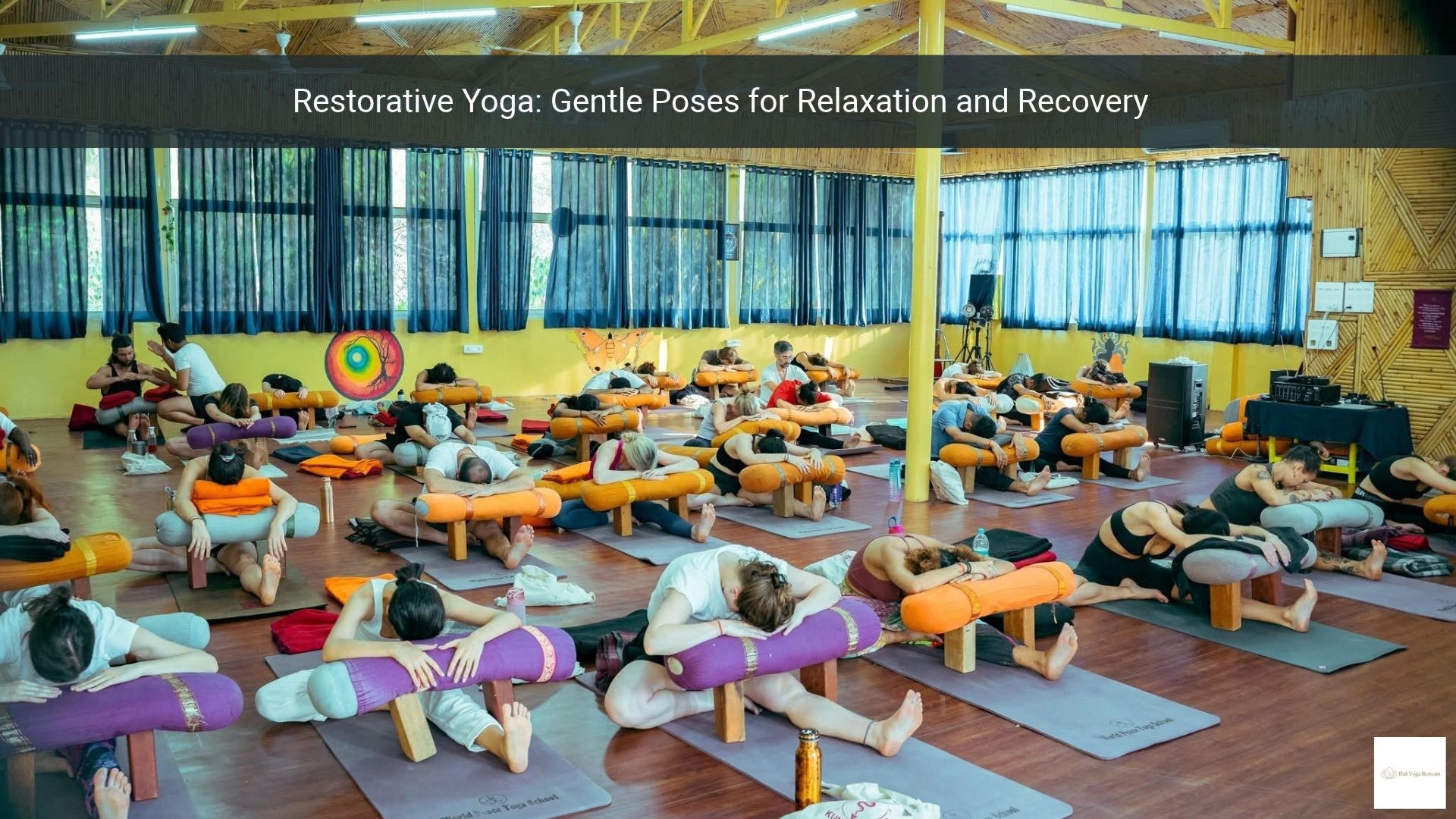
Restorative Yoga is a gentle style of yoga that uses supportive props and comfortable positions to encourage relaxation. Instead of focusing on flexibility or physical intensity, it gives practitioners time to settle into each posture and observe their breathing. It is particularly suitable for people who want to explore a quieter side of yoga.
Understanding Restorative Yoga And Its Role In Yoga Education
Restorative Yoga focuses on supporting the body rather than challenging it. Practitioners use props such as bolsters, blankets, blocks and cushions to make postures more comfortable. Each pose may be held for several minutes, allowing the practitioner to remain still without unnecessary muscular effort.
For those interested in a 200 Hour Yoga Teacher Training in Bali, learning about restorative practices can expand their understanding of different teaching approaches. A well-rounded yoga education includes more than dynamic asana sequences. It also introduces students to relaxation, breathing, body awareness and the importance of adapting practices to different needs.
Restorative Yoga is different from simply stretching on the floor. The main intention is to create a supportive position in which the practitioner can relax without forcing the body into a particular shape.
Restorative Yoga Vs Yin Yoga
Restorative Yoga and Yin Yoga are sometimes confused because both involve slower movements and longer-held postures. However, their intentions are different.
Restorative Yoga uses props to support the body and minimise physical effort. Yin Yoga generally involves passive stretches held for longer periods, with an emphasis on experiencing gentle tension in targeted areas.
In simple terms:
Restorative Yoga prioritises support and relaxation.
Yin Yoga focuses on sustained, gentle stretching.
Restorative postures often use more props.
Yin Yoga may involve a stronger sensation of stretch.
Both approaches can complement a balanced yoga routine, depending on individual preferences and physical needs.
5 Gentle Restorative Yoga Poses To Explore
Here are seven beginner-friendly positions that can be adapted with suitable support.
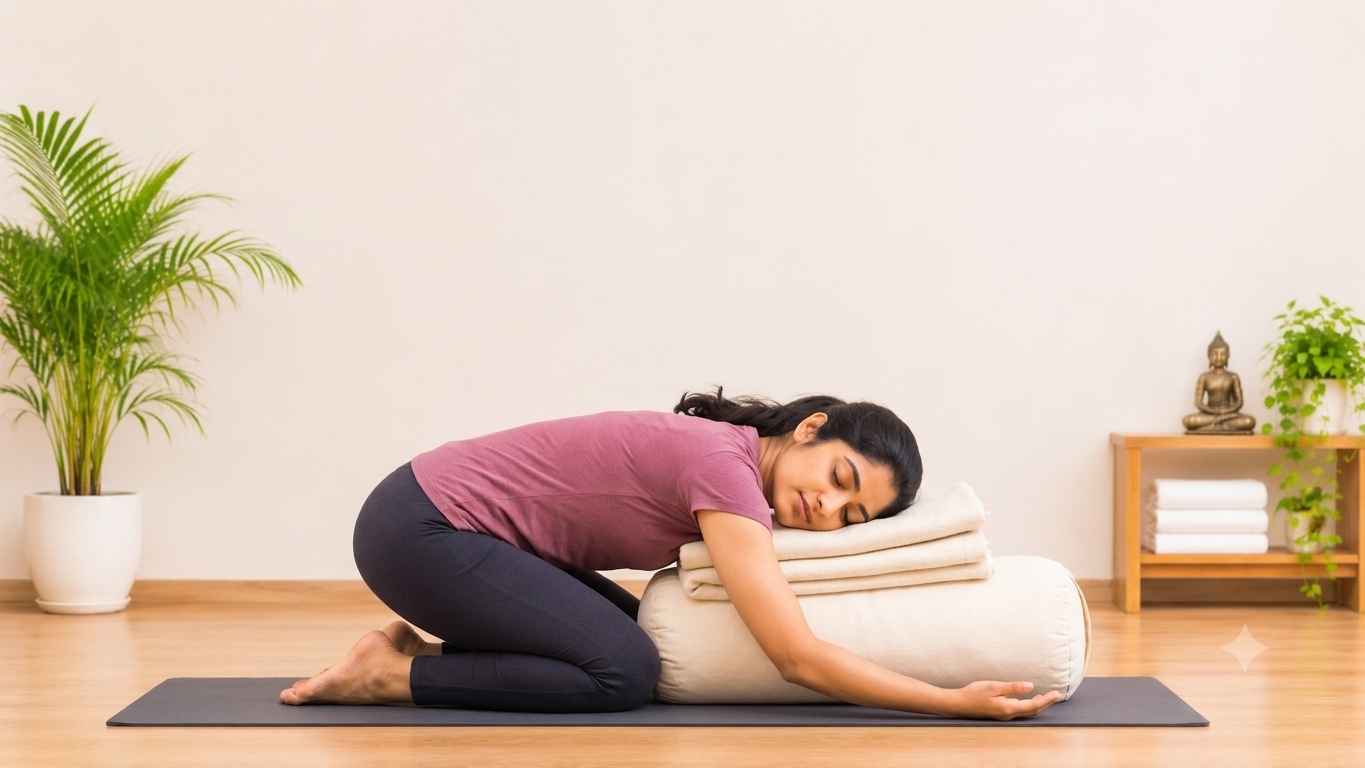
1. Supported Child's Pose
Begin by kneeling on the floor and bringing your knees slightly apart. Place a bolster or several folded blankets in front of you. Gently rest your torso on the support and turn your head to one side.
This posture provides a comfortable position for slowing down and observing the breath. Change the direction of your head halfway through the hold.
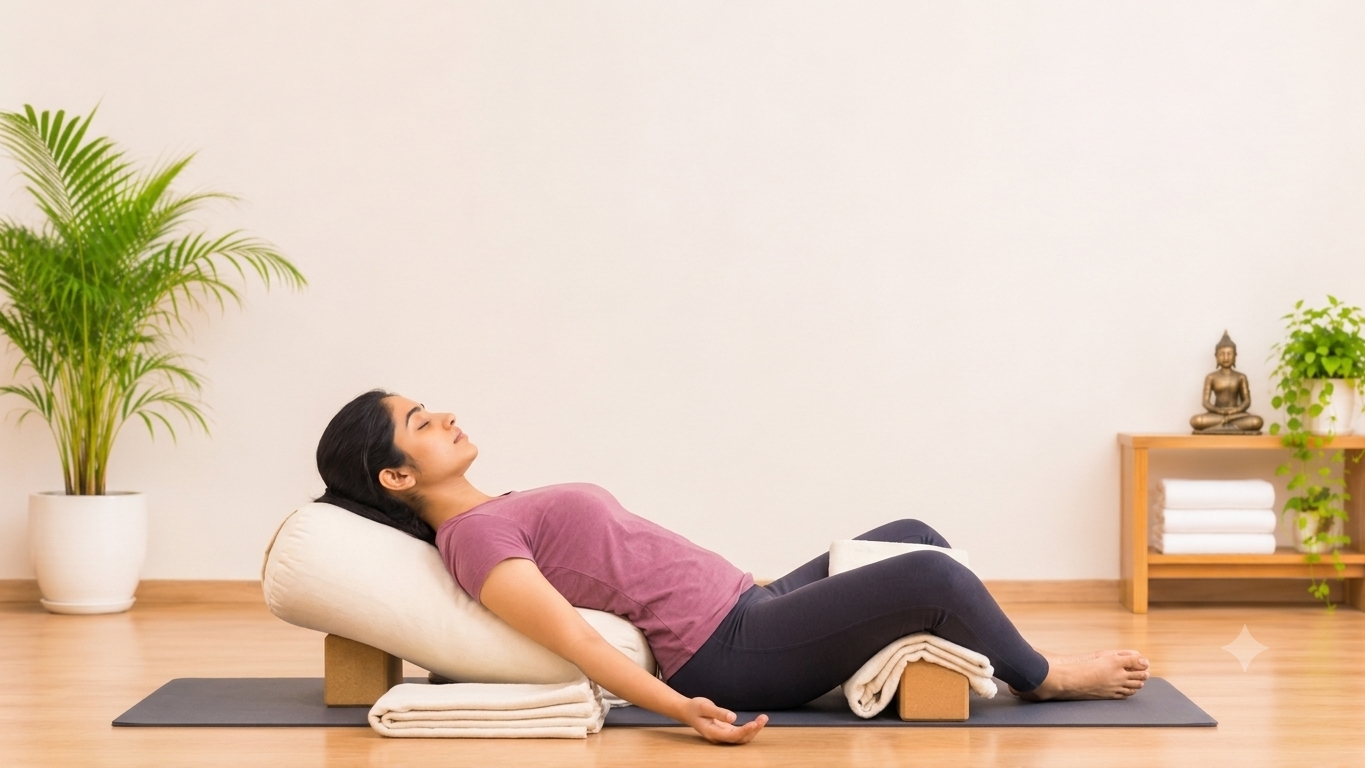
2. Supported Reclining Bound Angle Pose
Lie on your back and bring the soles of your feet together. Allow your knees to move outward while placing cushions or blocks underneath your thighs.
A bolster can support the length of your back if comfortable. Avoid forcing your knees towards the floor.
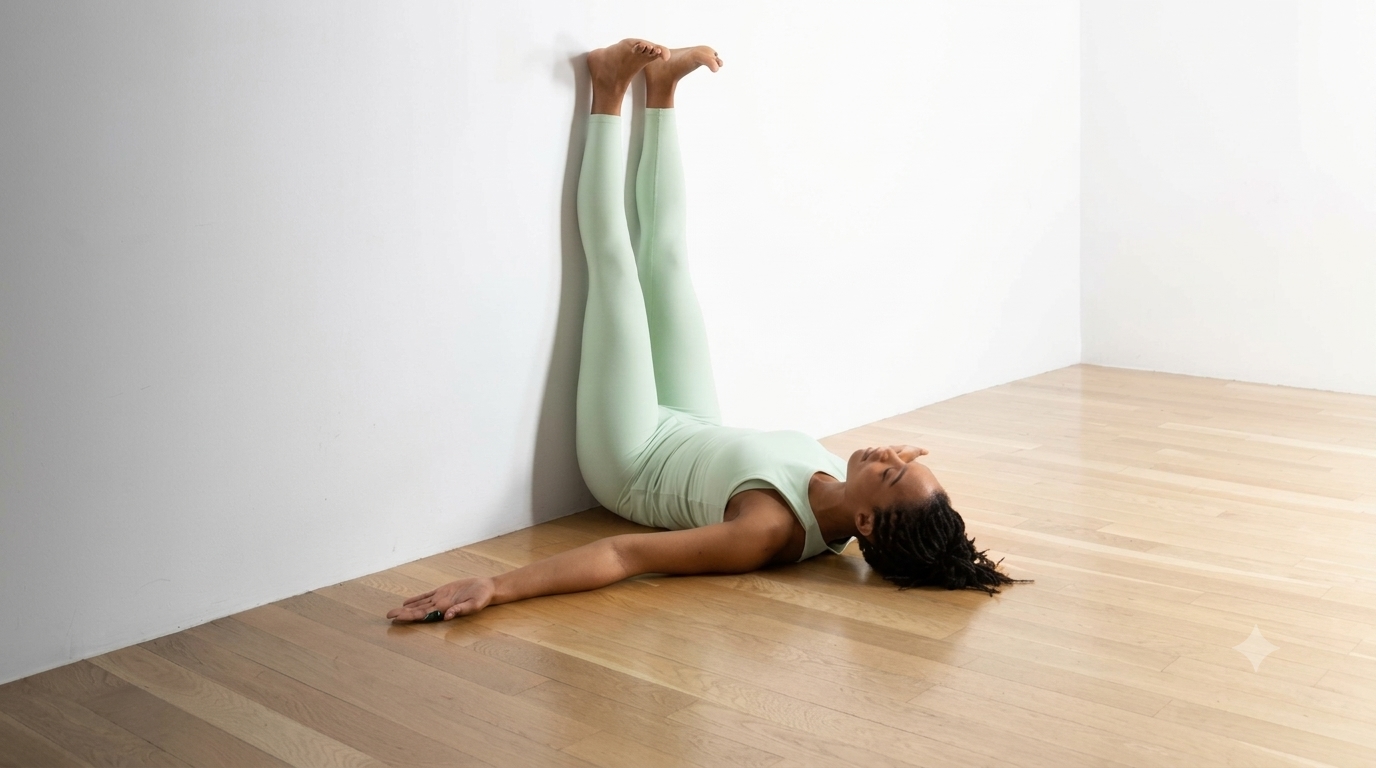
3. Legs Up The Wall Pose
Sit sideways beside a wall and carefully turn onto your back, bringing your legs upward against the wall.
Keep your hips at a comfortable distance from the wall. A folded blanket beneath the pelvis may provide additional support if suitable.
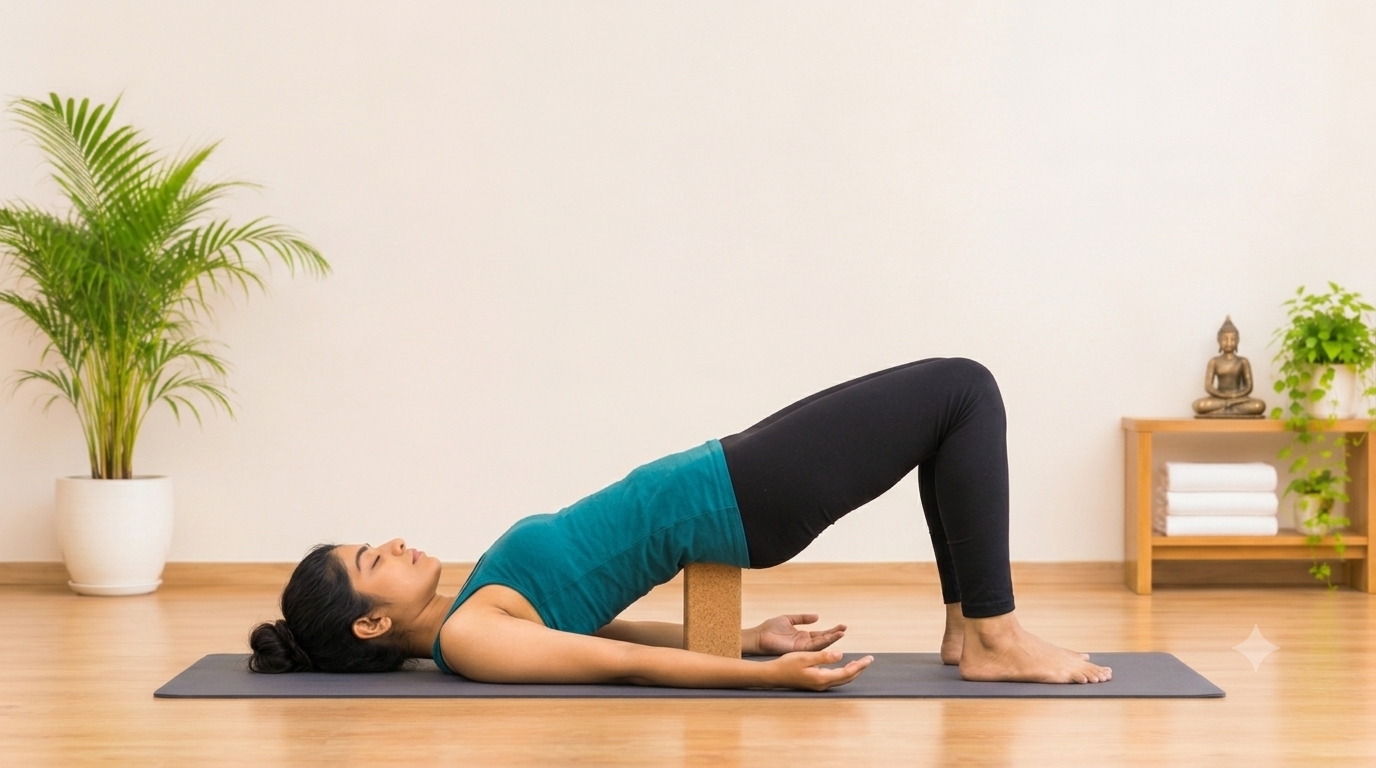
4. Supported Bridge Pose
Lie on your back with your knees bent and feet on the floor. Gently lift your hips and place a yoga block or firm support underneath your sacrum.
Allow your weight to rest on the support instead of actively holding the hips up. Exit the pose carefully.
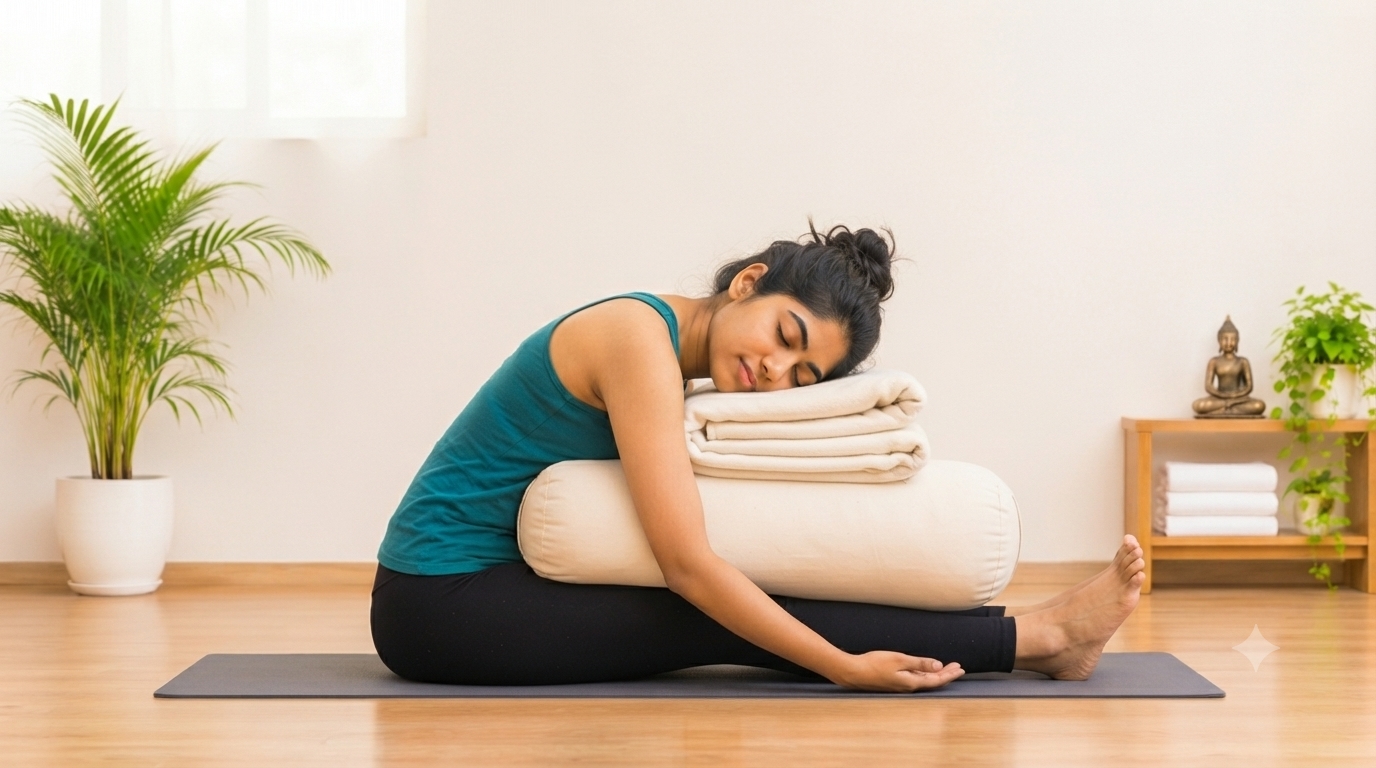
5. Supported Seated Forward Fold
Sit with your legs comfortably extended. Place a bolster or stacked blankets across your thighs and gently lean forward until your upper body is supported.
Avoid pulling yourself into a deep stretch. The goal is comfort rather than reaching your feet.
Benefits Of Restorative Yoga
Restorative Yoga can offer several benefits as part of a balanced wellness routine.
1. Encourages Deep Relaxation
Supported postures allow practitioners to remain comfortable without continuously engaging their muscles. This can create an opportunity to slow down after a busy day.
2. Develops Body Awareness
Remaining in a posture for several minutes gives people time to notice their physical sensations and adjust their position when necessary.
3. Supports Mindful Breathing
The slower pace encourages practitioners to observe their natural breathing patterns without rushing through movements.
4. Provides A Gentle Alternative To Dynamic Yoga
People who prefer less physically demanding sessions may appreciate the supportive nature of restorative postures.
5. Encourages Patience
Holding a supported posture requires little movement. Practitioners gradually learn to become comfortable with stillness.
6. Creates Space For Self-Reflection
A quiet practice can provide time away from everyday distractions and responsibilities.
These benefits vary between individuals. Restorative Yoga should not be presented as a treatment for injuries or medical conditions.
Essential Props Used In Restorative Yoga
Props play an important role in creating a comfortable practice.
Bolsters: Provide support beneath the back, chest, hips or knees.
Yoga Blocks: Help support different body positions.
Blankets: Add cushioning and warmth.
Yoga Straps: Offer additional support when needed.
Eye Pillows: Reduce light exposure and provide a gentle resting sensation around the eyes.
You do not need expensive equipment to begin. Folded towels, firm cushions and blankets can work as alternatives when used safely.
How Restorative Yoga Fits Into Yoga Teacher Training
A yoga teacher may work with students who have different experience levels, physical abilities and expectations. Understanding restorative practices helps future instructors appreciate that yoga classes do not always need to be physically demanding.
During a 200 Hour Yoga Teacher Training in Bali, students can build foundational knowledge of asana, anatomy, pranayama, meditation and teaching methodology. These subjects help them understand how to approach different yoga sessions and communicate instructions clearly.
Bali Yoga Retreats brings together students from around the world who want to deepen their practice and develop their teaching abilities. Its yoga education environment introduces students to different dimensions of traditional and modern yoga, helping them build a broader foundation for their personal and professional journeys.
Learning about Restorative Yoga can also help aspiring instructors understand the importance of props, modifications and comfortable positioning when planning suitable classes.
Tips For Beginners Starting Restorative Yoga
If you are new to this style, keep these points in mind:
Begin with two or three simple postures.
Use enough props to support your body comfortably.
Avoid forcing joints into deep stretches.
Choose a quiet environment with comfortable room temperature.
Leave each posture slowly and carefully.
Stop or modify any position that causes pain, numbness or discomfort.
If you have an injury, recent surgery or a health condition affecting movement, seek appropriate professional guidance before beginning a new practice.
Frequently Asked Questions
1. What Is Restorative Yoga?
Restorative Yoga is a gentle style of yoga that uses supportive props to help practitioners remain comfortably in different postures while focusing on relaxation and body awareness.
2. Is Restorative Yoga Suitable For Beginners?
Yes. It is generally accessible to beginners because it does not require advanced flexibility or complicated movements. Postures should always be adapted to individual comfort.
3. How Long Should You Hold A Restorative Yoga Pose?
Many restorative postures are held for approximately five to twenty minutes, depending on the posture, teacher's guidance and practitioner's comfort.
4. What Props Do You Need For Restorative Yoga?
Common props include bolsters, blankets, blocks, straps and cushions. Household alternatives such as folded towels and firm pillows can also be useful.
5. Can Restorative Yoga Be Practised Every Day?
Yes, gentle restorative sessions can be included regularly in a yoga routine. The duration and postures should be adjusted according to individual needs.
Conclusion
Restorative Yoga reminds us that yoga is not always about achieving difficult postures or increasing physical intensity. It also involves understanding when to slow down, use support and give ourselves time to become still.
By exploring gentle poses, supportive props and mindful breathing, practitioners can discover a different relationship with their yoga practice. For aspiring teachers, understanding this approach also adds another useful dimension to their knowledge of yoga and student care.