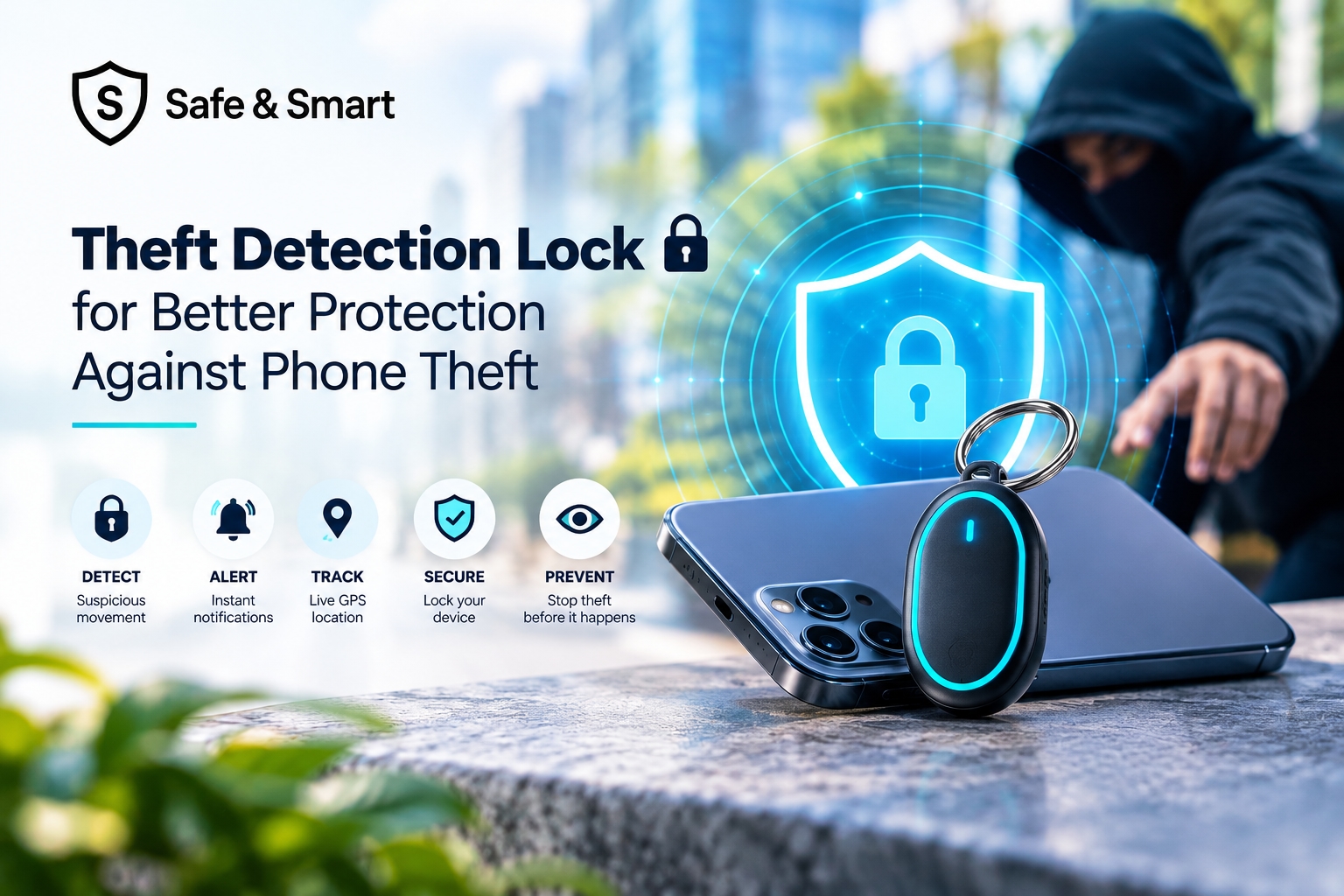
Smartphones have become an essential part of everyday life. People use them for banking, communication, navigation, shopping and storing important personal information. However, carrying an expensive phone also creates a risk of theft, particularly in crowded streets, public transport, shopping centres and busy travel locations. A phone can be snatched in seconds, leaving its owner without an important device and potentially exposing sensitive information.
Traditional phone cases help protect devices from scratches and accidental damage, but they do not actively respond to suspicious movement or attempted theft. This is where a theft detection lock becomes a useful concept in modern smartphone security. By combining intelligent sensors, instant notifications and location tracking, smart anti-theft technology can help users respond more quickly when their phone is taken unexpectedly.
Understanding how these features work and what to consider when choosing a security solution can help people protect their smartphones and valuable belongings more effectively.
What Is a Theft Detection Lock?
A theft detection lock is a security mechanism designed to help identify unauthorised movement, suspicious handling or potential theft of a valuable item. Unlike a conventional physical lock, which prevents access through a mechanical barrier, a smart theft detection system focuses on identifying unusual activity and notifying the owner.
For smartphones, this type of protection may involve sensors integrated into a specialised phone case, an alert system connected to a mobile application or location tracking features.
Depending on the product, the system may help users:
Detect unexpected grabbing or snatching movements.
Receive notifications when suspicious activity is detected.
Access location information through a connected application.
Share relevant alerts or location details with trusted contacts.
Respond more quickly when a phone goes missing.
Not every product includes all these capabilities. Users should check the actual features, connectivity requirements and operating limitations before choosing a security device.
Why Is Smartphone Theft Protection Important?
Smartphones are valuable not only because of their purchase price but also because of the information they contain. A stolen device may provide access to personal photographs, emails, contacts, payment applications and other sensitive information if it is not adequately secured.
Several everyday situations can increase the risk of phone theft.
Crowded Streets and Public Transport
Busy pavements, railway stations, buses and underground transport can create opportunities for opportunistic theft. People frequently use their phones while walking, checking directions or waiting for transport, sometimes without noticing their surroundings.
A smart anti-theft device can provide an additional layer of awareness by helping detect unexpected movement and notifying the owner when supported conditions are met.
Cafés, Restaurants and Shopping Centres
Leaving a phone on a table, counter or shopping trolley can make it easier for someone to take it unnoticed. A theft detection solution may help users monitor their devices and respond to alerts, depending on the technology used.
Travel and Daily Commuting
Travellers often rely on their phones for tickets, maps, bookings and payments. Losing a device during a journey can disrupt plans and create additional security concerns.
Using a protective case, enabling device security settings and considering a compatible tracking solution can help reduce the impact of such incidents.
How Does a Smart Theft Detection Lock Work?
The operation of a smart anti-theft system depends on its design. Some products use movement sensors, while others rely on connectivity, location tracking or application-based notifications.
1. Detecting Unusual Movement
Sensors can identify certain changes in movement or handling. In a smart phone case designed for anti-snatch protection, the detection mechanism may recognise a sudden movement pattern associated with an unexpected grab.
The system then evaluates the detected activity according to its configured rules. The accuracy of detection depends on the sensor design, software and surrounding conditions.
2. Sending Instant Alerts
When the system identifies an event that meets its alert conditions, it may notify the user through a connected application or another supported alert method.
A timely notification helps the owner recognise that something unusual may have happened. However, alert delivery can depend on connectivity, device settings, battery status and the specific product.
3. Providing Location Information
Location tracking can help users check where their phone or connected device was last reported. Depending on the system, location information may be updated through GPS and supported network connections.
This feature can be particularly useful when a phone has been misplaced or is suspected to have been stolen. Location data should be treated as an aid rather than a guarantee of recovery, because updates may be delayed or unavailable in some conditions.
4. Supporting a Faster Response
Once an alert is received, users can assess the situation and decide what to do next. They may check available location information, contact trusted people or report the incident to the relevant authorities.
The purpose of smart detection is to provide useful information quickly, rather than relying entirely on the owner noticing that the phone has disappeared.
Key Features to Look for in a Theft Detection Lock
Choosing a suitable phone security solution requires more than comparing product appearance or price. The following features can help determine whether a device meets your needs.
Anti-Snatch Detection
Anti-snatch detection is particularly relevant for people who regularly carry smartphones in public places. A compatible device can use sensors to identify certain sudden movements and trigger an alert.
Before purchasing, check which movements the product detects and whether the feature requires an active connection to a mobile application.
Live GPS Tracking
GPS tracking can provide location information for supported devices. This may help users understand where a phone or tracking accessory is located, subject to the product's capabilities and available connectivity.
Check whether the device provides live updates, last-known locations or location sharing, as these functions are not identical.
Instant Notifications
Alerts are useful only when they reach the intended recipient in time. Look for clearly explained notification settings and check whether alerts are delivered through an application, a local alarm or another supported method.
It is also important to understand what happens when the phone or connected device loses network access.
Emergency Alert Support
Some smart security products include a one-touch SOS feature that can notify selected contacts. This can be useful when a user needs to communicate an urgent situation.
SOS functionality is different from theft detection. Check whether the product offers both features and understand any limitations before relying on them.
Battery Performance and Everyday Convenience
A security accessory should be practical enough to use consistently. Consider battery life, charging requirements, durability, size and ease of installation.
A lightweight phone case with integrated security features may be more convenient for everyday use than a separate accessory that is frequently forgotten or left behind.
Privacy and Data Protection
Location tracking involves sensitive information. Before choosing a connected security product, review its privacy policy, location permissions, data storage practices and account security options.
Use strong passwords, secure your phone with a PIN or biometric authentication, and share location information only with people you trust.
Theft Detection Lock vs Traditional Phone Protection
Traditional protection and smart anti-theft technology serve different purposes. A standard phone case mainly protects against everyday physical damage, while a screen protector reduces the risk of scratches and certain types of screen damage.
A smart security accessory may add movement detection, notifications or location-related features, depending on its design.
For example, a standard case may help protect a phone if it falls onto the pavement. However, it cannot necessarily alert the owner when someone grabs the device. A smart case equipped with suitable anti-snatch technology may provide that additional capability.
Neither approach eliminates every risk. The most practical strategy is to combine physical protection, digital security settings and suitable anti-theft features.
Users should also enable available device-locking functions, secure important accounts and avoid keeping sensitive information accessible without authentication.
How to Choose the Right Anti-Theft Phone Security Device
The right security solution depends on how you use your phone, where you travel and which risks concern you most.
Consider your daily routine. If you regularly commute through crowded areas, anti-snatch detection and prompt alerts may be important features.
Check compatibility. Confirm that the product works with your smartphone model and operating system. Some accessories require a compatible application or specific device settings.
Understand connectivity requirements. Determine whether the device relies on GPS, a mobile network, a nearby phone or another connection method. These technologies have different operating ranges and limitations.
Review the complete feature list. Confirm whether tracking, movement detection, SOS alerts and offline functionality are included. Do not assume that every smart security accessory offers all these features.
Evaluate ongoing costs. Some connected devices require a subscription for network connectivity, application services or advanced features. Review the full cost before making a decision.
Read the privacy information. Check how location data is handled and whether you can manage permissions, trusted contacts and account access.
A careful comparison helps ensure that the selected device offers practical protection without creating unnecessary complexity.
Additional Ways to Reduce the Risk of Phone Theft
Technology works best when combined with sensible everyday habits. Even a sophisticated theft detection system cannot guarantee that a phone will never be stolen.
Keep your phone secure when walking near roads or moving through crowded areas. Avoid leaving it unattended on café tables or other exposed surfaces. When travelling, store it in a secure pocket or bag rather than an easily accessible outer compartment.
Enable your smartphone's built-in screen lock and account recovery features. Keep operating system updates current and make regular backups of important information.
If your phone is stolen, use the official tools available for your device to secure the account, lock the handset or erase its data where appropriate. Contact your mobile network provider if necessary and report the theft to the police. Do not confront a suspected thief or enter an unsafe situation to retrieve a device.
These measures complement smart security products and help reduce the potential consequences of theft.
Conclusion
A theft detection lock represents a smarter approach to smartphone protection by focusing on suspicious movement, timely alerts and location awareness rather than relying only on a conventional phone case. Depending on the technology available, these features can help users recognise potential theft, respond more quickly and make better-informed decisions when a device goes missing.
When choosing a security solution, consider anti-snatch detection, location tracking, notification reliability, battery performance, compatibility and data privacy. Combining these features with strong smartphone security settings and sensible daily habits provides a more complete approach to protecting valuable devices.
Safe&SmartOne develops smart anti-theft security products, including the Slim Case, designed to support smartphone protection through features such as anti-snatch detection, live GPS tracking and connected alerts. For users looking for an additional layer of protection for their everyday devices, smart security technology can be a practical addition to their existing phone protection measures.
Frequently Asked Questions
1. What is a theft detection lock for smartphones?
A theft detection lock is a security mechanism designed to identify suspicious movement or potential unauthorised handling and notify the owner. Depending on the product, it may include sensors, mobile application alerts or location tracking.
2. Can a theft detection lock prevent phone theft completely?
No. It can help users detect certain suspicious activities and respond more quickly, but no device can guarantee complete protection. Physical security, strong device settings and sensible habits remain important.
3. How does anti-snatch detection work?
Anti-snatch detection uses supported sensors and software to recognise certain sudden movements or handling patterns. When the detected activity matches the system's configured conditions, it may trigger an alert.
4. Does a theft detection lock include GPS tracking?
Not necessarily. GPS tracking depends on the product's specifications. Some security devices offer location tracking alongside movement detection, while others provide only selected security features.
5. Is a smart anti-theft phone case better than a standard case?
A standard case mainly provides physical protection against scratches and impacts. A compatible smart anti-theft case may add features such as anti-snatch detection or connected alerts. The better option depends on your requirements, budget and the features provided.
6. Can a smart theft detection device work without an internet connection?
Offline functionality varies by product. Some devices may retain certain information or queue alerts until connectivity returns, while other features may become temporarily unavailable. Always check the manufacturer's specifications.
7. What should I do if my phone is stolen?
Move to a safe location, use the official device recovery service to locate or secure the phone where possible, protect your accounts, contact your mobile network provider if needed and report the theft to the police. Avoid confronting a suspected thief.
8. What features should I compare before buying a theft detection lock?
Compare anti-snatch detection, location tracking, alert delivery, battery performance, smartphone compatibility, connectivity requirements, privacy protection and any ongoing subscription costs. Choose a product whose documented features match your everyday security needs.