Embarking on a remote nature expedition into the heart of Central Africa is an unforgettable adventure. Whether you are trekking through the dense rainforests of Cameroon, tracking lowland gorillas in the Republic of Congo, or exploring the pristine national parks of Gabon, you will witness some of the most untouched biodiversity on the planet.
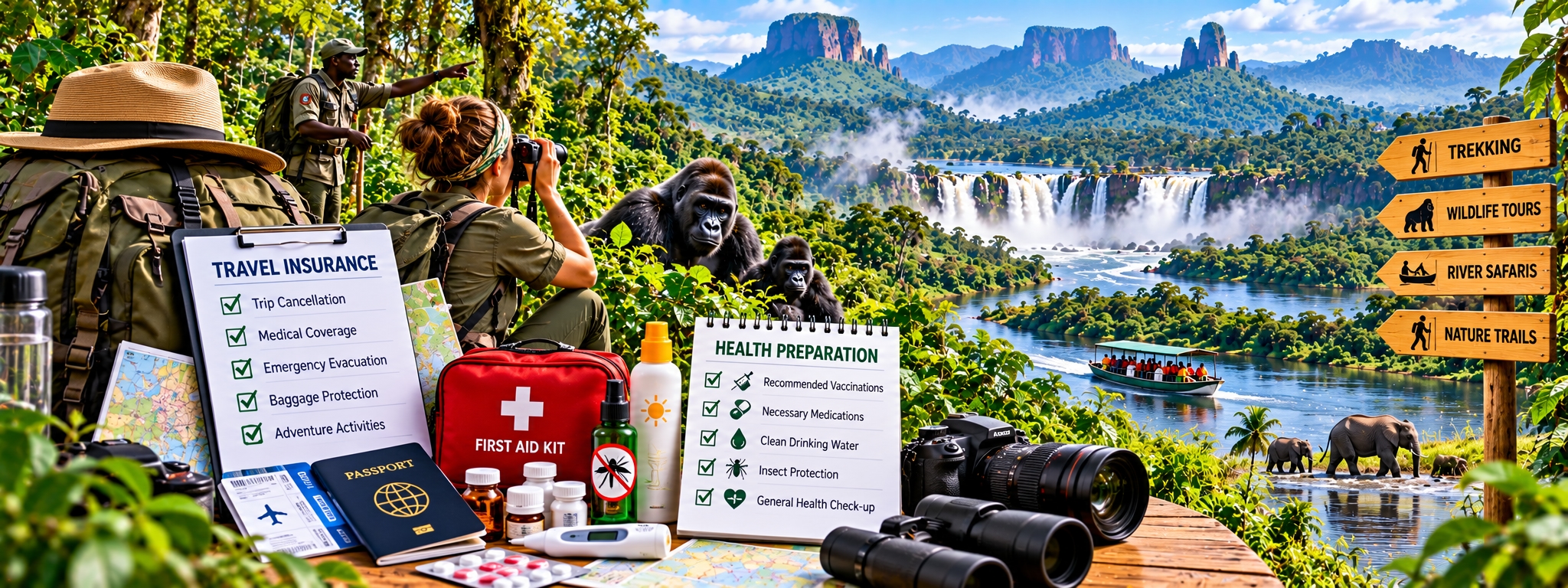
However, traveling off the beaten path in Central Africa requires careful planning. Unlike standard city vacations, remote wilderness trips demand rigorous health preparations, comprehensive travel insurance, and precise visa arrangements.
This guide covers everything you need to know to stay safe, healthy, and fully compliant on your Central African journey.
1. Essential Health Preparations: Vaccinations and Medical Kits
Remote nature trips put you far away from modern medical facilities. Preparing your health in advance is the single most important step of your journey.
Mandatory and Recommended Vaccinations
Yellow Fever: This is a strict entry requirement for almost all Central African nations. You must carry your International Certificate of Vaccination or Prophylaxis (ICVP)—often called the "Yellow Card"—to enter Cameroon, Congo, and Gabon.
Routine Vaccines: Ensure your routine boosters (tetanus, diphtheria, polio, measles, and hepatitis A and B) are up to date.
Typhoid and Meningitis: Highly recommended for rural and forested travel.
Rabies: Because you will be exploring nature and potentially encountering wildlife or stray animals, pre-exposure rabies vaccination is strongly advised.
Malaria Prophylaxis and Mosquito Protection
Central Africa is a high-risk zone for malaria. Consult your travel doctor before departure to get a prescription for anti-malarial medication (such as Atovaquone-proguanil, Doxycycline, or Mefloquine). Pack EPA-registered insect repellent containing DEET or Picaridin, lightweight long-sleeve shirts, and long pants treated with permethrin.
Building a Personal First Aid Kit
Do not rely on local pharmacies in remote areas. Your travel medical kit should include:
Rehydration salts (electrolytes)
Broad-spectrum antibiotics and anti-diarrheal medication
Pain relievers (ibuprofen or paracetamol)
Wound care supplies (antiseptic wipes, gauze, bandages, and medical tape)
Water purification tablets or a portable UV sterilizer
2. Why Comprehensive Travel Insurance is Non-Negotiable
Standard credit card insurance or basic holiday coverage will not suffice for a deep-wilderness expedition in Central Africa. When choosing a policy, you must ensure it covers specific high-risk scenarios.
Medical Evacuation (Medevac) Coverage
If you suffer a serious injury or contract a severe illness deep in the Congolese rainforest or remote Gabonese parks, you may need an emergency bush flight to a regional medical hub or even back to your home country. Ensure your policy includes at least $100,000 to $250,000 in emergency medical evacuation and repatriation.
Adventure Sports and Remote Hiking
Many standard insurance policies exclude activities like jungle trekking, wildlife tracking on foot, or multi-day camping. Read the fine print to confirm that remote hiking and wildlife safaris are fully covered.
Trip Interruption and Logistics Delays
Travel in Central Africa can be unpredictable due to seasonal rains, remote transport schedules, or localized logistics challenges. Robust travel insurance protects your investment if flights or river transfers are delayed or canceled.
3. Securing Your Visas for Cameroon, Congo, and Gabon
Before you pack your hiking boots and binoculars, you need to secure the proper travel authorizations. Each country has distinct entry procedures, and preparing them ahead of time ensures a smooth journey.
Cameroon Visa Process
Planning a trip to explore Mount Cameroon or the southern rainforests? You will need to arrange your entry documentation properly. For reliable guidance and structured applications, you can check details on obtaining a Cameroon Short Stay Visa.
Democratic Republic of the Congo (DRC) Visa Process
If your adventure takes you into the iconic Virunga or Kahuzi-Biega national parks to see mountain gorillas and active volcanoes, securing the correct travel permit and visa is critical. You can learn more about the application steps by visiting Apply for the Democratic Republic of the Congo Visa.
Gabon Visa Process
Gabon is famous for its "Last Eden" ecosystems, where elephants walk on Atlantic beaches and mandrills roam the trees of Loango National Park. To plan your eco-tourism getaway, explore the requirements at Gabon Tourism E-Visa.
Why Choose Professional Visa Assistance?
Navigating embassy requirements, digital portals, and official documentation for multiple African nations can be time-consuming and stressful. Utilizing professional visa services offers major advantages:
Reliable Travel Visa Services: Our global approach has assisted numerous travelers in obtaining their Visa seamlessly.
Round-the-Clock Assistance: Reach out to us 24/7, and our experts will respond within 72 hours.
Experienced Visa Consultants: Receive expert guidance to ensure the acceptance of your application and avoid costly delays.
Efficient Visa Application Process: Apply for your Visa in minutes with our simplified, user-friendly forms.
Final Checklist for Your Central African Expedition
Check Passport Validity: Ensure your passport is valid for at least 6 months beyond your planned departure date and has plenty of blank pages.
Make Digital Copies: Save digital copies of your passport, yellow fever card, travel insurance policy, and visas in secure cloud storage.
Bring Cash (USD/Euros): In remote areas, digital payments and ATMs are practically nonexistent. Bring crisp, newer-issue US Dollars or Euros for local expenses and tipping guides.
Respect Local Wildlife and Communities: Always follow the guidance of your local rangers and guides to ensure a safe, sustainable, and respectful journey into nature.
Prepare thoroughly, secure your paperwork early, and get ready for the trip of a lifetime into the wild heart of Central Africa!