In modern times, a business does not run using only one piece of software. One firm can employ different software applications for sales, inventory, finance, and human resource functions. But it is impossible for such software to function effectively when it operates independently. The lack of communication between business applications causes inefficiency, makes mistakes more likely, and wastes a lot of employee time doing manual work.
To make yourself relevant for a career in technology, the best way to start is with an SAP CPI Course Online. Understanding the way in which integration software connects systems is crucial knowledge for the world of cloud computing. In this guide, we will look at why Cloud Platform Integration is so important for businesses.
Connecting SAP and Non-SAP Applications
One of the major problems facing large firms is making sure that the software products provided by various vendors work well together. The firm may utilise SAP for its accounting but may not use SAP for its web transactions and services. This has been made difficult by the fact that these software applications have different languages.
CPI serves as an intelligent link that allows the two software applications to communicate with each other effectively.
App Location | App Purpose | What It Does in the Workflow |
|---|---|---|
Sales App | Cloud Customer Portal | Takes in new customer sales orders every day |
Main ERP | Core Business System | Maintains the centralised financial and inventory data |
Shipping App | Third-Party Logistics | Arranges shipping schedule and monitors shipments |
By using standard bridges, companies avoid messy custom code and keep their apps connected without high costs.
Simplifying Data Transformation and Integration Flows
Diverse software applications store their data differently. For example, an online retailer can submit data as a JSON file, whereas an outdated accounting application only supports XML files. When JSON data is sent directly into an XML application, the application will simply shut down or return an error.
This is where CPI comes in and translates data during the integration process automatically.
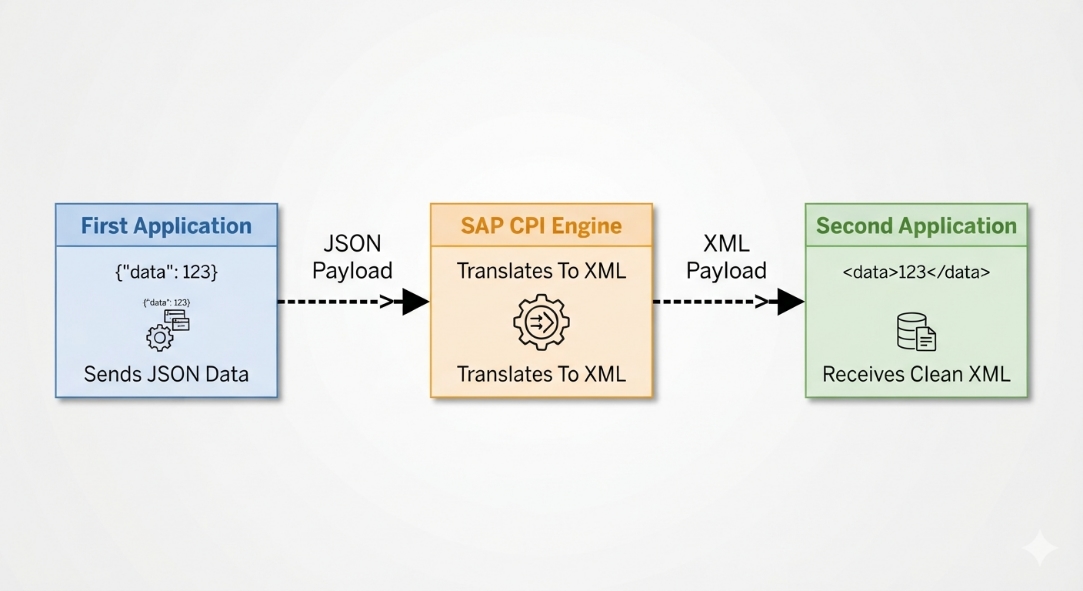
There is no need for programmers to write a line of code to connect each file. All they need to do is drag and drop a couple of screens. Students enrolled in an SAP BTP Course see firsthand how easy visual setup is to create new applications within a few days.
Supporting Cloud and On-Premises Integration
Many companies keep part of their technology in local office servers and part of it in the cloud. Connecting local server systems to cloud tools over the regular internet can lead to safety risks and network problems.
CPI links these two worlds together using lightweight tools called cloud connectors. These tools create secure channels between local servers and cloud apps.
How CPI Helps Hybrid Systems
Safe Channels: Links local database systems to cloud applications without creating dangerous firewall holes.
Ready Connectors: Provides ready-made connectors for processing common web and file connections.
Easy Scaling: Manages sudden surges in web traffic without hampering business operations.
Improving Integration Security and Control
Any confidential data or numbers related to customers sent using external network links should have safety controls. Failure to put in place such controls would cause data breaches and loss of files. Moreover, it would cause legal problems for firms and organisations.
CPI is a tool that protects data by controlling the security policy in one centralised place. This way, the tool ensures the security of the data while in transit, and it checks all the systems that try to gain access to the data.
User Verification: Checks the user seeking access to data using encrypted keys.
Data Scrambling: Encrypts any confidential information to protect it while in transit.
Access Control: Allows the manager to control who accesses specific data flows.
Making Enterprise Integrations Easier to Monitor and Maintain
Previously, businesses integrated their applications through point-to-point connections with each individual application. This led to a complex network of coding as businesses increased their number of applications. If there were any issues with one point connection, identifying the problem took time.
With CPI, all those connections can be managed from one centralised dashboard.
Integration Choice | Direct System Links | Central CPI Platform |
|---|---|---|
Setup Style | Complicated custom links | Centralised traffic control point |
Finding Errors | Difficult to determine at which point the link failed | Alerts indicate immediate problem occurrence. |
Ongoing Maintenance | Even minor updates can disrupt custom code. | Adapters are always reliable. |
Students taking an SAP CPI Course in Hyderabad spend lab time learning how to read log screens and set up quick alerts for failed messages.
How Does SAP CPI Support a Real Business Process?
The integration of all these components may be understood in the following real example of a customer order:
New Order: The client buys a product from the website, and the webstore produces a JSON file.
Safe Entry: CPI securely transfers the JSON file through a connection and validates the webstore’s legitimacy.
Data Translation: CPI converts the JSON file into an XML file because it is necessary for the business system.
Local Delivery: CPI securely delivers the XML file through the connection to the local database.
Completion: The business system makes an entry for the sale, and CPI acknowledges the completion of the process on its dashboard.
Conclusion
CPI SAP is an essential solution that allows keeping modern-day applications connected, efficient, and secure. By replacing the difficult-to-understand customised codes with simple visual process flows, it helps organisations expand without interfering with the current architecture of the application systems. For students who enter the technology world, knowing the principles of data translation, secured messaging, and application routing provides many career opportunities.