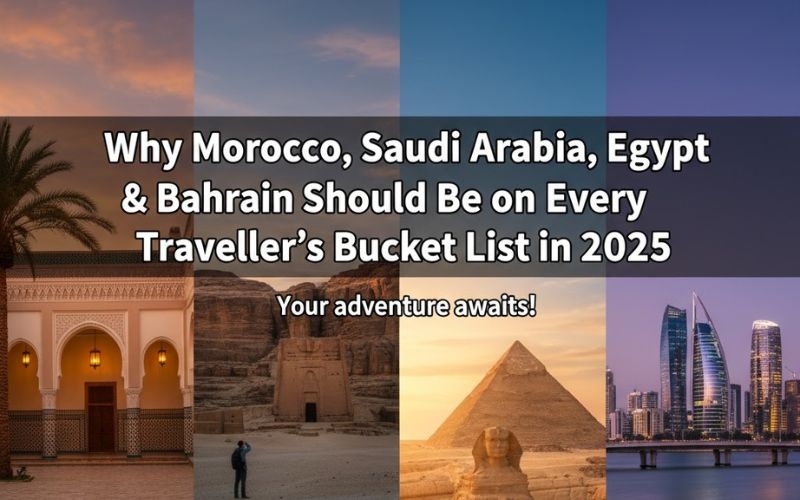
Imagine stepping off the plane and instantly finding yourself at a crossroads of past and future. In 2025, four destinations — Morocco, Saudi Arabia, Egypt & Bahrain — are waiting with open arms, vibrant culture, luxurious escapes and surprising modern twists. Thanks to streamlined travel processes, booking your trip is easier than ever. Whether you’re mapping out this year’s big adventure or simply dreaming ahead, these four places belong on your travel bucket list.
Why These Four Countries Are Leading the 2025 Global Travel Boom
Let’s dive into each destination and explore what makes it stand out right now.
Morocco: North Africa’s Cultural Gem
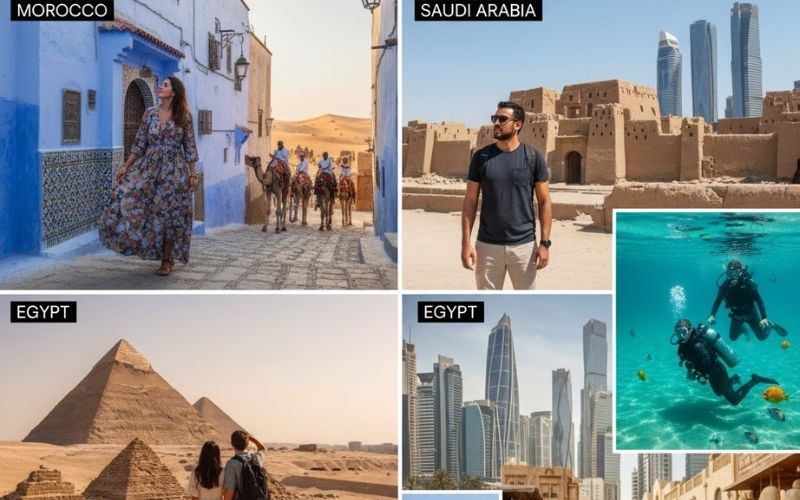
Morocco has been smashing tourism records lately. By the end of September 2025, it had welcomed 15 million visitors — up ~14 % from the same period the previous year. Why this matters for travellers: You’ll find mix of vibrant city life in Marrakech or Fes, enchanting blue villages like Chefchaouen, and a desert escape in the Sahara — all in a single trip. And with more international flights landing than ever, reaching and moving around the country is more comfortable.
Saudi Arabia: The Emerging Mega-Destination
Saudi Arabia is no longer just a pilgrimage destination — it’s reinventing itself for global leisure travel in a big way. The region’s tourism growth is part of a broader MENA trend in 2025. For you, this means exploring the historic mud-city of Diriyah, diving in the Red Sea’s pristine waters, or staying at ultra-modern resorts that feel completely new. With fresh hotels, cultural zones and entertainment events popping up across the Kingdom, this is a destination where you’ll see the “next phase” of travel.
Egypt: Timeless History Meets Beach & Adventure
Egypt has the kind of appeal that never goes out of style. Think of the Pyramids, the Nile, the ancient temples — and then add in new museum openings, fresh beachfront resorts and a sense of rediscovery. Recent data shows Egypt is seeing strong tourism recovery and momentum. For the traveller, this means you can couple a once-in-a-lifetime heritage journey with time relaxing on the Red Sea, or taking a cruise between Luxor and Aswan. It’s historic and rejuvenating in one.
Bahrain: Gulf Charm — Compact, Modern, Relaxed
While smaller than its Gulf neighbours, Bahrain offers big rewards: deep cultural roots, modern comforts, a lively capital (Manama), and easy regional connections. For travellers who want something slightly off the more-crowded path yet still world-class, Bahrain stands out.
Its blend of tradition and contemporary lifestyle makes it an ideal stopover or extended stay destination in 2025.
How eVisa Makes Travel Easier Across Morocco, Saudi Arabia, Egypt & Bahrain
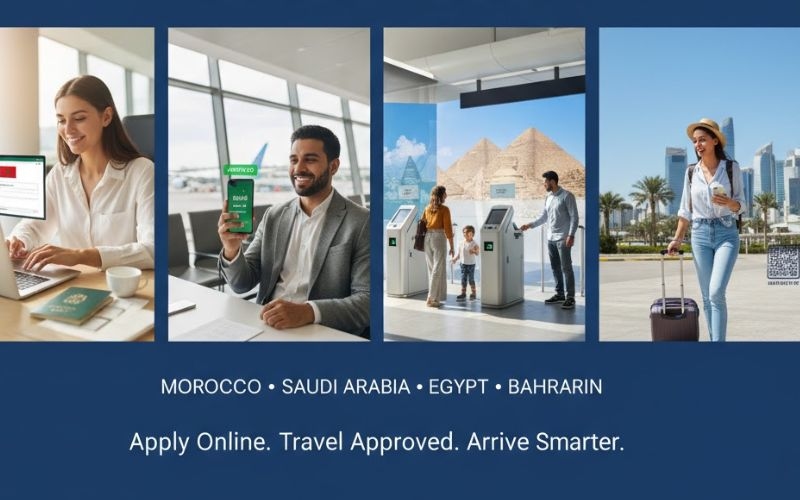
One of the key enablers behind this travel boom is the adoption of the eVisa system across many destinations. This digital travel permit tool lets you apply ahead of time, reduces uncertainty at arrival and gives you more peace of mind before you fly.
Here’s how the eVisa advantage plays out for these four countries:
You apply online from home, submit your passport data and supporting documents, and wait for approval.
Once approved, you travel knowing you’ve cleared one key hurdle.
On arrival your approved digital permit is usually enough — fewer surprises, smoother check-ins.
In each destination the exact process varies, but the digital nature of the eVisa means fewer in-person steps and less waiting. When you’re preparing a big trip in 2025, that can make all the difference between excitement and stress.
Different eVisa Types for Morocco, Saudi Arabia, Egypt & Bahrain Explained
Let’s break down the common types of eVisa offers you’ll encounter in each destination — tailoring your permit to what you’re doing (holiday, business, cultural trip, event) is key.
Morocco
Tourist entry eVisa: for those staying to sightsee, explore, relax.
Short-stay formats that target leisure travellers.
Because Morocco is actively growing its tourism sector, many types of visitor permits now support digital Morocco eVisa applications.
Saudi Arabia
Tourist eVisa – The most popular option for leisure trips.
Multiple-Entry eVisa – Great for frequent visitors or guests.
Umrah eVisa – For travellers performing Umrah outside the Hajj season.
Event eVisa – Issued for concerts, festivals, or major sports events.
Egypt
Egypt Tourist eVisa: single-entry or multiple-entry formats ordinary visitors use.
Heritage/archaeology-focused permits for those on special trips.
Entry formats tied to beach resorts or Nile cruises may vary.
Egypt’s tourism authorities are keen to make visiting easier and more attractive as historic sites and new museums come online.
Bahrain
Standard tourist eVisa: stays of a few days to over a week for sightseeing, shopping, culture.
Event-tourism permits (for festivals, regional stops) may exist.
Bahrain’s compact size and connectivity in the Gulf make it very practical for travellers looking to combine business/travel or multi-destination trips.
The Best Time to Explore Morocco, Saudi Arabia, Egypt & Bahrain
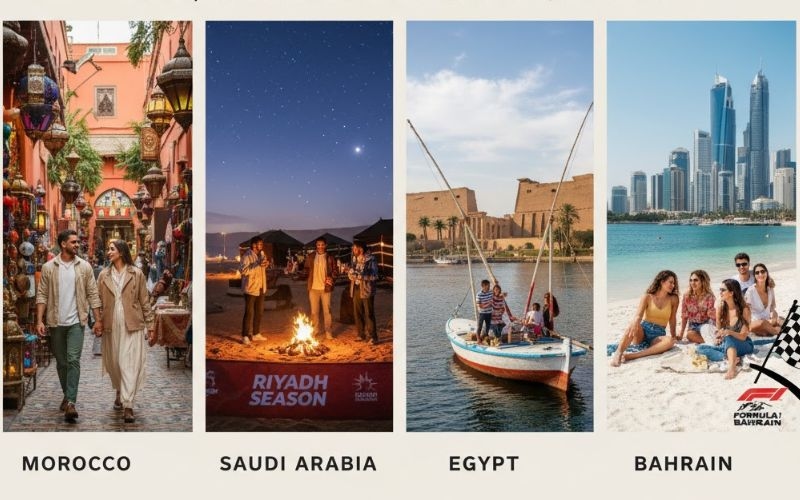
Choose shoulder seasons (spring and autumn) for Morocco and Egypt, cooler winter months for Saudi Arabia and Bahrain. That gives you pleasant daytime temperatures for sightseeing while avoiding extreme heat and peak crowds. See country-by-country details and planning steps below.
1) Morocco — when & why
Best months: mid-March → June and September → early November (spring and autumn). These months offer milder daytime temperatures (comfortable for medina walking, mountain trekking and Sahara excursions) and lower chance of peak summer heat in inland and desert areas.
Where to go by month:
March–May: Atlas Mountains wildflowers, pleasant Marrakech/Lavish riads, early surf season on Atlantic coast.
June: Gnaoua festival in Essaouira (dates vary — see festival section below) — great for music lovers.
Sept–Nov: Cooler evenings perfect for Sahara night camps, less crowded Fes and Chefchaouen.
Practical tips:
Book riads and desert camps several weeks in advance for spring and autumn.
Pack layers — warm nights in desert and cool mountain mornings.
If planning the Atlas treks, avoid winter snowfall months (Dec–Feb) unless prepared for snow gear.
2) Saudi Arabia — when & why
Best months: October → April, with November → February the most comfortable (cooler nights and mild days). This window aligns with the Kingdom’s main festival/entertainment season and outdoor activities.
Seasonal specifics:
Oct–Nov: Start of Riyadh Season and other city events — great for cultural programs and concerts.
Dec–Feb: Ideal for Red Sea diving and coastal exploration; inland desert nights are brisk — excellent for desert safaris.
Mar–Apr: Shoulder season; some large sporting/entertainment events also occur (wider event calendar in late 2025).
Practical tips:
Check the events calendar (Riyadh Season and city seasons) before booking — major concerts and sports can drive accommodation demand.
Respect local customs; pack modest clothing for public spaces and historic sites.
3) Egypt — when & why
Best months: October → April for Nile cruises and temple sightseeing; Red Sea beach season often best March–May and Sept–Nov (depending on heat tolerance).
Where to go by month:
Oct–Apr: Cairo, Giza, Luxor & Aswan — ideal temple visits and Nile cruises with comfortable daytime temps.
Mar–May & Sep–Nov: Red Sea resorts (Hurghada, Sharm El Sheikh, Marsa Alam) for diving when water and air temperatures are balanced.
Practical tips:
For temple light phenomena (e.g., Abu Simbel Sun Festival), verify exact festival dates before finalising travel — these are precise astronomical dates.
4) Bahrain — when & why
Best months: November → March (cool, pleasant weather ideal for outdoor sightseeing and beaches). Shoulder months like April/October strike a balance with fewer crowds.
Event timing: Bahrain’s major events (Formula 1 weekend—usually March/April, music festivals often in Oct) influence best travel windows — match your travel to events you want to see.
Practical tips:
Book hotels early around Grand Prix dates.
Bahrain is compact — plan a 3–5 day stay for a relaxed exploration with day trips.
Top 2026 Festivals Across Morocco, Saudi Arabia, Egypt & Bahrain
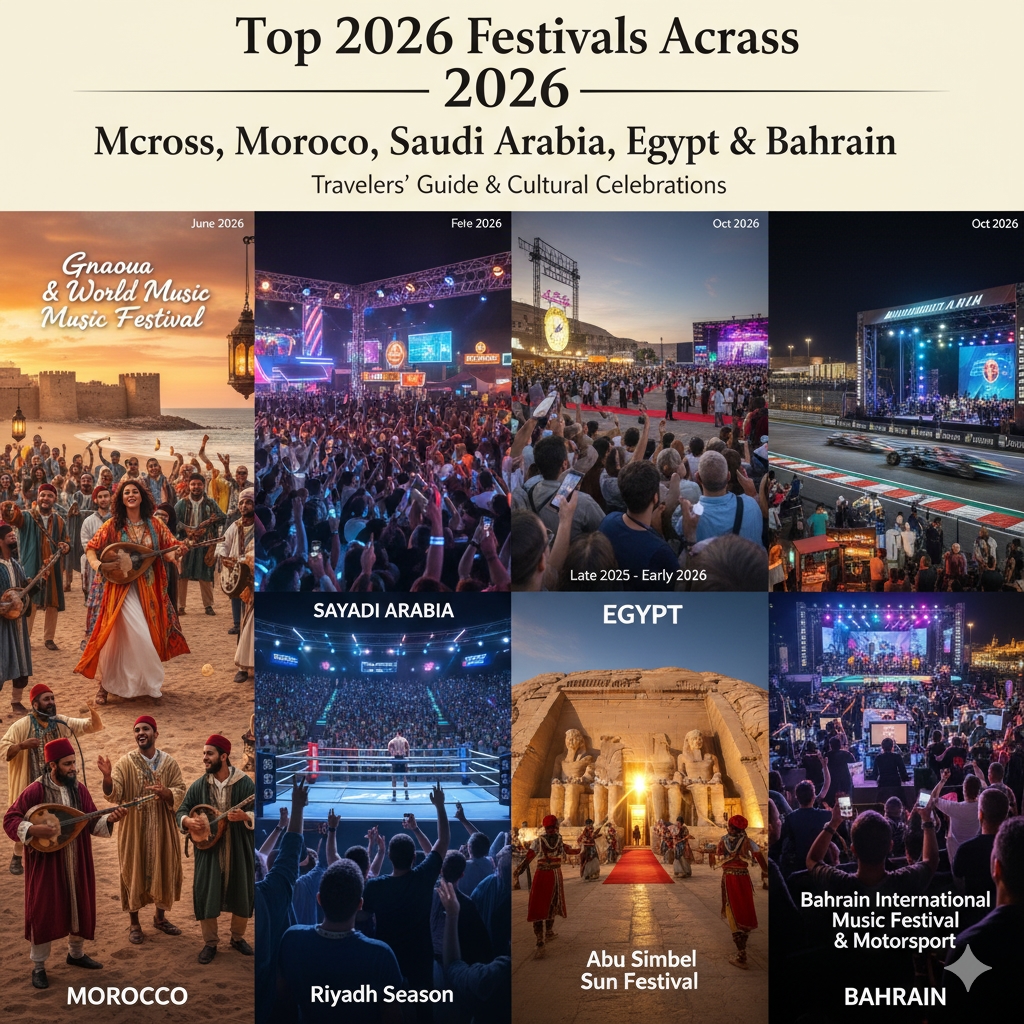
Festivals play a major role in bringing travelers closer to local music, food, spirituality, and ancient traditions. In 2026, these four destinations will host spectacular cultural celebrations, global entertainment lineups, and historical event reenactments that make a trip even more memorable. Here’s a reliable guide to the top 2026 festivals to plan for — with experiences, timing, and travel tips included.
Morocco — Gnaoua & World Music Festival, Essaouira
Expected Dates: June 2026 (annual late-June scheduling)
A globally loved artistic gathering, the Gnaoua & World Music Festival unites Morocco’s spiritual Gnawa music with jazz, afro-fusion, Caribbean beats, and contemporary world performances.
What travelers can expect in 2026:
Free and ticketed concerts across the city’s beachfront and medina zones
Late-night jam sessions with renowned maâlems (Gnawa masters)
Workshops on traditional instruments like the guembri and qraqeb
Coastal breeze, art exhibitions, and a youthful festival atmosphere
Travel Tips:
Book your stay months earlier — Essaouira has limited rooms compared with Marrakech
Combine the trip with a cultural visit to Marrakech or Agadir
Carry warm layers — coastal nights can feel breezy even in summer
Saudi Arabia — Riyadh Season & Year-Round Mega Events
Expected Season: Late 2025 through early 2026 (multi-month program)
Part of Vision 2030’s tourism expansion, Riyadh Season transforms the capital with world-class entertainment, celebrity concerts, global sports, technology zones, and family attractions.
Highlights travelers may see in 2026:
Major boxing or combat sports nights
International comedy festivals
Themed entertainment streets and giant amusement zones
Theater productions with global casts
Food festivals featuring celebrity chefs
Saudi Arabia also plans major Jeddah arts and waterfront events around winter–spring 2026.
Travel Tips:
Tickets for headline shows can sell out quickly — plan ahead
Consider staying near main zones for easier shuttle access
Evening events are common — pack light for movement between venues
Egypt — Abu Simbel Sun Festival & Cultural Celebrations
Key Dates: February 22, 2026 & October 22, 2026
Twice a year, travelers gather at Abu Simbel to witness a mystical moment: sunrise aligns perfectly to light the statues inside Ramses II’s temple. This Sun Festival blends astronomy, ancient engineering, and Nubian dance shows.
Extra 2026 attractions:
Cairo arts festivals and red-carpet film premieres
Expansion of new exhibitions linked to Egypt’s national museums and archaeological discoveries
Musical performances at historic sites in Luxor and Aswan
Travel Tips:
Access via Aswan is easiest — guided day trips are commonly arranged
Expect early departures (as early as 3 AM) for the sunrise spectacle
Bring sunscreen, hats, and water — the desert warms quickly after sunrise
Bahrain — Bahrain International Music Festival & Motorsport Thrills
Expected Festival Month: October 2026
Bahrain shines as a creative hub each October with orchestral productions, jazz fusion nights, Arab pop stages, and cross-cultural music workshops.
Bonus Events in 2026:
Formula 1 Gulf Air Bahrain Grand Prix — typically March 2026
Global motorsport events hosted at Bahrain International Circuit
Fan zones with entertainment and interactive attractions
Travel Tips:
Book accommodation near Manama or the circuit ahead of race weekends
Expect lively nightlife around the old souq and waterfront during festival days
Bahrain’s compact size makes quick transport easy for multi-event travel
Delicious Cuisines Travelers Must Try Across These Four Destinations
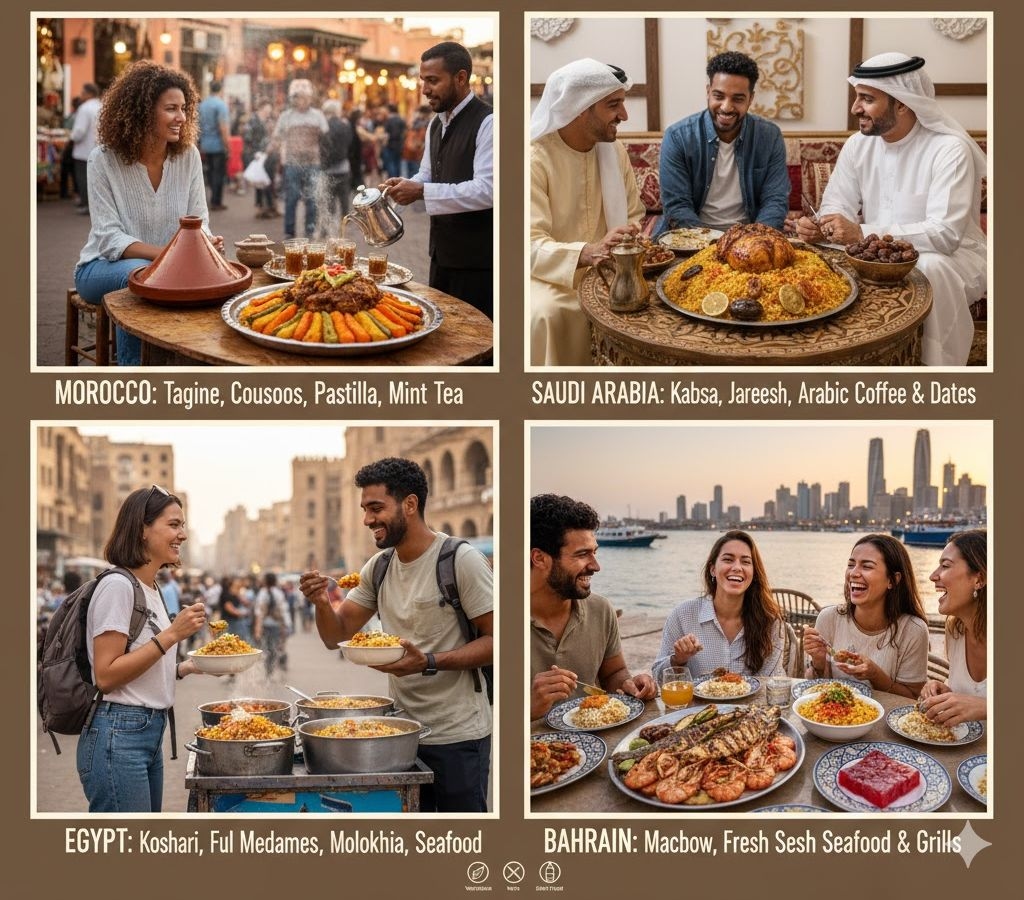
For each country I’ll describe must-try dishes, regional variations, best places to sample them, and dietary tips (allergies, vegetarian options, street-food safety).
Morocco — dishes, regions, where to taste
Signature dishes:
Tagine (slow-cooked stew in an earthenware pot): regional variations include lamb with prunes, chicken with preserved lemon and olives, and vegetable tagines.
Couscous: traditionally served on Fridays with meat/vegetables and sometimes a poached egg.
Pastilla (b’stilla): a layered sweet-savory pie often made with pigeon or chicken, almonds and sugar — a Fez specialty.
Mint tea: served everywhere — look for the ceremony of pouring from height.
Where to eat: Marrakech medina food stalls (Djemaa el-Fna for street theatre + food), Fes old medina restaurants for tradition, Essaouira for fresh seafood.
Saudi Arabia — dishes, regions, where to taste
Signature dishes:
Kabsa / Machboos: spiced rice with meat (chicken, lamb, or camel in specialty restaurants), often aromatic with saffron and dried lime.
Jareesh and Mandi: regional rice & meat specialties with Yemeni and Arabian Peninsula influences.
Arabic coffee & dates: hospitality staples served in majlis settings.
Where to eat: Family restaurants and modern food markets in Riyadh and Jeddah offer both traditional and contemporary dining. Coastal towns (Jeddah) serve exceptional seafood.
Egypt — dishes, regions, where to taste
Signature dishes:
Koshari: a filling national street food — rice, lentils, chickpeas, fried onions and tomato sauce.
Ful Medames: slow-cooked fava beans eaten at breakfast.
Molokhia: leafy stew served with rice and meat or chicken.
Fresh Red Sea seafood: grilled fish in Hurghada and coastal resorts.
Where to eat: Cairo’s street vendors for Koshari, Alexandria for seafood, Luxor/Aswan for Nile-inspired dining.
Safety & etiquette: Street food is safe if you pick busy, popular vendors; opt for freshly cooked items and bottled water if unsure.
Bahrain — dishes, regions, where to taste
Signature dishes:
Machboos: spiced rice with fish or meat — Bahraini take on Gulf rice dishes.
Bahraini halwa: a sticky, sweet specialty made with sugar, rosewater, and nuts — great souvenir.
Fresh seafood and grills along Amwaj Islands and Manama seafront.
Where to eat: Bab Al Bahrain and adjacent souks for local specialties; waterfront restaurants in Seef and Amwaj for modern dining.
Dietary notes: Bahraini cuisine uses nuts and dairy in sweets — request ingredient lists when needed.
Top Adventure Sports for Thrill-Seekers Visiting These Regions
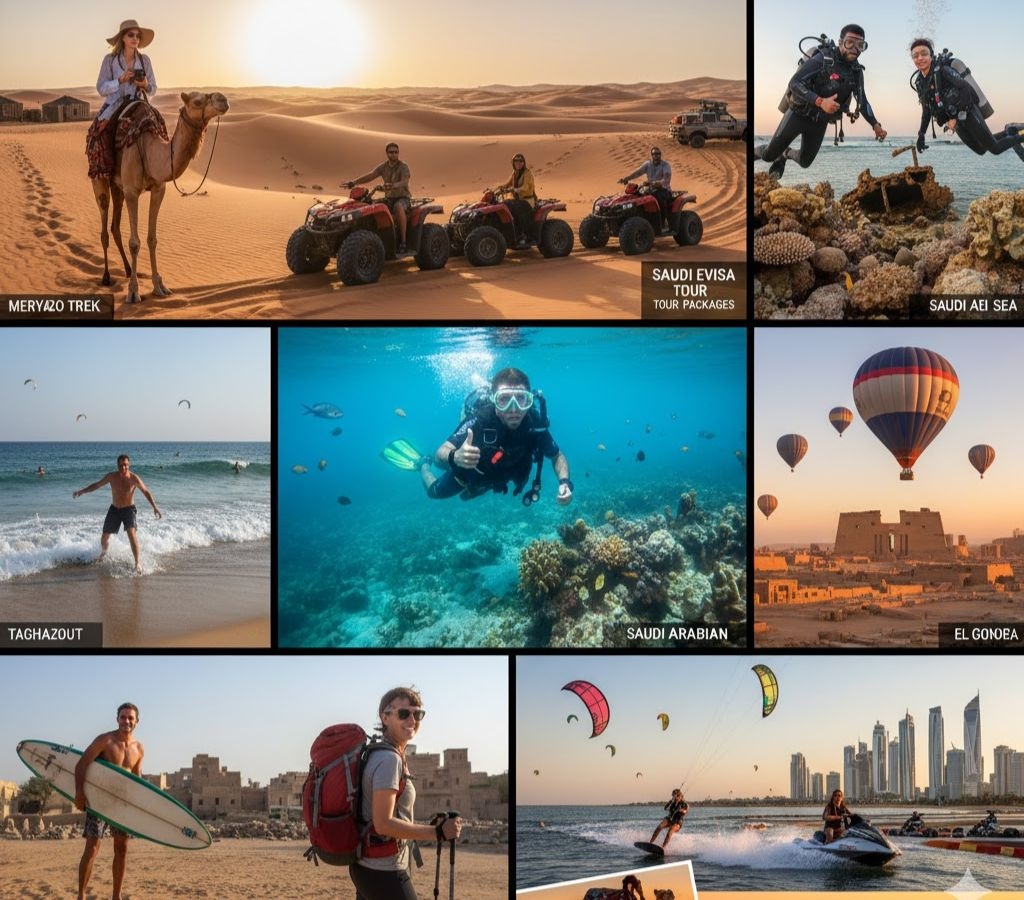
For each destination I list the best adventure activities, top regions/operators (where public info exists), recommended season, and safety/practical notes.
Morocco — adventure activities
Sahara dune activities (Merzouga, Erg Chebbi):
What: camel treks, sunrise/sunset photography, overnight luxury/desert camps with stargazing.
Where to book: local desert operators in Merzouga and Zagora; many reputable riads arrange transfers and guided treks.
Best time: Sept–Nov and Mar–May (cooler nights).
Safety: Bring layers, sun protection, and sufficient water; check camel operator reviews and emergency plans.
Surfing & coastal sports (Taghazout, Essaouira):
What: surf lessons, board rentals, kite surfing. Coastal seasons vary; Taghazout is popular in winter/spring for consistent swells.
Saudi Arabia — adventure activities
Desert safaris & dune riding (Empty Quarter / Rub’ al Khali area): quad biking, 4×4 over dunes. Book with licensed, Saudi eVisa Tour operators who provide safety gear and guides. Best Oct–Apr.
Red Sea diving (northern Red Sea, Farasan Islands): pristine coral reefs, technical diving options being promoted with new resort access. Best Oct–Apr for visibility and moderate water temps.
Mountain hiking (Asir region): cooler highlands with trails and cultural stays — ideal November–March.
With Saudi eVisa Tour Packages, travelers can enjoy safe, guided activities and seamless entry, making it easier than ever to explore Saudi Arabia’s top adventure destinations year-round.
Egypt — adventure activities
Scuba diving & snorkeling (Red Sea — Hurghada, Sharm El Sheikh, Marsa Alam): famous reef sites, wreck dives (e.g., SS Thistlegorm), operators with professional PADI certification available. Best seasons: spring & autumn for water comfort; winter for clear visibility.
Hot-air ballooning (Luxor): sunrise flights over the Valley of the Kings — book early for good slots.
Kitesurfing (Red Sea lagoons): spots in El Gouna and Dahab with kite schools.
Bahrain — adventure activities & practical how-to
Watersports (Amwaj Islands, Bahrain Bay): jet skis, paddleboarding, kiteboarding lessons. Best Nov–Mar.
Motorsport & karting: Bahrain International Circuit hosts events and has karting facilities — combine race spectator time with track experiences during event weeks.
Desert experiences: short dune safaris and sunset drives — check operator credentials and vehicle safety.
Why Business Travelers Prefer eVisa When Visiting Bahrain, Saudi Arabia & Beyond

eVisa systems reduce friction in planning, speed up arrival formalities, and allow business travellers to combine meetings with leisure (bleisure) more easily. Below are specific reasons and practical steps business travellers should follow in 2025. Sources include official eVisa portals and recent tourism strategy reporting.
1) Concrete advantages for business travelers
Faster pre-approval & predictability: Apply online, obtain digital permission, and use it as part of travel paperwork for corporate travel desks and meeting schedules. Saudi and Bahrain e-visa channels provide clear entry categories helpful for meetings and conferences.
Flexible multi-entry options: Saudi eVisa offers one-year multi-entry permits (up to 90 days per visit) for many nationalities — convenient for repeat regional trips or roadshows. And the Bahrain Business e-visa offers a convenient validity period that allows multiple entries over several weeks or months, perfect for frequent business travel.
Integration with events and seasons: Large business events (trade shows, sporting events, summits) are tied to the new entertainment/calendars; eVisa helps business travellers secure entry aligned with event dates. Riyadh Season and F1 style events create concentrated business + leisure opportunities.
2) Practical steps for business travelers using eVisa
Confirm visa category: Choose “business” or “tourist” depending on event rules; some conferences require business-visa documentation.
Apply early: Corporate travel managers should file eVisa at least 2–3 weeks before travel and upload invitation letters if requested.
Carry event invites & ID: Keep digital copies of conference registration, hotel bookings, and local contact info for border requests.
Check regional schemes: Watch for GCC / Schengen-style regional developments (expected future changes), which may further simplify multi-country travel in the Gulf.
Common eVisa Rejection Reasons and Smart Ways to Avoid Them
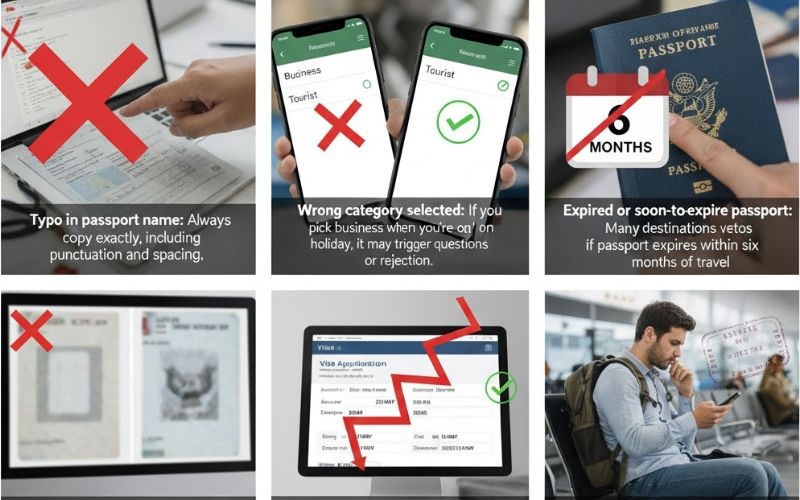
Here are some common pitfalls travellers face — and how to steer clear:
Typo in passport name: Always copy exactly, including punctuation and spacing.
Wrong category selected: If you pick business when you’re on holiday, it may trigger questions or rejection.
Expired or soon-to-expire passport: Many destinations veto applications if passport expires within six months of travel.
Blurry or improperly sized uploads: Make sure your digital documents are clear and meet the dimensions required.
Entry dates don’t match travel plan: Ensure your arrival/departure dates align with your travel bookings.
Past overstay or visa issues: If you previously spent longer than allowed, your permit may be denied.
Smart tip: Submit your application at least 2–3 weeks before you travel (ideally more) so you have time to correct anything.
Simple Mistakes Travelers Make With Visa-on-Arrival — And How to Prevent Them
Even when a destination offers visa-on-arrival, relying on that can be risky. Here’s what to watch:
Assuming everyone qualifies: Some nationalities or travel purposes are excluded from visa-on-arrival.
Arriving without permit pre-approval: If your destination prefers or requires an eVisa, showing up expecting to do everything at the airport may cause delays.
Peak season queues: At popular destinations or resort hubs, arrival counters may have big waits. A pre-approved eVisa often means faster processing.
Not bringing documentation: Even with visa-on-arrival, you may be asked for return tickets, accommodation booking, local contact info.
Not checking arrival fees: Some destinations charge an entry fee at the border which you need to be prepared for.
If you’re planning to travel to Morocco, Saudi Arabia, Egypt or Bahrain, opting for the eVisa route ahead of time gives you more control and reduces stress once you land.
Agent Services vs Government Services: Hassle-Free eVisa Guidance Anytime You Need
Planning a multi-country trip to Morocco, Saudi Arabia, Egypt & Bahrain is exciting — but handling eVisa rules alone can feel overwhelming. Here’s why many travelers find agent services more convenient and stress-free:
Why Agent Services Are Better for Travelers
Multi-Country Expertise in One Place: Get guidance for all four destinations together — no need to search separate sources or worry about mistakes.
Help in Your Own Language: Clear explanations for every step, so you don’t misunderstand form requirements or travel rules.
Application Checking & Corrections Allowed: Agents verify documents before submission to reduce the chance of rejection due to errors.
24/7 Customer Support: Real people assist anytime — especially useful when traveling across time zones.
Fast Communication: You receive updates directly, from submission to approval, without waiting in long inquiry queues.
Mobile-Friendly & Simple Process: Easy uploads and guided form filling instead of navigating complex pages.
Travel Add-Ons Available: Options like Saudi E-Visa tour assistance, trip planning suggestions, and reminders for crucial entry requirements.
Why Government Services Are Harder for Travelers
Limited Support — If something goes wrong, responses can take time
Language Barriers — Instructions may not always be clear for non-native speakers
One-Country Focus — You must handle each destination separately
No Pre-Check — Small errors can lead to processing delays or refusals
Unclear Document Requirements for new travelers
Technical Glitches — If your form gets stuck or doesn’t submit properly, solving it may be difficult
If you’re travelling with family, in a group, or you’re visiting for business with tight deadlines, an agent service can remove anxiety. If you’re comfortable with digital forms and confident in your travel plan, doing it yourself is entirely doable.
Family-Friendly Attractions in Morocco, Saudi Arabia, Egypt & Bahrain
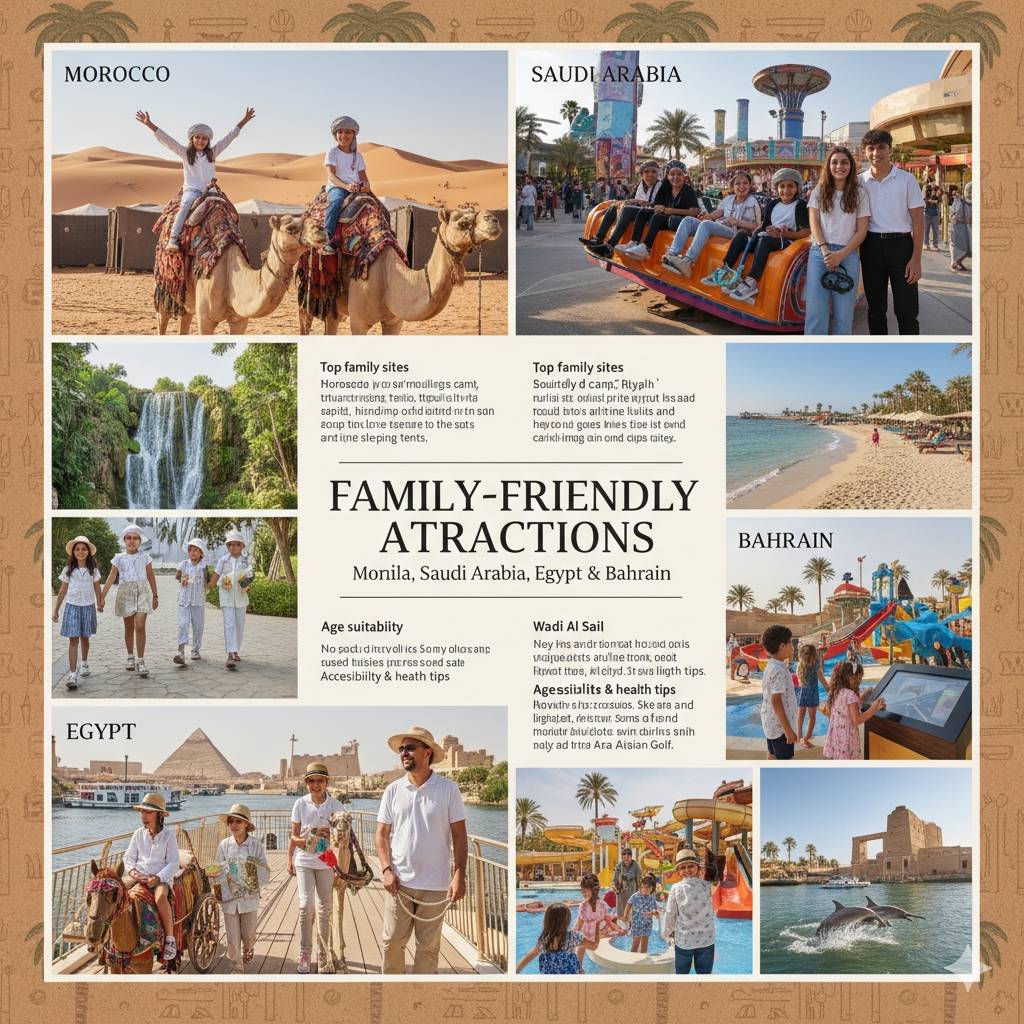
Below I describe top family attractions in each country, how to plan age-appropriate itineraries, accessibility notes, and safety/comfort tips for families traveling with children or older relatives.
Morocco — family highlights & planning tips
Top family sites:
Sahara camel-trek & camp (Merzouga): short camel rides for kids and family-friendly desert camps with safe sleeping tents and meals.
Ouzoud Waterfalls (day trip from Marrakech): easy walks, boat rides, and safe picnic spots.
Coastal towns (Essaouira, Agadir): beaches and watersports for older kids.
Age suitability: toddlers to teens — low-impact activities like riad stays, souk explorations and gentle camel rides suit younger children; teens enjoy trekking and surf lessons.
Accessibility & health: Many riads and hotels have family rooms; mountain/old-city areas can be cobbled and uneven — bring a comfortable stroller for city strolls but expect some limitations in medinas.
Saudi Arabia — family highlights & planning tips
Top family sites:
Boulevard City zones and family entertainment parks (Riyadh & Jeddah): large playgrounds, themed attractions and family concerts during Riyadh Season.
Beaches and coastal family resorts (Red Sea coastal towns): safe shallow spots and resort facilities.
Age suitability: families with younger children enjoy theme parks and museum interactive exhibits; teens may prefer diving or desert adventures with safety briefings.
Accessibility & health: Most modern malls and event zones are highly accessible; check local family-friendly policies for dedicated family areas.
Egypt — family highlights & planning tips
Top family sites:
Nile cruises with family cabins: many cruise operators provide family rooms and child-friendly entertainment (board games, guided kid tours).
Red Sea resorts: shallow lagoons and hotel kids’ clubs in Hurghada/El Gouna.
Pyramid plateau with stroller/transport options: consider a guided camel or horse-carriage experience for children.
Age suitability: all ages — museums and interactive ancient sites can fascinate school-age kids, while toddlers enjoy beaches and relaxation.
Accessibility & health: Nile cruise cabins usually have medical kits and staff; bring sun protection and hydration for temple days.
Bahrain — family highlights & planning tips
Top family sites:
Wadi Al Sail or Amwaj waterparks / beach playgrounds: safe swim zones and lifeguards.
Bahrain National Museum & Bahrain Fort: engaging cultural introductions with interactive displays for kids.
Dolphin watching or short boat trips: safe, family-friendly activities from marina operators.
Age suitability: toddlers to teens — compact distances make it easy for families to move between attractions without long drives.
Accessibility & health: many family-oriented hotels offer child services and babysitting; public spaces are generally stroller-friendly.
Final Thoughts
If your travel list for 2025 is still under construction, you now have four incredible destinations to consider — Morocco, Saudi Arabia, Egypt & Bahrain. Each of them brings something special to the table: rich history, striking landscapes, modern luxury, and now travel processes (like the eVisa) that make the journey smoother than ever.
Imagine standing at the foot of the Pyramids, riding a camel into the Sahara at sunset, diving in the Red Sea, or sipping coffee as the Bahrain skyline lights up. These moments become the stories you tell for years.
Whatever your travel style — explorer, relaxer, family-traveller, business-traveller — this quartet of destinations has something tailored to you. Pull up a calendar, pick your time, submit your eVisa, pack your bags, and hit the road.
FAQs: Why Morocco, Saudi Arabia, Egypt & Bahrain Should Be on Every Traveller’s Bucket List in 2025
Q1: What makes 2025 a better year to visit these than before?
Because each destination is ramping up new infrastructure, cultural venues, festivals and global connectivity — meaning you’re there for a moment of transformation.
Q2: How does the eVisa help me travel easier?
You apply ahead, have your entry permit lined up, minimise arrival stress and focus on enjoyment rather than paperwork.
Q3: Do all nationalities qualify for the eVisa in all four countries?
It depends on your passport and purpose of stay. Always check the entry-permit eligibility for your nationality in advance.
Q4: Can I combine two or more of these destinations in one trip?
Yes — for example a “North Africa + Gulf” loop (Morocco → Egypt → Bahrain) is entirely feasible if you build in travel time between regions.
Q5: Is travel safe for solo travellers, families, or older visitors in these places?
Yes — major tourism areas are well-set up and welcoming. Just follow standard travel precautions and local guidance.