
1. Why Finish and Heat Output Are Often Confused
When choosing a towel radiator, many homeowners assume the finish—chrome or black—directly determines how much heat it produces. Chrome towel radiators are often seen as “less warm,” while black towel radiators are believed to give off more heat. This perception is widespread, but it’s only partially accurate.
In reality, heat output is influenced by several factors, including material, surface coating, radiator size, pipe configuration, and installation method. The finish does play a role, but not in the way most people think.
Understanding how heat output actually works helps you choose the right towel radiator without sacrificing performance for style—or vice versa.
2. How Towel Radiators Produce Heat
Before comparing chrome and black finishes, it’s important to understand how towel radiators generate heat in the first place.
Heat Transfer Basics
Towel radiators heat a room through two main processes:
Radiation – heat emitted directly from the surface
Convection – warm air circulating around the radiator
The effectiveness of these processes depends on:
The surface temperature of the radiator
The total surface area
How efficiently heat is transferred to the surrounding air
Material Matters More Than Colour
Most towel radiators—whether chrome or black—are made from steel. Steel conducts heat very efficiently, meaning the core material performs similarly regardless of finish.
The finish affects how heat is released from the surface, not how much heat is generated internally.
3. Chrome Towel Radiators: Performance and Limitations

Chrome towel radiators are a long-standing favourite due to their clean, reflective appearance and versatility across bathroom styles.
Why Chrome Radiators Are Often Seen as “Cooler”
Chrome finishes are highly reflective. This reflectivity slightly reduces radiant heat output because less heat is absorbed and emitted by the surface compared to darker finishes.
As a result:
Chrome radiators typically have lower quoted BTU outputs
Heat is felt more through convection than direct radiation
This doesn’t mean chrome radiators don’t heat bathrooms effectively—it just means their heat transfer is marginally less efficient.
Real-World Impact
In everyday use, the difference is often small. A properly sized chrome towel radiator will still warm towels and contribute to room heating, especially in:
Small to medium bathrooms
Well-insulated spaces
Bathrooms with additional heat sources
Advantages of Chrome Despite Lower Output
Corrosion resistance
Easy cleaning and maintenance
Reflective finish that brightens small spaces
Chrome radiators may require slightly larger sizes to match the output of darker finishes, but they remain perfectly functional when chosen correctly.
4. Black Towel Radiators: Do They Really Heat Better?
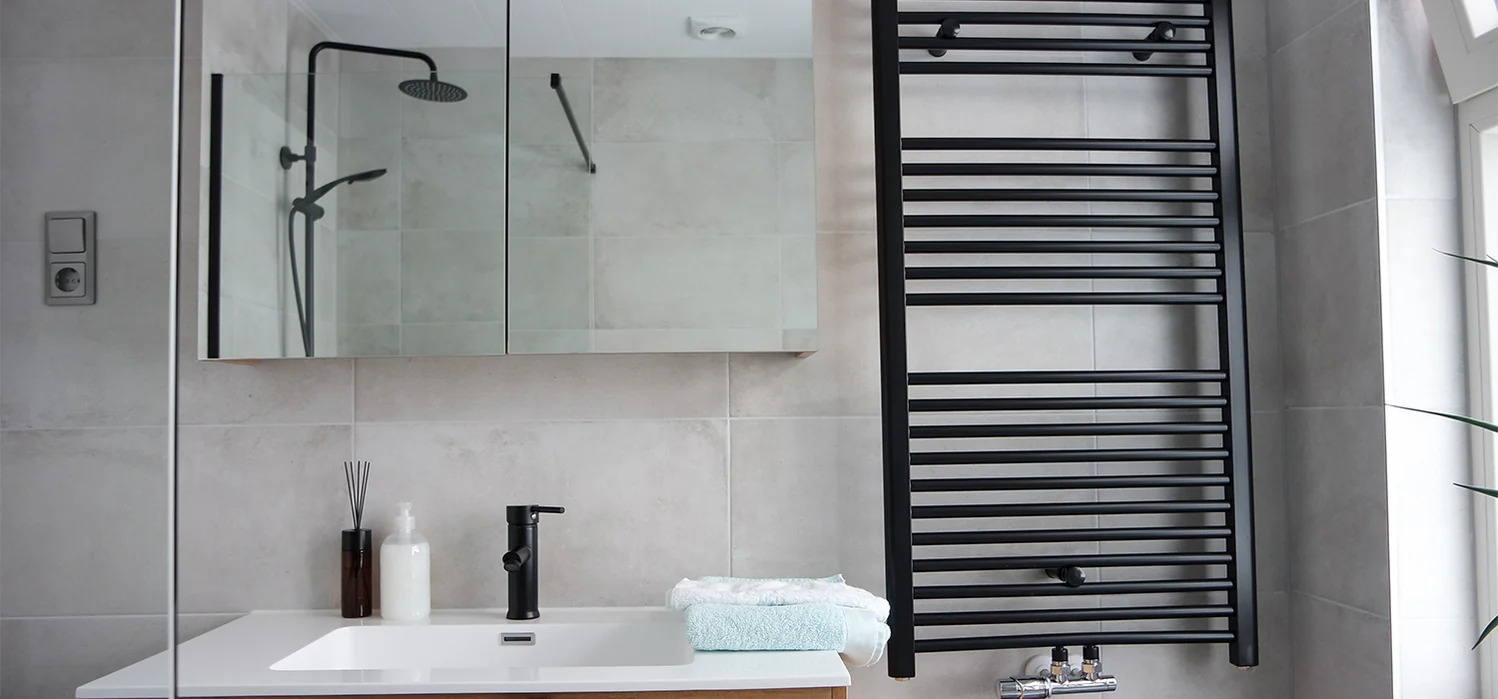
Black towel radiators—especially matte black—are often highly marketed. There is some truth to this, but context is important.
Why Black Finishes Emit More Heat
Darker surfaces absorb and emit heat more efficiently than reflective ones. Black finishes allow more radiant heat to escape from the surface, which results in:
Slightly higher heat output ratings
A warmer feel when standing close to the radiator
This effect is measurable, but not dramatic.
How Much Difference Are We Talking About?
On average:
A black towel radiator may offer 5–10% higher heat output than a chrome equivalent of the same size
The difference becomes more noticeable in larger bathrooms or when the radiator is the primary heat source
Matte vs Gloss Black
Matte black tends to perform marginally better than gloss black due to reduced reflectivity
Gloss black still outperforms chrome but may sit slightly behind matte finishes
Practical Advantages of Black Radiators
Better heat radiation
Strong visual impact
Ideal for bathrooms where towel radiators need to contribute significantly to room heating
Black radiators are particularly effective in modern bathrooms where minimal additional heating is used.
5. Which Finish Is Better for Your Bathroom? Final Verdict
So, does chrome or black give better heat output?
The Technical Answer
Yes—black towel radiators do give better heat output than chrome, but the difference is modest rather than transformative.
What Really Matters More Than Finish
Radiator size and bar spacing
Number of horizontal bars
Installation position
Bathroom insulation level
A well-sized chrome radiator can outperform an undersized black one every time.
Choose Chrome If:
Your bathroom is small or well insulated
The radiator is mainly for warming towels
You prefer easy maintenance and a classic look
You plan to size up slightly to compensate
Choose Black If:
The radiator is a key heat source
Your bathroom is larger or colder
You want maximum heat efficiency
You prefer bold, modern styling
Sizing Is the Key to Comfort
If you’re torn between finishes, the safest approach is to:
Choose the finish you love
Select a radiator with sufficient heat output for your room size
This ensures performance without compromise.
Final Thoughts
The idea that chrome towel radiators don’t heat well is a myth—but black finishes do offer a genuine performance advantage. That said, the difference is rarely dramatic enough to outweigh poor sizing or layout choices.
In real bathrooms, heat output depends far more on radiator size, placement, and insulation than colour alone. Chrome radiators remain reliable, stylish, and effective, while black radiators provide a slight edge in heat efficiency and modern appeal.
If warmth is your top priority, black may be the better option. If balance, versatility, and easy care matter more, chrome still performs admirably when chosen correctly.
If you’d like, I can also help calculate ideal towel radiator size by bathroom dimensions or compare electric vs central-heating towel radiators for heat performance—just let me know.