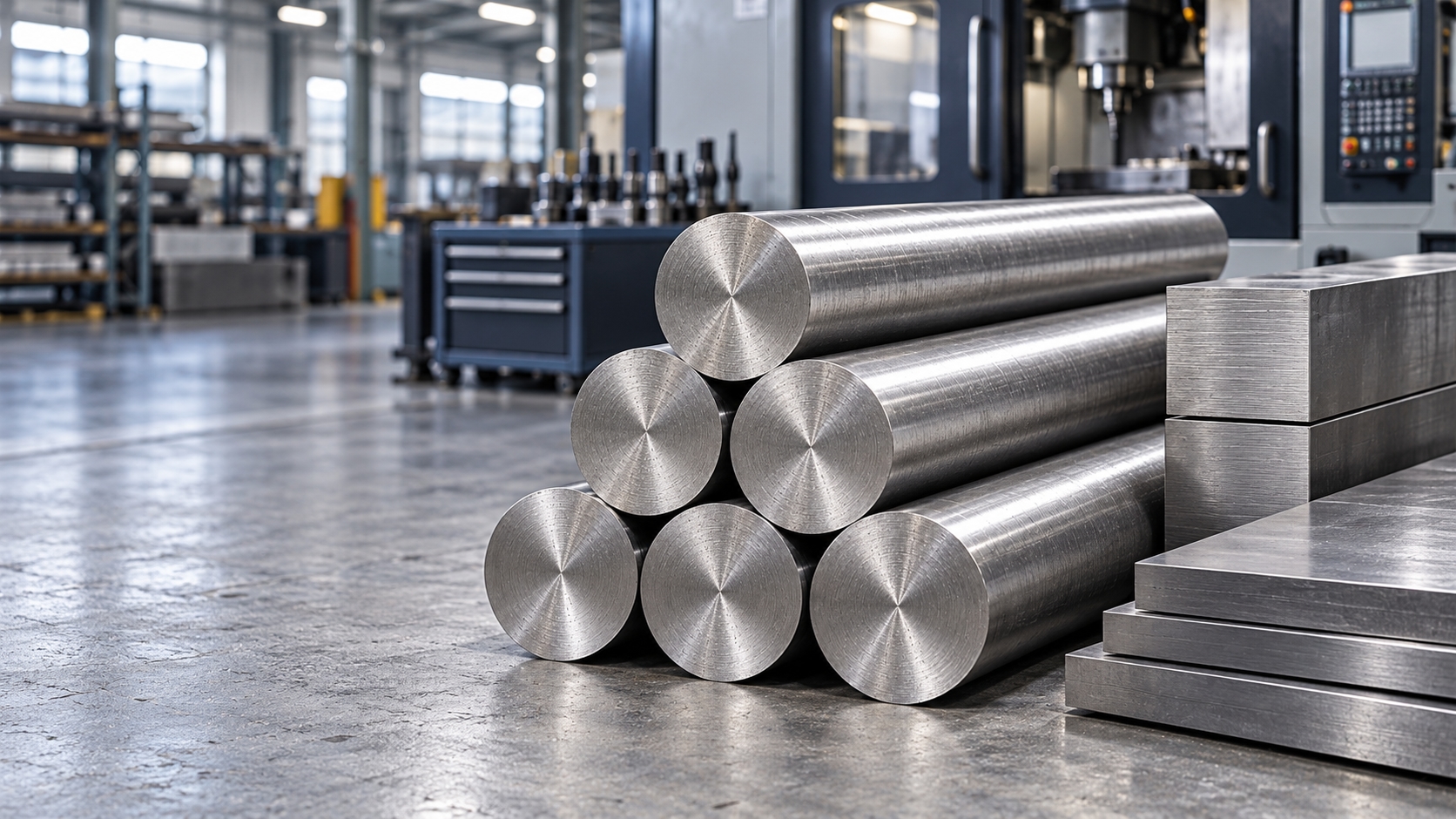
A die block cracks in the furnace. Three weeks of machining, gone. The certificate said D2, the bar looked like D2, and the invoice for the Die and Tool Steel was paid in full before anyone ran a hardness test.
That's the usual story. Not bad luck, just a purchase made on a grade name and a price per kilo. Most buyers still treat die and tool steel like mild steel with a fancier label, and the shop floor pays for it later.
Grade names are the start of a specification, not the end of one.
Die and Tool Steel Specifications: What the Grade Name Doesn't Tell You
Tool steels split by what they're asked to survive: cold, heat, or cutting speed. Pick the wrong family and no heat treatment rescues the part. Here's the short map, because it saves more money than any negotiation will.
Cold Work Steels: D2 and O1
D2 carries roughly 1.5% carbon and 11–13% chromium, which is why it holds an edge in blanking and forming dies and why it chips when the die design has sharp internal corners. O1 is cheaper and easier to machine, but it softens quickly as temperature rises. Which means it suits short-run tooling, not high-volume stamping.
Hot Work Steels: H13
H13 is the default for die-casting and forging dies, built around about 5% chromium with molybdenum and vanadium. Typical working hardness sits in the 44–52 HRC range. Push harder and you trade away toughness, and thermal cracking arrives sooner.
High Speed Steels: M2
M2 can reach 62–65 HRC after heat treatment, which is why it shows up in drills, taps and cutters. It's also the grade where a poor heat treatment exposes itself fastest.
Here's the detail most buyers skip: the delivery condition. Annealed bar and pre-hardened block machine very differently, and an order that doesn't say which one you want gets whatever is sitting in the yard. Machining allowance matters too. Short allowance on a large block means a scrapped part, not a discount. And thick sections are harder than buyers expect, because the centre of a big block rarely matches its surface after heat treatment. Put section size and delivery condition on the purchase order, every time.
How One Procurement Partner Protects Your Margin
Fewer vendors means fewer places for a bad lot to hide. These are the benefits that show up on the cost sheet, not the brochure.
One grade list, fewer purchase orders. You stop reconciling certificates from four vendors with four formats. Less admin, fewer mix-ups at incoming inspection.
Flexible quantities. You buy for the job, not the bar length. Capital stays out of offcuts.
Disclosed sourcing. Domestic or imported, you see the price and lead time of each option up front. No quiet substitution of a cheaper grade.
Documentation coordinated with delivery. An EN 10204 3.1 certificate is issued by the manufacturer's authorised inspection representative, independent of production, and it should arrive with the material. When it does, your customer's audit doesn't stall your dispatch.
Delivery timed to your machining schedule. Less idle spindle time, less steel stacked in the stores waiting for a slot.
One point of accountability. When a bar fails, you make one call and keep one record, instead of watching two vendors blame each other.
Die and Tool Steel Suppliers in India: Why Location Is a Supply Chain Decision
India is the world's second-largest crude steel producer, yet that doesn't mean every special grade comes in every section size from a domestic mill. Plenty of die and tool steel, especially large blocks and premium hot work grades, still arrives by sea. That makes lead time a function of port clearance as much as mill schedule.
Die-making clusters sit in Pune, Chennai, Coimbatore, Rajkot and the Delhi NCR belt, and port-side stock in Mumbai or Chennai reaches some of them faster than others. An inland tool room can add days of transit and handling to a lead time that looked fine on paper. So when you shortlist Die and Tool Steel Suppliers in India, ask where the material physically sits today, not just whether the grade is "available."
About Steel Exchange: What We Check Before a Bar Leaves Our Yard
We're a B2B steel trading and engineering steel distribution business serving manufacturers, tool rooms and project buyers across India. We keep multiple grades under one desk, and we tell you where each lot comes from. One habit we picked up the hard way: we ask for your intended heat treatment route before we quote, because the right grade and delivery condition depend on it. A quote that skips that question is a guess, and we'd rather not guess with your money.
Your Next Die and Tool Steel Order Starts With the Spec, Not the Quote
Good die and tool steel buying comes down to a clear spec and a supplier who'll put the answers in writing. Get those two right and the grade almost picks itself. Next time you request prices, send the application and heat treatment plan first, and watch which suppliers ask follow-up questions.
FAQs
Which die and tool steel grade should I buy for a stamping die versus a die-casting die?
D2 for stamping and blanking where wear resistance matters, H13 for die-casting and forging where heat and thermal shock are the enemy. If your run is short, O1 can do the stamping job for less. Tell us the part material and volume and we'll narrow it down.
How do I tell genuine Die and Tool Steel Suppliers from traders?
Ask for the heat number on the certificate and match it to the bar markings. Ask where the lot was made. Genuine suppliers answer both in minutes, and traders go quiet or promise "later."
What's your minimum order quantity?
From 100 kg for cut-to-size. Honest caveat: it moves with grade and form, and some imported sections only ship in full bars, so we'll confirm before you commit.
Can you supply both imported and domestic grades?
Yes, and we state the origin on the quote. The catch is that imported lead times depend on shipping and port clearance, which we can't fully control, so we give you a range rather than a promise.
Do you provide test certificates?
Yes, with the material. Tell us at enquiry stage if you need EN 10204 3.1 or a specific lab report, because that changes which lots we can offer.