
When travelers dream of Africa, images of open savannas and wildlife safaris often come to mind. However, hidden in Central Africa lies a country so geographically diverse that it is often called "Africa in Miniature." Cameroon offers a landscape shaped by millions of years of volcanic activity, creating spectacular volcanic peaks, lush caldera valleys, and dramatic crater lakes.
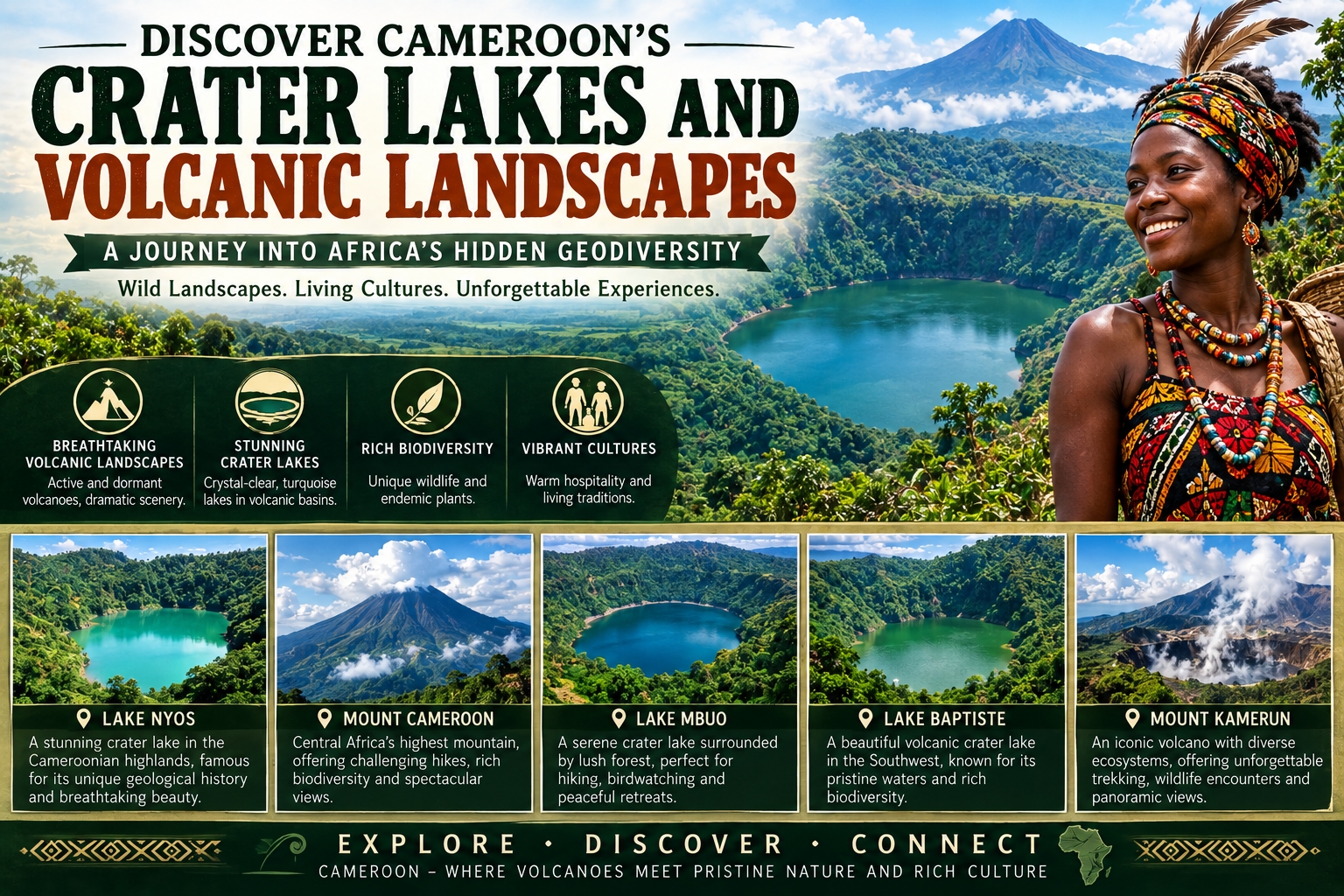
If you are an adventurer seeking off-the-beaten-path destinations, Cameroon’s volcanic highlands deliver breathtaking scenery, rich local culture, and incredible trekking opportunities. Here is everything you need to know about exploring Cameroon’s most iconic volcanic landscapes and crater lakes.
What Makes Cameroon’s Volcanic Terrain So Unique?
Cameroon sits along the Cameroon Volcanic Line, a 1,600-kilometer-long chain of volcanoes and volcanic islands extending from the Gulf of Guinea up into the highlands of West and Central Africa. This geological feature has gifted the country with fertile soils, dramatic elevation changes, and crater basins filled with crystal-clear water.
From active volcanic peaks to tranquil highland lakes surrounded by misty forests, Cameroon’s geography offers a distinct climate and environment compared to the rest of the region.
Must-Visit Volcanic Destinations and Crater Lakes in Cameroon
1. Mount Cameroon (Mount Fako)
Standing at 4,040 meters (13,255 feet), Mount Cameroon is the highest peak in West and Central Africa and one of the continent’s most active volcanoes. Known locally as Mongo ma Ndemi ("Mountain of Greatness"), it last erupted in 2000.
Highlights: Multi-day trekking routes, volcanic cinder cones, ancient lava flows, and sweeping views of the Atlantic Ocean.
Trekking Experience: Every February, the mountain hosts the famous "Mount Cameroon Race of Hope," where athletes climb and descend the peak in hours. For tourists, a guided 3-to-4-day trek offers a challenging yet rewarding journey through rainforests, grasslands, and rocky summit ridges.
2. The Twin Lakes of Mount Manengouba (Male and Female Lakes)
Nestled high on the Manengouba Massif near Nkongsamba, the Twin Lakes of Manengouba (Lacs Jumeaux) are two distinct crater lakes formed inside a collapsed volcanic caldera.
The Female Lake (Lac Femelle): Known for its soothing blue waters, accessible shores, and gentle surrounding hills where local Fulani herdsmen graze their cattle.
The Male Lake (Lac Mâle): Located in a steep crater, this lake features deep green waters surrounded by precipitous cliffs. Local traditions hold spiritual reverence for these waters.
Why Visit: The cool mountain air, rolling green pastures, and cultural interactions with local pastoralists make Manengouba one of Cameroon's most scenic hiking spots.
3. Lake Oku and the Kilum-Ijim Highlands
Situated in the Bamenda Highlands of Northwest Cameroon, Lake Oku sits at an altitude of over 2,200 meters inside a extinct volcanic crater on Mount Oku.
Biodiversity Haven: Lake Oku is surrounded by the Kilum-Ijim Forest, one of the last remaining montane cloud forests in West Africa. It is home to rare species such as Bannerman’s turaco (a striking endemic bird) and unique medicinal plants.
Atmosphere: The tranquil environment and cool highland temperatures provide a peaceful retreat for hikers and nature lovers.
4. Lake Nyos and Lake Monoun
For travelers interested in geology and history, the highland lakes of Nyos and Monoun hold significant geological importance. These crater lakes are famous worldwide for rare limnic eruptions in the 1980s. Today, international scientific degassing projects have made the lakes stable and safe, attracting researchers, eco-tourists, and photographers drawn to their mysterious beauty and high-altitude surroundings.
Essential Tips for Trekking Cameroon's Volcanic Highlands
Best Time to Visit: The dry season between November and March offers the clearest skies and best trail conditions for mountain climbing and lake trekking.
Hire a Local Guide: Navigating volcanic trails and respecting local cultural customs requires an experienced local guide.
Pack for Variable Weather: Temperatures drop significantly at higher altitudes, particularly on Mount Cameroon and around Mount Manengouba. Bring warm layers and sturdy waterproof hiking boots.
Planning Your Journey: Do You Need a Visa for Cameroon?
Before you pack your hiking gear and set off to explore these volcanic marvels, ensuring your travel documentation is in order is step number one.
Most foreign nationals require a valid visa prior to entering the Republic of Cameroon. Getting your travel authorization early allows you to focus on planning your itinerary without last-minute stress. Check out this guide on do you need a visa to visit Cameroon to understand the specific entry requirements based on your nationality and travel plans.
Why Choose Us for Your Travel Visa Services?
Navigating visa requirements can sometimes feel overwhelming. We make your journey seamless with our dedicated visa assistance services:
Reliable Travel Visa Services: Our global approach has assisted numerous travelers in successfully obtaining their visas with confidence.
Round-the-Clock Assistance: Reach out to us 24/7, and our expert support team will respond within 72 hours to answer your queries.
Experienced Visa Consultants: Receive tailored, professional guidance to ensure the accuracy and acceptance of your application.
Efficient Visa Application Process: Apply for your visa in just a few minutes using our simplified, user-friendly online form.
Start your Cameroonian adventure today by securing your travel documents quickly and hassle-free!



