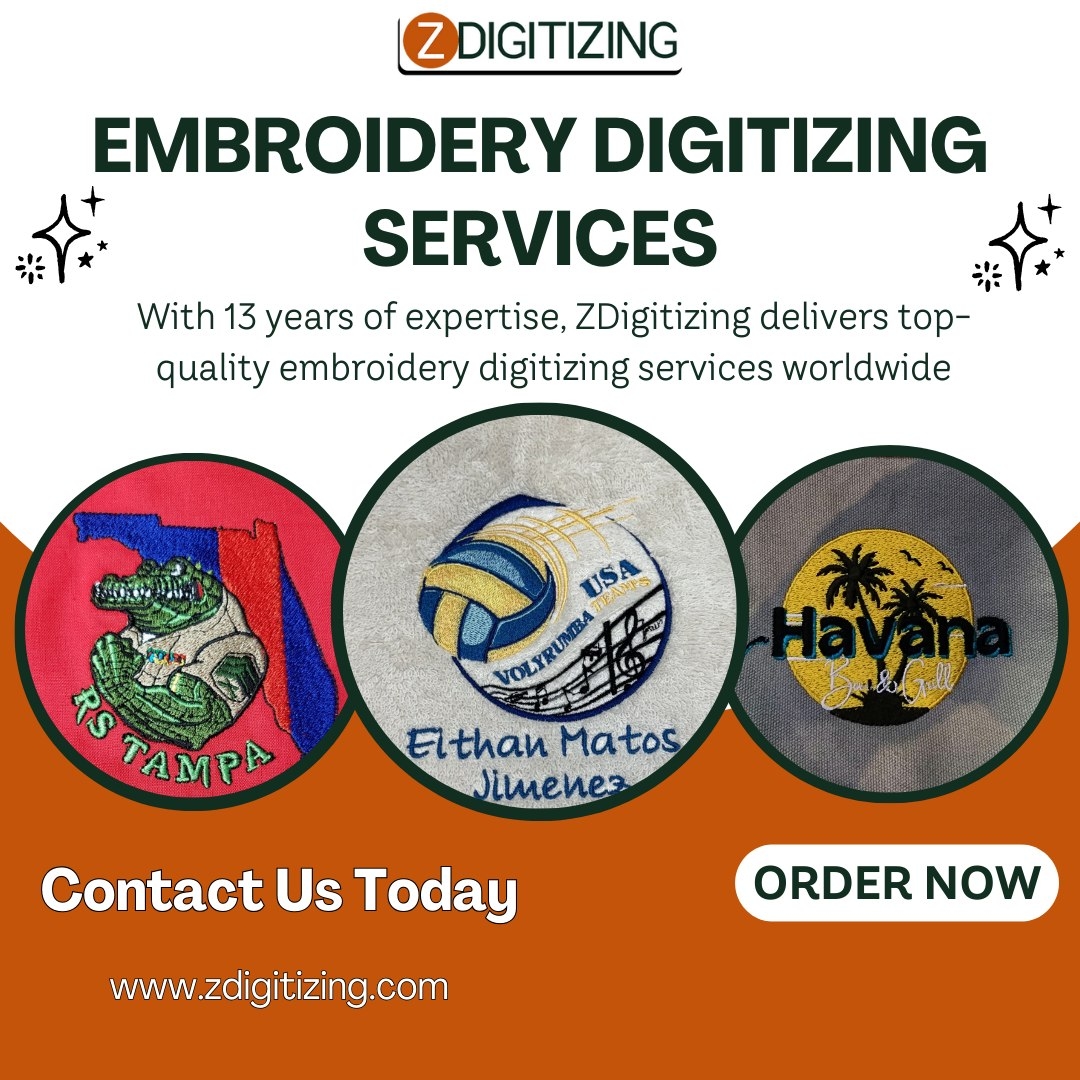
In the competitive apparel and branding industry, embroidery is a reliable method for adding a professional finish to garments and merchandise. The quality of embroidery largely depends on a critical step that often goes unnoticed, which is embroidery digitizing.
This process converts artwork into a format that embroidery machines can read and execute accurately. Without proper digitizing, even a well-designed logo can result in uneven stitching, thread breaks, or distorted patterns.
A professional embroidery digitizing service ensures that designs are ready for precise machine stitching, making it an essential part of producing high-quality embroidery.
What Is Embroidery Digitizing?
Embroidery digitizing is the process of converting an image, logo, or design into a digital embroidery file. This file contains instructions for the embroidery machine, including stitch type, direction, density, and sequencing.
Unlike a simple file conversion, digitizing requires both technical knowledge and artistic judgment. A skilled digitizer considers the type of fabric, thread, and design complexity to create a file that produces a clean, professional result.
Why Use Professional Digitizing Services
While some may assume embroidery machines automatically convert images to stitches, this is rarely sufficient for high-quality results. Professional digitizing ensures that designs are optimized for size, fabric, and thread, reducing errors and improving durability.
Key benefits of professional digitizing include:
Accurate stitch placement and clean design outlines
Appropriate stitch density to prevent fabric puckering or thread breaks
Designs optimized for different materials
Reduced machine downtime and material waste
Consistent results across multiple products
Investing in professional digitizing also helps maintain brand consistency and ensures embroidered products look polished and professional.
Benefits for Businesses and Individuals
Embroidery digitizing services are useful for businesses of all sizes as well as individuals creating custom designs.
Benefits include:
Professional Appearance: Digitized designs result in sharp, detailed embroidery that reflects quality.
Time Efficiency: Ready-to-use digitized files streamline production.
Cost Savings: Reduces material waste and prevents errors.
Scalability: Digitized files can be used repeatedly across various products.
Customization: Designs can be adapted for different fabrics, threads, and embroidery machines.
Whether it’s logos on uniforms or custom merchandise, digitizing ensures consistent, high-quality embroidery.
Common Types of Digitizing
Different embroidery projects require different digitizing techniques. Some common types include:
Logo Digitizing: Ideal for shirts, jackets, or caps
3D Puff Digitizing: Creates raised, dimensional effects
Appliqué Digitizing: Adds texture while reducing stitch count
Left Chest Digitizing: Optimized for small logos on garments
Cap and Hat Digitizing: Adjusted for stitching on curved surfaces
Each type involves specific technical adjustments to ensure optimal stitching quality.
Characteristics of a Quality Digitized Design
A high-quality digitized design balances aesthetics with machine efficiency. Important factors include:
Smooth stitch flow with minimal thread trims
Proper underlay stitches for stability on fabric
Balanced stitch density for durability
Clean edges and sharp details
Correct stitch sequencing to prevent gaps or overlaps
These characteristics guarantee that the final embroidery is both visually appealing and long-lasting.
How Digitizing Supports Branding
Embroidery is a long-lasting decoration method that reinforces brand recognition. A professionally digitized design ensures logos and custom graphics are stitched accurately across multiple products, providing a consistent and high-quality appearance. Businesses can adapt designs to different apparel, create promotional merchandise, and strengthen their overall branding through precise embroidery.
Choosing the Right Digitizing Service
Selecting a reliable digitizing service is crucial for achieving professional embroidery. Look for providers with experience in multiple embroidery styles, fast turnaround times, and compatibility with various machine formats. The ability to refine and revise designs, along with strong attention to detail, is also essential.
A professional service acts as a partner in your embroidery projects, helping ensure every stitch meets your quality standards.
Frequently Asked Questions (FAQs)
1. What types of files are produced by embroidery digitizing services?
Embroidery digitizing services create machine-readable files in formats such as DST, PES, EXP, or JEF, depending on the type of embroidery machine.
2. How long does the digitizing process take?
The turnaround time depends on the design complexity, size, and number of revisions required. Simple designs may take a few hours, while detailed logos can take several days.
3. Can all types of designs be digitized for embroidery?
Most designs can be digitized, but intricate images with very fine details may need adjustments to ensure they stitch cleanly and maintain clarity.
4. Why is professional digitizing better than automatic conversion?
Automatic conversion often leads to uneven stitching, skipped areas, or excessive thread trims. Professional digitizing ensures proper stitch placement, density, and sequencing for high-quality results.
Conclusion
Embroidery digitizing is a critical step in producing professional and durable embroidery. By converting designs into precise machine files, digitizing ensures every stitched product reflects quality, accuracy, and attention to detail. Businesses, designers, and hobbyists benefit from faster production, reduced errors, and consistent results. Choosing an experienced digitizing service is a key investment for anyone aiming to create polished embroidery projects.