
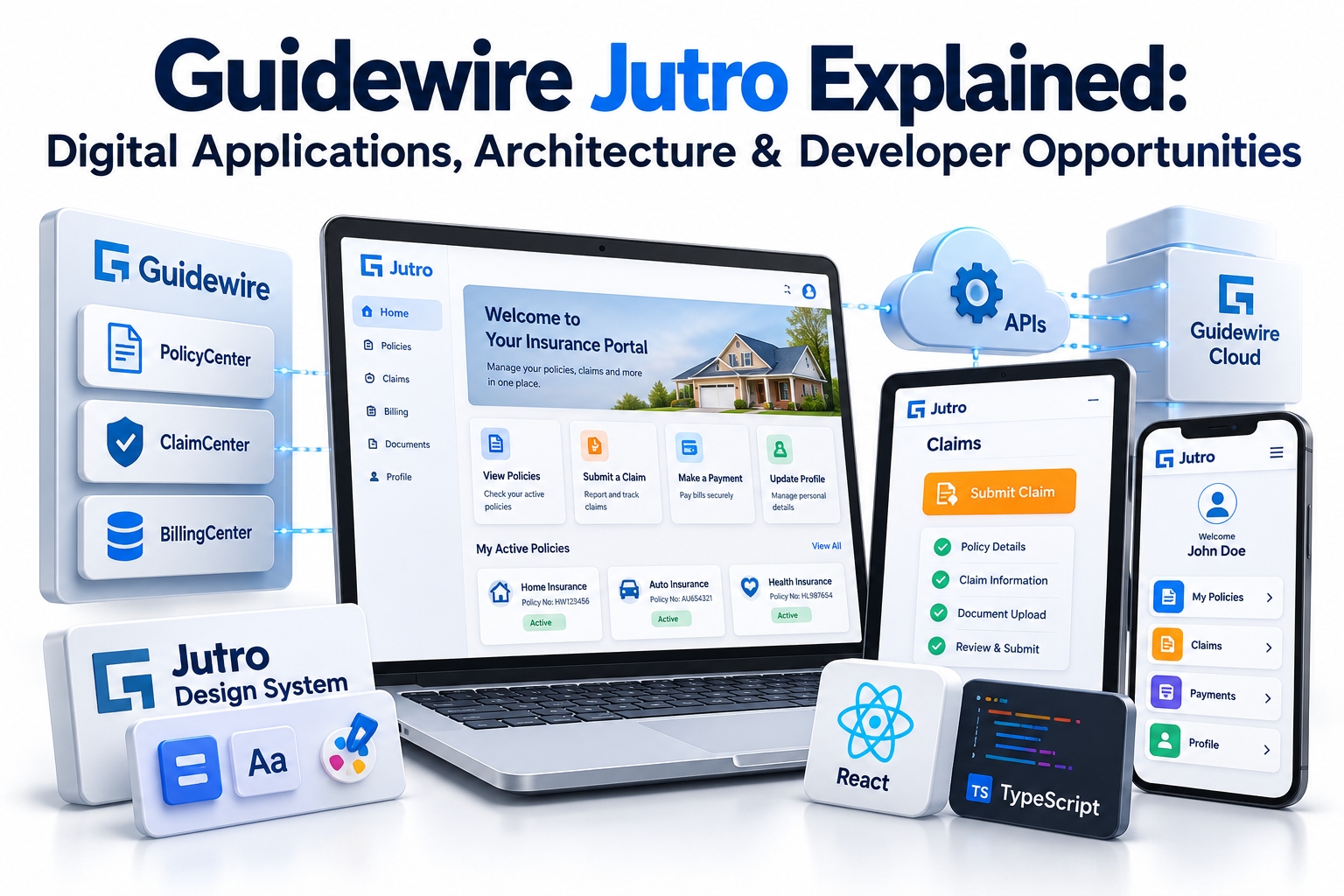
Insurance companies are moving beyond traditional web portals to create faster, smarter, and more personalized digital experiences. But what technology connects these experiences with complex insurance systems? Guidewire Jutro is becoming an important part of this transformation.
For developers, Jutro introduces opportunities to combine modern frontend engineering with insurance technology. Understanding its architecture, development workflow, and integration capabilities can help professionals prepare for emerging roles in the Guidewire ecosystem.
What Is Guidewire Jutro and Why Does It Matter?
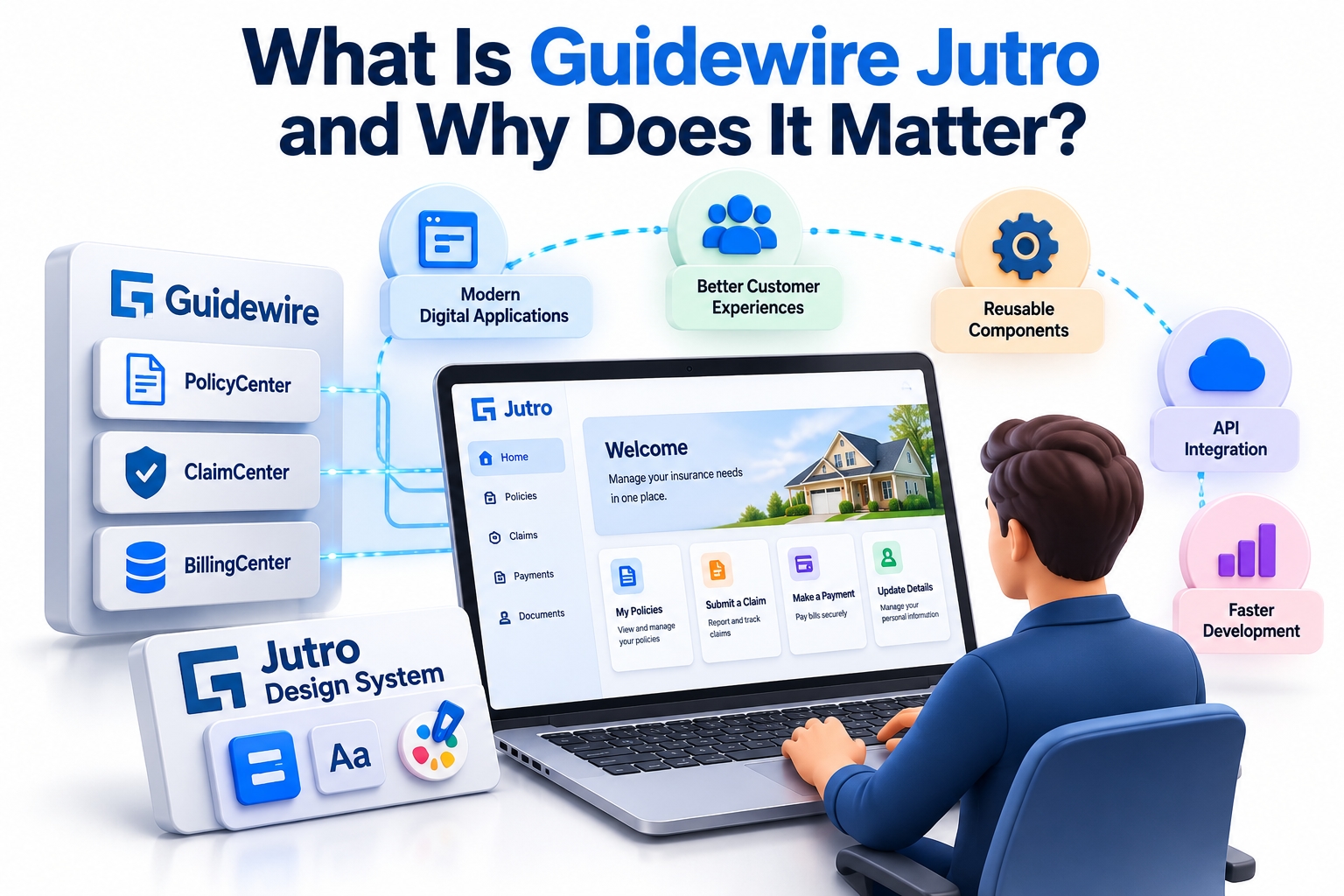
Guidewire Jutro Digital Platform (JDP) is a development platform designed to help insurance companies build modern digital applications. It provides tools, frameworks, reusable UI components, and SDKs that simplify the development of customer-facing and employee-facing insurance experiences.
Unlike traditional approaches that require extensive custom development, Jutro provides a structured environment for creating applications connected to Guidewire InsuranceSuite. Developers can build interfaces that allow customers, agents, brokers, and insurance employees to interact with business services through web applications.
Its importance comes from several capabilities:
Personalized experiences: Build interfaces for different insurance user personas.
Reusable components: Develop consistent interfaces using established design patterns.
API integration: Connect frontend applications with Guidewire Cloud services.
Flexible deployment: Support standalone applications and micro frontend architectures.
Development efficiency: Use platform tools and templates to streamline development.
For insurance organizations, these capabilities help improve digital servicing, policy management, claims interactions, and overall customer engagement.
Understanding Guidewire Jutro Architecture
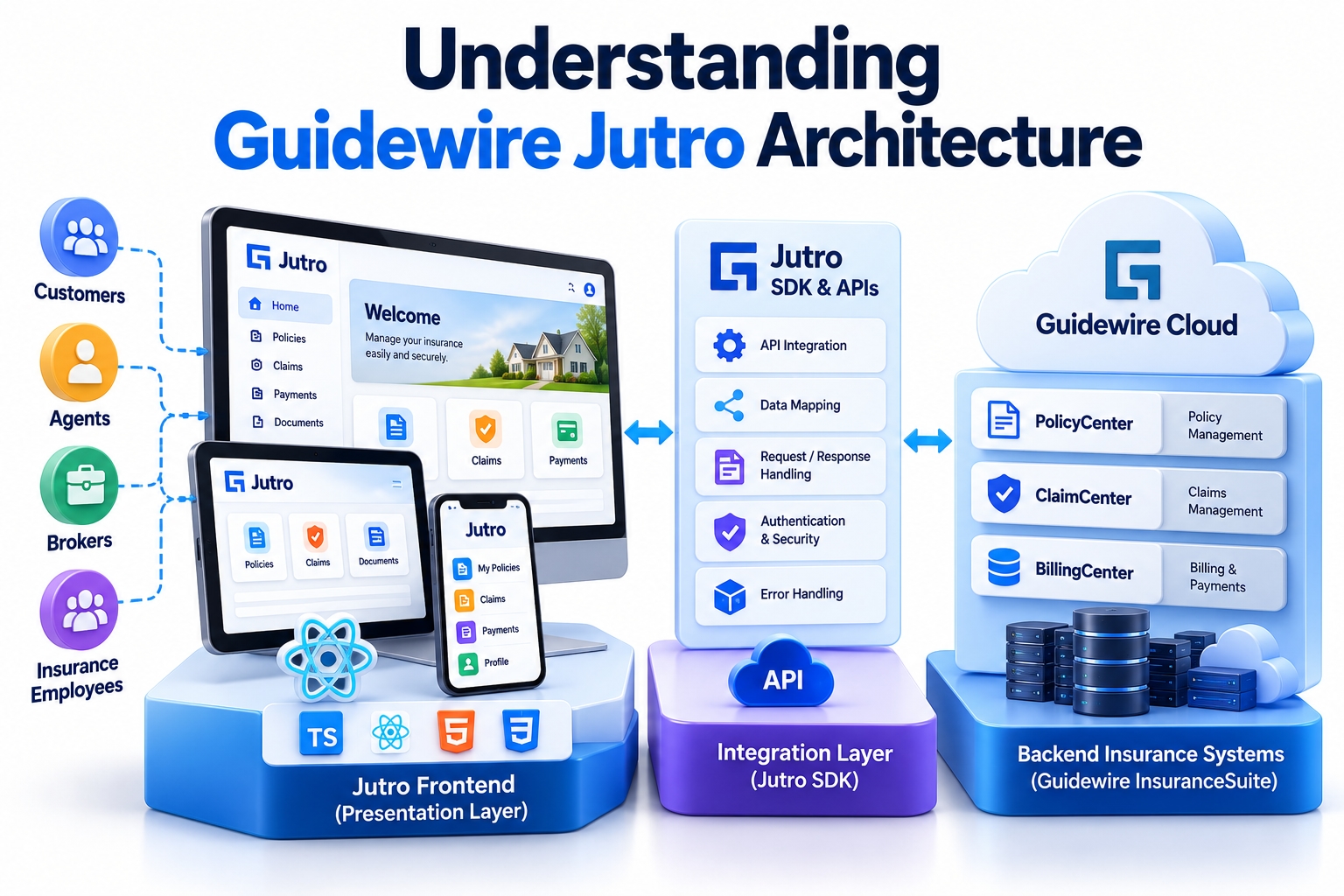
Understanding the architecture is essential before developing applications. Jutro applications are built around modern web technologies, particularly React-based frontend development. They communicate with backend insurance systems through APIs and purpose-built development tools.
A typical application architecture includes multiple interconnected layers:
1. Presentation Layer
This layer contains the application's visual interface. Developers create pages, forms, navigation elements, dashboards, and reusable components using React and the Jutro Design System.
2. Application Logic Layer
This manages user interactions, application state, validation, navigation, and business-related frontend behavior.
3. Integration Layer
The Jutro SDK and relevant APIs help applications communicate with Guidewire Cloud and InsuranceSuite services. Developers manage requests, responses, data mapping, and error handling.
4. Backend Insurance Systems
InsuranceSuite applications provide core business capabilities related to policy administration, billing, and claims management.
5. Deployment Infrastructure
Jutro applications can use Guidewire Cloud infrastructure or suitable external hosting arrangements, depending on the application architecture and selected platform capabilities.
This architecture separates frontend presentation from backend insurance operations, making applications easier to maintain, customize, and extend.
Building Digital Applications Using Jutro
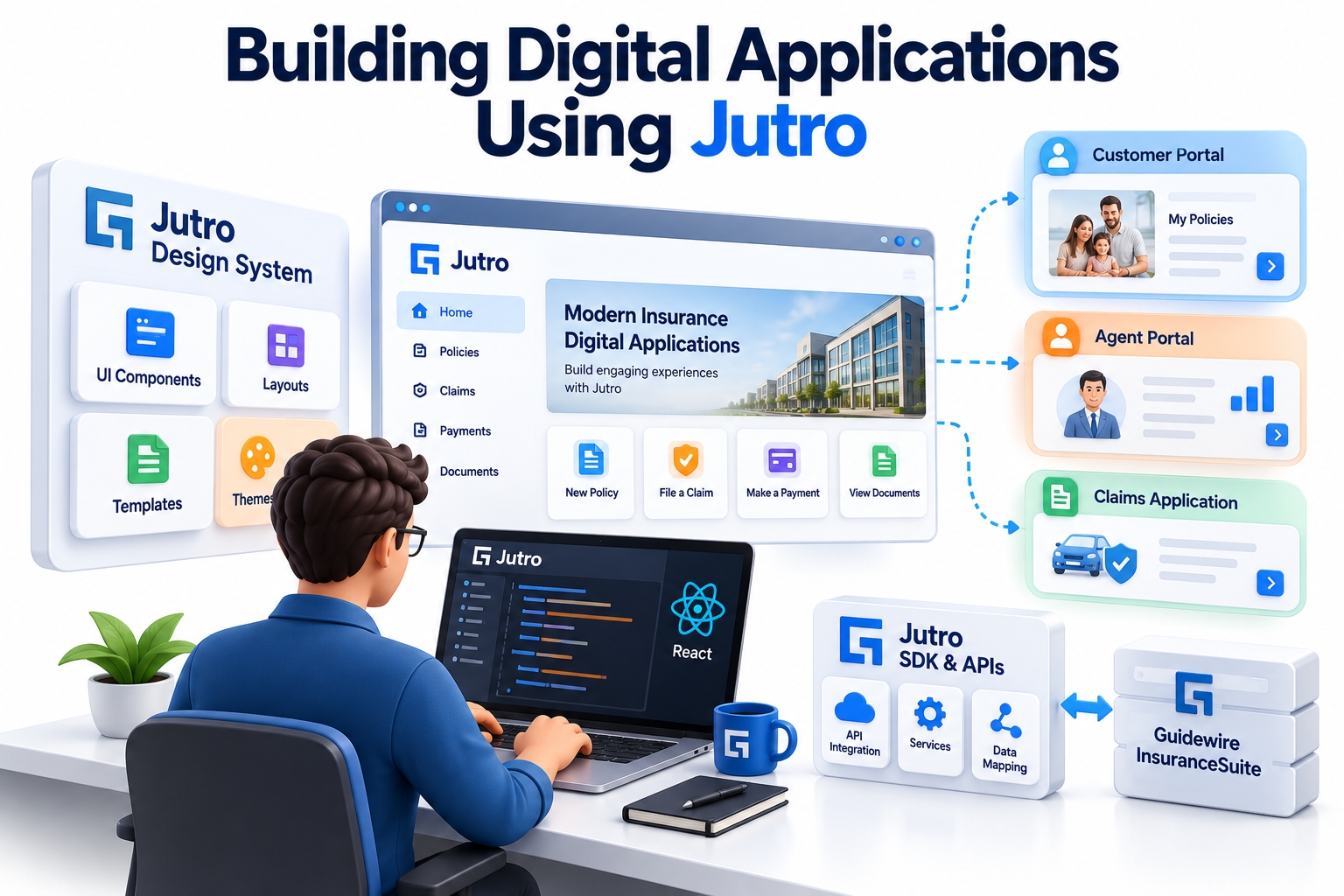
One of Jutro's important capabilities is supporting different types of digital applications. Insurance companies can create interfaces that address specific customer requirements without unnecessarily changing their underlying insurance systems.
Two common application approaches are standalone applications and micro frontends.
Standalone Applications
These applications provide complete user experiences through dedicated web interfaces. For example, an insurer can build a customer portal where users can:
View active insurance policies.
Check policy information and coverage details.
Submit claims-related information.
Update personal details.
Track service requests.
Micro Frontends
Micro frontends represent smaller application experiences designed to operate within a larger application or portal.
For example, an insurance company may already have an established customer website but want to introduce a new claims submission experience. Instead of rebuilding the entire website, developers can integrate a suitable Jutro micro frontend into the existing application.
This approach supports gradual modernization and allows development teams to improve individual business experiences independently.
Choosing between these approaches depends on business requirements, integration complexity, deployment strategy, and existing application infrastructure.
Essential Technical Skills for Guidewire Jutro Developers
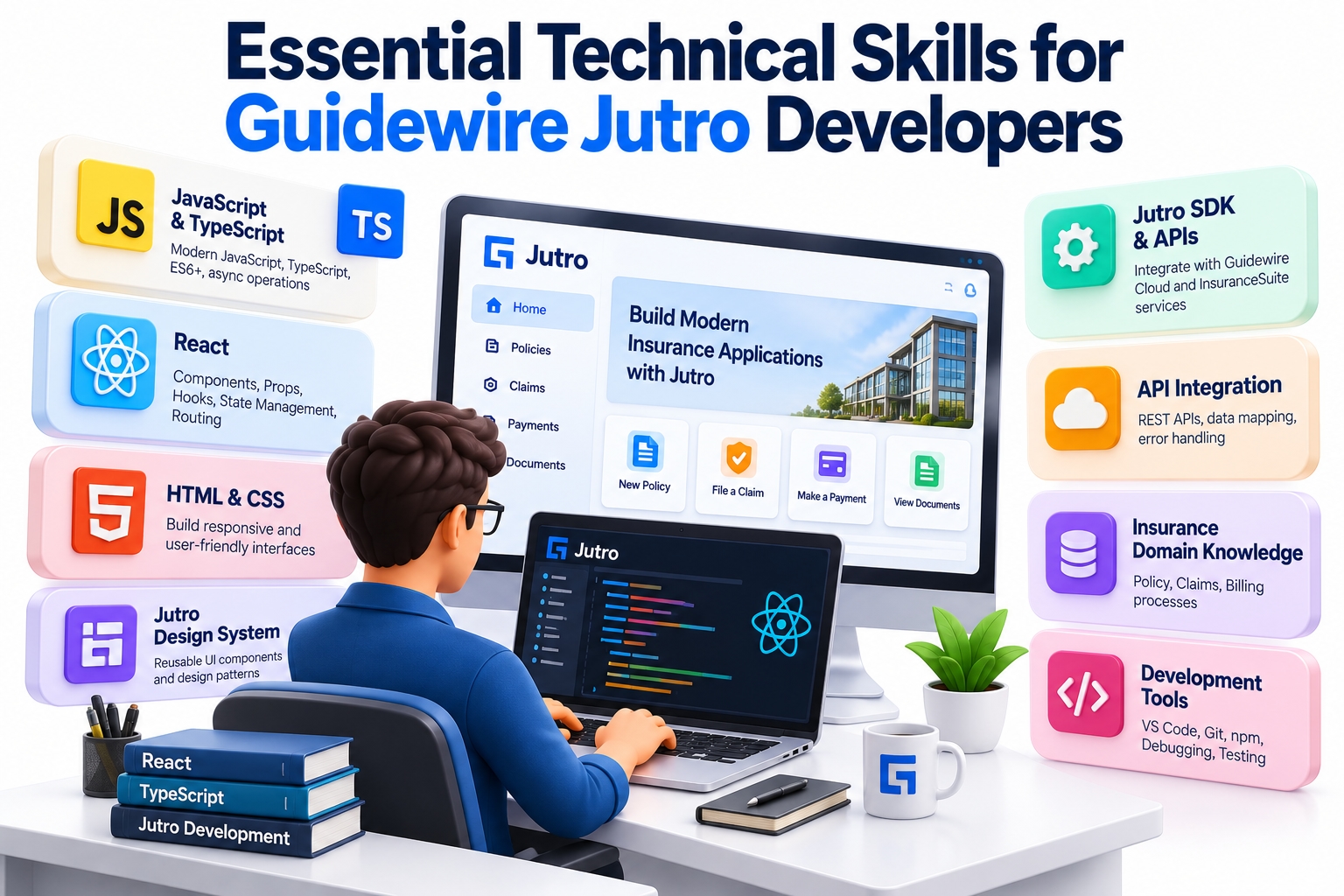
Jutro development requires a combination of frontend programming, application architecture, and insurance technology knowledge. Developers with existing React experience have a useful starting point, but they must also understand how digital applications interact with enterprise insurance systems.
Important technical skills include:
JavaScript and TypeScript: Understand modern programming concepts, asynchronous operations, functions, objects, and type safety.
React: Learn components, props, hooks, state management, routing, and reusable UI development.
HTML and CSS: Build responsive layouts and maintain consistent application interfaces.
Jutro Design System: Understand available components, design principles, theming, and customization.
REST APIs: Work with HTTP methods, JSON payloads, request parameters, and response handling.
Jutro SDK: Learn how to consume supported Guidewire Cloud APIs through the platform's development tools.
Git and debugging: Manage source code, investigate application issues, and collaborate with development teams.
Developers should also understand insurance business concepts such as policy administration, claims processing, billing operations, and customer servicing.
Combining these skills helps developers understand not only how to build an interface but also how that interface supports an actual insurance business process.
Real-World Projects and Developer Opportunities
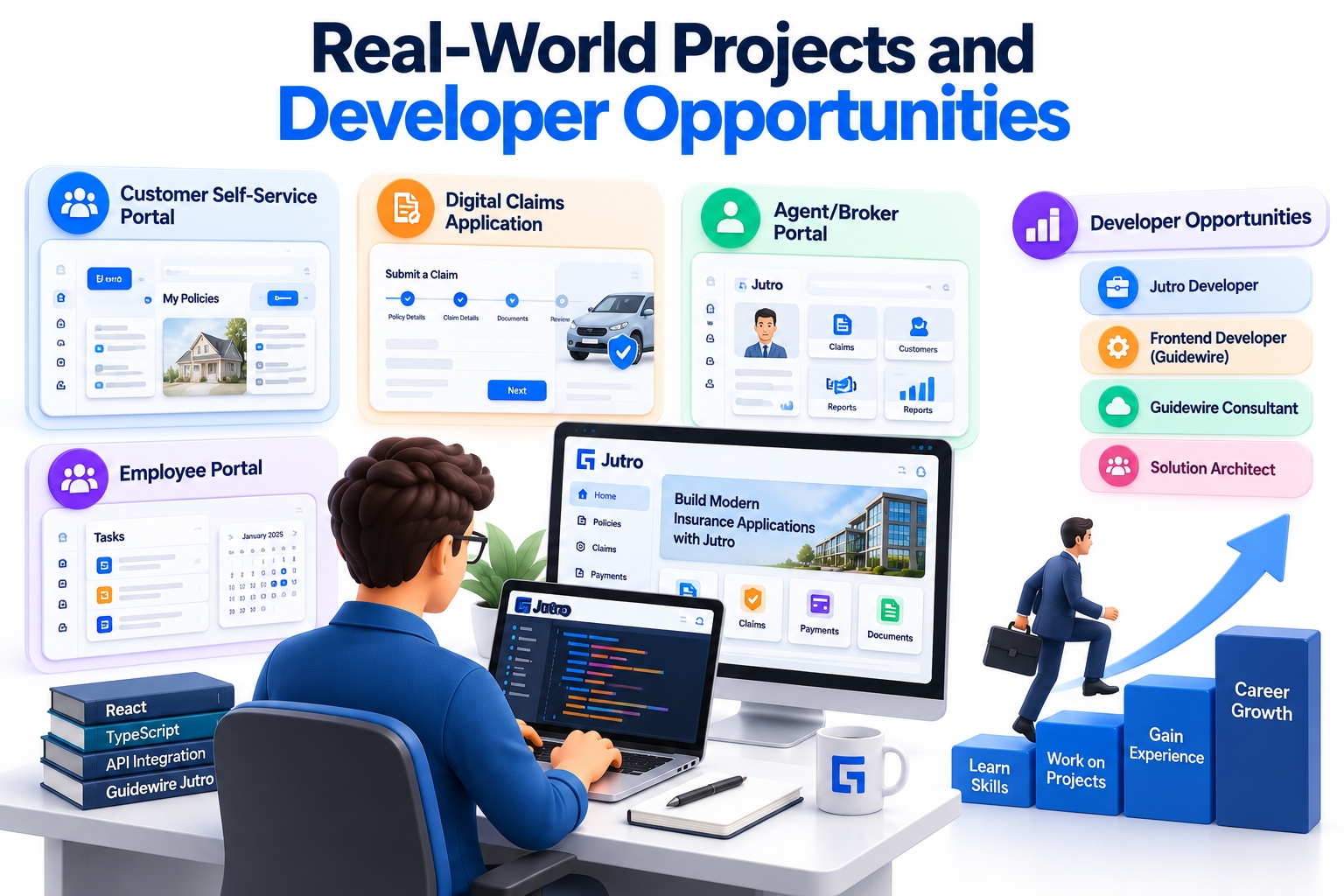
Practical project experience is important because Jutro development involves more than creating attractive screens. Developers must understand business requirements, integrate application data, handle user interactions, and ensure that digital workflows function correctly.
Consider three practical project examples.
Customer Self-Service Portal
Develop a customer-facing application that allows policyholders to access policy information, update their profiles, and submit service requests.
Key development activities include:
Designing responsive application screens.
Implementing reusable UI components.
Integrating supported backend APIs.
Handling form validation and application errors.
Digital Claims Application
Build an application that helps customers initiate claims and follow the claims process.
Developers work on claim submission forms, document-related interactions, API communication, validation, and status presentation.
Agent Policy Management Dashboard
Create an interface that allows insurance agents to search customer information, review policy details, and access relevant business operations.
This project develops practical knowledge of application navigation, data handling, API integration, and role-based experiences.
These projects demonstrate how Jutro connects frontend development with insurance operations.
Professionals who develop these capabilities can explore opportunities such as:
Guidewire Jutro Developer
Frontend Developer
React Developer for Insurance Applications
Digital Experience Developer
Guidewire Technical Consultant
Insurance Application Developer
The exact responsibilities depend on the organization, project architecture, and experience level.
How to Start a Career in Guidewire Jutro Development
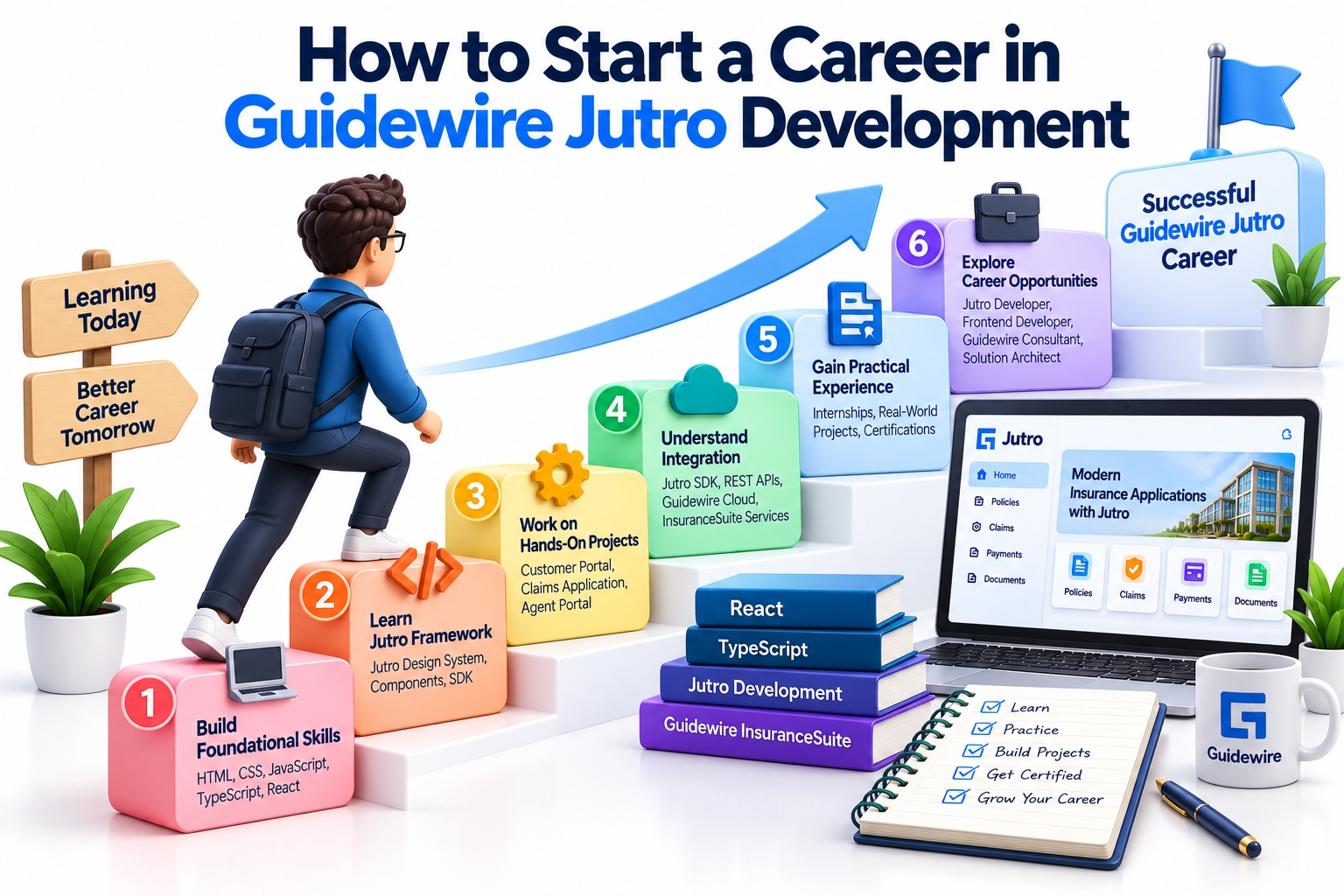
A structured learning approach helps developers move from general frontend knowledge to specialized insurance application development.
Start with JavaScript, TypeScript, React, HTML, and CSS. These technologies establish the foundation needed to understand Jutro application development.
Next, explore the Jutro Design System, application structure, development tools, templates, and supported SDK capabilities. Practice building reusable components and responsive application screens.
The next stage should focus on integration. Learn how frontend applications communicate with Guidewire Cloud APIs, how requests and responses are handled, and how authentication and authorization requirements affect application development.
Finally, gain practical experience through insurance-related projects.
For professionals exploring Guidewire Training in Hyderabad, understanding the relationship between frontend engineering and Guidewire InsuranceSuite can help create a more focused learning path.
Specialized Guidewire Jutro Developer Training can also help learners understand platform-specific development concepts, application integration, reusable components, debugging, and deployment workflows.
A practical learning roadmap should include:
Frontend programming fundamentals.
React and TypeScript development.
Jutro application architecture.
Design System and component customization.
API and SDK integration.
Insurance application projects.
Testing, debugging, and deployment practices.
Consistent hands-on practice is essential for developing the confidence required to contribute to enterprise digital application projects.
Conclusion
Guidewire Jutro is an important development platform for insurance companies looking to modernize their digital experiences. Its React-based application approach, reusable design components, SDK capabilities, and flexible deployment options help organizations create customer portals, claims applications, and employee-facing interfaces. Understanding its architecture gives developers a clearer picture of how modern frontend applications connect with enterprise insurance systems.
For aspiring developers, Jutro offers an opportunity to combine frontend engineering with specialized insurance technology knowledge. Building strong JavaScript, TypeScript, React, API integration, and Guidewire fundamentals can create a solid foundation for this career path. As insurers continue investing in digital transformation, professionals who can develop, integrate, and maintain modern insurance applications will be valuable contributors to technology teams.



