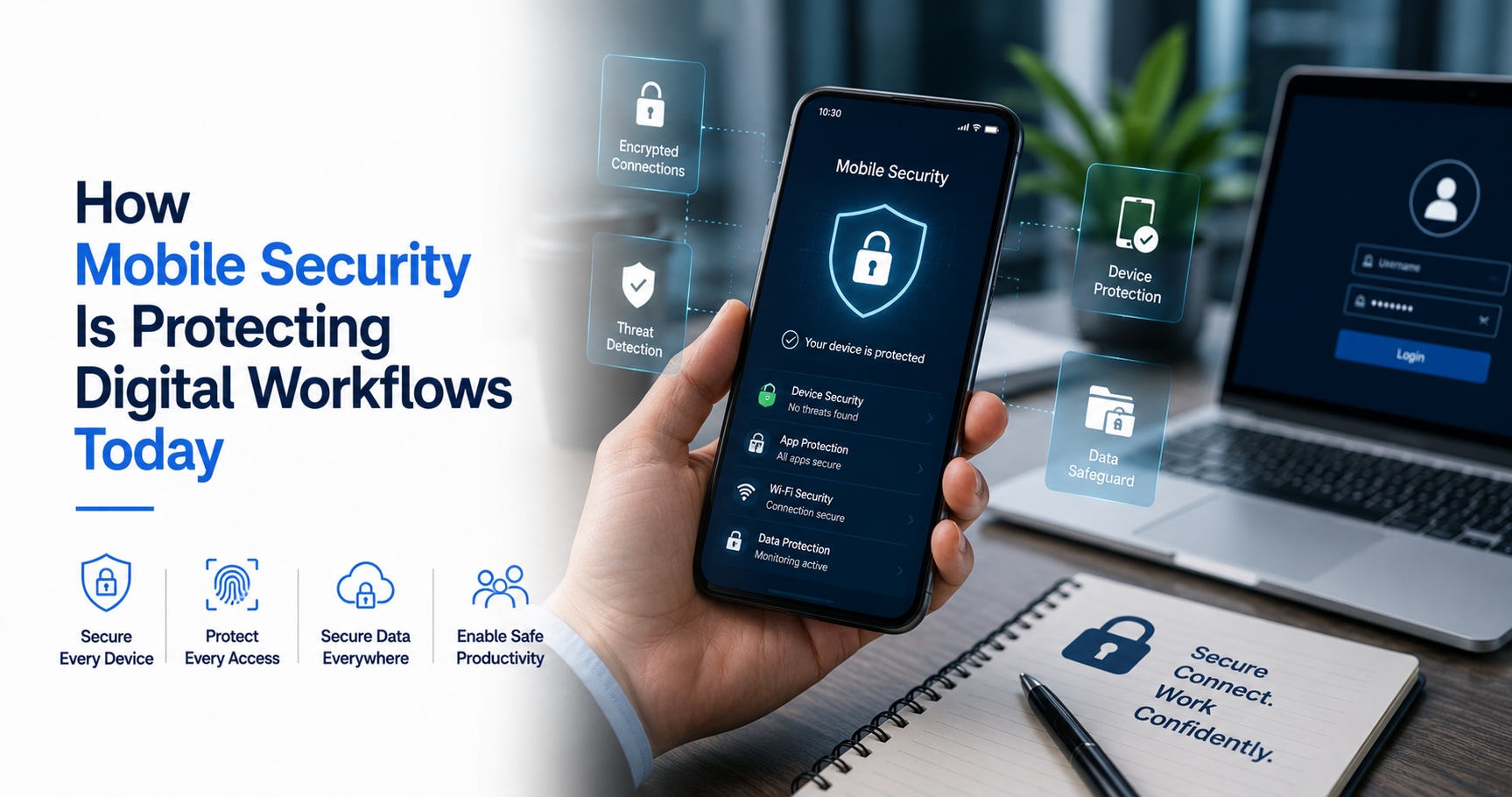
Mobile devices have become central to modern work as employees use smartphones and tablets to access emails, cloud applications, collaboration tools, customer records, and financial systems. This shift has improved workplace flexibility, but it has also expanded the number of endpoints that organizations must protect from phishing, malware, unsafe networks, unauthorized access, and data leakage.
According to MarkNtel Advisors, the mobile security growth forecast states that the mobile threat defense market was valued at USD 4.38 billion in 2025 and is projected to grow from USD 5.69 billion in 2026 to USD 13.29 billion by 2032. The study estimates a CAGR of around 15.19% during 2026–2032, supported by hybrid work, BYOD adoption, cloud applications, and rising mobile cyber risks.
Enterprise Mobility Is Expanding Security Needs
The use of personal and corporate mobile devices has changed enterprise cybersecurity requirements. Employees now access sensitive business information through multiple networks, applications, and devices, often outside traditional office environments. This creates more entry points for attackers, especially when devices are unmanaged, outdated, connected to unsafe Wi-Fi, or used for both personal and professional activity.
NIST’s mobile device security guidance describes mobile devices as permanent fixtures in enterprise environments that are used to access modern systems and process sensitive data, which supports the need for organizations to manage mobile risk through device controls, application monitoring, endpoint protection, and user access policies. This makes mobile threat defense an important part of broader security architecture.
Phishing Is Becoming More Mobile Focused
Mobile phishing has become harder to detect because small screens, short message formats, and fast communication habits make it easier for users to overlook suspicious links. Attackers can target employees through SMS, messaging apps, email, QR codes, fake login pages, and malicious applications designed to capture credentials or redirect users to unsafe websites.
CISA’s online safety guidance highlights phishing recognition, strong passwords, multifactor authentication, and software updates as practical ways to reduce cyber exposure, which is relevant to mobile security because many attacks begin with a user tapping a deceptive link or approving access from a compromised device. Mobile threat defense tools help identify these risks before they lead to larger incidents.
Solutions Are Leading Enterprise Adoption
Solutions account for around 72% share by offering in 2026, according to the shared study. This reflects enterprise preference for integrated platforms that can detect mobile malware, monitor device risk, block unsafe network activity, inspect applications, and enforce security policies across both corporate-owned and bring-your-own-device environments.
Integrated mobile threat defense tools are becoming important because mobile risks rarely appear in isolation. A single incident may involve a compromised application, stolen credentials, device misconfiguration, and unsafe network access. Unified solutions help security teams connect these signals and respond faster, especially when mobile protection is integrated with identity management, endpoint security, and zero-trust access controls.
BFSI Remains Highly Exposed to Mobile Risks
The BFSI sector holds around 25% share among end users in 2026, making it the largest end-user category in the study. Banks, insurance providers, fintech firms, and financial service organizations depend heavily on mobile applications for customer transactions, employee access, digital onboarding, payment approvals, and internal communication.
This dependence makes mobile security a critical operational requirement. Financial institutions need to protect customer credentials, transaction data, employee devices, and application integrity while meeting expectations for fraud prevention and data protection. Mobile threat defense platforms help support these needs by monitoring device health, detecting malicious applications, and reducing exposure to account takeover attempts.
Cloud Deployment Supports Scalable Protection
Cloud-based mobile threat defense platforms are gaining relevance as enterprises look for faster deployment, centralized visibility, and easier security updates. Cloud delivery allows security teams to monitor mobile risks across distributed workforces without managing extensive on-premises infrastructure. This is especially useful for large enterprises, remote teams, and organizations operating across multiple geographies.
Cloud-based protection also aligns with the broader movement toward security automation. Mobile threat defense tools can continuously evaluate device posture, detect risky behavior, and trigger policy-based responses such as blocking access, warning users, or escalating incidents to security teams. This supports faster response times in environments where mobile devices are constantly moving across networks and locations.
North America Leads Security Adoption
North America accounted for around 39% revenue share in 2026, making it the leading region in the shared study. The region’s position is supported by strong enterprise cybersecurity spending, advanced digital infrastructure, cloud adoption, and strict security requirements across BFSI, healthcare, government, defense, and technology sectors.
Regulatory pressure and high awareness of cyber risks have encouraged organizations in the United States and Canada to strengthen mobile endpoint protection. As hybrid work and mobile-first operations continue, enterprises are investing in tools that help secure mobile access to corporate systems without limiting employee productivity.
App Security Is Becoming a Core Priority
Mobile applications are now central to business workflows, but they can also introduce security risks when permissions are excessive, code is vulnerable, or applications are downloaded from unsafe sources. App vetting, behavioral analysis, and runtime protection are becoming more important as organizations seek to prevent data leakage, malware exposure, and credential theft.
ENISA’s cyber threat landscape identifies major cyber threats, attack techniques, and mitigation measures, which is relevant to mobile environments because attackers often combine phishing, malware, credential theft, and application abuse to compromise enterprise systems. This reinforces the value of continuous monitoring across mobile endpoints and connected applications.
Outlook for Mobile Threat Defense
Mobile threat defense is becoming a key part of enterprise cybersecurity as organizations rely more heavily on smartphones, tablets, cloud applications, and hybrid work models. Growth is being shaped by mobile phishing, BYOD complexity, financial app security, cloud-based protection, and the need for continuous endpoint visibility.
The long-term direction will depend on how effectively organizations integrate mobile security with identity systems, endpoint protection, zero-trust frameworks, and employee awareness. As mobile devices remain central to digital work, mobile threat defense is likely to become an increasingly important layer of enterprise risk management.