
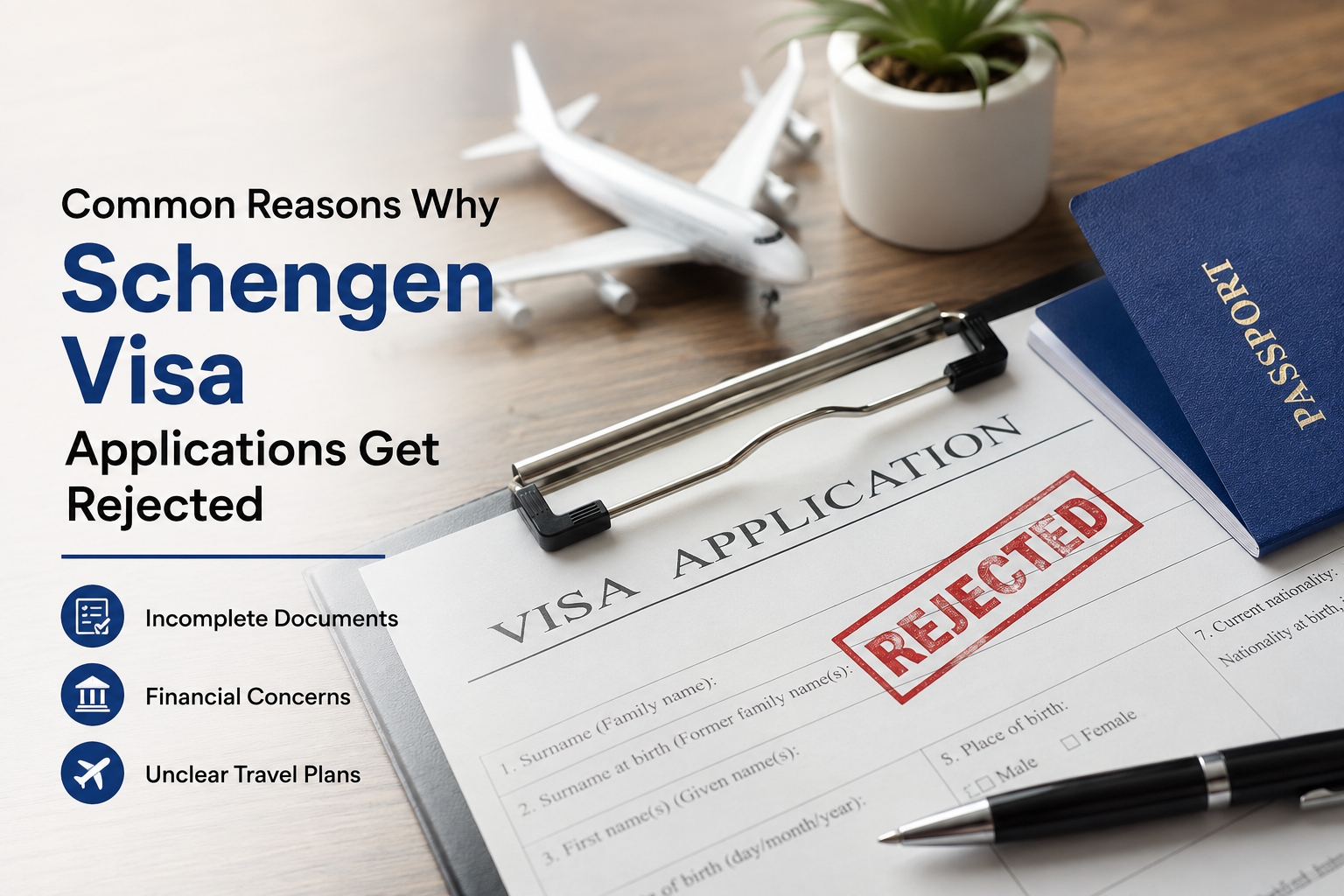
Common Reasons Why Schengen Visa Applications Get Rejected
Applying for a Schengen visa is an important step for travelers planning to visit Europe for tourism, business, family visits, or other short-term purposes. While many applications are approved each year, some are refused because applicants fail to meet one or more visa requirements. In many cases, these rejections are not due to a single major issue but rather small mistakes that could have been avoided with careful preparation.
Understanding the common reasons for Schengen visa rejection can help applicants prepare stronger applications and reduce the risk of refusal. From incomplete documents and financial concerns to unclear travel plans and incorrect information, every part of the application is carefully reviewed by the relevant embassy or consulate.
Before submitting your application, it is important to ensure that all required documents are complete, accurate, and consistent. Taking the time to review your application carefully can improve your chances of a successful outcome and help prevent unnecessary delays.
In this guide, we will explain the most common reasons why Schengen visa applications get rejected and share practical tips that can help you prepare your application with greater confidence.
Incomplete or Incorrect Application Form
One of the most common reasons for a Schengen visa rejection is submitting an incomplete or incorrectly completed application form. The visa application form provides essential information about the applicant, travel plans, and personal background. Any missing details, incorrect information, or inconsistencies may raise concerns during the assessment process.
Applicants should complete every required section of the form carefully. Leaving mandatory fields blank, providing inaccurate dates, entering incorrect passport details, or making spelling mistakes can delay the application or even result in a refusal.
It is equally important to ensure that the information provided on the application form matches the supporting documents. For example, travel dates, passport details, accommodation bookings, and personal information should all remain consistent throughout the application.
Before submitting your visa application, review the completed form several times to identify any errors or missing information. If possible, ask another person to check the application as well, as a second review may help identify mistakes that were initially overlooked.
Taking a few extra minutes to verify every detail can significantly reduce the chances of avoidable errors affecting your Schengen visa application.
Missing Supporting Documents
Supporting documents play a vital role in the Schengen visa application process. They help the embassy or consulate verify the information provided in your application and determine whether you meet the visa requirements. If any required documents are missing, incomplete, or outdated, your application may be delayed or even refused.
The exact document requirements may vary depending on the country you are applying to and the purpose of your visit. However, most applicants are generally required to submit documents such as a valid passport, recent passport-sized photographs, proof of accommodation, confirmed or reserved flight details, travel insurance, financial documents, and evidence supporting the purpose of their trip.
Submitting documents that do not meet the embassy's specifications can also create problems. For example, unclear photocopies, expired documents, unsigned forms, or documents with missing information may not be accepted during the application review.
Applicants should always refer to the latest document checklist provided by the relevant embassy, consulate, or visa application center before submitting their application. Requirements may change over time, so relying on outdated information can increase the risk of rejection.
Creating a personal checklist before applying is a simple but effective way to ensure that every required document is included. Organizing your paperwork in the recommended order can also make it easier for visa officers to review your application.
Carefully preparing and verifying your supporting documents before submission demonstrates that you have taken the application process seriously and can help improve the overall quality of your Schengen visa application.
Insufficient Proof of Financial Means
Another common reason for Schengen visa rejection is the inability to demonstrate sufficient financial resources for the planned trip. Visa authorities need to be confident that applicants can cover their travel expenses without facing financial difficulties during their stay in the Schengen Area.
Applicants are generally expected to provide financial documents that show they have enough funds to pay for accommodation, transportation, meals, daily expenses, and other travel-related costs. Depending on the embassy's requirements, this may include recent bank statements, salary certificates, employment letters, tax documents, or other financial records.
Providing bank statements with very low balances, sudden large deposits without explanation, or incomplete financial records may raise questions during the application review. Financial documents should present a clear and consistent picture of the applicant's financial situation.
If another person is sponsoring the trip, applicants may need to provide sponsorship documents along with evidence of the sponsor's financial ability to support the visit. The required documents vary depending on the country and the applicant's circumstances.
It is equally important that the financial information matches the travel plans. For example, an expensive multi-country itinerary should be supported by financial documents that reasonably demonstrate the applicant's ability to afford the trip.
Preparing accurate and well-organized financial documents helps visa officers assess your application more confidently and reduces the likelihood of rejection due to insufficient proof of financial means.
Unclear Travel Purpose or Itinerary
A clear travel purpose is an important part of every Schengen visa application. Visa officers must understand why you are traveling, where you plan to go, how long you intend to stay, and what activities you will undertake during your visit.
Applications may be questioned if the travel purpose is vague, inconsistent, or not supported by relevant documents. For example, stating that you are traveling for tourism without providing accommodation details, a travel itinerary, or evidence of planned activities may create uncertainty about your intentions.
A well-prepared itinerary does not need to include every minute of your trip, but it should clearly outline your planned destinations, travel dates, accommodation arrangements, and expected return date. Supporting documents such as hotel reservations, flight bookings, event registrations, or invitation letters can strengthen your application.
Applicants visiting family or friends should ensure that invitation letters and supporting documents are complete and consistent with the information provided in the application form. Business travelers should include meeting schedules, conference registrations, or invitation letters from the host company whenever applicable.
A realistic and organized travel plan demonstrates that you have carefully prepared for your trip and intend to comply with the conditions of your visa. Providing clear and consistent information helps reduce doubts during the visa assessment process and improves the overall credibility of your application.
How to Reduce the Chances of Schengen Visa Rejection
Although no visa approval can be guaranteed, careful preparation can significantly reduce the risk of rejection. A well-organized application shows that you understand the requirements and have genuine travel plans.
Before submitting your application, make sure to:
Check the latest Schengen visa requirements.
Complete the application form accurately.
Submit all required supporting documents.
Provide clear proof of financial ability.
Prepare a realistic travel itinerary.
Ensure your travel insurance meets Schengen requirements.
Apply well before your planned travel date.
It is also important to review your documents carefully before submission. Small mistakes, missing information, or inconsistent details can create unnecessary concerns during the visa review process.
How to Avoid Schengen Visa Rejection When Applying From the UAE
UAE residents applying for a Schengen visa should pay close attention to document preparation and application requirements. Different Schengen countries may have slightly different procedures, so understanding the specific requirements of the destination country is important.
Applicants should prepare a complete file that includes accurate personal information, financial documents, travel plans, accommodation details, and other required paperwork. Organizing documents properly can make the application process smoother and reduce the chances of delays.
Many travelers prefer professional guidance when preparing their applications to avoid common mistakes. In the UAE, Regal Tours UAE helps travelers understand Schengen visa requirements, review application documents, and prepare the necessary paperwork before submission.
Before applying, always verify the latest requirements and ensure that all information provided is accurate and consistent. Proper preparation is one of the best ways to improve your chances of a successful Schengen visa application.
A Schengen visa rejection can happen for several reasons, including incomplete documents, unclear travel plans, financial concerns, or inconsistent information. Most common mistakes can be avoided by preparing carefully and following the required guidelines.
Taking time to organize your documents, understand the requirements, and submit accurate information can make the application process easier. A well-prepared visa application helps demonstrate your genuine travel purpose and increases confidence during the review process.