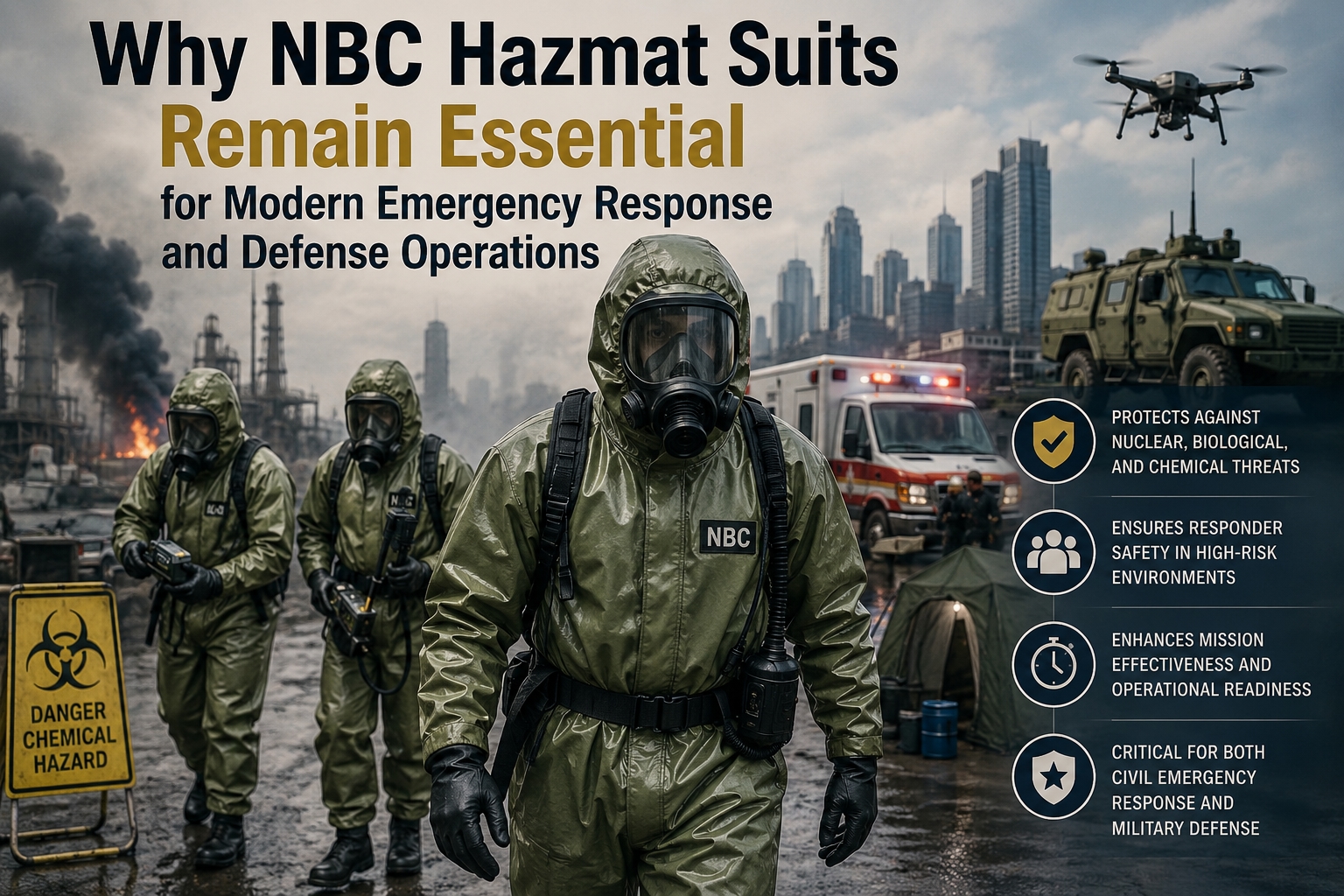
Protective equipment has become an indispensable component of modern emergency preparedness, military readiness, industrial safety, and hazardous material response. Among the most specialized forms of personal protective equipment are Nuclear, Biological, and Chemical (NBC) Hazmat suits, which are designed to protect personnel from exposure to dangerous substances in high-risk environments. As governments, healthcare organizations, emergency responders, and industrial facilities strengthen their preparedness strategies, demand for advanced protective technologies continues to evolve.
According to a study published by MarkNtel Advisors, this market analysis highlights the growing importance of advanced protective equipment across defense, industrial, healthcare, and emergency response sectors. The report provides insights into technology developments, material innovation, and the increasing emphasis on personnel safety in hazardous operating environments.
Modern Threats Require Advanced Personal Protection
NBC Hazmat suits are engineered to provide comprehensive protection against hazardous chemical agents, biological contaminants, radioactive particles, and toxic industrial substances. Unlike standard protective clothing, these suits are designed to create a barrier that minimizes exposure while allowing responders to safely perform critical tasks under challenging conditions.
Emergency responders, military personnel, hazardous materials teams, laboratory workers, and specialized industrial operators depend on this equipment during incidents involving chemical spills, infectious agents, radiological contamination, or unidentified hazardous materials. Reliable protective clothing enables professionals to carry out rescue, containment, and decontamination operations while reducing risks to their own health.
The World Health Organization (WHO) emphasizes the importance of appropriate personal protective equipment in protecting healthcare workers and emergency responders from biological hazards and infectious disease exposure.
Material Innovation Is Improving Protection and Comfort
Early generations of hazmat suits often prioritized maximum protection at the expense of mobility and comfort. Today's manufacturers are focusing on advanced materials that provide strong chemical resistance while reducing weight and improving flexibility.
Modern protective fabrics combine multilayer barrier technologies with breathable materials that help reduce heat stress during extended operations. Enhanced seam sealing, improved visor designs, ergonomic construction, and integrated glove and boot interfaces further improve safety and operational efficiency.
These innovations enable responders to work for longer periods without significantly compromising mobility or situational awareness.
Defense Organizations Continue to Modernize Protective Equipment
Military personnel may encounter environments where protection against nuclear, biological, or chemical hazards is essential. As defense organizations modernize their equipment, NBC protective suits are increasingly being integrated with advanced communication systems, respiratory protection, and mission equipment.
Modern military protective clothing is designed to support mobility during demanding operational conditions while maintaining high levels of protection against multiple threat types. Lightweight construction and improved durability allow personnel to perform complex missions without unnecessary physical burden.
The North Atlantic Treaty Organization (NATO) continues to promote preparedness and resilience against chemical, biological, radiological, and nuclear threats through collaborative capability development and operational standards.
Industrial and Healthcare Applications Continue to Expand
Beyond defense and emergency response, NBC-style protective suits are increasingly used in pharmaceutical manufacturing, biotechnology laboratories, chemical processing facilities, nuclear energy operations, and hazardous waste management.
Workers operating in these environments require specialized protective equipment to minimize exposure to potentially dangerous substances while maintaining strict safety and regulatory compliance. Hospitals and infectious disease response teams also rely on high-performance protective garments during outbreaks involving highly contagious pathogens.
As industrial safety standards continue evolving, organizations are placing greater emphasis on ensuring workers have access to reliable personal protective equipment designed for specific operational risks.
Technology Is Supporting Smarter Protective Solutions
Advances in wearable technology are beginning to influence the next generation of NBC protective equipment. Researchers are exploring integrated sensors capable of monitoring environmental conditions, detecting hazardous substances, tracking physiological indicators, and supporting real-time communication between response teams.
These technologies have the potential to improve situational awareness while enabling commanders and emergency coordinators to make faster, better-informed operational decisions during hazardous incidents.
Improvements in decontamination compatibility, reusable protective materials, and intelligent equipment monitoring are also contributing to more sustainable and efficient protective solutions.
The U.S. Centers for Disease Control and Prevention (CDC) provides extensive guidance on the selection and use of personal protective equipment for biological hazards, reinforcing the importance of appropriate protection during emergency response operations.
Preparing for Future Risk Environments
Global emergency preparedness strategies increasingly recognize that hazardous incidents can emerge from industrial accidents, infectious disease outbreaks, transportation incidents, or complex security events. Building resilient response capabilities requires continuous investment in training, equipment modernization, and protective technologies.
NBC Hazmat suits represent one element of broader preparedness systems that include detection equipment, decontamination procedures, respiratory protection, medical support, and coordinated emergency planning. As technology advances, future protective systems are expected to become lighter, smarter, and more adaptable to a wider range of operational environments.
Looking Ahead
NBC Hazmat suits remain a critical component of modern safety infrastructure across defense, healthcare, industrial operations, and emergency response. Continuous improvements in protective materials, ergonomic design, integrated technologies, and operational performance are helping organizations better protect personnel working in some of the world's most hazardous environments.
As governments and industries continue strengthening resilience against chemical, biological, radiological, and nuclear risks, innovation in protective equipment will remain an important priority. Organizations that invest in advanced protective technologies and comprehensive preparedness strategies will be better positioned to safeguard both responders and the communities they serve.