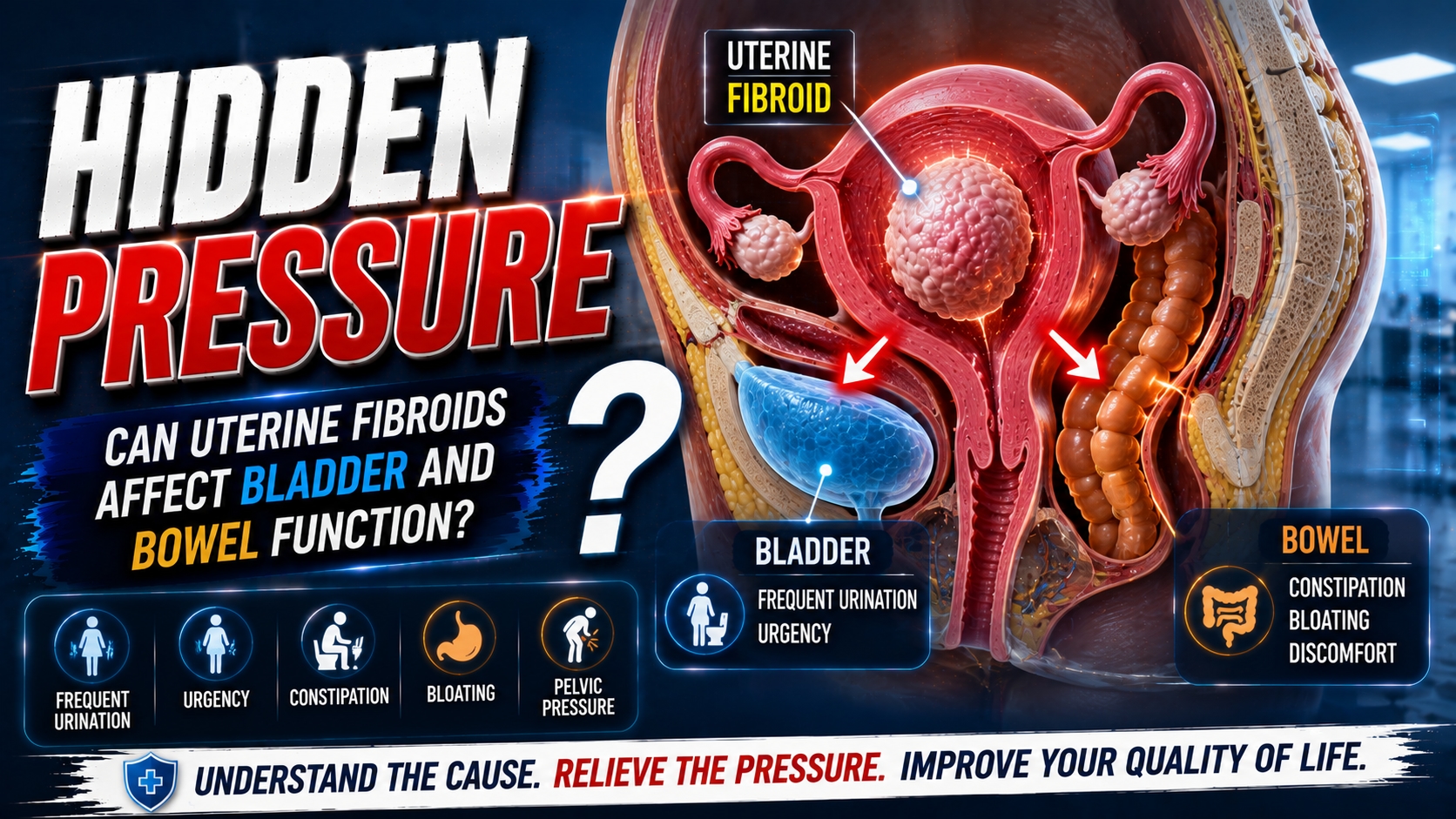
Yes, uterine fibroids can affect bladder and bowel function, especially when they become large or are located in areas where they press against nearby pelvic organs. Depending on their size and position, fibroids may cause frequent urination, difficulty emptying the bladder, constipation, or a feeling of pressure in the pelvis.
While not every woman with fibroids experiences these symptoms, persistent bladder or bowel changes should be medically evaluated to determine whether fibroids are contributing to the problem.
Many women associate uterine fibroids only with heavy menstrual bleeding, but fibroids can also affect surrounding organs. Understanding how uterine fibroids influence bladder and bowel function helps explain why symptoms vary depending on the location and size of the fibroids.
Why Can Fibroids Affect Nearby Organs?
The uterus is located close to both the bladder and the bowel.
As fibroids enlarge, they may occupy additional space within the pelvis.
Depending on their location, they can place pressure on:
The bladder
The rectum
The lower bowel
Nearby pelvic tissues
According to the American College of Obstetricians and Gynecologists (ACOG), pressure symptoms become more common as fibroids increase in size.
How Can Fibroids Affect the Bladder?
Fibroids located on the front wall of the uterus are more likely to press against the bladder.
This pressure may cause:
Frequent urination
A constant urge to urinate
Difficulty emptying the bladder completely
Waking up at night to urinate
These symptoms occur because the bladder has less space to expand normally.
Can Fibroids Cause Urinary Retention?
Sometimes.
In some women, large fibroids may compress the bladder outlet or surrounding structures, making it difficult to empty the bladder completely.
Although this is less common, persistent difficulty passing urine requires prompt medical evaluation.
Doctors will determine whether fibroids or another urinary condition is responsible.
How Can Fibroids Affect the Bowel?
Fibroids growing toward the back of the uterus may press against the rectum.
This pressure can contribute to:
Constipation
Difficulty passing stools
A feeling of incomplete bowel emptying
Pelvic pressure during bowel movements
According to the National Health Service (NHS), bowel symptoms caused by fibroids usually develop gradually as the fibroids enlarge.
Do All Fibroids Cause Bladder or Bowel Problems?
No.
Many fibroids never cause pressure symptoms.
Whether nearby organs are affected depends on:
Fibroid size
Fibroid location
Number of fibroids
Individual pelvic anatomy
A relatively small fibroid in the wrong location may cause symptoms, while a larger fibroid elsewhere may not.
How Do Doctors Determine Whether Fibroids Are the Cause?
Doctors begin with:
Medical history
Pelvic examination
Pelvic ultrasound
If additional detail is needed, Magnetic Resonance Imaging (MRI) may also be recommended.
Imaging helps doctors assess:
Fibroid size
Exact location
Pressure on surrounding organs
Overall uterine anatomy
This information helps determine whether the bladder or bowel symptoms are related to fibroids.
Can These Symptoms Improve Without Treatment?
Sometimes.
Women with small fibroids and mild symptoms may only require regular monitoring.
However, persistent pressure symptoms should not be ignored because they may gradually worsen if the fibroids continue growing.
Treatment decisions depend on symptom severity rather than fibroid size alone.
What Treatment Options Are Available?
Treatment depends on:
Symptom severity
Fibroid size
Fibroid location
Future pregnancy plans
Options may include:
Observation
Medication
Uterine Fibroid Embolization (UFE)
Myomectomy
Hysterectomy
Uterine Fibroid Embolization is a minimally invasive procedure that blocks the blood supply to the fibroids, causing them to gradually shrink. As the fibroids become smaller, pressure on the bladder and bowel often decreases, helping improve related symptoms.
Doctors recommend the most appropriate treatment based on each woman's individual condition.
Why Is Early Evaluation Important?
Seeking medical advice early allows doctors to:
Identify the cause of urinary or bowel symptoms
Monitor fibroid growth
Prevent worsening pressure symptoms
Recommend timely treatment when appropriate
Early diagnosis often provides more treatment options before fibroids become significantly enlarged.
Conclusion
Uterine fibroids can affect bladder and bowel function when their size or location causes pressure on nearby pelvic organs. Symptoms such as frequent urination, difficulty emptying the bladder, constipation, or pelvic pressure are often related to the position of the fibroids rather than simply their presence.
Because many other conditions can cause similar symptoms, proper imaging is essential for an accurate diagnosis.
The encouraging news is that modern ultrasound and MRI allow doctors to precisely identify how fibroids are affecting the uterus and surrounding organs.
Minimally invasive treatments such as Uterine Fibroid Embolization can effectively shrink fibroids while preserving the uterus, helping relieve pressure symptoms for many women.
Women interested in advanced fibroid care can consult an interventional radiologist Jaipur to learn more about available treatment options.
Frequently Asked Questions
Can uterine fibroids cause frequent urination?
Yes. Fibroids pressing against the bladder can reduce its capacity, leading to frequent urination and a persistent urge to urinate.
Can fibroids cause constipation?
Yes. Fibroids located toward the back of the uterus may press against the rectum, contributing to constipation or difficulty passing stools.
Does every woman with fibroids develop bladder or bowel symptoms?
No. Pressure symptoms depend on the size, number, and location of the fibroids rather than simply having fibroids.
How do doctors determine whether fibroids are causing urinary problems?
Doctors usually perform a pelvic examination, ultrasound, and sometimes MRI to assess the size and location of the fibroids and their effect on nearby organs.
Can Uterine Fibroid Embolization relieve bladder and bowel symptoms?
Yes. By shrinking the fibroids, Uterine Fibroid Embolization often reduces pressure on surrounding organs, helping improve urinary and bowel symptoms in suitable patients.