A supercar can cost more than a house, and it can be damaged by a driveway ramp. That mismatch is why people searching for an exotic car hauler aren't just looking for a truck. They're looking for someone who understands low clearance, delicate bodywork and the difference between "insured" and "insured for what this car is worth."
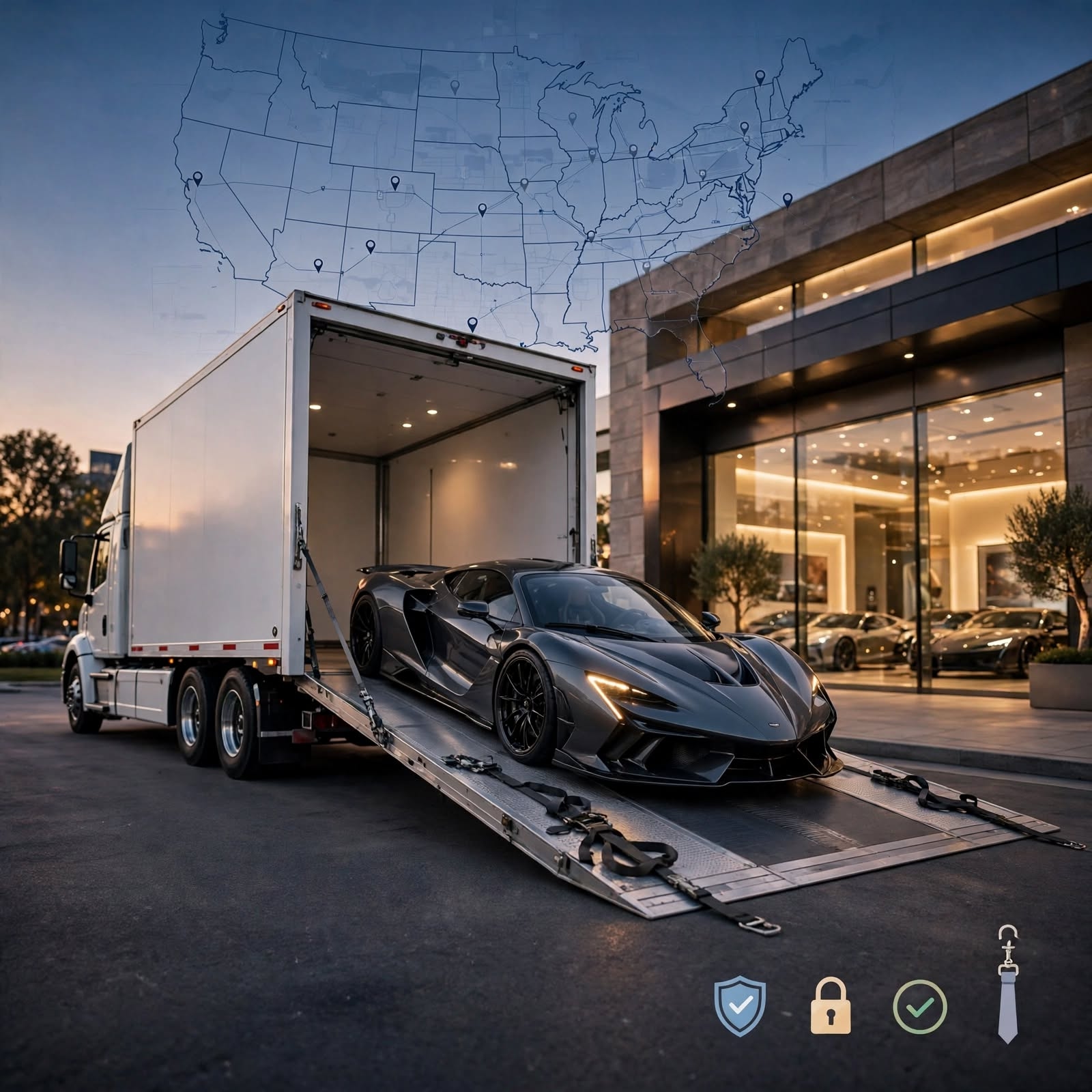
This guide breaks down what a proper exotic car hauler looks like, which questions expose a weak one, and how to avoid the insurance gap that surprises many owners.
What Is an Exotic Car Hauler?
The phrase covers both the equipment and the service. An exotic car hauler is typically an enclosed trailer, pulled by a professional driver, set up to move high-value vehicles such as supercars, hypercars, classics and collector cars. The service built around it usually includes careful loading, secure tie-down, extra insurance and attentive communication.
The difference from standard shipping isn't prestige. It's protection and handling at every step: how the car is loaded, how it's strapped, who else is on the trailer, and what happens if something goes wrong.
Why Open Transport Usually Isn't the Right Call
Open carriers are the standard for everyday cars, and they work well for them. For an exotic, the trade-offs change. Your car is exposed to weather, road debris and nearby vehicles, and a ramp built for ordinary ground clearance can scrape a low front splitter.
Guidance from one shipper says to choose enclosed for luxury, exotic or classic cars, and for vehicles with custom paint, a wrap, carbon fiber trim or a lowered suspension. If the repair bill for a single scratch would sting, the enclosed premium usually pays for itself.
The Hauler Spec Sheet: What to Look For
When you compare exotic car haulers, check these features in person or in writing.
1. Enclosed, Hard-Sided Trailer
The trailer should be fully enclosed, not a canvas wrap or a partial cover. This shields the car from rain, sun and debris, and from view.
2. Liftgate Loading
This one matters more than most owners realize. A trailer with a liftgate lets a low car avoid scraping on a steep ramp. One shipper's guidance recommends an enclosed carrier with a hydraulic liftgate rather than ramps for luxury and exotic cars. If your car has a low front end, ask directly how it's loaded.
3. Soft-Tie Securement
How the car is strapped is a quiet detail with big consequences. Exotic-friendly setups use soft straps over the tires rather than standard wheel straps. Chains at the frame or suspension points can damage parts and finishes, so ask what the driver uses.
4. Shared or Dedicated Trailer
Enclosed trailers typically carry one to six cars, compared with seven to ten on open ones. Most are multi-car, usually with vehicles of similar value. A dedicated single-car run costs considerably more. If you want the trailer to yourself, say so upfront.
5. Climate Control, If You Need It
Some enclosed carriers offer climate control, which matters for certain cars and extreme temperatures. It's not essential for every vehicle, but ask if it applies to yours.
6. Tracking and Documentation
Look for detailed photo or video documentation at pickup and delivery, along with regular updates in transit.
Insurance: The Gap Most Owners Miss
This is where exotic shipping goes wrong more often than people expect. A common assumption is that "insured" means "covered for the full value." It doesn't.
Coverage limits vary widely. Typical cargo coverage ranges are often cited at $100,000 to $250,000 for open transport and $250,000 to $1,000,000 or more for enclosed transport, though these are not guaranteed and vary by carrier. If your car is worth more than the carrier's limit, you carry the difference.
Confirm the carrier's cargo coverage in writing and check that the limit actually covers your car's value, as there will always be a cap. Then take these steps:
Request a certificate of insurance that shows the cargo limit and the coverage dates.
Ask about the deductible and what counts as a covered loss.
Call your own insurer. Having your own coverage in force before the hauler picks up your car is the best protection, since you may be less covered by the carrier's insurance than you think. Ask whether a temporary transit endorsement is available.
Match the numbers. Compare the car's agreed or appraised value with the policy limit.
How Much Does an Exotic Car Hauler Cost?
Exotic transport costs more than standard shipping, for reasons that are easy to explain. The trailer carries fewer cars, uses more expensive equipment and requires higher insurance coverage. One source puts the extra cost of enclosed transport at roughly 21% to 39% over open, depending on distance, while other guides cite increases of 40% to 60% on long hauls, so the spread depends on route and demand.
What moves your price:
Distance. Longer routes cost more in total and less per mile.
Trailer arrangement. A shared enclosed trailer costs less than a dedicated run.
Equipment. Liftgate and soft-tie service can add to the quote.
Season and availability. Spring and summer, plus event season, tighten supply.
Vehicle size and value. Higher value brings higher insurance cost.
Condition. A non-running exotic needs a winch or liftgate-equipped carrier and typically costs extra.
Because fewer enclosed haulers run each lane, scheduling is also tighter. Book earlier than you would for an open carrier.
Quick Scorecard Before You Book
Use this to grade any hauler on a simple pass or fail basis:
Question | A good answer sounds like |
Enclosed, hard-sided trailer? | "Yes, fully enclosed." |
How is the car loaded? | "Hydraulic liftgate," or a clear plan for low clearance. |
How is it secured? | "Soft straps over the tires." |
Shared or dedicated? | A direct answer, with pricing for each. |
What is the insurance limit? | A number, a certificate and a deductible. |
Are you a broker or a carrier? | A plain answer, plus registration numbers you can check. |
Who is the driver? | Name and experience before pickup. |
What if there's damage? | A clear claims process, with documentation. |
A vague answer to any of these is information too.
What a Good Pickup Looks Like
You can tell a lot in the first twenty minutes:
The driver walks around the car with you and notes every existing mark.
Photos or video are taken from all angles, including the wheels and undercarriage.
The car is loaded slowly, with someone guiding the clearance.
Soft straps are used and checked.
You sign a bill of lading that matches what you saw.
At delivery, repeat the process. Inspect before signing, and write any damage on the paperwork before the driver leaves, because that signature confirms the car arrived in acceptable condition.
Mistakes That Cost Exotic Owners Money
Choosing on price alone. A suspiciously cheap quote on a high-value car usually hides a gap in equipment or insurance.
Assuming insurance is automatic. Ask for the certificate and read the limit.
Skipping the pre-shipment inspection. Document the car's condition before loading, with date-stamped photos.
Leaving valuables inside. Carrier insurance doesn't usually cover personal items.
Forgetting the details. Tell dispatch about low clearance, active aero, air suspension or special starting procedures.
How Rapid Auto Shipping Handles Exotic and Luxury Cars
At Rapid Auto Shipping, we arrange enclosed transport for exotic, luxury and collector vehicles, and we start with questions about your specific car: its clearance, its value, how it's usually loaded and what protection you expect. We'll explain your options, including shared or dedicated trailers and loading methods, and we'll tell you what the insurance does and doesn't cover before you commit.
If you'd like a clear, honest quote for your car, tell us the make, model, route and timing. Request your free, no-obligation exotic transport quote from Rapid Auto Shipping today.
FAQs
1. What is an exotic car hauler?
It's an enclosed trailer and driver setup designed to move high-value vehicles such as supercars, hypercars and classics, usually with liftgate loading, soft-tie securement and higher insurance limits.
2. Is enclosed transport necessary for an exotic car?
It's strongly recommended. Enclosed trailers protect against weather, road debris and exposure, and they usually offer higher insurance limits than open carriers.
3. What is a liftgate and why does it matter?
A liftgate is a hydraulic platform that raises the car level into the trailer instead of driving it up a ramp. It helps low-clearance cars avoid scraping their bumpers and undercarriage.
4. How much more does enclosed exotic transport cost?
Estimates range from about 20% to 60% over open transport depending on route, season and trailer arrangement. A dedicated single-car trailer costs more than a shared one.
5. How much insurance should an exotic car hauler carry?
It depends on your car's value. Typical enclosed coverage is often cited at $250,000 to $1,000,000 or more, but limits vary by carrier. Ask for a certificate and confirm the limit covers your car.
6. Does my own insurance cover transport?
It may, but not always. Call your insurer before shipping and ask whether transit is covered or whether a temporary endorsement is available.
7. Can I ship an exotic car that doesn't run?
Usually, yes. An enclosed carrier with a winch or liftgate is assigned, and an extra fee generally applies. Tell your dispatcher the condition when you book.
8. Should I ride along or follow the hauler?
Most haulers don't permit passengers. You can request updates and photos in transit instead.
9. How long does exotic car transport take?
Timing depends on distance and carrier availability. Enclosed haulers run fewer schedules than open ones, so expect a longer pickup window and book early.
10. Do I need to be present at pickup and delivery?
You or a trusted representative should attend to inspect the car and sign the bill of lading.
11. Can I leave personal items in the car?
Typically no. Carrier insurance generally doesn't cover personal belongings, and extra weight can affect loading.
12. How far ahead should I book?
Several weeks ahead is wise for enclosed exotic transport, and earlier for peak seasons or event dates.
The Bottom Line
Hiring an exotic car hauler comes down to three checks: the right equipment, the right insurance for your car's value, and a team that treats your questions as normal. Ask for the liftgate, the soft straps and the certificate of insurance. A company that welcomes those questions is one you can trust with your car.
Get your free quote from Rapid Auto Shipping and move your exotic with confidence.