Long before "walking simulators" and narrative indie games became popular, a small Japanese team made something that still feels ahead of its time. Cosmology Of Kyoto is a 1990s CD-ROM adventure that turned the ancient Japanese capital into a haunting, explorable world. Here is a closer look at why it remains a cult favourite among historians, artists and retro gaming fans.
Origins of a cult classic
The game was conceived in Japan in the early 1990s and published by Yano Electric. A localised English edition for Windows 3.x and Mac reached Western shelves in the mid-1990s. It was never a mass-market hit, but critics who discovered it praised its originality, and over time it gained a reputation as a hidden gem that more people should experience.
Heian Kyoto brought to life
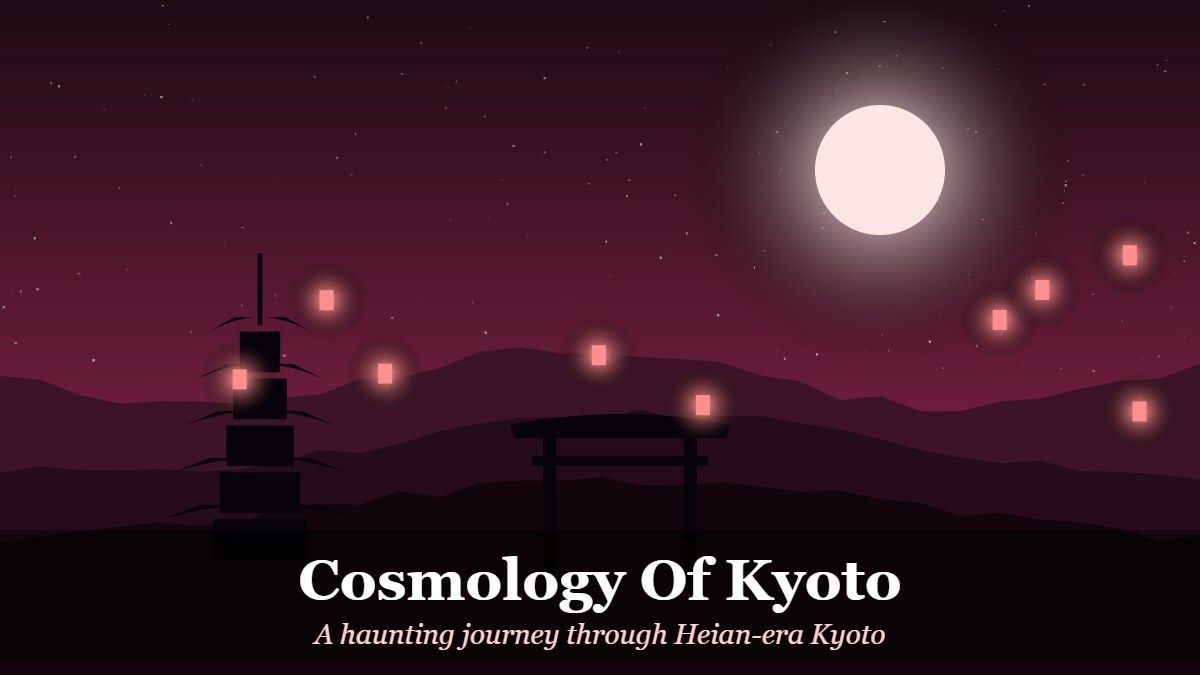
The setting is Heian-kyo, the city now known as Kyoto, around the tenth century. This was a period of aristocratic refinement and courtly poetry, but also of epidemics, poverty and widespread belief in spirits and curses. The game captures both sides. Elegant temples sit beside dark alleys, and polite conversations can turn into encounters with hungry ghosts or wrathful demons.
The artwork mixes traditional Japanese visual styles with surreal, sometimes grotesque imagery. The result feels like walking through an illustrated scroll that has started to dream.
Gameplay without a checklist
Rather than offering quests, Cosmology of Kyoto lets players roam freely in first person. You choose where to walk, whom to speak with and what to examine. Some encounters are funny, some are sad, and some are deeply unsettling. Riddles and symbolic moments replace typical puzzles. Progress is measured by understanding, not by points.
The game also treats death in an unusual way. When your character dies, you may enter Buddhist realms of the afterlife, face judgment, and return to the world in a new form. It is a playable version of karma and reincarnation, and it makes the city feel connected to a much larger spiritual order.
An encyclopedia hidden inside a game
A standout feature is the extensive encyclopedia. Nearly every landmark, custom, deity and legend you encounter can be looked up, with detailed notes on history and religion. Teachers and students have long recommended the game as an engaging way to learn about medieval Japan, and the notes make it easy to go deeper when something sparks your interest.
Its influence on art games
Today, Cosmology of Kyoto is frequently mentioned as an early example of games as art. Its focus on mood, interpretation and philosophy foreshadowed later experimental and story-driven titles. Designers who value atmosphere over action often point to it as proof that games can explore big ideas about life and death without needing combat or high scores.
Where to experience it now
Original copies are rare and older machines are hard to maintain, which is why browser emulation matters so much. You can play Cosmology Of Kyoto online on GameYak, where the original Windows 3.x release runs right in the browser. It is the simplest way to see the game as it was meant to be seen, without any setup.
Conclusion
Cosmology of Kyoto is more than a nostalgic curiosity. It is a thoughtful, beautiful and occasionally disturbing journey into the beliefs of a vanished world. Whether you love history, Japanese folklore or simply unusual games, it deserves a place on your list of experiences to try at least once.