
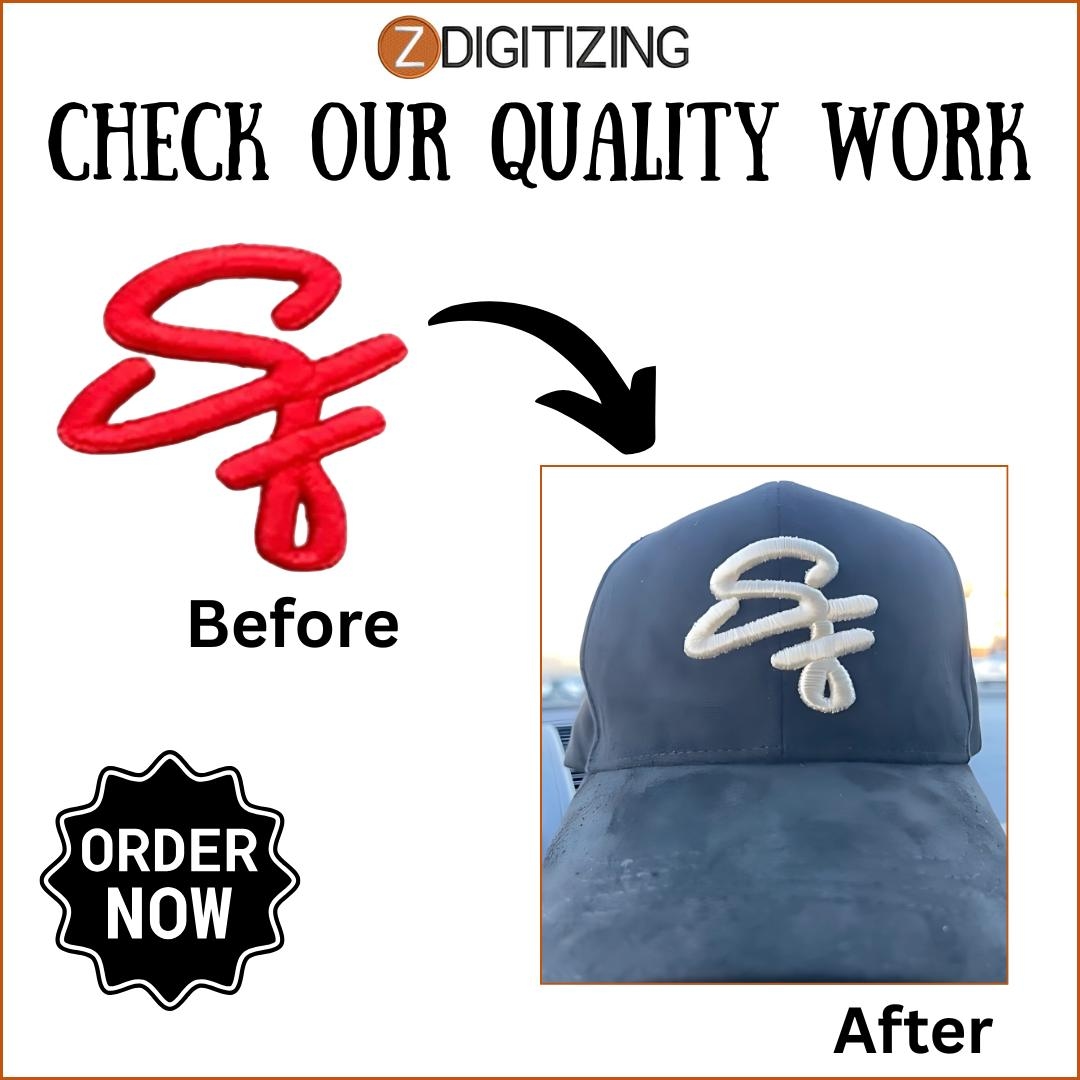
Hat digitizing in USA has developed into a highly specialized segment of the embroidery industry. Businesses, apparel brands, promotional companies, and print shops rely on accurate digitizing to convert logos into machine-ready embroidery files specifically engineered for caps.
Unlike flat garments, hats introduce technical constraints such as curved front panels, center seams, limited vertical space, and thicker fabric layers. These factors demand technical knowledge, practical experience, and attention to detail.
High-quality hat embroidery begins long before a machine starts stitching. It starts with a properly digitized file built for cap construction. When done correctly, the result is clean lettering, balanced designs, fewer thread breaks, and consistent production across large orders.
What Is Hat Digitizing?
Hat digitizing in USA is the process of converting artwork into a stitch file that embroidery machines can interpret. However, it is not a simple file conversion. A professional digitizer manually assigns stitch types, stitch directions, densities, pull compensation, and sequencing based on the structure of the cap.
Because caps are stitched on curved surfaces, designs must be engineered differently compared to flat embroidery. Cap digitizing typically requires:
Adjusted stitch angles to prevent distortion
Compensation for push and pull on structured panels
Careful planning around the center seam
Controlled stitch density to prevent puckering
Strong underlay support for stability
Without these technical adjustments, designs may appear warped, off-center, or uneven.
Why Hat Digitizing Requires Specialized Expertise
Experienced digitizers understand that hats are embroidered differently from shirts or jackets. Most caps are stitched using a cap frame that rotates during production. This mechanical movement affects stitch direction and sequencing.
Digitizing for hats often includes:
Center-out stitching to maintain symmetry
Avoiding heavy stitching directly over seams
Splitting text strategically for better alignment
Reinforced underlay beneath large satin columns
Testing designs to ensure smooth machine performance
Professional experience reduces production errors, minimizes thread breaks, and improves final embroidery quality. This level of precision reflects both technical expertise and real-world production knowledge, which aligns with best practices for reliable, high-quality embroidery services.
Types of Hats Commonly Digitized
Hat digitizing services typically support multiple cap styles, each requiring specific file adjustments:
Baseball caps with structured front panels
Snapbacks with flat brims and firm crowns
Trucker hats with foam fronts and mesh backing
Flat brim caps used in retail and fashion branding
Beanies, which require lighter density due to stretch fabric
Each cap type behaves differently under the needle. A knowledgeable digitizer adjusts stitch density and underlay settings accordingly to maintain shape and clarity.
Industries That Rely on Hat Digitizing
Hat digitizing supports various sectors that depend on durable, branded headwear:
Corporate marketing teams
Sports organizations
Apparel brands
Promotional product suppliers
Construction and trade companies
Event merchandise vendors
Embroidered caps remain a practical branding tool because they are durable, visible, and suitable for long-term use.
What to Look for in a Hat Digitizing Service
When evaluating a provider, consider measurable indicators of quality and reliability:
Demonstrated experience in cap-specific digitizing
Sample stitch-outs for quality verification
Clear revision policies
Fast but realistic turnaround times
Knowledge of major embroidery machine formats
Transparent pricing structure
Working with experienced professionals reduces costly production errors and ensures consistent output.
The Growing Demand for Hat Digitizing in USA
As custom apparel continues to expand, embroidered headwear remains in strong demand. Businesses value caps for brand visibility, while retail brands use them as premium merchandise items. Improvements in embroidery software and machine technology have increased the precision possible in modern digitizing.
Today’s digitizers can manage:
High-density stitching with controlled distortion
Seam-aware design adjustments
Multi-layer embroidery effects
Complex logo structures
This technical progress has made professional hat digitizing a critical part of embroidery production workflows.
Conclusion
Hat digitizing in USA requires technical accuracy, production knowledge, and hands-on experience. Caps are structurally different from flat garments, and successful embroidery depends on files built specifically for curved, structured surfaces.
From standard embroidery to advanced 3D puff designs, professional digitizing ensures clean execution, production efficiency, and long-term durability. For businesses investing in embroidered headwear, choosing an experienced digitizing service directly influences product quality and brand presentation.
Frequently Asked Questions (FAQs)
1. What file formats are used for hat embroidery?
Common machine formats include DST, PES, EXP, and JEF. The correct format depends on the embroidery machine being used.
2. Is hat digitizing different from regular embroidery digitizing?
Yes. Caps require specific stitch sequencing, seam planning, and density adjustments due to their curved structure and center seam.
3. How long does professional hat digitizing take?
Turnaround time varies depending on design complexity, but standard logo digitizing is typically completed within one business day by experienced providers.
4. Can small text be embroidered clearly on hats?
Yes, but it depends on font style, letter height, and proper digitizing adjustments. A skilled digitizer may modify small details to ensure readability after stitching.