
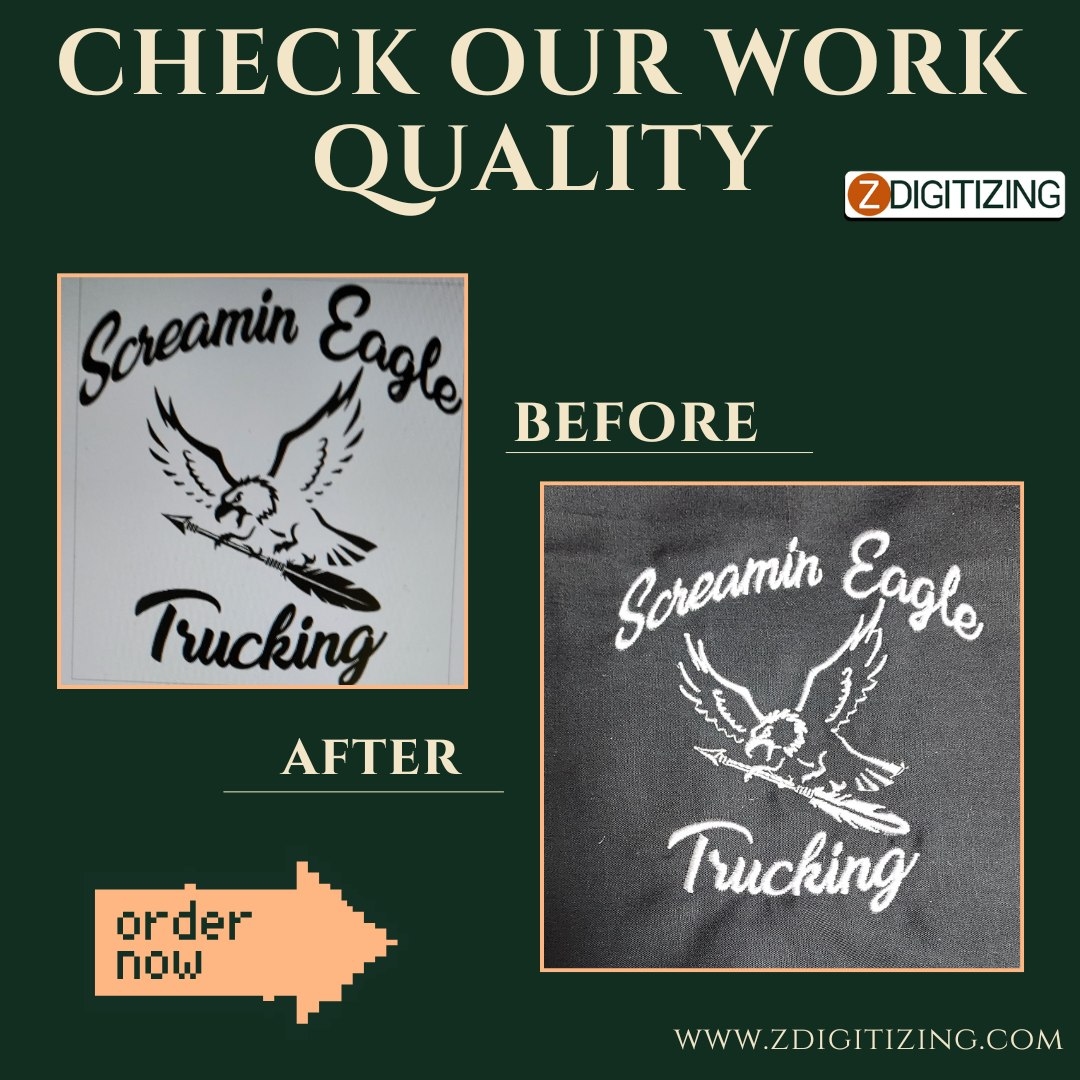
Embroidery continues to be one of the most reliable and long-lasting decoration methods in the custom apparel industry. Whether used on corporate uniforms, sportswear, caps, jackets, or promotional merchandise, embroidery provides durability and a polished brand presentation that holds up through repeated washing and daily wear.
Before a design can be stitched onto fabric, it must be converted into a machine-readable stitch file. This technical process is known as embroidery digitizing. Professional embroidery digitizing services convert logos, illustrations, and text into structured files that embroidery machines can read and execute with precision. The accuracy of this process directly influences stitch quality, production efficiency, and the overall appearance of the finished garment.
Understanding Embroidery Digitizing
Embroidery digitizing is not a simple file conversion. Standard image files such as JPG, PNG, AI, or PDF cannot be read by embroidery machines. Instead, a trained digitizer uses specialized software to manually program stitch paths, directions, densities, and sequencing.
During digitizing, the technician defines stitch types, sets underlay foundations, determines thread color order, and establishes entry and exit points. The final design is exported into machine formats such as DST, PES, EXP, JEF, or VP3, depending on the embroidery equipment being used.
Because embroidery involves thread tension, fabric movement, and needle penetration, the digitizing process must account for physical variables that affect the final result.
Why Professional Digitizing Matters
High-quality embroidery depends on experienced digitizing. Automated software alone cannot compensate for fabric stretch, push and pull distortion, or garment structure. Poor digitizing often leads to thread breaks, uneven fills, distorted lettering, fabric puckering, and inconsistent outlines.
Professional digitizers adjust settings based on the specific material and placement area. Cotton, polyester, fleece, denim, performance fabrics, and structured caps all react differently during stitching. A design intended for a flat polo shirt will require different settings than the same logo applied to a curved cap surface.
These technical adjustments ensure consistent, production-ready results and reduce costly machine downtime or rework.
Technical Elements That Influence Stitch Quality
Effective embroidery digitizing involves strategic planning rather than simple tracing. Satin stitches are typically used for lettering and borders, while fill stitches cover larger areas. Running stitches define fine details. Underlay stitching creates a stable base that prevents shifting and improves coverage.
Push and pull compensation is applied to counteract natural fabric movement during embroidery. Stitch density must be carefully balanced to avoid stiffness or thread breaks while maintaining full coverage. Logical stitch sequencing minimizes trims and improves production efficiency.
When these elements are properly engineered, the finished embroidery appears clean, sharp, and durable.
Benefits of Outsourcing Embroidery Digitizing Services
Businesses that depend on embroidery production often rely on professional digitizing services to maintain quality and efficiency. Expert digitizing improves design clarity and reduces production errors, helping embroidery shops meet deadlines without unnecessary machine interruptions.
Another advantage is garment-specific optimization. A small left chest logo requires different programming than a large jacket back design or a 3D puff cap logo. Skilled digitizers tailor each file for its intended use, ensuring consistent brand representation across various garments.
Digitized files can also be reused for repeat orders, which supports scalable production and uniform branding over time.
Applications Across Industries
Embroidery digitizing services support a wide range of industries including corporate uniform suppliers, sports organizations, hospitality businesses, retail brands, promotional product distributors, schools, and nonprofit organizations. Reliable digitizing ensures logos remain clear and proportionate regardless of garment type or production volume.
The Digitizing Workflow
The process begins with artwork evaluation to assess complexity, size, and feasibility. The design is then prepared for digitizing software, where stitch programming is manually applied. Digital simulations are reviewed to verify sequencing and trim points. In some cases, a physical stitch-out sample is created to confirm real-world performance. Finally, the file is exported in the required machine format and delivered for production.
Each step is designed to prevent errors and ensure accurate embroidery results.
Choosing a Reliable Digitizing Provider
Selecting the right embroidery digitizing service requires evaluating experience, reviewing actual stitch samples, confirming file compatibility, and understanding turnaround times. Transparent pricing and a clear revision policy are also important factors.
A dependable provider will refine the file if adjustments are needed after testing. Long-term reliability and consistent results are more valuable than choosing services based solely on low pricing.
Conclusion
Embroidery digitizing is a specialized technical service that directly affects embroidery quality, efficiency, and durability. Properly digitized stitch files are engineered for fabric type, garment placement, and machine compatibility, ensuring accurate and professional results.
For businesses involved in custom apparel and promotional products, professional embroidery digitizing is an essential investment that reduces production issues and maintains consistent brand presentation across every order.
Frequently Asked Questions
What file formats are used in embroidery digitizing?
Common machine formats include DST, PES, JEF, EXP, and VP3. The correct format depends on the embroidery machine brand and model.
Can any artwork be digitized for embroidery?
Most designs can be digitized, but highly detailed or very small artwork may require adjustments to ensure clean stitching and readability.
How long does professional embroidery digitizing take?
Standard logo digitizing typically takes between 4 and 24 hours, depending on complexity and revision requirements.
Why does the same logo need separate digitizing for caps and shirts?
Caps have curved and structured surfaces, while shirts are flat and flexible. Each surface requires different stitch density, underlay, and compensation settings to achieve accurate results.